
Traditional Oak Drawers
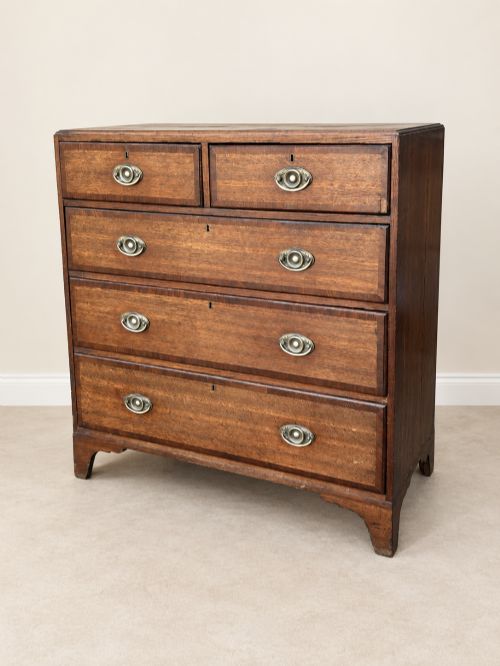
Traditional oak drawers offer solid domestic utility, spanning robust Georgian chests and Edwardian examples built to last.
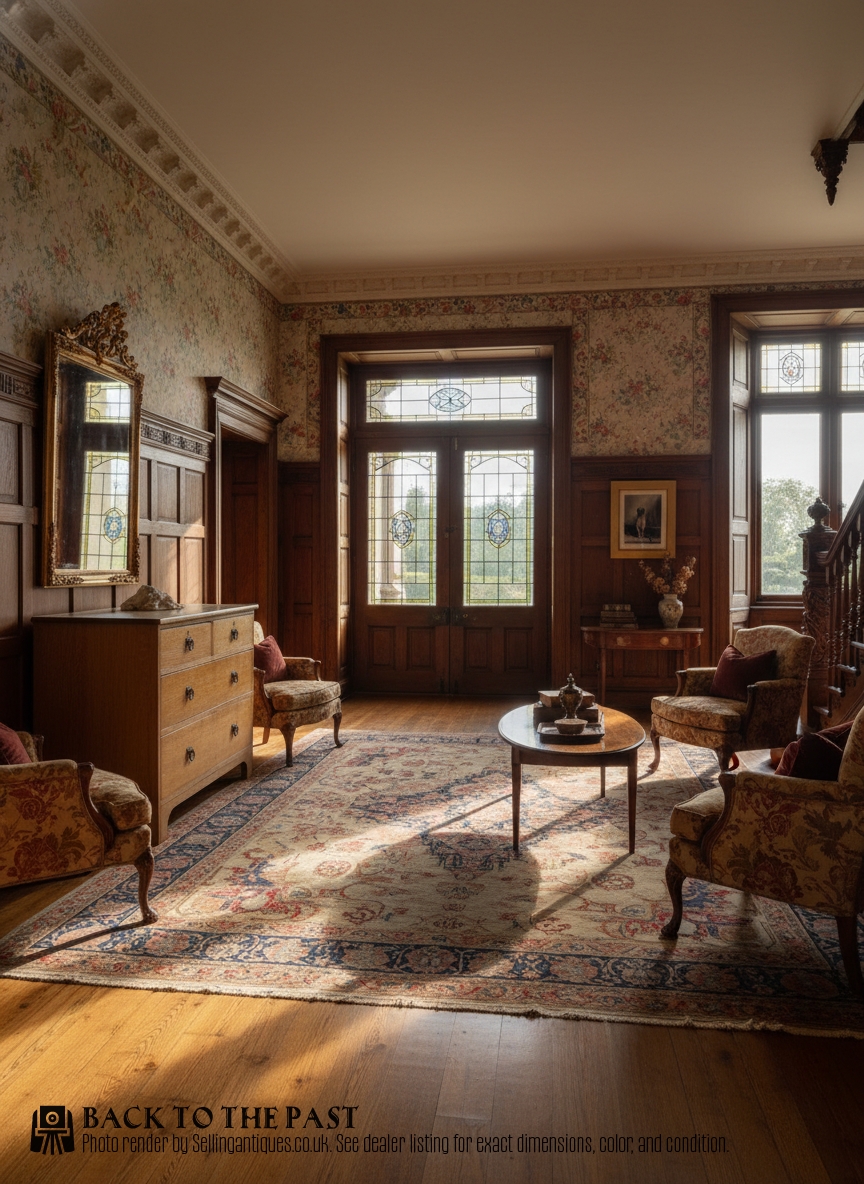
Traditional Oak Drawers
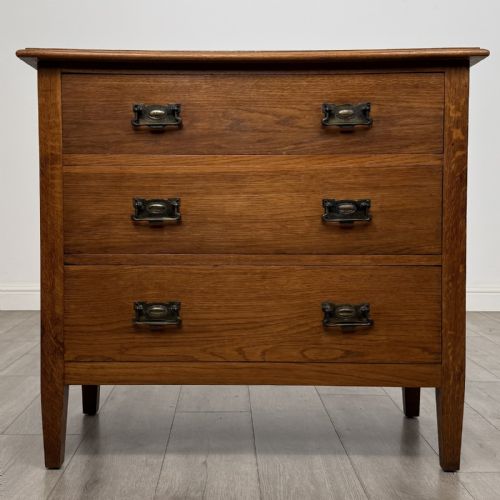
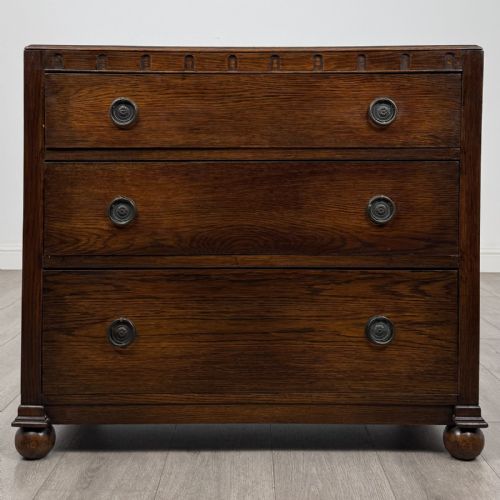
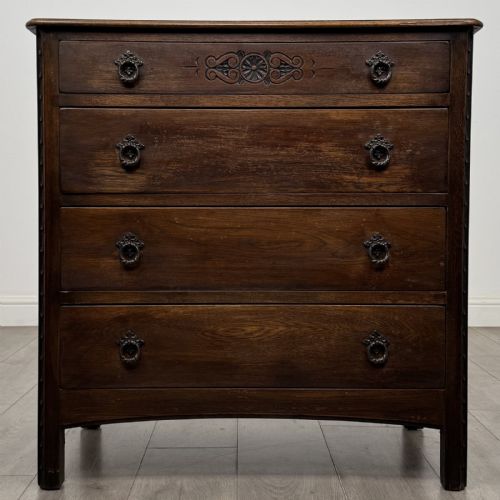
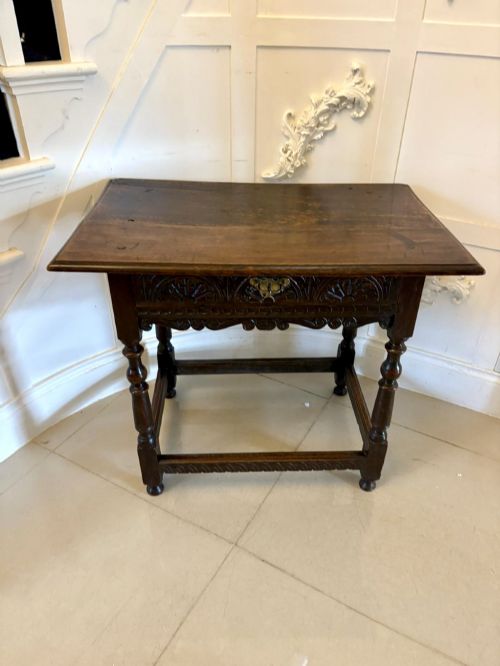
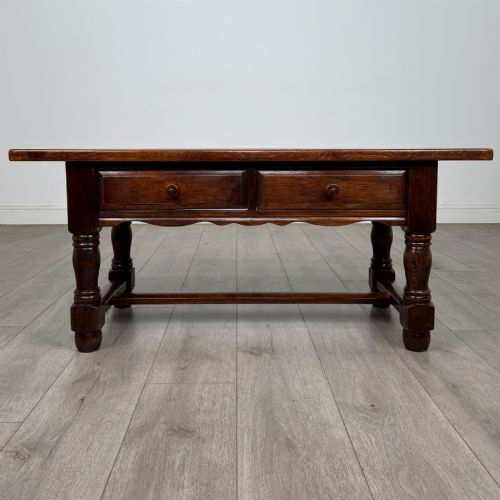
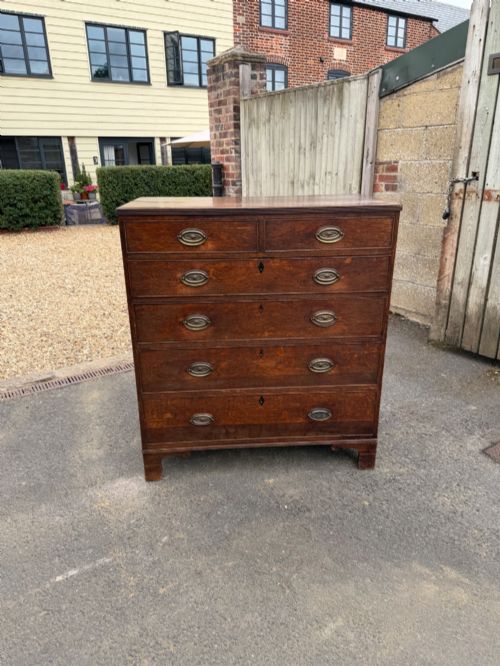
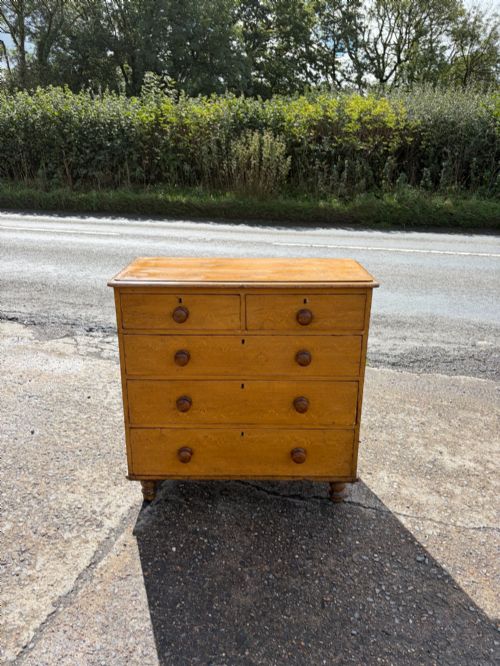
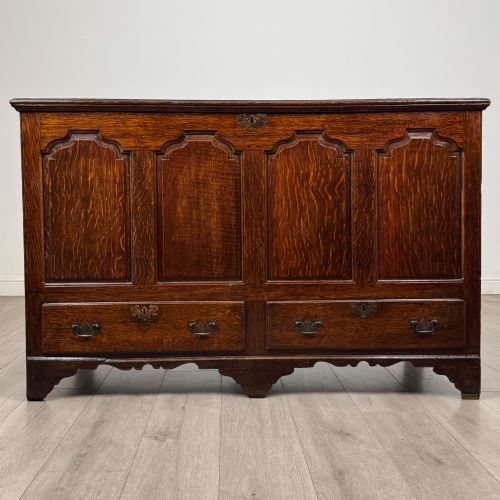
Traditional oak drawers encompass practical storage forms like chests of drawers, desks, bureaux and dressers built primarily from solid timber. These pieces range from 18th-century Georgian formats to later Edwardian and 1920s interpretations influenced by Arts and Crafts and Jacobean revival styles.
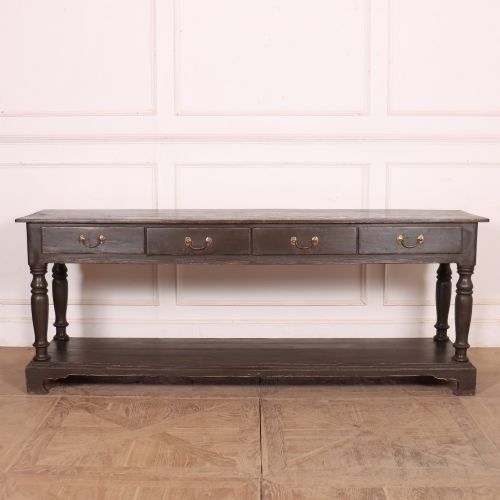
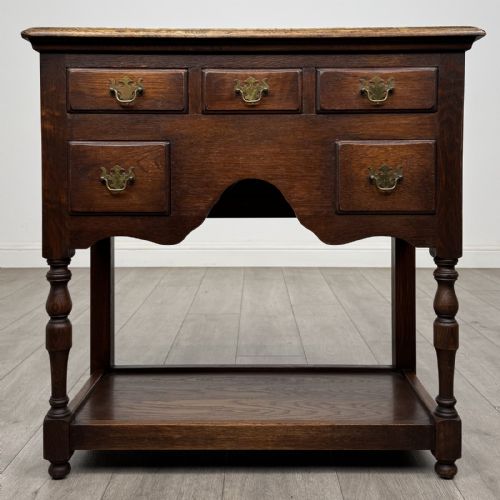
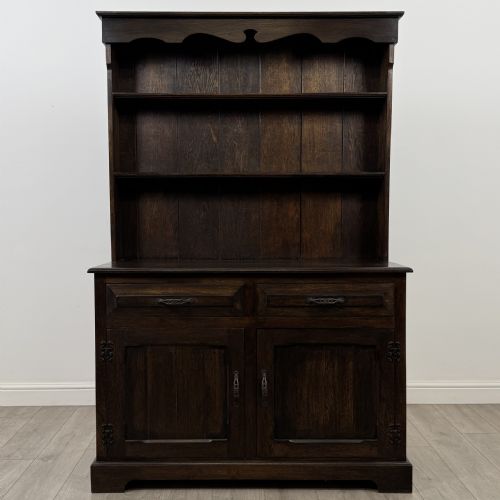
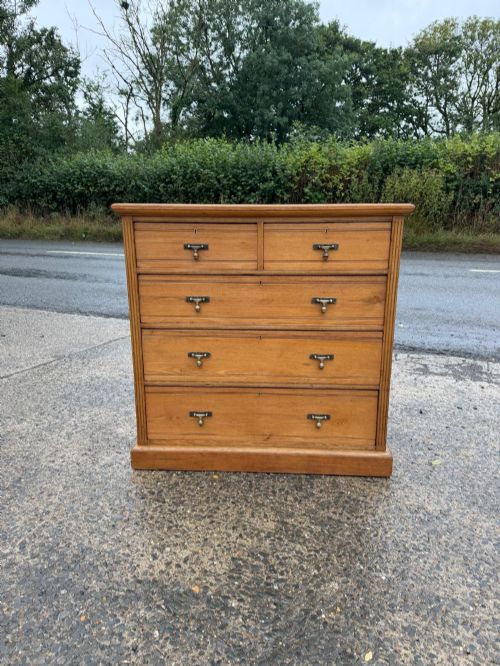
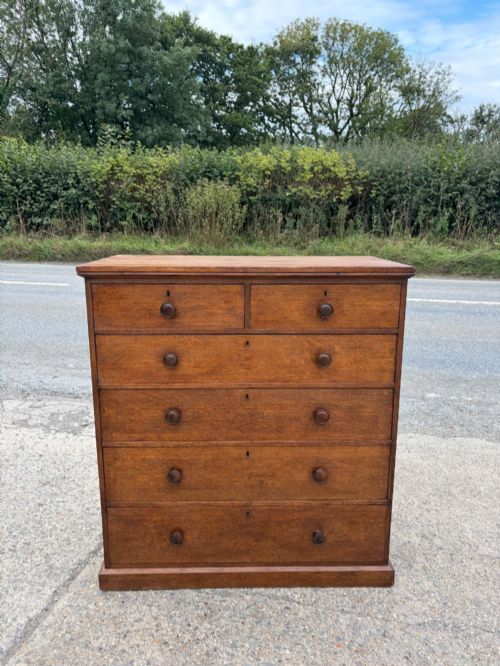
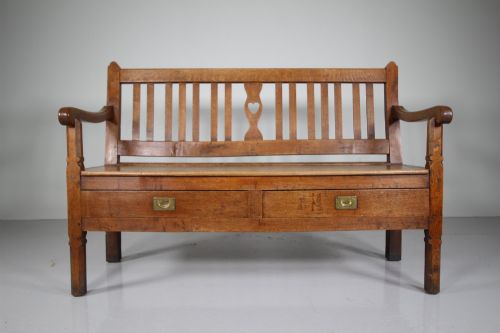
Buyers seeking traditional oak drawers most frequently encounter early 20th-century and Edwardian pieces on this page, alongside 19th-century and 18th-century examples. Forms vary from low chests and side tables with fitted drawers to larger pedestal desks and dresser bases with potboards.
How they were made
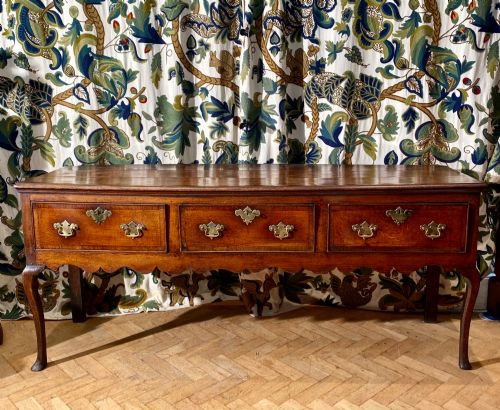
Construction relies heavily on solid oak, frequently paired with secondary timbers such as chestnut and accented with brass or metal hardware, leather inserts and occasionally burr walnut veneers. Cabinetmakers utilised traditional joinery methods to frame carcases and house drawer units securely within sturdy timber frames.
Surface treatments range from plain golden oak finishes to carved panels featuring linenfold motifs and Jacobean-style detailing. The integration of functional elements like drop-front writing surfaces and fitted interior compartments demonstrates practical craftsmanship across periods.
Listings feature oak alongside contrasting materials like brass, leather, burr walnut and chestnut across Georgian and Edwardian eras.
What varies in quality
Quality depends upon the selection of timber grain, the crispness of carved details such as linenfold panels, and the structural integrity of the drawer construction. Finer pieces demonstrate careful timber matching and substantial solid oak scantlings rather than thin veneering over lesser woods.
Proportion and execution distinguish standard utilitarian items from finer architectural forms, such as Georgian chests on stands or potboard dresser bases. The retention of original brass handles, locks and stable writing surfaces elevates the standing of desks and bureaux.
Heals of London
The Traditional Oak Drawers Glossary
- Potboard
- An open lower shelf on a dresser base designed for displaying pottery and heavy kitchen utensils.
- Bureaux
- A writing desk featuring a sloping fall-front lid that opens to reveal internal pigeonholes and small drawers.
- Linenfold
- A style of wood carving that imitates folded fabric, popular on panels during the revival periods.
- Coffer bach
- A small Welsh chest featuring a drawer beneath the main storage compartment, used for linen or documents.
- Pedestal desk
- A heavy freestanding writing table supported by two vertical banks of drawers.
Traditional Oak Drawers: Frequently Asked Questions
How do I date an oak chest?
Dating relies on examining construction techniques, drawer linings, hardware and stylistic cues such as bracket feet or moulding profiles. Earlier 18th-century pieces often display hand-cut dovetails and pegged frames.
Later Edwardian and 1920s versions utilise machine-sawn timber and standardised fittings while mimicking earlier Jacobean or Georgian aesthetics.
Are these drawers suitable for daily use?
Solid oak construction provides exceptional durability, making these pieces well suited for heavy, everyday storage requirements in modern homes. The robust frames handle regular opening and closing without losing structural stability.
Drawers should be checked for smooth operation along runners, though minor adjustments by a restorer can resolve sticking.
What is the difference between golden oak and standard oak?
Golden oak refers to a specific warm, honey-toned colouration often found in pieces dating from the Edwardian period and the 1920s. This appearance results from timber selection, finishing oils and the natural ageing process of specific oak species.
Standard oak descriptions may encompass a broader spectrum of tones, from dark 18th-century patinated surfaces to lighter Victorian and Edwardian examples.
How do I care for antique oak furniture?
Maintain the timber by keeping pieces away from direct heat sources and sudden humidity changes that cause wood to split or warp. Regular dusting with a soft, dry cloth preserves the natural sheen of the wax or polish.
A light application of traditional beeswax feeds the grain periodically without building up heavy residue.