
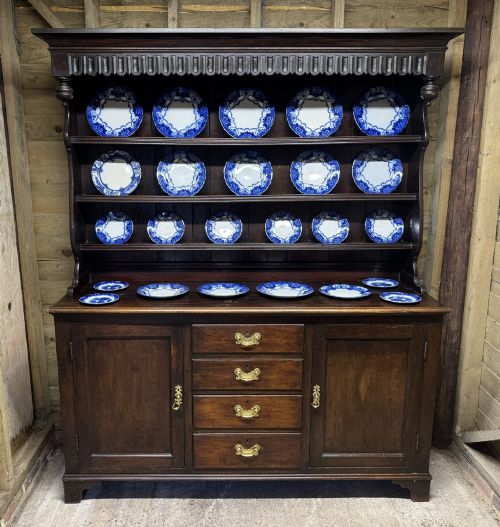

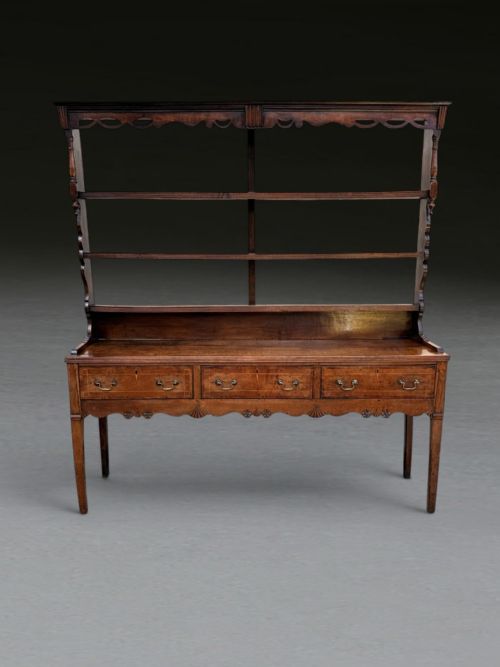
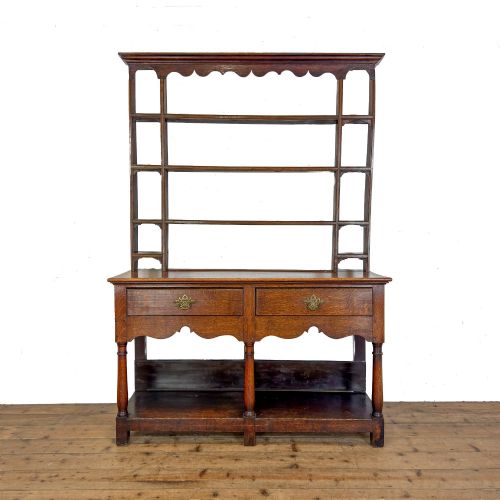
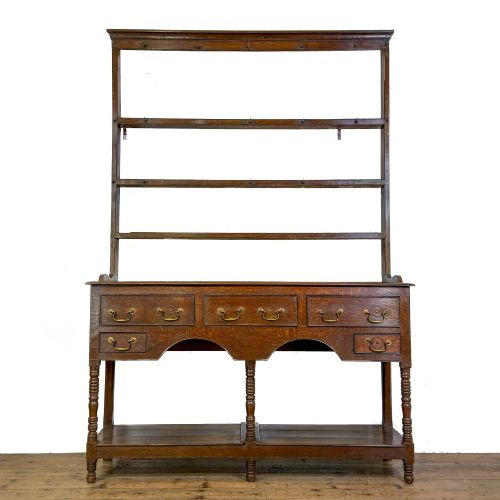


Open Plate Rack
An open plate rack provides wall or dresser-top display for crockery, keeping everyday dishes accessible in traditional kitchens.
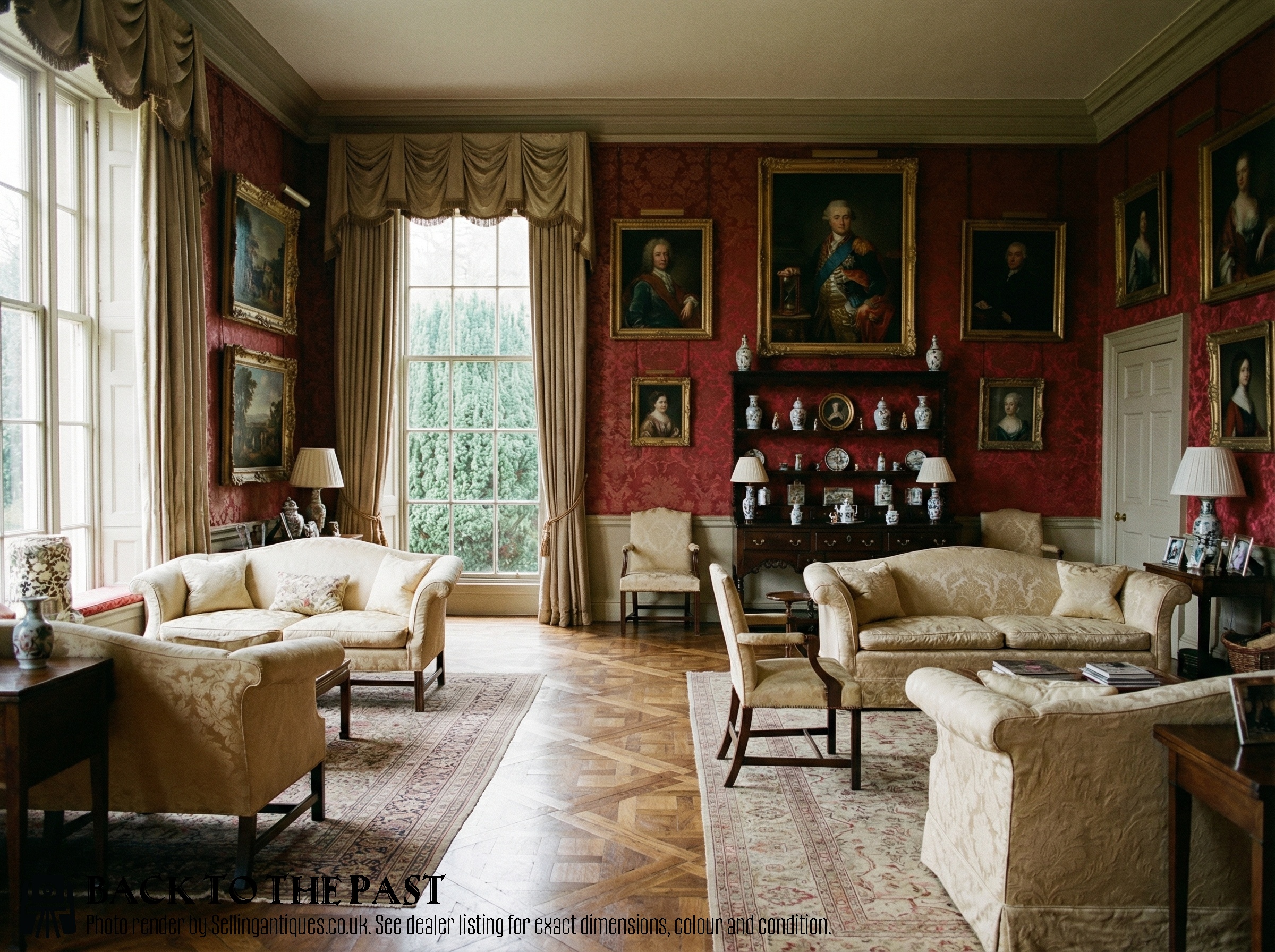
Open Plate Rack
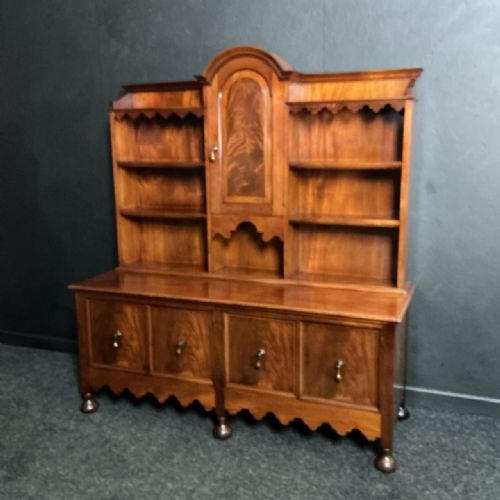
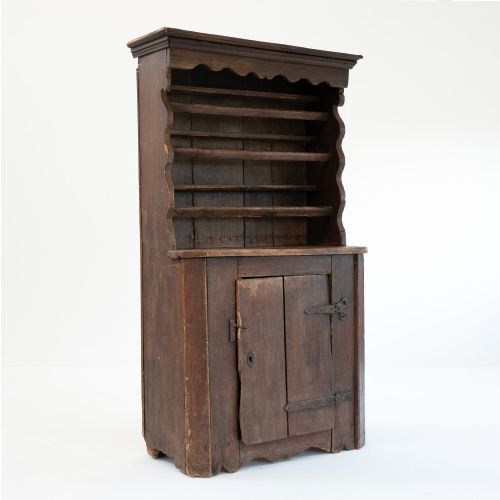
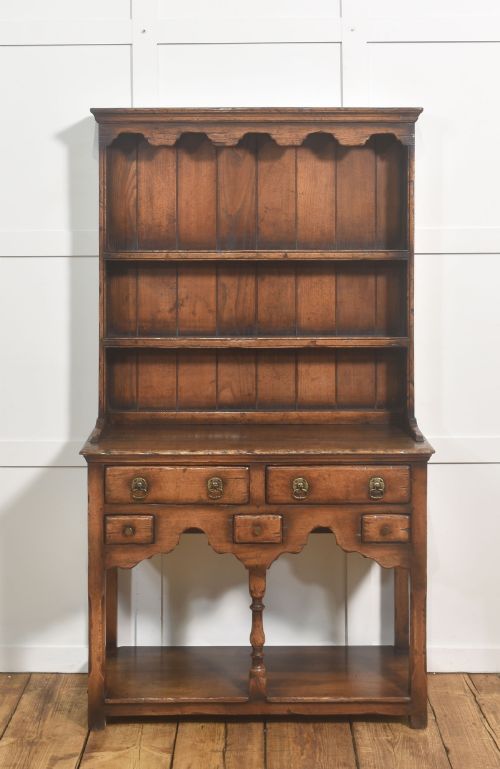
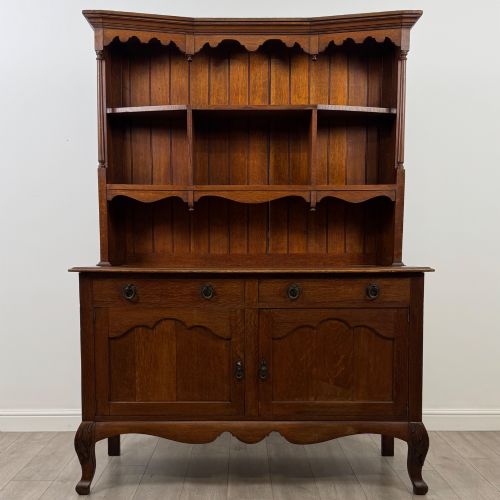
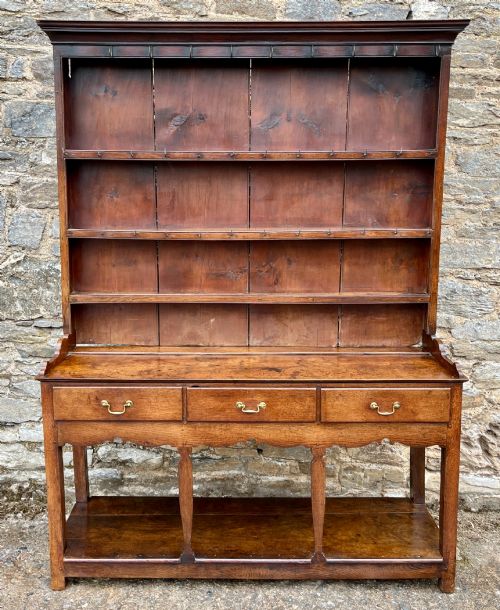
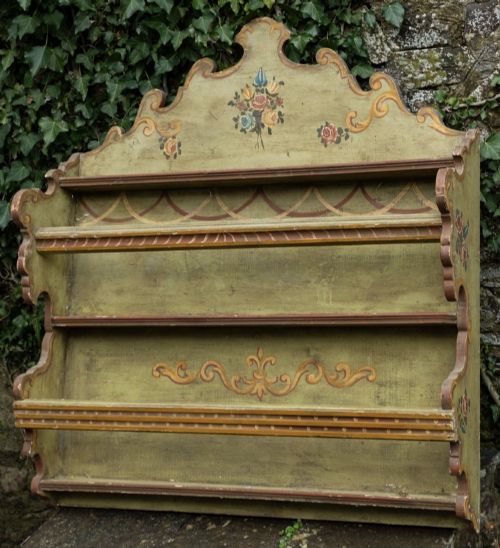
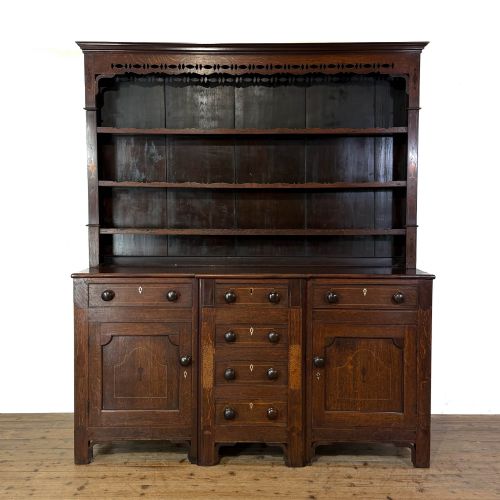
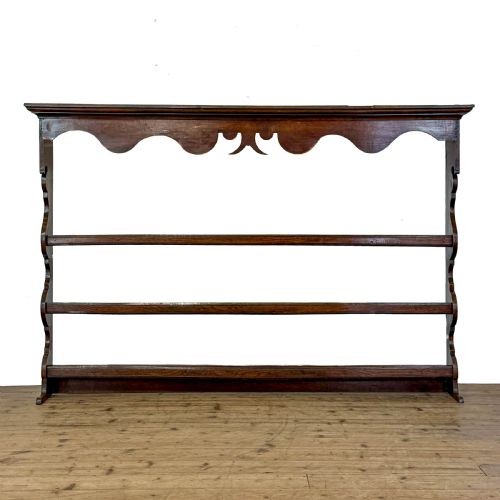
An open plate rack is encountered primarily as a wall-hanging shelf or as the upper section integrated into a larger country dresser. These pieces originate across Georgian, Victorian, and Edwardian periods, reflecting regional styles from Wales, England, Ireland, and France.
Most examples found here combine utilitarian kitchen storage with display, utilising native timbers to hold plates upright against grooved wooden backs.
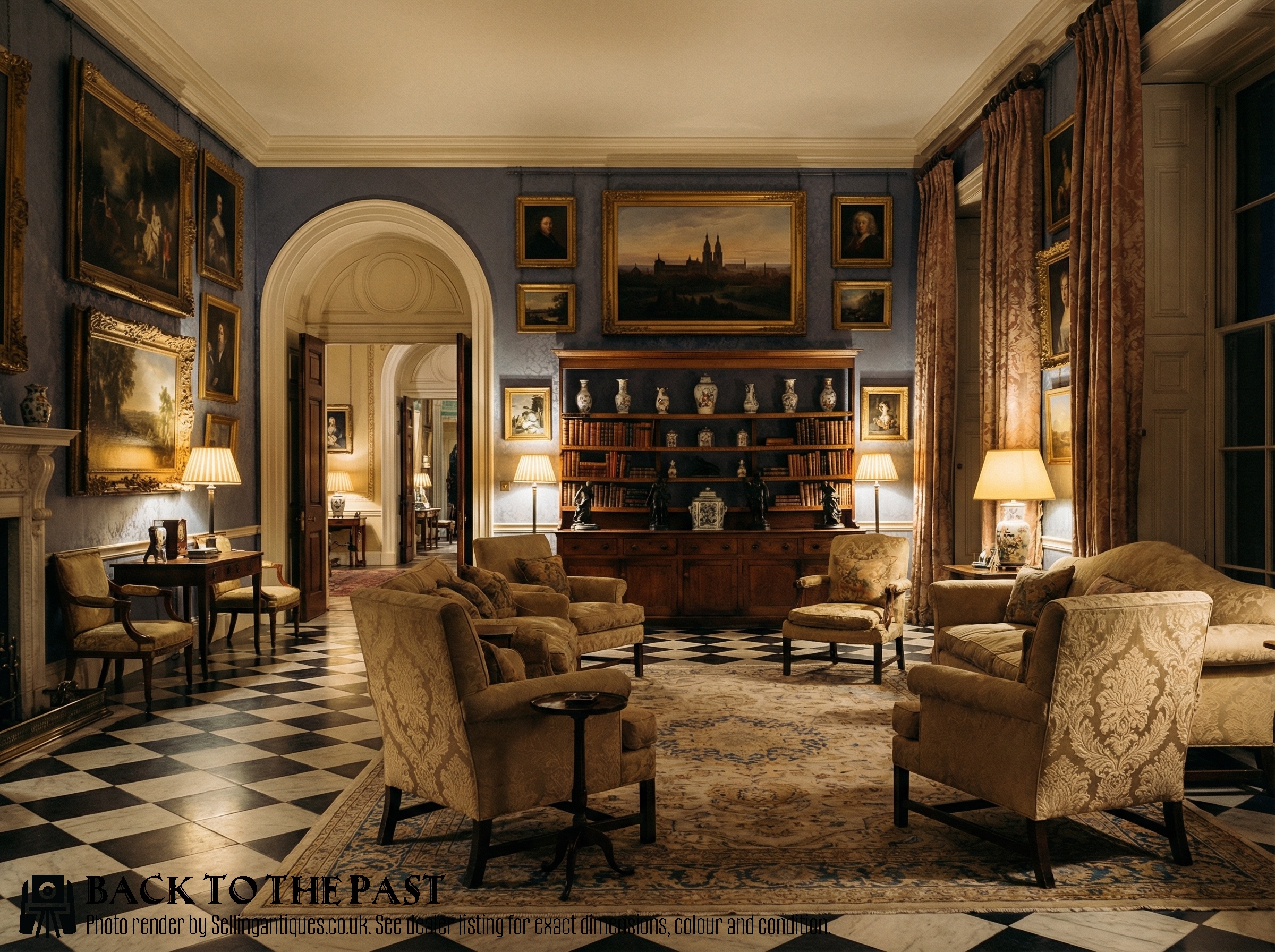
Construction and Materials
Cabinet makers utilised solid timbers such as oak, pine, mahogany, and walnut, often pairing denser woods for structural frames with softer boards for back panels.
Joinery techniques rely on traditional pegged joints, dovetailing in drawer construction where base units are present, and rebated slats to secure plate retaining rails.
One nineteenth-century Welsh dresser carries the distinct provenance of originating from a cafe in Snowdon.
Judging Quality
Quality rests upon the selection of timber grain, the crispness of surviving mouldings, and whether original plate racks remain paired with their base dressers or survive as independent hanging shelves.
Surface finish dictates value, distinguishing pieces retaining patinated original paint or clean wax surfaces from those stripped or altered in later centuries.
The Open Plate Rack Glossary
- Potboard
- A lower open shelf built into the base of a dresser, historically used for storing heavy pots and pans. This platform sits just above the floor.
- Vernacular
- Furniture made by local regional joiners for domestic use rather than for elite urban commissioners. These items employ traditional local building methods.
- Breakfront
- A piece of furniture where the central section projects forward from the flanking wings. This configuration adds architectural depth to larger dressers.
Open Plate Rack: Frequently Asked Questions
How are these racks mounted?
Hanging shelves use sturdy screw fixings through internal back rails to support the considerable weight of stacked ceramic plates safely.
Larger combination units sit directly upon dresser bases, secured by timber dowels or simple brackets against the wall.
What wood was used?
Oak predominates across Georgian and Welsh vernacular pieces, offering structural strength and rich grain patterns that darken gracefully over centuries.
Pine appears frequently in Victorian and farmhouse items, chosen for utility and often found finished with paint or simple scrubbed surfaces.
Are shelves adjustable?
Fixed plate grooves and retaining rails form an integral part of the structural frame in traditional open racks, holding plates at a secure angle.
Alterations to shelf heights are rarely found in period examples because the upright slats provide vital rigidity to the entire rack.
How do I date a rack?
Dating relies upon timber species, nail construction methods, and joinery details such as hand-cut dovetails or pegged tenons visible on the frame.
Stylistic cues like breakfront profiles, ogee mouldings, or original painted surfaces help narrow the period from Georgian origins to Edwardian revivals.