
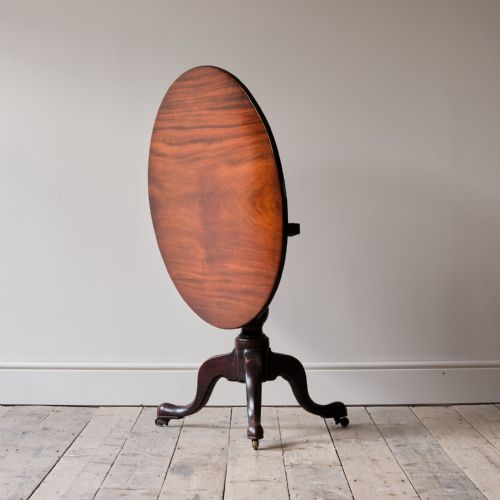
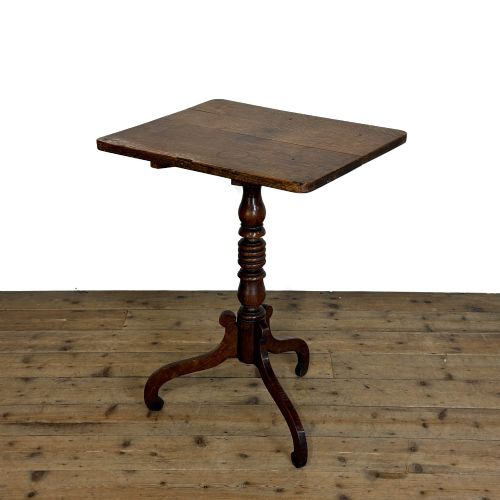
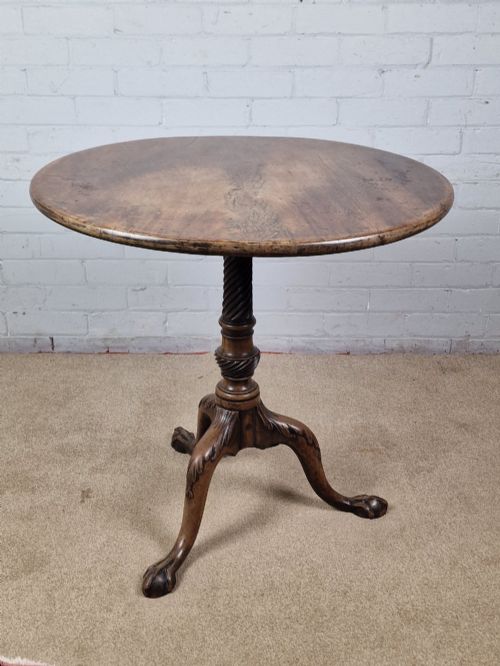
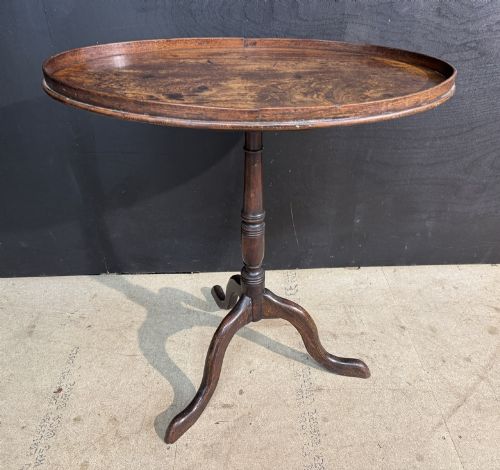
Snap Top Tea Table
A snap top tea table folds flat for storage and frees space when tea service ends.
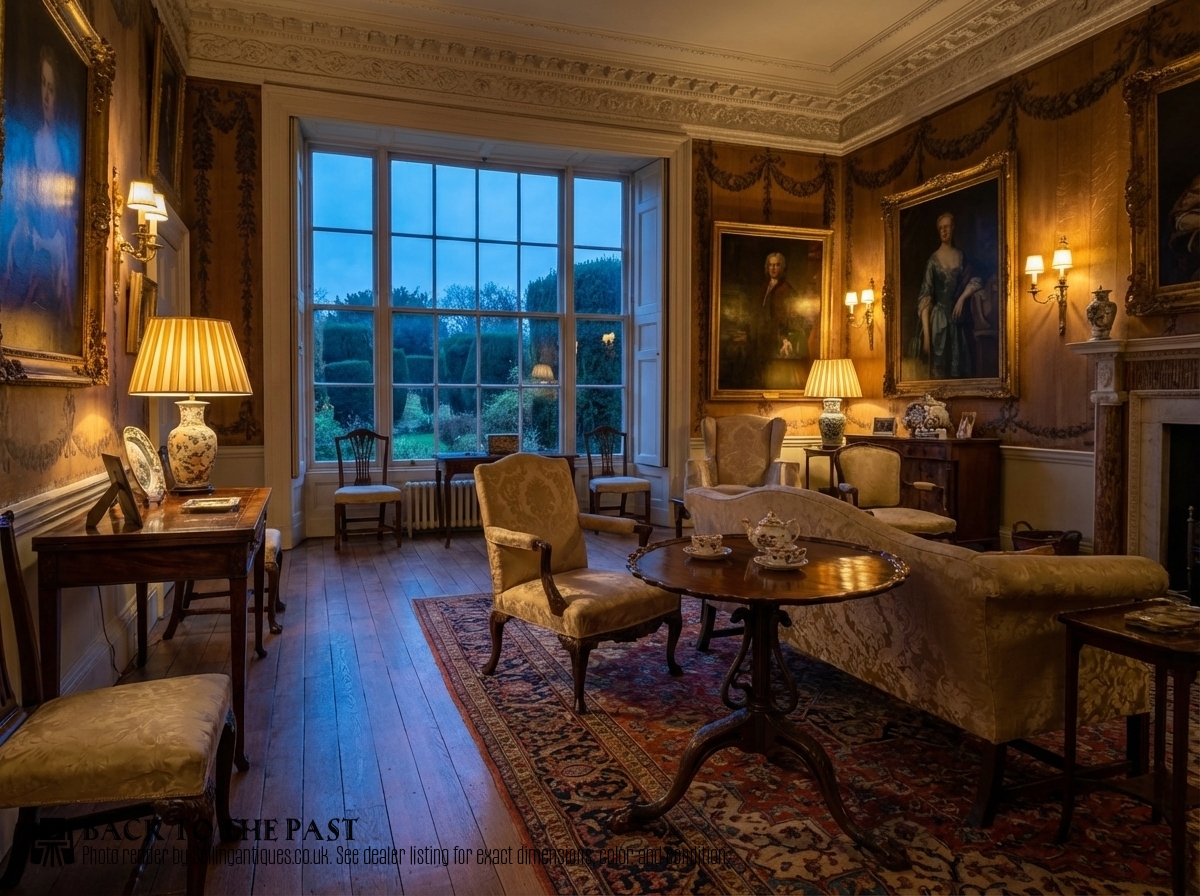
Snap Top Tea Table
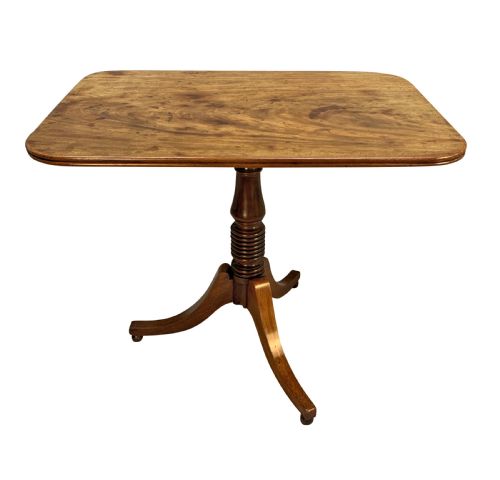
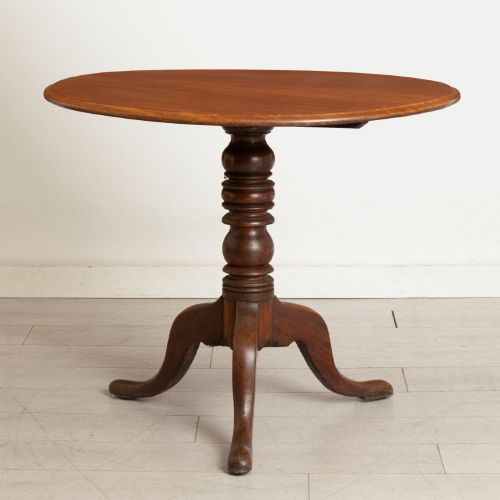
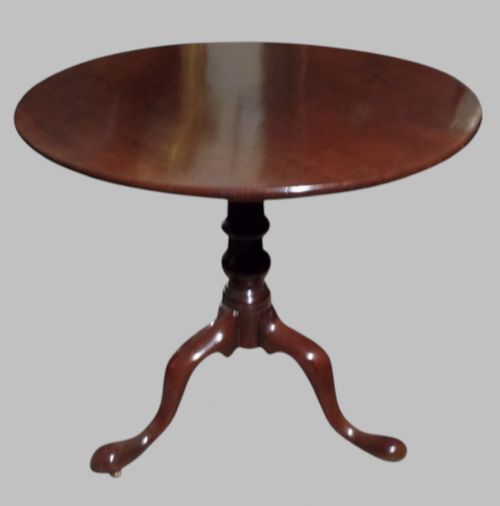
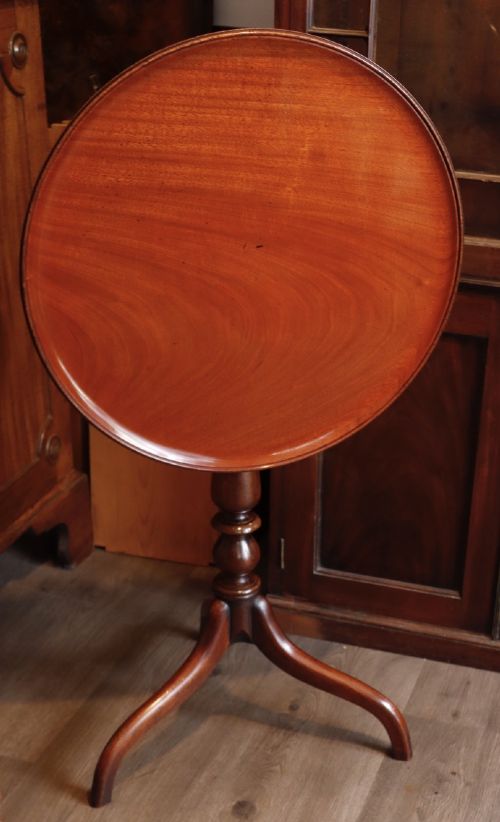
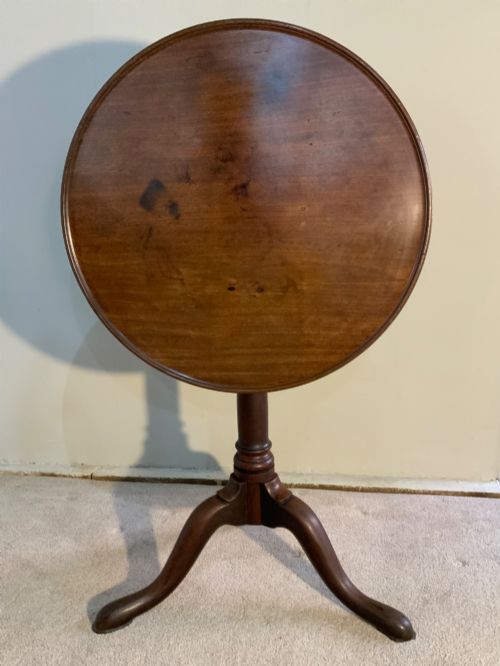
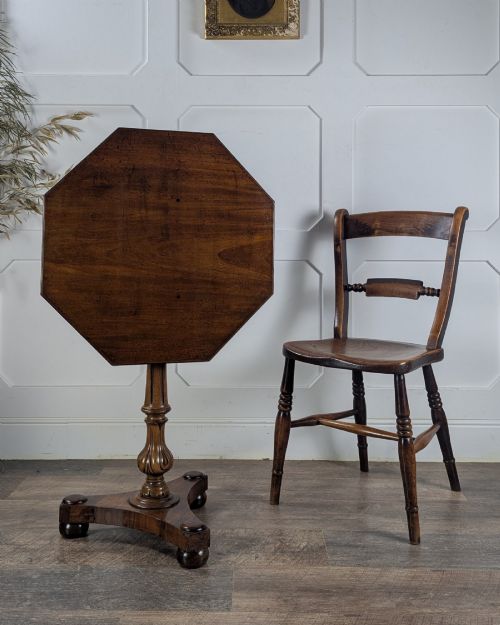
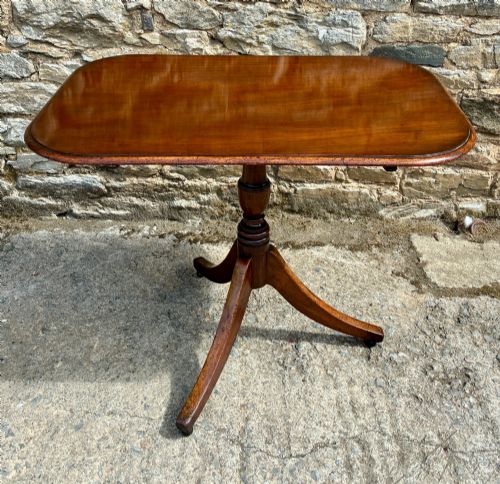
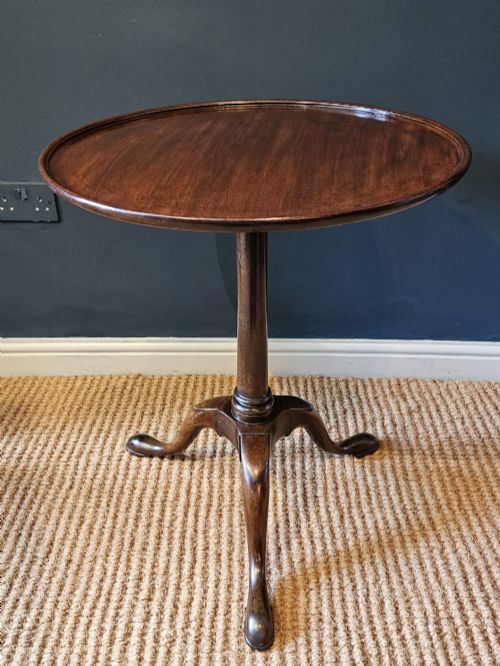
A snap top tea table stands on a central pillar with a tripod base, designed so the circular or tray-shaped top tilts upright against the support when not in use.
Most examples found here date from the Georgian and Victorian periods, with 18th century and 19th century pieces forming the bulk of the selection.
Makers utilised timbers such as mahogany, oak, walnut, and fruitwood, sometimes incorporating birdcage mechanisms or revolving top actions beneath the surface.
How they were made
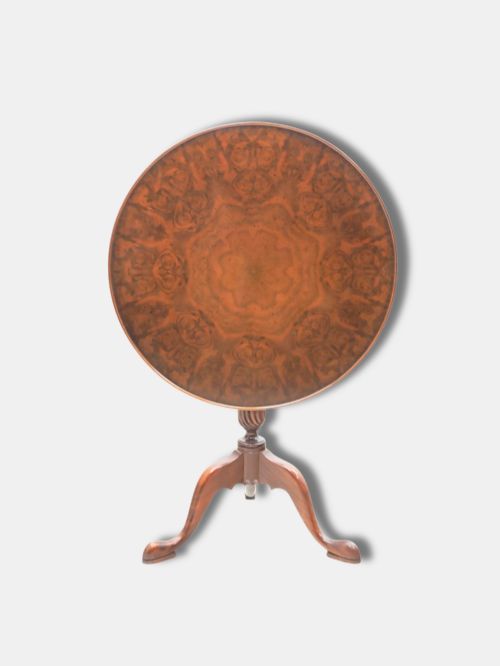
Cabinet makers constructed these tables primarily from solid timbers like mahogany and oak, occasionally applying burr walnut veneer or lacquer for decorative effect.
The tilting mechanism relies on a wooden catch or a brass birdcage block that allows the top to pivot and lock firmly into the horizontal position.
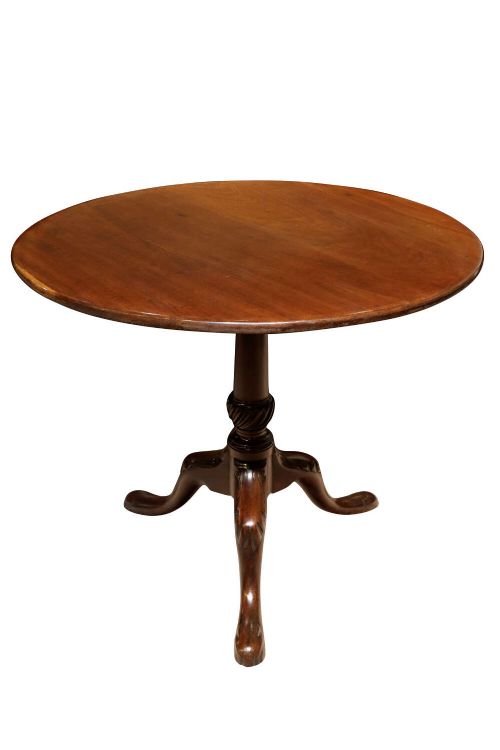
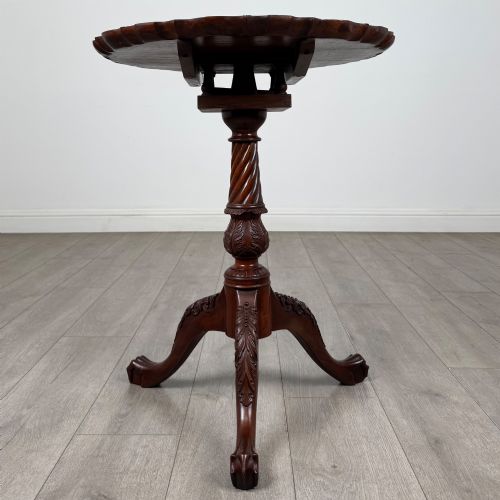
Tripod legs terminate in pad feet, claw and ball feet, or plain spade forms, joined to the turned pillar column by dovetail or tenon joints.
Listings feature mahogany, oak, walnut, and lacquer surfaces across Georgian, Regency, and Victorian periods.
What varies in quality
The proportion between the top and the supporting column dictates the visual balance, with finer tables showing precise turning and careful timber selection.
The tightness of the snap mechanism and the smoothness of the pivot action reveal the skill of the original maker.
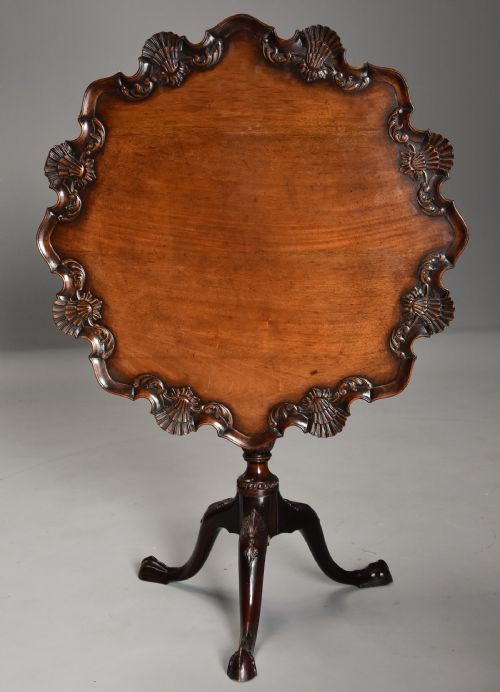
Carved details on the knees of the tripod legs or moulded edges around the piecrust top separate utilitarian country pieces from high style urban workshop productions.
The Snap Top Tea Table Glossary
- Snap-top
- A table top fitted with a catch allowing it to tilt from horizontal to vertical. This feature saved precious floor space in smaller period rooms.
- Birdcage
- A timber framework beneath the table top that permits the surface to revolve as well as tilt. It adds height and mechanical complexity to the column.
- Tripod base
- Three legs splaying from a central pedestal to provide stability on uneven floors. This configuration prevents the table from rocking.
- Piecrust top
- A raised, scalloped edge carved from the solid timber of the table top. It prevented cups and saucers from sliding off during service.
Snap Top Tea Table: Frequently Asked Questions
What is a snap top tea table?
A snap top tea table is a small occasional table featuring a hinged mechanism that lets the top tilt vertically against its central column.
This clever design allowed households to push the furniture against a wall to clear the floor between meals.
How do you use a tilt top table?
You release the catch underneath the surface to pivot the top upright when you need to reclaim room space in a parlour.
Lowering it back to the horizontal engages the locking latch so the surface remains stable for holding tea wares or lamps.
How do I identify a Georgian table?
Georgian tables typically display dense mahogany or oak timbers, elegant tripod bases, and restrained turning on the central pillar column.
Examining the construction methods underneath, such as hand-cut joints and period fixings, helps confirm the era.
Why does the top revolve?
Certain tables include a revolving mechanism within a wooden birdcage frame situated just beneath the table top.
This allows the surface to spin smoothly in addition to tilting, offering extra convenience for serving tea.