

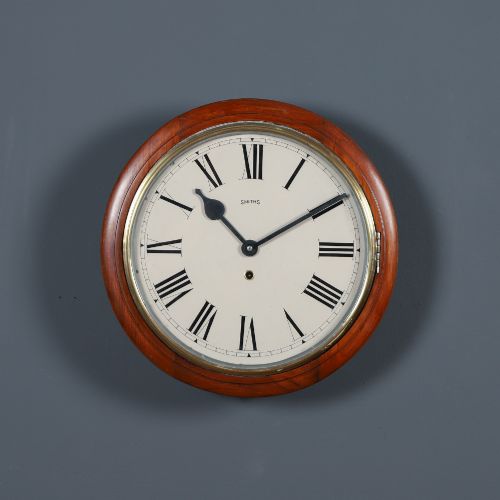
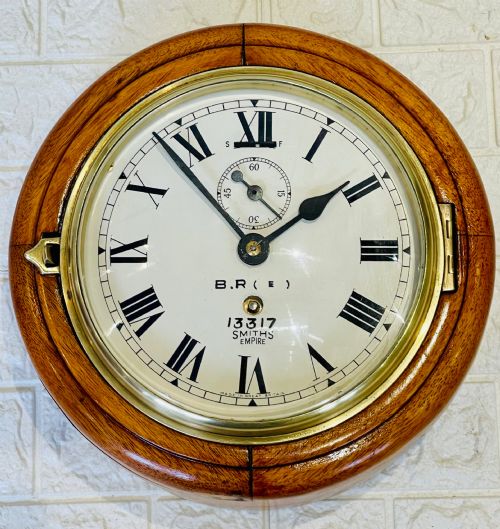
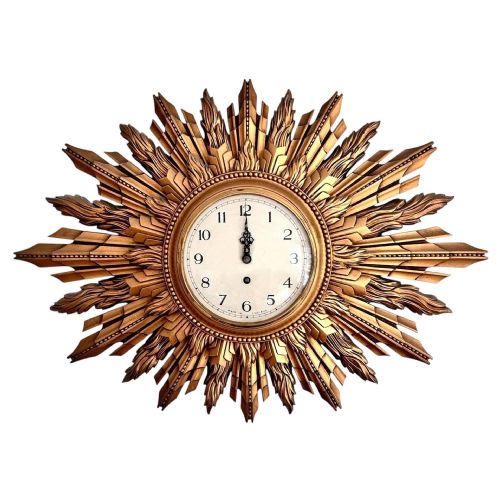
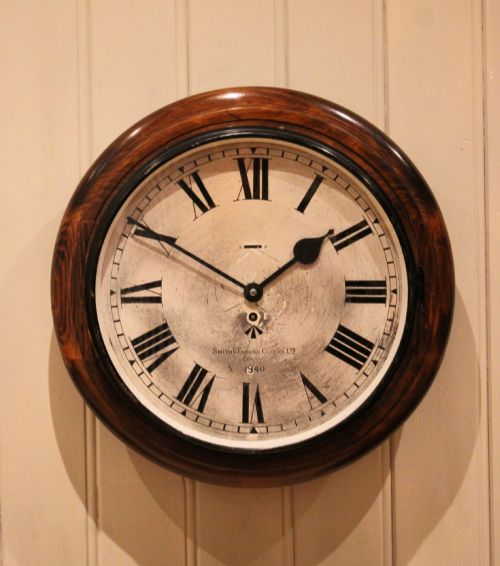


Smiths Wall Clock
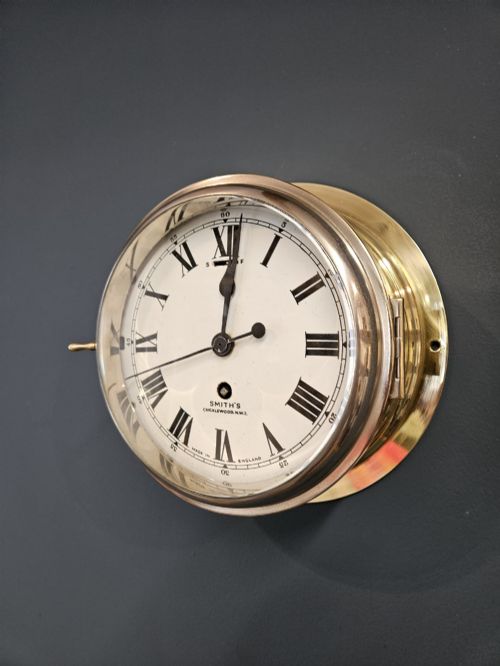
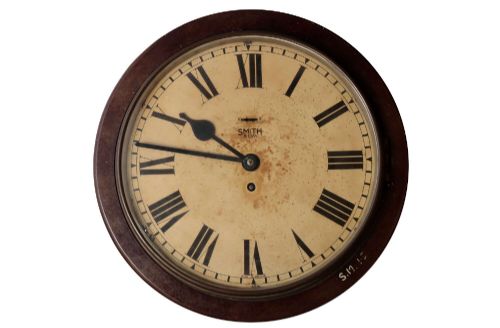
These robust smiths wall clock pieces range from railway station dials to military bulkhead timepieces.
Smiths Wall Clock
A smiths wall clock covers utility timepieces originating from the nineteenth and twentieth centuries, spanning periods like the 1930s, 1940s, and 1950s. The selection on this page leans heavily toward functional designs produced for railways, military departments, and industrial spaces.
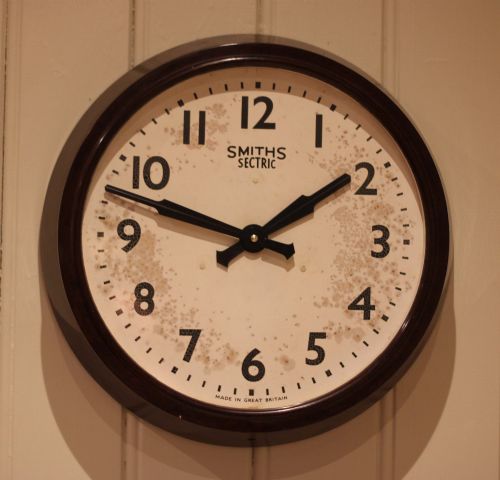
Buyers encounter classic round dial wall clocks housed in mahogany, oak, or utilitarian Bakelite and chrome cases. Many bear specific organizational markings from transport boards and government ministries, reflecting their original institutional service.
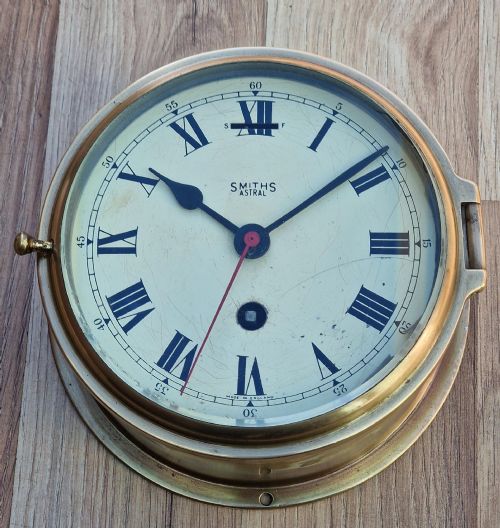
Forms vary from large school dials and heavy ship bulkhead clocks to star burst wall clock designs and double-sided factory units. These pieces suit domestic interiors seeking genuine utilitarian character.
How they were made
Cases combine traditional timber framing in mahogany and oak with industrial metals including brass, chrome, iron, and gilded wood. Wartime production introduced moulded Bakelite and beech, prioritising robust function over ornamentation.
Dials rely on clear enamel or painted metal faces paired with heavy glass covers to withstand institutional environments. Movements range from standard 8-day mechanical mechanisms to electric Sectric movements.
Smiths Wall Clock Retail Price Guide 2026
Typical asking prices for smiths wall clock among the pieces listed under this phrase on Sellingantiques today, from the lower quarter to the upper quarter. They describe what is for sale here now, not the wider market.
Materials in these listings span traditional mahogany and oak alongside industrial brass, chrome, iron, and mid-century Bakelite.
What varies in quality
Quality rests in the originality of the dial and the integrity of the case materials, whether polished mahogany or military Bakelite. Specimens retaining authentic institutional markings and original bezels hold greater distinction.
The sophistication of the movement, from standard timepieces to chiming railway station variants or heavy engine room clocks, separates standard utility pieces from more substantial examples.
Smiths·Smiths English Clocks Ltd
The Smiths Wall Clock Glossary
- Bulkhead clock
- A heavy-duty timepiece designed to mount directly onto ship walls or bulkheads. These typically feature brass or chrome waterproof cases with secure screw bezels.
- Bakelite
- An early synthetic phenol-formaldehyde plastic utilised extensively for twentieth-century clock cases. It provides a dark, durable finish common in wartime and industrial manufacturing.
- Sectric
- The brand name for electric synchronous movements introduced by the maker in the twentieth century. These plugged into mains electricity rather than requiring manual winding.
- Dial
- The visible face of the clock where numerals indicate time. Institutional examples often feature bold black numerals designed for quick legibility across large rooms.
Smiths Wall Clock: Frequently Asked Questions
How do I date a Smiths clock?
Dating relies on casing materials, movement types, and any military or railway broad arrow markings stamped on the dial or backbox. Wartime pieces often feature specific issue years stamped alongside government department names.
Earlier models from the nineteenth century or 1920s tend to utilise traditional timber surrounds, while the 1930s and 1940s brought in Bakelite and electric Sectric movements.
Were all these clocks used on railways?
Railway deployment accounts for many surviving examples, particularly those marked for regional networks like the Great Western Railway or British Rail. These were built for strict timekeeping in stations and signal boxes.
Other specimens served different public sectors entirely, including hospital wards, factory floors, and government ministries during wartime.
How do I wind an 8-day clock?
An 8-day mechanical movement requires a winding key inserted into the dial face every week to maintain tension on the mainspring. Care must be taken not to overwind the mechanism.
Electric Sectric variants bypass this entirely by running on mains power, while battery conversions found in later pieces require modern cells.
Where should I hang a heavy bulkhead clock?
Bulkhead and ship engine room clocks feature substantial brass or chrome cases that require secure fixing into solid wall anchors. Their heavy glass covers and metal construction demand sturdy support.
Kitchens, hallways, and studies suit their industrial aesthetic, provided the chosen wall bears the weight of the metal casing.