



Wooden Schoolhouse Wall Clock
These wooden schoolhouse wall clock examples bring honest utility to any wall, offering robust dial design shaped by decades of public service.
Wooden Schoolhouse Wall Clock
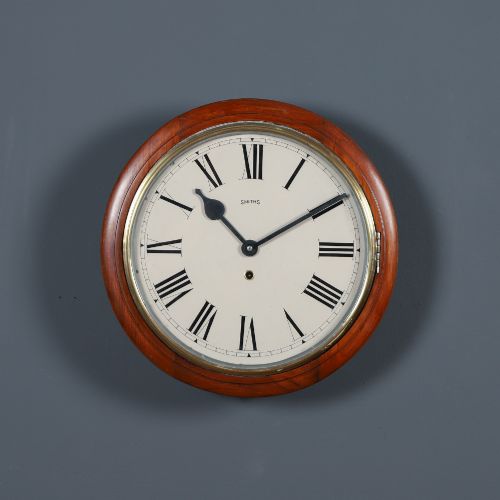
A wooden schoolhouse wall clock stands out for its circular face and straightforward timber case, designed for clear timekeeping in public spaces. Buyers searching this phrase encounter round dial formats, drop dial silhouettes, and fusee movements housed in sturdy surrounds.
The selections available here span from Regency and Victorian origins up through 1950, capturing decades of practical institutional design. Most examples rely on mahogany, oak, or walnut, combining glazed bezels with robust wooden housings suited for prominent display.
Materials and construction
Craftsmen built these cases using dense hardwoods such as mahogany, oak, and walnut, often shaping them into drop dial or circular profiles to protect the delicate internal mechanism. Glass protects the painted or papered dial faces, while brass details and iron components secure the interior gears.
Many of these pieces employ fusee mechanisms to maintain steady tension and accurate timekeeping throughout the duration of the 8 day run. Secondary metals like brass appear in bezels and pendulum assemblies, contrasting against the dark timber frames.
Wooden Schoolhouse Wall Clock Retail Price Guide 2026
Typical asking prices for wooden schoolhouse wall clock among the pieces listed under this phrase on Sellingantiques today, from the lower quarter to the upper quarter. They describe what is for sale here now, not the wider market.
The listings span from the Regency period through to 1950, utilising mahogany, oak, walnut, brass, glass, and iron.
Judging quality in wall clocks
Superior examples display crisp dial lettering, clean timber grains, and original brass bezels that retain their intended finish without excessive restoration. The sophistication of the internal movement, particularly the presence of a well-executed fusee mechanism, distinguishes finer pieces.
The integrity of the wooden case and the legibility of the dial face dictate the overall character of each clock. Pieces bearing maker inscriptions or institutional association marks from railway stations, government posts, or county councils carry particular historical weight.
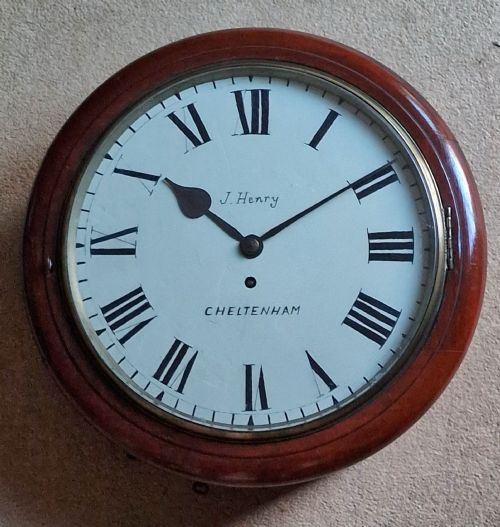
J Henry Cheltenham·Payne of Tunbridge Wells
The Wooden Schoolhouse Wall Clock Glossary
- Fusee
- A conical pulley used in clock movements to equalize the declining power of the mainspring as it unwinds. This mechanical addition ensures steady timekeeping accuracy across the entire running duration.
- Drop dial
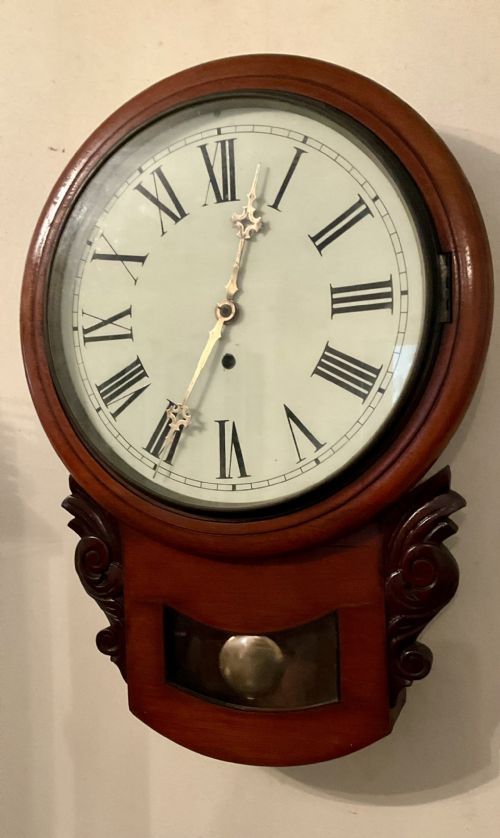
- A clock case featuring an extended lower wooden box designed to enclose the downward swing of a pendulum. This silhouette remains typical of institutional and railway timepieces.
- Dial clock
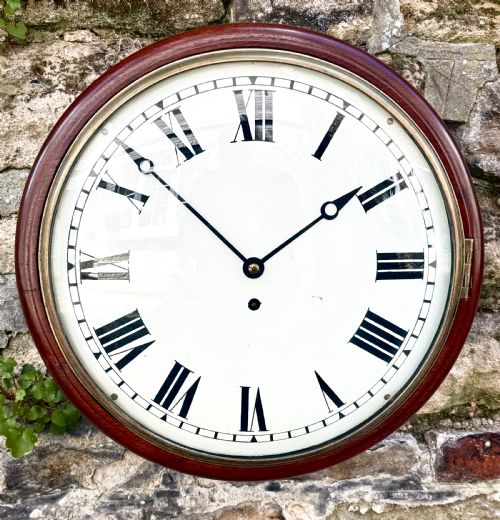
- A timepiece dominated by a prominent circular face, usually mounted directly to a wall for public legibility. These items rely on clear numerals and simple hands for immediate readability.
Wooden Schoolhouse Wall Clock: Frequently Asked Questions
What defines a schoolhouse wall clock?
These timepieces are characterised by a clean circular dial and a robust timber case built for institutional utility. They were traditionally mounted in public spaces where clear visibility was paramount.
Most examples utilise durable hardwoods like mahogany or oak and often feature straightforward mechanical movements designed for reliable daily service.
How do fusee movements work?
A fusee movement uses a conical pulley connected to the mainspring via a chain or cord. This clever mechanism balances the diminishing torque of the spring as it unwinds.
The result is a constant force delivered to the gear train, which greatly improves the timekeeping accuracy of the clock.
Where were these clocks used?
Original locations included railway stations, government post offices, municipal buildings, and educational institutions. Their robust construction ensured they could withstand busy public environments.
Today, they transition easily into domestic settings, bringing industrial and traditional character to kitchens, hallways, and living spaces.
How do I date a dial clock?
Dating relies on examining the timber species, the style of the case, and the construction methods of the movement. Pieces from the Regency and Victorian eras often display hand-painted dials and traditional fusee mechanisms.
Later 20th century examples from the 1940s or 1950s often reflect more utilitarian institutional designs associated with organizations like the General Post Office.