




Small Secretary Desk
A small secretary desk brings compact writing space and concealed pigeonholes into a room, uniting everyday utility with fine period cabinet-making.
Small Secretary Desk
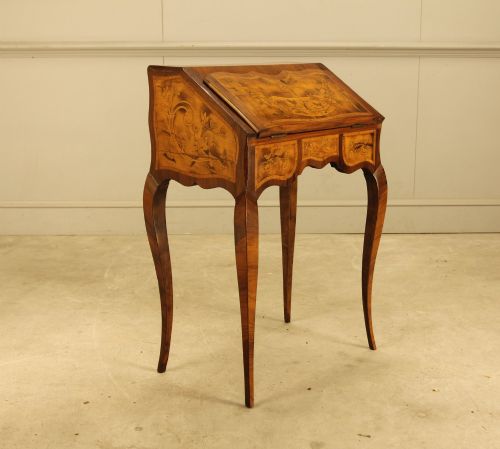
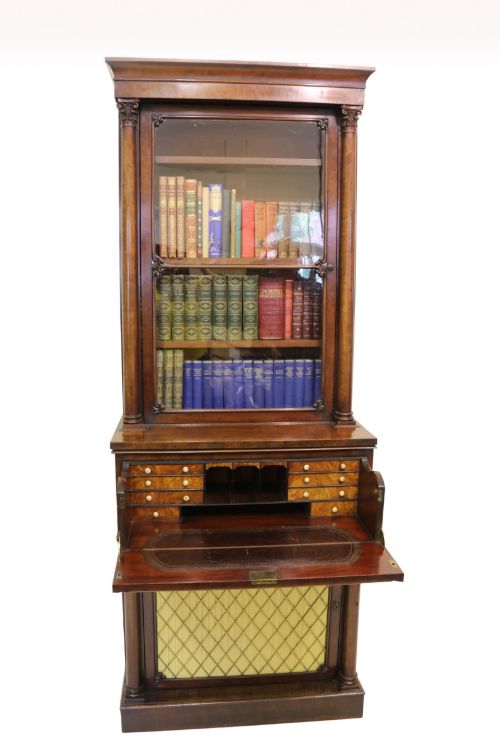
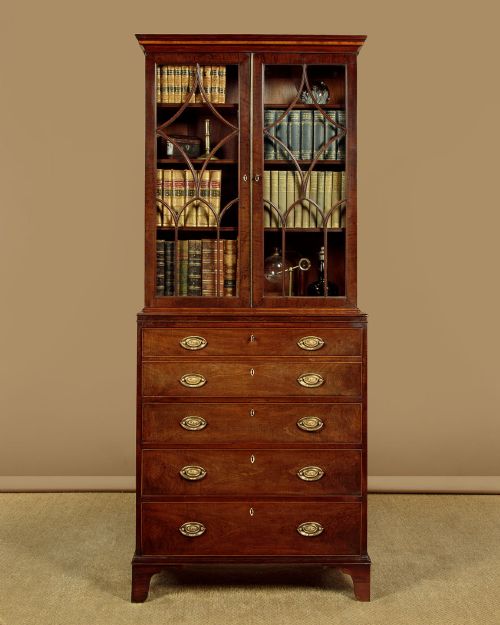
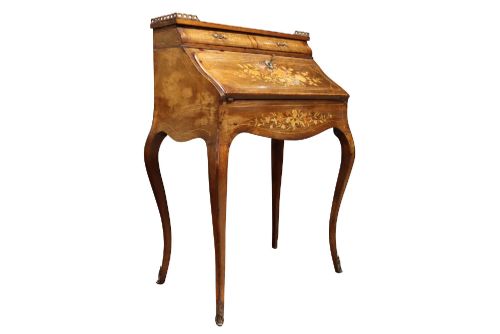
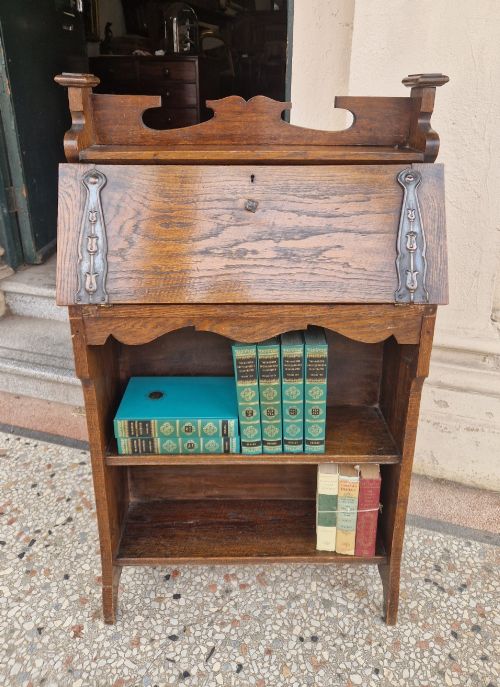
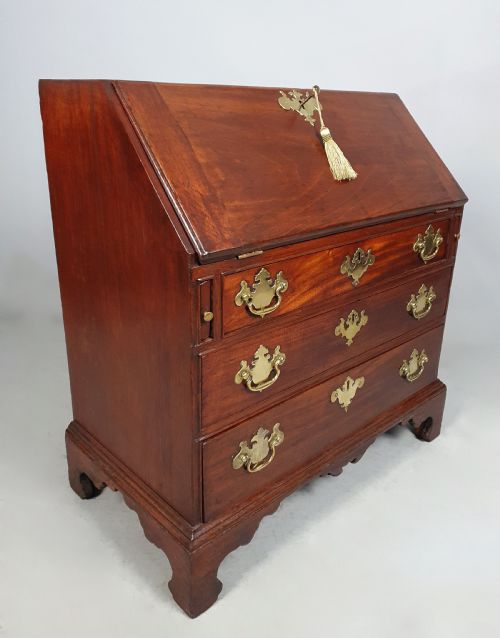
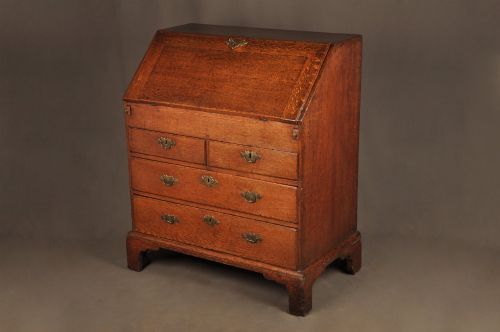
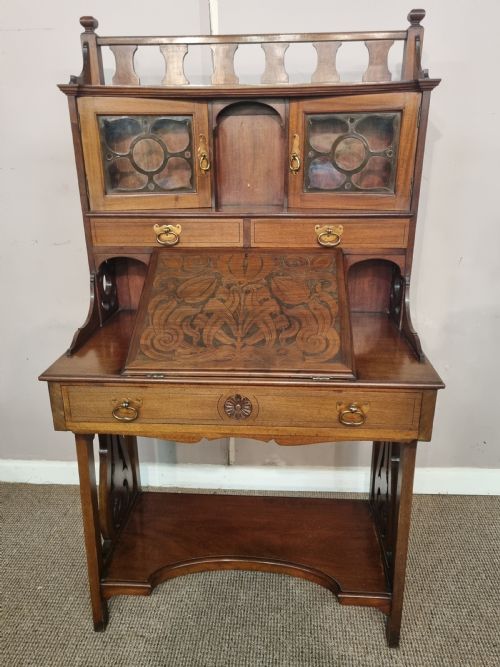
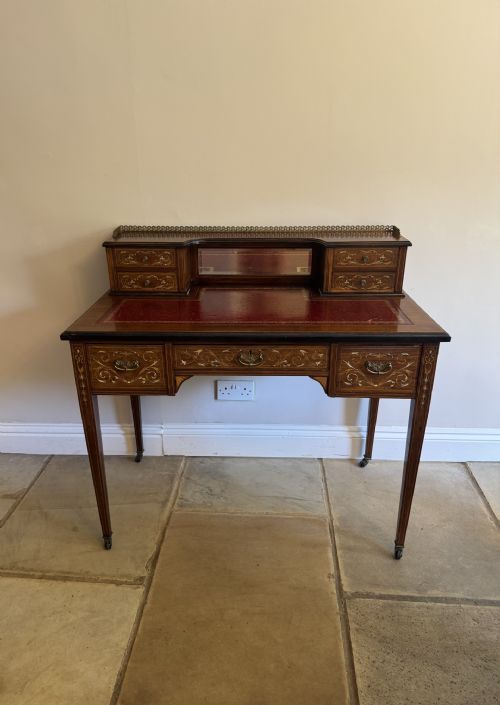
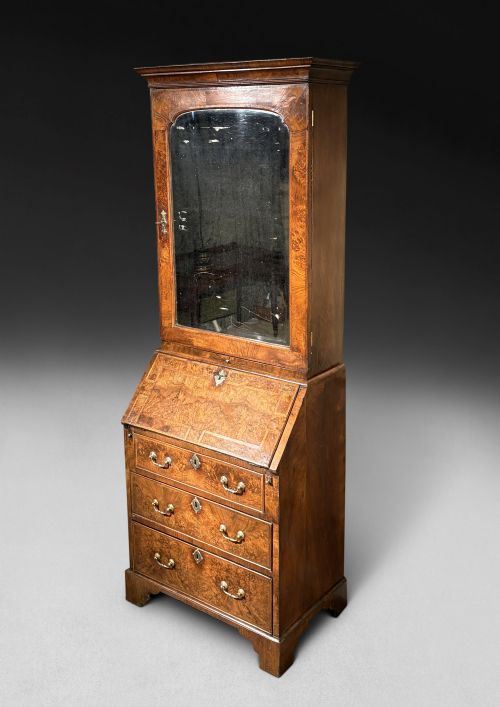
A small secretary desk is most commonly encountered as a bureau, a secretaire bookcase, a Davenport, or a bonheur-du-jour originating from the eighteenth and nineteenth centuries. These pieces span George II, Georgian, Regency, Victorian, Edwardian, and Arts and Crafts periods, reflecting domestic writing habits across generations.
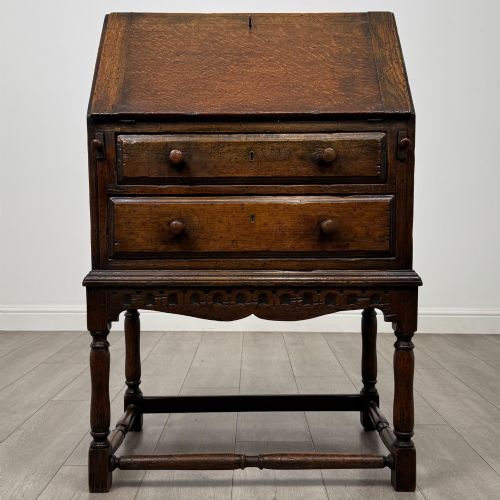
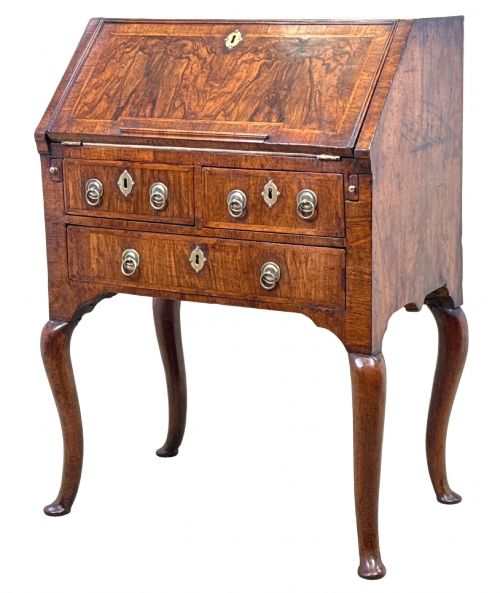
The selection ranges from early eighteenth-century walnut and oak forms raised on legs or stands to later mahogany and satinwood bureau bookcases. Smaller proportions define these pieces, making them suitable for compact spaces while retaining fitted interiors with drawers and compartments.
Materials and construction
Cabinet-makers utilised timbers such as mahogany, oak, walnut, burr walnut, fruitwood, cedarwood, rosewood, and satinwood, frequently employing veneers to display figured grain patterns. Structural integrity relied on traditional joinery, dovetail drawers, and timber linings.
Decoration incorporated brass handles, escutcheons, inlay, marquetry, and occasional ormolu mounts, particularly on French revival pieces. Glass panels appeared on bookcase doors, while writing surfaces often featured inset leather.
Some nineteenth-century ladies desks include hidden spring-loaded compartments designed for secret letters.
Craftsmanship and distinction
The standard of a small secretary desk depends upon the selection of timber figures, such as burr walnut or figured mahogany, and the precision of the cabinet-maker's joinery. Superior examples demonstrate seamless veneer matching, finely cut dovetails, and well-proportioned fitted internal compartments.
Hardware choice and secondary timber selection also separate standard utilitarian items from finer examples. Original brasses, careful inlay work, and robust internal drawers elevate the piece.
Gillows of Lancaster
The Small Secretary Desk Glossary
- Bureau
- A desk featuring a sloping lid that drops down to form a writing surface, revealing internal small drawers and pigeonholes. This form dominated eighteenth-century writing furniture.
- Secretaire bookcase
- A tall cabinet combining a writing drawer or drop-front desk compartment with upper shelving enclosed by doors. These pieces served dual functions for storage and correspondence.
- Bonheur-du-jour
- A light ladies writing desk featuring a small cabinet or set of shelves upon the upper surface. This style gained popularity during the nineteenth century.
- Davenport
- A compact pedestal desk with a sloped, hinged writing surface and drawers opening to the side. It originated in the nineteenth century for domestic correspondence.
- Tambour
- A sliding door constructed from narrow vertical strips of wood glued to a canvas backing. This mechanism concealed compartments on specialised writing tables.
Small Secretary Desk: Frequently Asked Questions
How do I date an old bureau?
Dating a bureau involves examining the secondary timbers, construction methods, hardware, and overall style. Eighteenth-century examples often feature oak or walnut linings with hand-cut dovetails, while nineteenth-century pieces may utilise different interior layouts and machine-sawn components.
Stylistic markers such as bracket feet, cabriole legs, or inlaid satinwood also point to specific eras like the Georgian or Regency periods. Comparing the primary wood choice, such as burr walnut or figured mahogany, helps narrow the decade of manufacture.
Where were these desks placed?
These desks were traditionally placed in private parlours, bedrooms, drawing rooms, or home libraries where correspondence and household accounts were managed. Their modest proportions allowed them to fit against walls or between windows without dominating the interior.
Freestanding pieces like Davenports could sit further into a room, while bureau bookcases combined heavy book storage with a dedicated writing station in a single footprint.
How do I maintain wood surfaces?
Maintaining wood surfaces requires regular dusting with a soft, dry cloth and the occasional application of appropriate furniture wax to nourish the timber and preserve the polish. Avoid placing these pieces in direct sunlight or near heat sources to prevent timber shrinkage and veneer lifting.
Leather writing inserts benefit from gentle cleaning and specialised conditioning to prevent cracking over time. Preserving the original finish maintains both the appearance and character of the piece.