
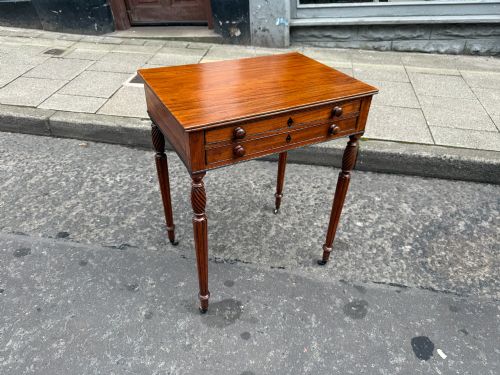
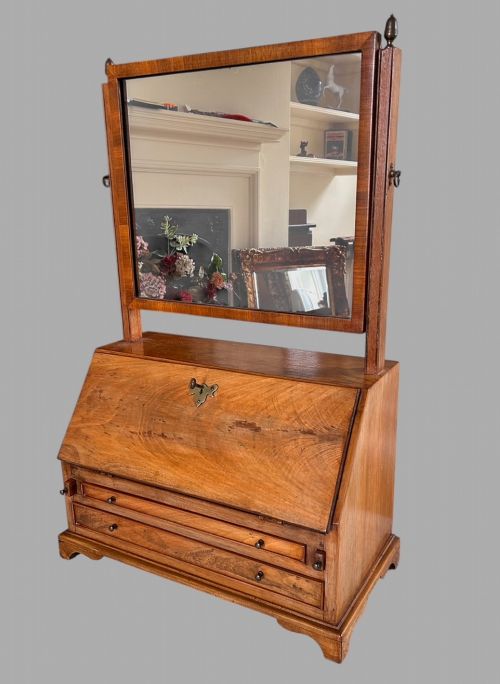
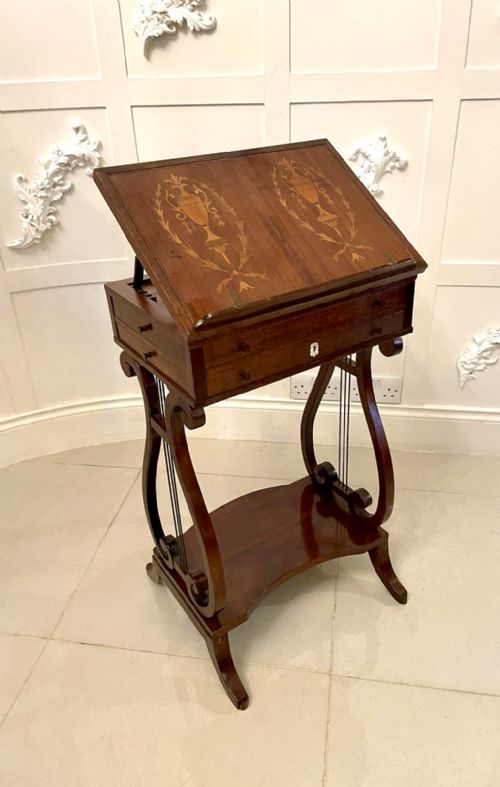
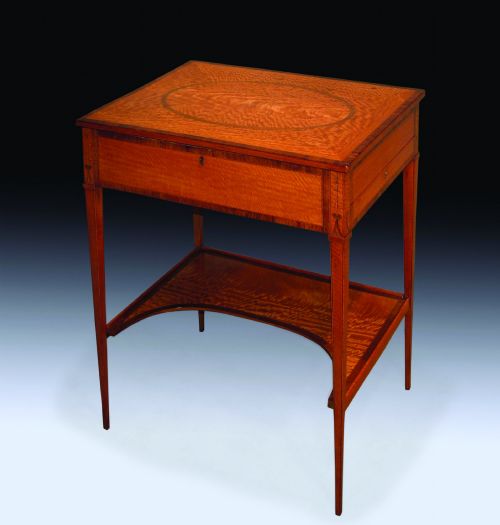





Small Satinwood Desk
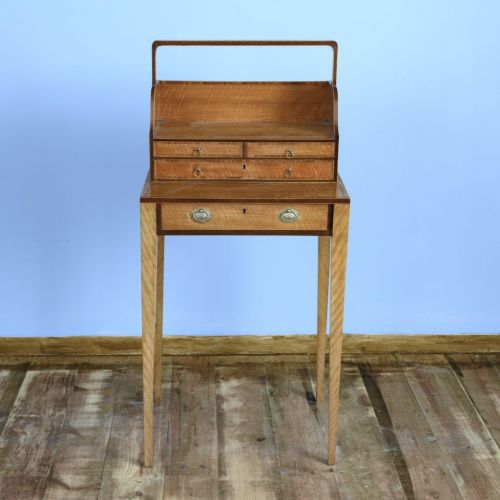
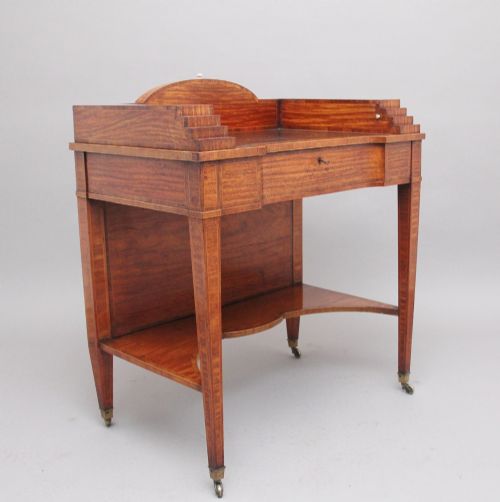
A small satinwood desk brings figured timber and compact writing space into a room, offering refined proportions from Georgian, Regency, and Edwardian periods.
Small Satinwood Desk
A small satinwood desk encompasses various compact writing forms, including bonheur du jour tables, bureaus, and ladies writing desks. These pieces originate across the eighteenth, nineteenth, and early twentieth centuries, spanning George III, Regency, Victorian, and Edwardian eras.
Buyers meet Edwardian satinwood pieces alongside Georgian and Regency examples, often featuring lighter writing tables and inlaid mahogany structures with satinwood veneers. These desks serve smaller rooms while retaining the character of larger period furniture.
Forms range from simple writing tables and Pembroke tables to elaborate fitted bureaus and table-top units. The selection centres on domestic writing furniture designed for refined everyday use.
Materials and construction
Cabinet makers combine light satinwood timbers with contrasting woods such as mahogany, rosewood, boxwood, and ebony. Veneers are laid over secondary timbers to create figured surfaces and decorative borders.
Brass handles, locks, or ormolu mounts punctuate the timber, while leather writing inserts provide durable surfaces for daily correspondence. Glass and wood veneer details complete the construction of more complex table-top pieces.
Several small desks retain tiny internal compartments designed specifically for nineteenth-century postage stamps and sealing wax.
Standards of craftsmanship
Quality rests upon the choice of timber and the precision of the marquetry or inlay work. Finer examples display carefully matched grain patterns across the writing surface and drawers.
The integrity of the underlying joinery and the survival of original brass mounts or leather inserts separate standard commercial production from exceptional cabinet work.
Sir John Bennett·J Shoolbred·Heal & Son·Gillows·Druce & Co
The Small Satinwood Desk Glossary
- Satinwood
- A light, lustrous timber native to tropical regions, prized for its golden sheen and smooth grain. It forms the primary visible surface on finer desks and revival pieces.
- Bonheur du Jour
- A light lady's writing desk featuring a small cabinet or set of drawers above the main writing surface. This form emerged in the eighteenth century and remained popular through the Edwardian period.
- Marquetry
- The art of forming decorative patterns using fitted pieces of wood veneer. Makers utilise contrasting timbers like boxwood and ebony to create floral or geometric borders.
- Bureau
- A desk fitted with a sloping flap that opens to reveal internal pigeonholes and small drawers. Period versions sit on bracket feet or slender legs.
- Ormolu
- Gilded bronze mounts applied to furniture for decorative effect. These metal accents appear on nineteenth-century pieces alongside fine timber veneers.
Small Satinwood Desk: Frequently Asked Questions
What periods do these small desks cover?
The selection spans from the eighteenth century through the Victorian and Edwardian eras, incorporating Georgian and Regency designs.
Revival styles from the late nineteenth and early twentieth centuries also feature strongly among the available pieces.
How were these writing desks used originally?
These compact pieces served domestic writing needs, letter drafting, and personal correspondence in private sitting rooms and bedrooms.
Bonheur du jour tables and ladies desks provided designated writing spaces without dominating smaller domestic interiors.
What woods appear alongside satinwood?
Mahogany forms the primary structure for many inlaid desks, while boxwood, ebony, and rosewood supply contrasting stringing and borders.
Secondary timbers support the veneered satinwood surfaces across both Georgian and Edwardian examples.
How do I distinguish Edwardian revival from earlier pieces?
Edwardian and Sheraton Revival pieces from around 1900 often display lighter construction, machine-cut stringing, and uniform floral painted decoration.
Eighteenth and early nineteenth-century examples rely on hand-cut veneers, deeper patination, and structural timber framing.