
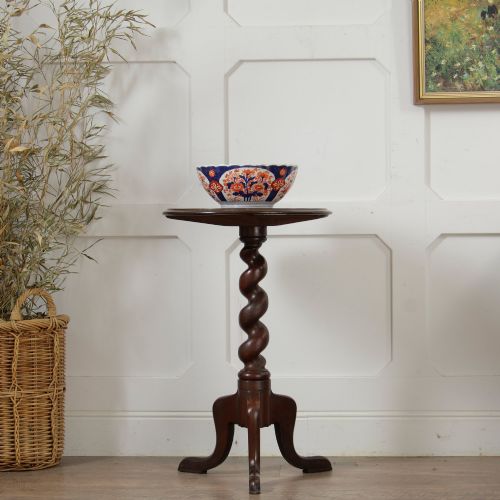


Small Round Walnut Table
A small round walnut table brings warmth and compact utility to a room, offering surface space for a lamp or glass without dominating the floor.
Small Round Walnut Table
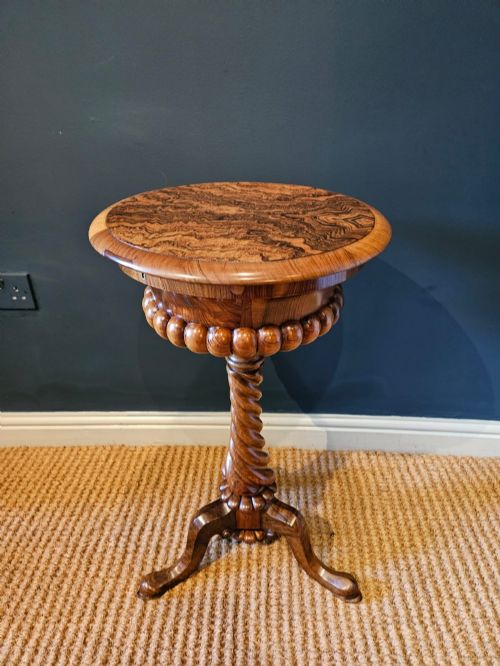
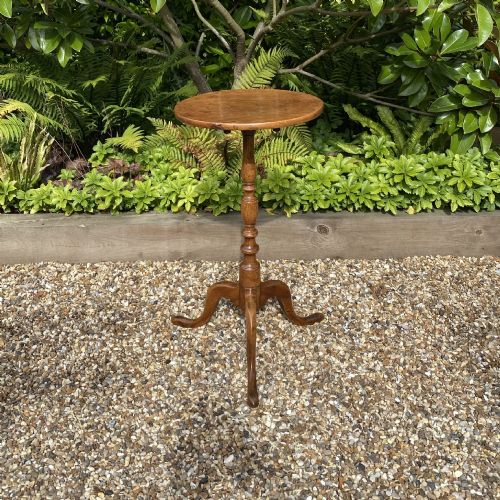
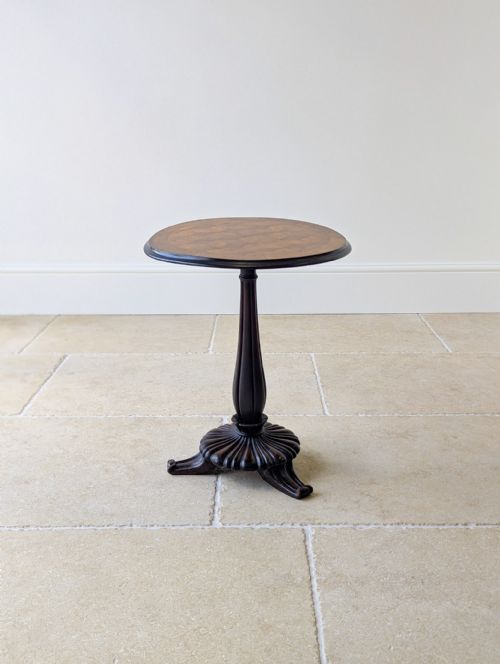
A small round walnut table typically appears as an occasional, wine, or tripod table designed to stand beside seating or in a corner. These pieces span the eighteenth, nineteenth, and early twentieth centuries, drawing on Victorian, Georgian, and French styles such as Louis XVI and French Provincial.
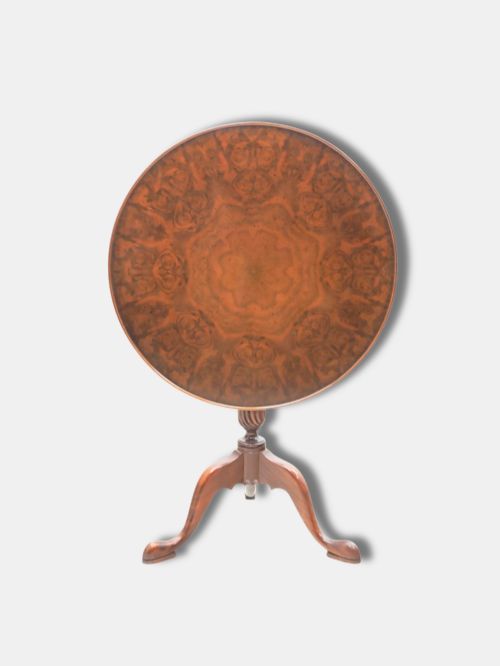
Forms include pedestal bases with barley twists, central columns supported by tripod legs, and low wine tables. Many examples incorporate round tops in plain walnut or burr walnut veneer, occasionally complemented by marble tops or marquetry inlay.
The historical record on this page shows British and French origins, ranging from formal Georgian designs to intimate Victorian display and tea tables. Buyers encounter diverse proportions, from tall wine tables to low occasional surfaces.
Materials and construction methods
Carpenters utilised solid walnut and burr walnut veneer over secondary woods, often selecting timber with rich grain patterns for the circular tops. Marquetry inlay adds geometric or floral decoration to the surface on select examples.
Structural variety includes turned pedestal shafts, tripod legs, and barley twist columns that provide stability for the small top. In French pieces, inset marble slabs replace wooden surfaces, while brass details occasionally appear on mounts or gallery edges.
Small Round Walnut Table Retail Price Guide 2026
Typical asking prices for small round walnut table among the pieces listed under this phrase on Sellingantiques today, from the lower quarter to the upper quarter. They describe what is for sale here now, not the wider market.
Occasional tables and wine tables dominate the forms, alongside French bouillotte and gueridon designs.
Distinctions in quality
Quality rests on the selection of the timber, particularly where burr walnut veneer or intricate marquetry inlay creates visual depth across the top. Grain matching and the crispness of turned pedestal elements or carved tripod legs separate standard production from finer cabinet work.
The integrity of the structural joints where the top meets the central column and where legs join the shaft determines the stability of the piece over time. Surface finishing that retains the natural warmth of the walnut without excessive intervention preserves the character of the wood.
The Small Round Walnut Table Glossary
- Burr walnut
- A type of wood figure taken from the wart or burl of a walnut tree, highly prized for its swirling, organic patterns. Cabinet makers frequently utilised burr walnut as a veneer on tabletop surfaces.
- Tripod table
- A small freestanding table supported by a central pillar resting on three legs. This design became popular in the eighteenth century and persisted through the Victorian era for occasional use.
- Wine table
- A small, low-standing occasional table originally intended to hold a glass and bottle of wine beside a chair. They feature circular tops and portable proportions.
- Marquetry
- The art of applying pieces of veneer to a structure to form decorative patterns or pictures. Craftsmen used contrasting woods to create detailed geometric or floral designs on tabletops.
- Bouillotte table
- A French neoclassical circular occasional table featuring a raised gallery edge to prevent items from sliding. These tables frequently incorporate marble tops and brass details.
Small Round Walnut Table: Frequently Asked Questions
How do I use a wine table today?
These tables fit easily beside armchairs or sofas as a convenient surface for a reading lamp or cup. Their compact footprint also suits empty corners that require a small decorative accent.
Because the tops are circular and modest in scale, they work best for single items rather than heavy groupings. Moving them between rooms is straightforward due to their light construction.
What is the difference between occasional and wine tables?
Wine tables generally feature smaller, higher tops designed specifically for holding a drink or small accessory near a seat. Occasional tables encompass a broader range of heights and top diameters for general placement.
Both forms share the characteristic round top and support structure, but occasional tables often serve display or tea functions as well.
How do I care for a walnut surface?
Keep walnut furniture away from direct heat sources and strong sunlight to prevent the timber and veneer from drying out or fading. Dusting regularly with a soft, dry cloth maintains the finish without needing harsh polishes.
Using coasters helps protect the polish from moisture rings left by glasses or vases.
How can I tell a Victorian piece from an earlier one?
Eighteenth-century examples like George II designs often exhibit restrained proportions and specific timber choices native to their period of construction. Victorian pieces frequently employ bolder turning, such as barley twists, or elaborate burr walnut veneers.
Examining the underside of the top and the joinery of the pedestal provides further clues regarding the era of manufacture.