


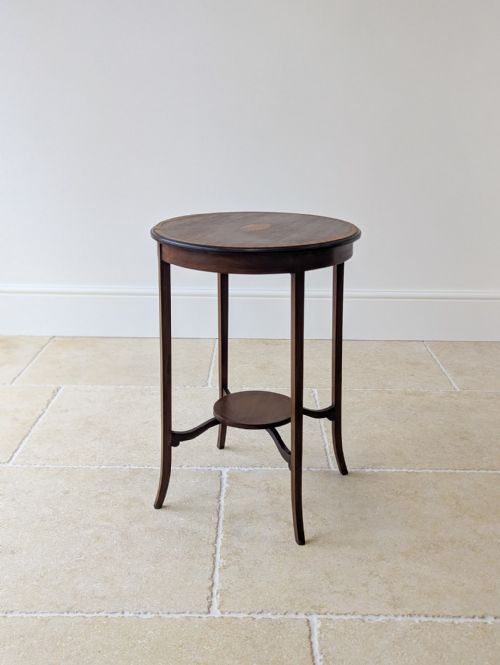

Small Round Mahogany Table
A small round mahogany table offers a steady surface and rich timber grain, serving as a versatile spot for a lamp or a glass.
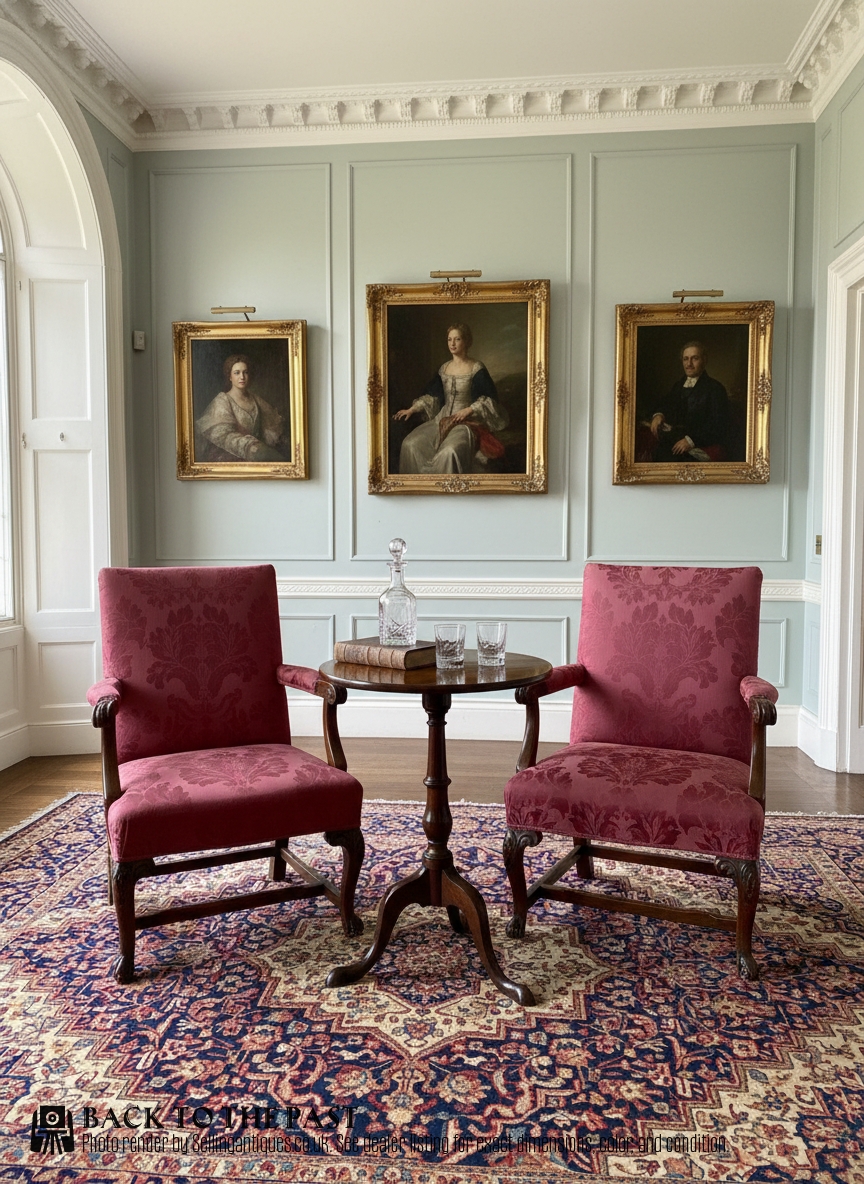
Small Round Mahogany Table
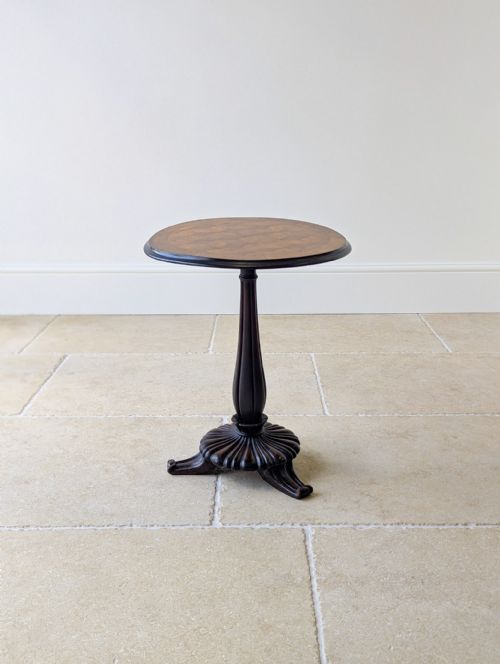
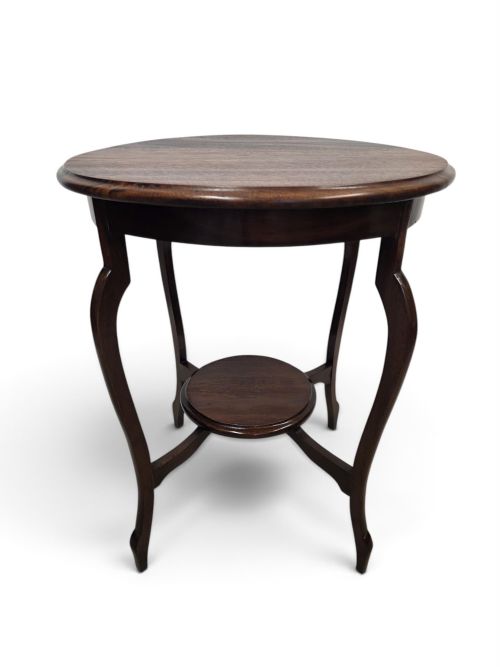
When you search for a small round mahogany table, you are looking at circular timber furnishings designed for occasional use, such as wine tables, side tables, lamp stands and compact pedestal forms. These pieces appear across several periods including the Georgian, Regency, Victorian and Edwardian eras, as well as later revival styles.
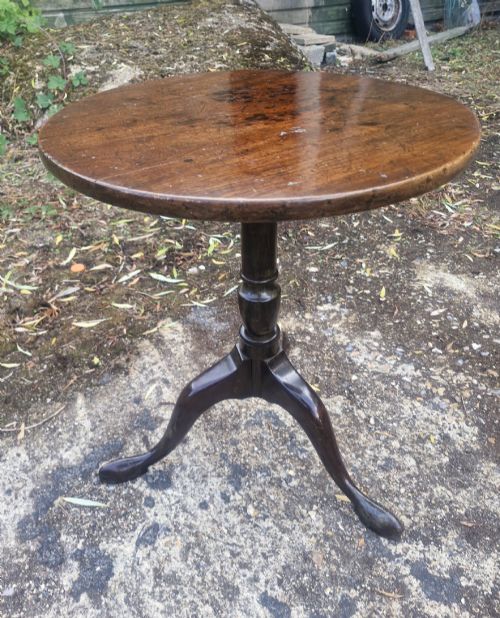
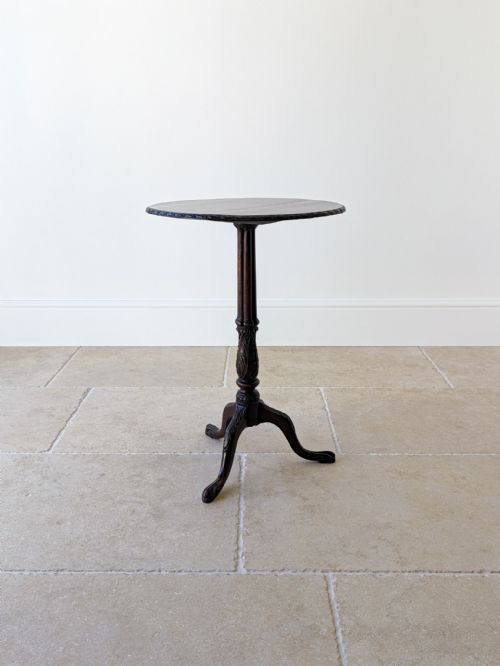
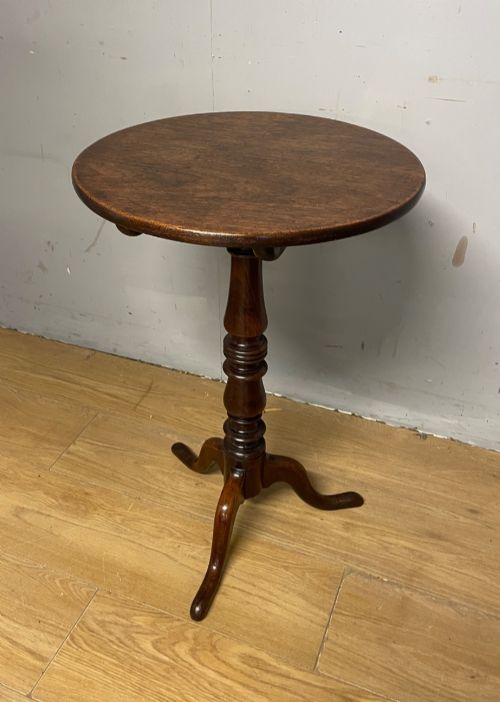
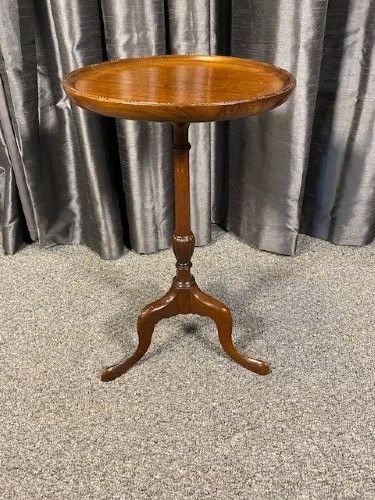
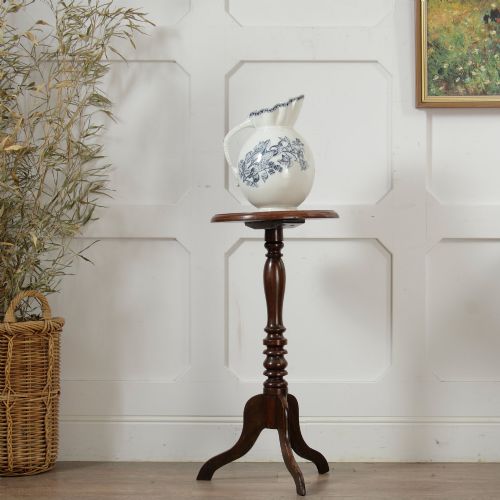
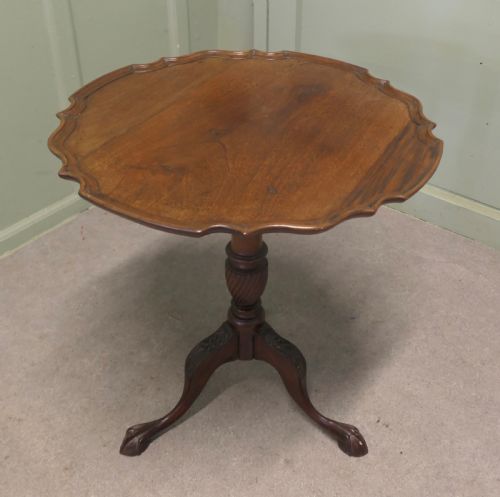
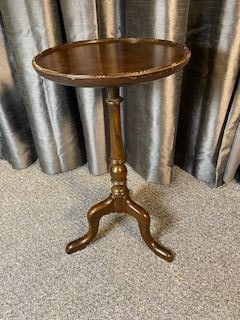
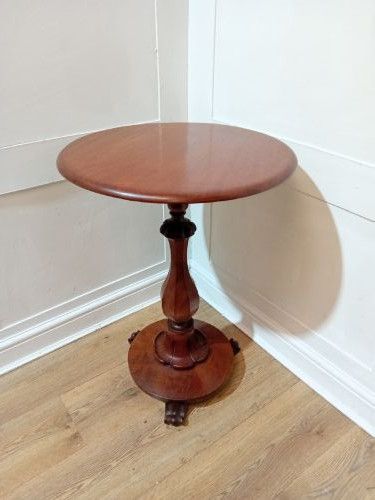
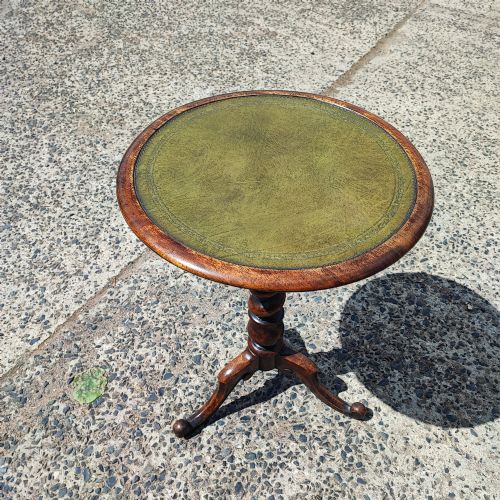
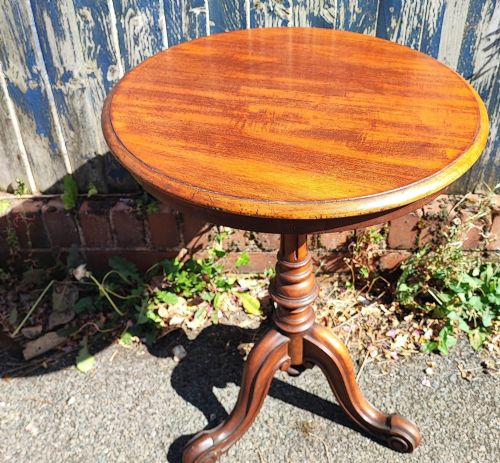
The version you are most likely to meet on this page is the tripod wine table or pedestal occasional table resting on a central column with three splayed legs. These tables frequently feature circular tops, sometimes with tilt mechanisms or raised dish edges, suited for placement beside a chair or in a hallway.
How they were made
Cabinet makers constructed these tables primarily using mahogany timber, occasionally incorporating secondary woods, satinwood, or boxwood stringing for inlay work. Turning lathes shaped the central pedestals and barley twist columns, while hand saws and chisels formed the tripod legs and joints.
Surfaces received careful smoothing and polishing to bring out the natural grain and deep red-brown colour of the mahogany. Some examples include brass fittings, leather inserts, or painted top details, reflecting the specific stylistic preferences of their period of manufacture.
Small Round Mahogany Table Retail Price Guide 2026
Typical asking prices for small round mahogany table among the pieces listed under this phrase on Sellingantiques today, from the lower quarter to the upper quarter. They describe what is for sale here now, not the wider market.
Materials appearing across these tables include solid mahogany, walnut, satinwood, brass fittings and leather table inserts.
What varies in quality
The quality of a small round mahogany table depends upon the selection of timber figures and the crispness of the carving on the pedestal base and legs. Finer examples display well-matched grain patterns on the circular top and robust, integrated joinery where the legs meet the central column.
Proportion and stability separate the better pieces from standard production work. A well-balanced table stands firmly on its tripod base without wobble, possessing neatly turned elements and subtle decorative touches such as pie crust edges or fine string inlay.
Waring & Gillow
The Small Round Mahogany Table Glossary
- Tripod table
- A small table supported by a central pillar resting on three legs. This construction prevents rocking on uneven floors.
- Tilt top
- A tabletop hinged to the pedestal so it can pivot vertically. This allowed tables to be stored flat against a wall when not in use.
- Dish top
- A circular tabletop with a raised rim carved directly from the solid timber. It prevented items from sliding off the surface.
- Barley twist
- A type of turning that resembles a spiralling rope. It appears frequently on the stems of Victorian pedestals.
- Pie crust edge
- A decorative carved moulding around the perimeter of a tabletop resembling the crimped edge of pastry. This detail is often associated with Georgian and revival pieces.
Small Round Mahogany Table: Frequently Asked Questions
What were small round mahogany tables used for?
These tables served primarily as movable stands for holding wine glasses, candles or tea service items during the evening. Their compact footprint allowed servants to place them conveniently beside seated guests in a drawing room.
Over time, owners adapted them to hold table lamps, books or decorative ornaments in various rooms of the house. Today, they continue to function well as flexible surfaces beside armchairs or sofas.
How do I tell a Georgian table from a Victorian one?
Georgian tables, dating from the eighteenth century into the early nineteenth century, tend to show restrained classical proportions and clean joinery. Their timber often exhibits a rich, deep patina developed over many decades of use.
Victorian and later revival pieces from the nineteenth and early twentieth centuries sometimes feature heavier turned supports, such as barley twist columns, or decorative inlays like satinwood and boxwood stringing. Examining the construction underneath often reveals the transition from hand-sawn components to machine-assisted manufacturing.
Are tilt top tables stable?
A well-made tilt top table remains stable when the catch mechanism beneath the top engages securely with the central block. The weight of the solid mahogany top keeps it resting evenly upon the pillar during normal use.
Over long periods, the wooden mechanisms can develop minor wear, so testing the pivot and the wedge catch ensures the top sits flat and firm without unnecessary movement.
Where should I place a round occasional table?
A round occasional table fits naturally into corners, beside seating arrangements, or in narrow hallways where a rectangular piece might obstruct movement. Its circular shape softens the linear geometry of walls and larger furniture.
Because these pieces have small diameters, they work effectively to hold a single reading lamp or a small plant without dominating the floor space of a room.