
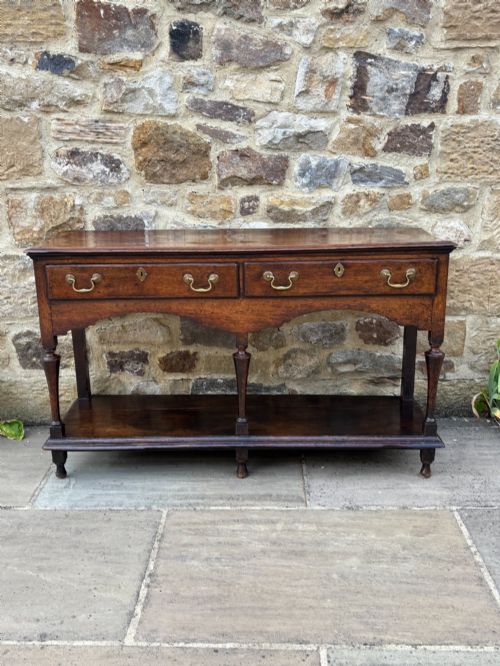
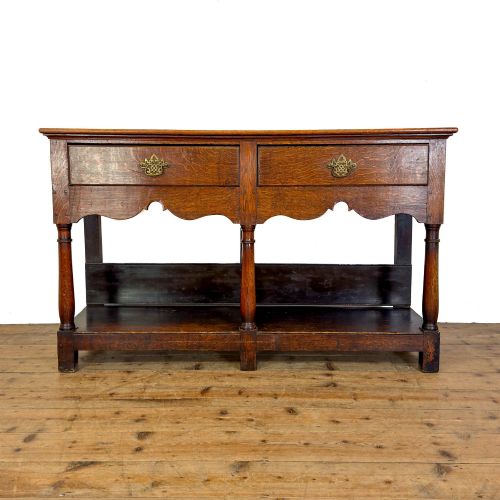
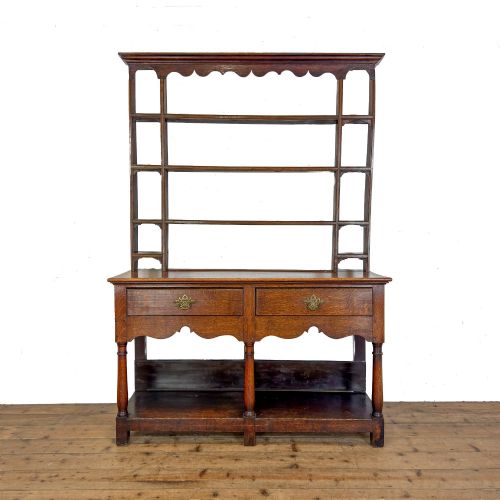


Small Oak Welsh Dresser
A small oak welsh dresser brings centuries of regional utility and warm timber grain into a modern dining space.
Small Oak Welsh Dresser
A small oak welsh dresser combines a lower storage cabinet with an upper plate rack, designed for domestic display and utility in vernacular homes. These pieces serve as functional focal points in kitchens or dining rooms, offering surface area and shelving while maintaining modest proportions suitable for compact interiors.
The versions met most frequently on this page date from the eighteenth and nineteenth centuries, including Georgian and Victorian periods. Pieces range from open potboard bases to complete two-part high dressers, featuring regional styles linked to Welsh country workshops.
Makers constructed these items to hold tableware, ceramics and provisions, utilising local timbers available in rural areas. Surviving examples reflect the practical needs of past households through pegged joints, boarded backs and surface wear accumulated over generations.
Materials and Construction Methods
Craftsmen built these dressers primarily from solid oak, supplemented occasionally by pine, ash, yew and iron hardware. Timber was quarter-sawn or plain-sawn by hand, yielding boards with varied grain patterns that responded differently to seasonal humidity.
Joinery relied on traditional pegged mortise and tenon frames, hand-cut dovetails for drawer construction and iron butterfly hinges or brass pulls. Potboard bases and high racks were joined structurally without modern adhesives, allowing the wood to move naturally over decades of use.
Many antique dressers still retain distinct spoon racks tucked beneath the plate shelves, built specifically to keep family silver from rolling away during dinner.
Factors That Distinguish Quality
Proportion and scale dictate the visual success of a smaller dresser, where balanced dimensions between the lower base and upper rack show the eye of the original regional carpenter. Untouched surface patination, developed through decades of polishing and handling, separates untouched vernacular surfaces from over-restored timber.
The integrity of regional construction, such as original potboards, joined backboards and unaltered brass or iron furniture, defines the standing of an individual piece. Lesser examples often feature replaced boards, altered rack heights or unsympathetic modern stripping that removes the historical skin of the wood.
The Small Oak Welsh Dresser Glossary
- Potboard
- An open lower shelf beneath a dresser base, traditionally used for storing pots and heavy domestic utensils. This platform sits just above the floor on stile feet.
- Cwpwrdd Tridarn
- A traditional Welsh three-part enclosed cupboard, featuring a middle section flanked by small doors and an upper canopy. These regional forms represent the most complex tier of vernacular case furniture.
- Dresser Base
- The lower portion of a dresser, functioning independently as a sideboard or serving table without an attached plate rack. Many surviving examples began life paired with racks that did not survive.
- Rack
- The upper shelving unit fixed above a dresser base, designed with plate grooves and retaining rails to display ceramics safely. Racks are often detachable from the base unit.
- Vernacular
- Furniture made by local country joiners using regional traditions rather than urban pattern books. These pieces prioritize practical utility and local timber availability over academic style.
Small Oak Welsh Dresser: Frequently Asked Questions
What is a small oak welsh dresser?
A small oak welsh dresser is a traditional regional storage unit comprising a lower cabinet or potboard base and an upper display rack. These items were made in rural communities to store and display domestic tableware.
Compact dimensions allow these dressers to fit easily into modern kitchens and dining rooms without dominating the floor space. They provide practical surface area alongside traditional open shelving.
How were these dressers used historically?
Households utilised the lower cupboards for storing heavy pots, pans and dry provisions, while the upper racks displayed ceramic plates and mugs. The surfaces served as working areas for food preparation and serving.
Over time, these pieces transitioned from hard-working farmhouse utilities into decorative focal points for displaying collections of pottery and glass in domestic interiors.
How do I care for antique oak furniture?
Maintain antique oak by keeping it away from direct heat sources and sudden humidity changes that cause timber to split. Apply occasional traditional beeswax to nourish the dry wood and preserve the surface sheen.
Avoid silicone-based sprays or modern polishes that build up sticky residues over the historical patination. Gentle dusting with a soft, dry cloth is sufficient for daily maintenance.
How can I tell an eighteenth-century dresser from a later one?
Eighteenth-century examples display hand-sawn timber marks, pegged mortise and tenon joinery, and hand-cut dovetails in the drawer construction. The backboards are typically wider, uneven planks secured with handmade iron nails.
Later Victorian and twentieth-century interpretations often feature machine-sawn timber, standardised components and different fastener types. Surface patination on earlier pieces shows deeper, accumulated wear distinct from newer finishes.