

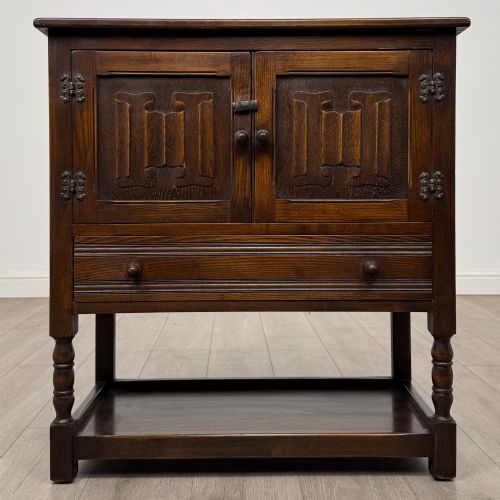


Small Oak Server
A small oak server is a compact dining room piece offering surface serving space and storage, prized for both practical utility and timber warmth.
Small Oak Server
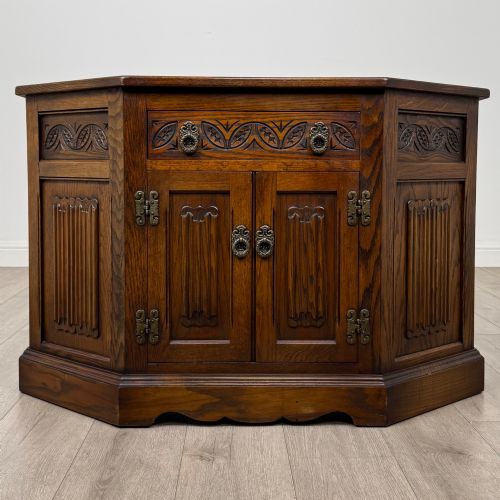
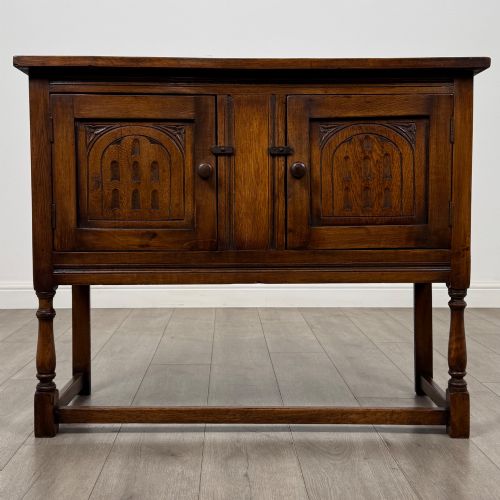
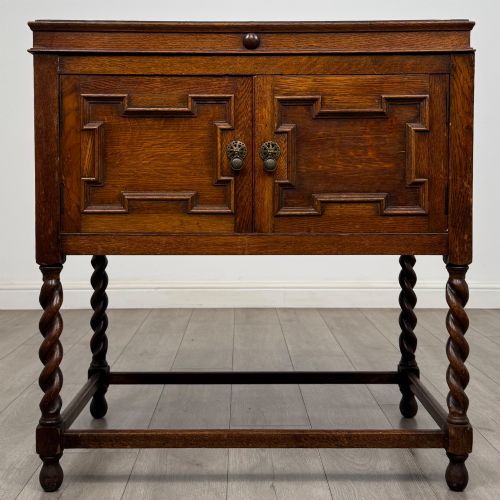
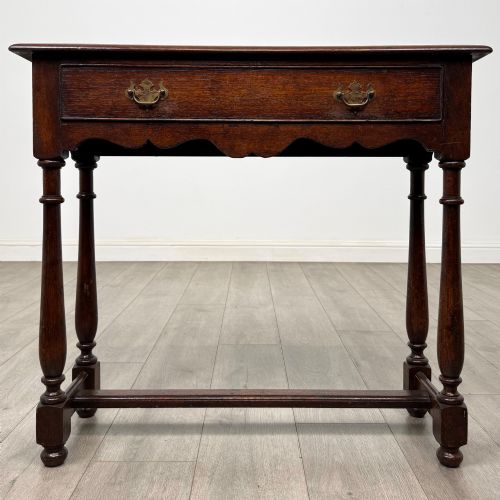
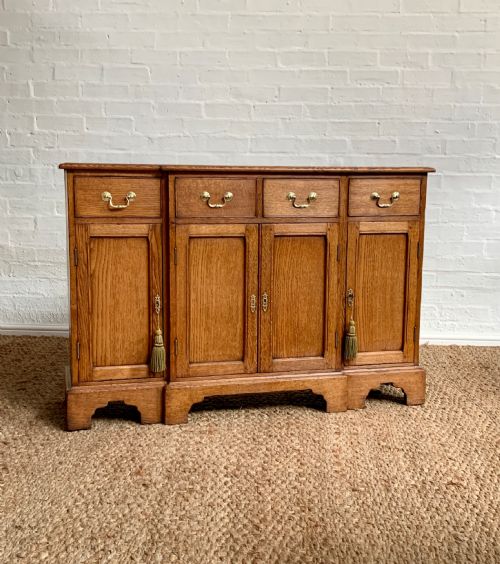
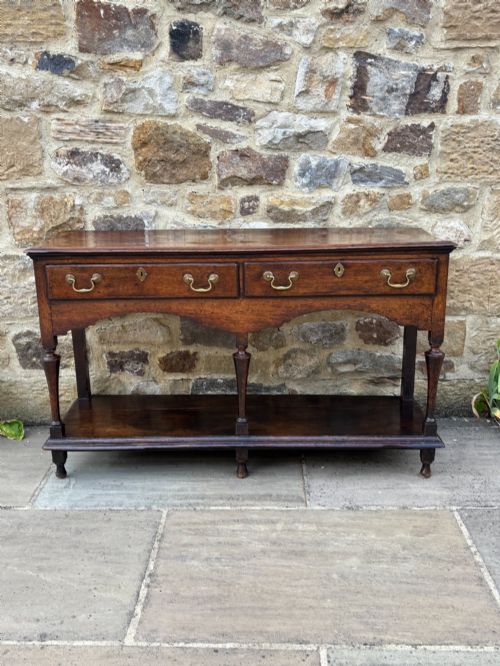
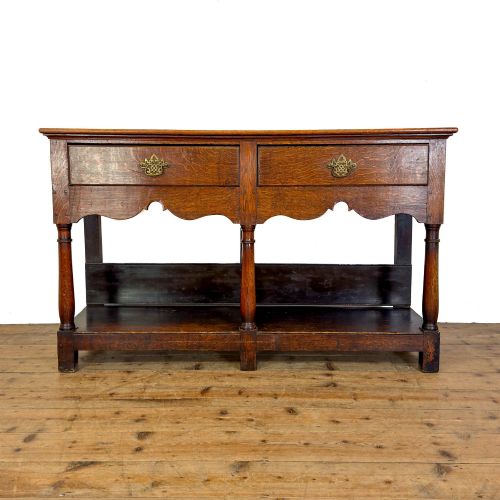
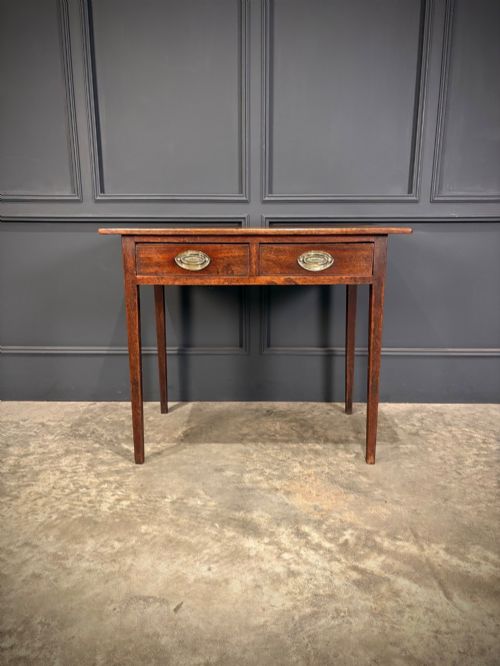
When you search for a small oak server, you encounter compact sideboards, dresser bases, side tables, and small cupboards designed for domestic utility. These forms provide practical surface space and enclosed storage without dominating a room.
The pieces on this page span several centuries and movements, ranging from seventeenth century style and Georgian country pieces to Edwardian linenfold cupboards and early twentieth century limed oak productions. The selection includes regional variations such as Welsh country furniture alongside revival styles.
While the primary material is oak, you also find pieces featuring mahogany, brass, and iron hardware. These servers function equally well in modern dining spaces and traditional hallways as compact storage units.
How they were made
Carpenters constructed these servers using solid oak boards, frequently incorporating brass handles, hinges, and iron fittings. Timber preparation involved traditional sawing and joining methods suited to the demands of domestic furniture.
Surface treatments vary from natural waxed finishes and dark polished oak to limed surfaces and period linenfold carving. Structural assembly relies on panel construction and jointing techniques appropriate to the period of manufacture.
Materials documented across the inventory comprise oak, limed oak, mahogany, brass, and iron.
What varies in quality
Quality in a small oak server rests on the selection of the timber and the crispness of any carved detailing, such as Jacobean revival motifs or linenfold panels. Well executed proportions and solid timber thickness distinguish finer workshops from mass produced alternatives.
The integrity of original brass or iron hardware and the smoothness of drawer and door operations further define the standard of execution. Consideration of the period style, whether 18th century Georgian or early 20th century Arts and Crafts, reveals the makers' adherence to traditional craft.
Heals of London
The Small Oak Server Glossary
- Dresser base
- A low cabinet featuring drawers or cupboards, historically used in kitchens and dining rooms for serving food and storing tableware.
- Court cupboard
- A compact enclosed cupboard originating in the Tudor and Jacobean periods, often featuring upper and lower tiers for display and storage.
- Linenfold
- A style of carved wooden panelling that resembles folded vertical lengths of fabric, commonly found on Tudor and Edwardian oak furniture.
- Limed oak
- A finishing technique applied to oak where a white pigment fills the open grain, popularised during the early twentieth century by firms like Heals of London.
- Potboard
- An open slatted lower shelf beneath a dresser base traditionally used for storing pots and serving vessels.
Small Oak Server: Frequently Asked Questions
Where does a small oak server work best?
These compact servers fit easily into dining rooms, kitchens, or hallways where floor space is limited. Their surfaces provide convenient areas for serving food or displaying decorative objects.
Enclosed cupboards and drawers below offer practical storage for tableware, linens, or household items without cluttering the room.
How do I date an oak server?
Dating relies on observing construction methods, timber characteristics, and stylistic details such as hardware and carving. 17th and 18th century examples display hand tool marks and pegged joints.
Later Victorian and Edwardian pieces often incorporate revival styles, including Jacobean or Gothic motifs, alongside machine sawn timbers.
What is a dresser base server?
A dresser base server is the lower portion of a traditional dresser, built without the upper plate rack. It typically combines drawers and cupboards in a low sideboard format.
These pieces were originally utilised in country homes for food preparation and storage, and today they function as versatile sideboards.
Are these servers made of solid oak?
The listings feature pieces constructed from solid oak, alongside variations in limed oak and related secondary timbers. The primary material provides durability and a distinctive grain pattern.
Hardware components such as hinges and pulls utilise brass and iron, contributing to the structural and decorative integrity of each piece.