
Small Mahogany Side Cabinet
When you search for a small mahogany side cabinet, you enter a diverse tradition of compact storage spanning Georgian elegance to Edwardian utility.
Small Mahogany Side Cabinet
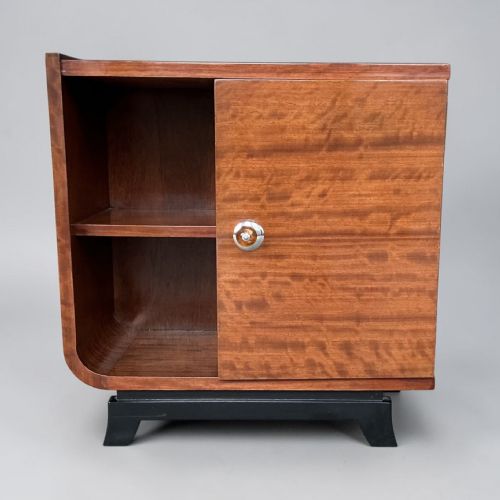
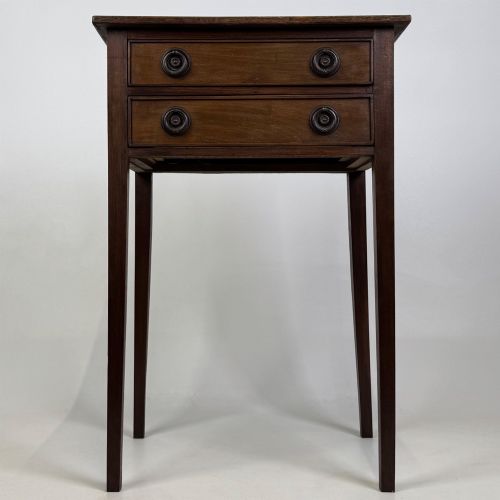
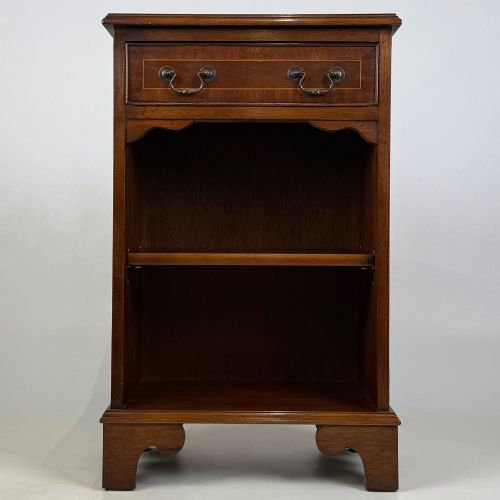
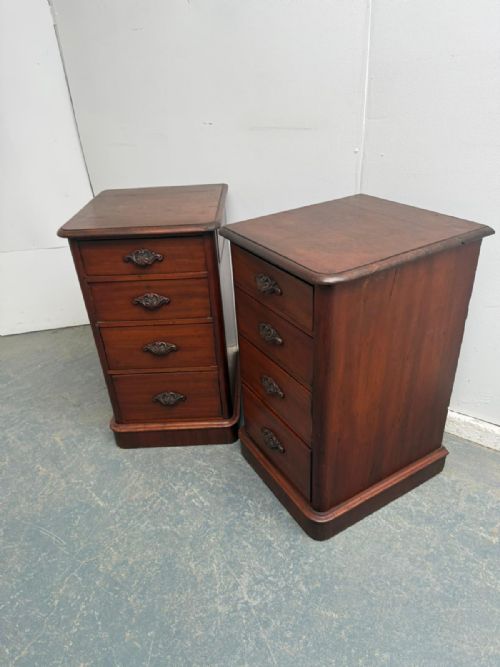
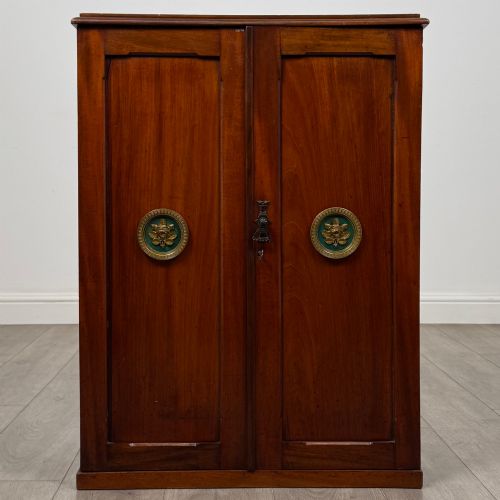
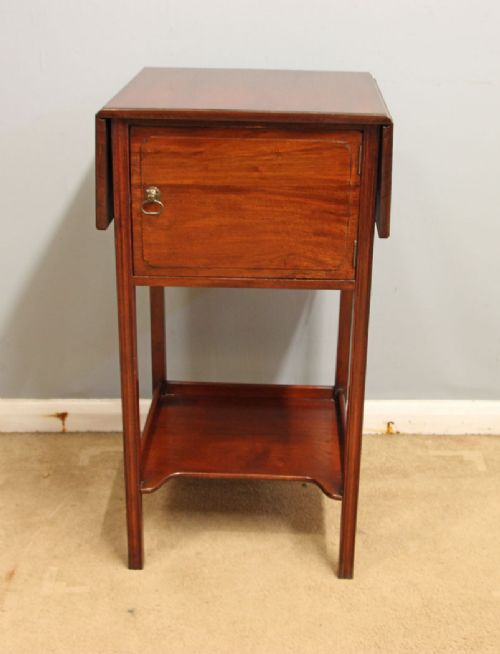
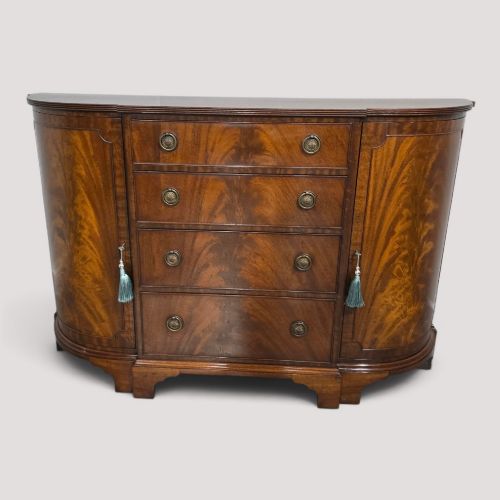
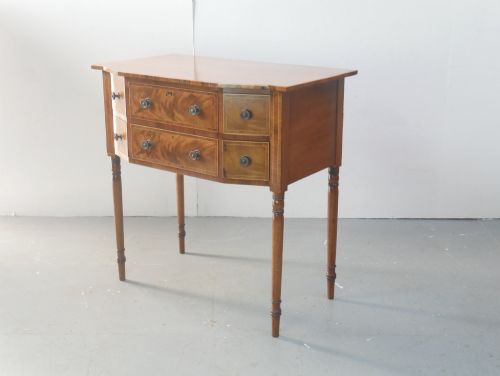
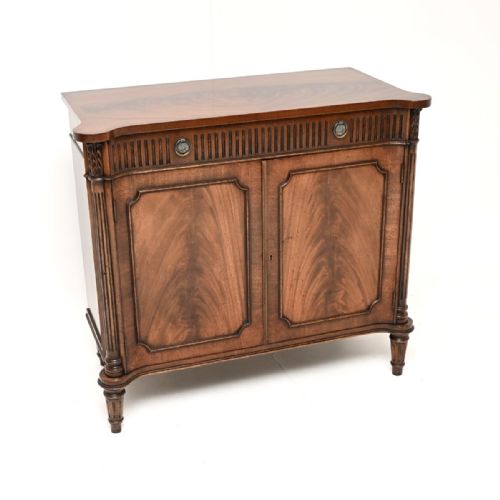
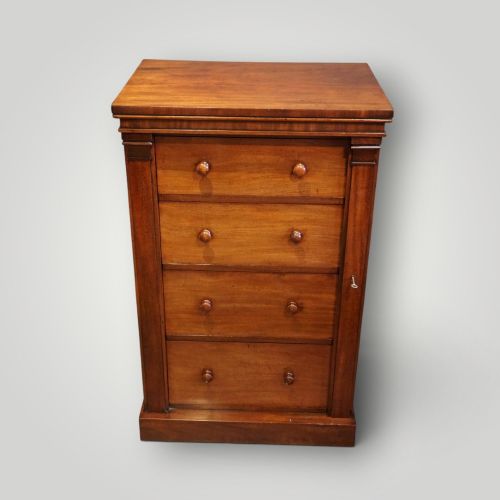
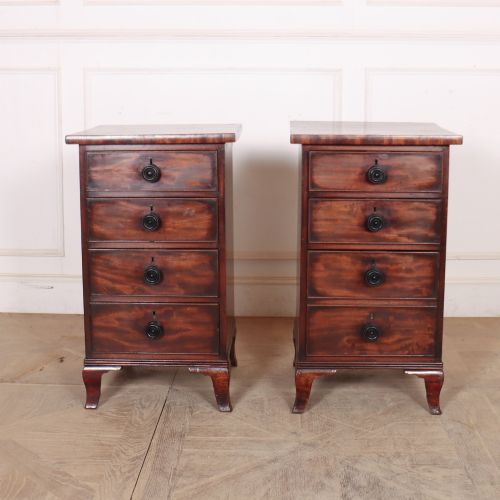
A small mahogany side cabinet is a versatile piece of compact furniture designed for storage and display across the home. Buyers searching this phrase meet an array of forms, including bedside cupboards, chiffoniers, narrow display units, and small chests dating from the Georgian, Victorian, and Edwardian periods.
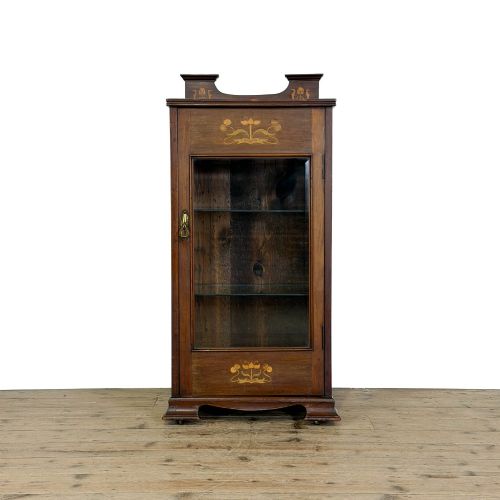
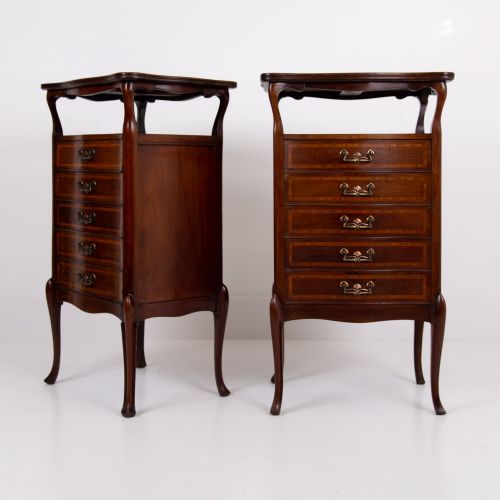
The pieces listed on this page reflect domestic needs from the eighteenth century through to the early twentieth century. Common variations include drop-leaf tables, music cabinets, and small cupboards featuring drawers or glazed doors tailored for restricted spaces.
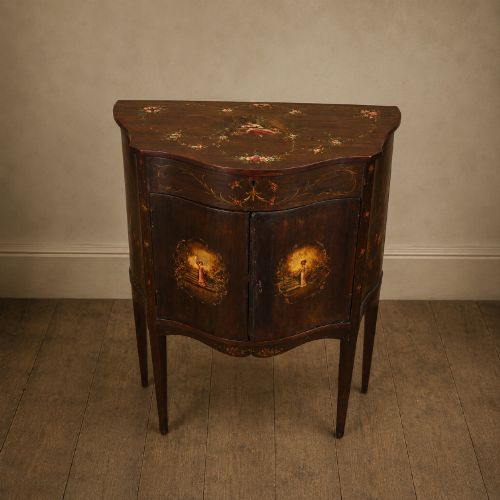
Origins span English, French, and Dutch workshops, offering styles ranging from austere Regency lines to inlaid Edwardian and Sheraton Revival aesthetics. The selection focuses heavily on timber constructions scaled for intimate rooms rather than grand reception halls.
How they were made
Cabinetmakers utilised solid mahogany and figured mahogany veneers applied to secondary timbers to build these compact carcasses. Grain selection dictated the visual warmth of the timber, often enhanced through wax polishing or French polishing.
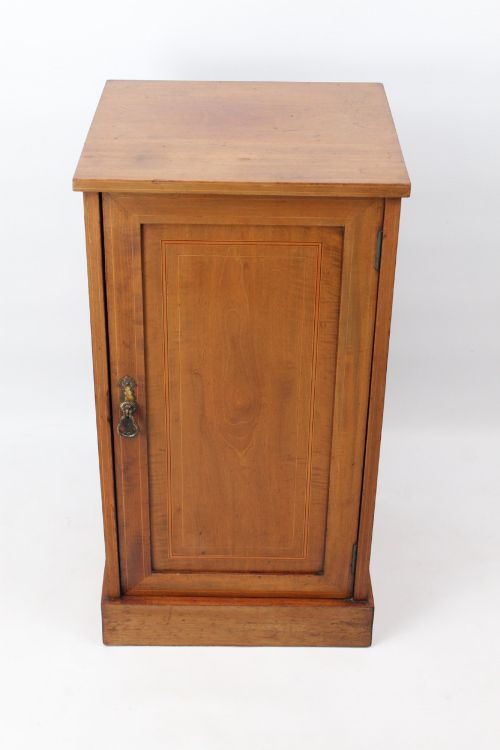
Decorative detailing incorporated contrasting stringing and inlays of satinwood, boxwood, and ebonised wood. Hardware commonly included cast brass handles, escutcheons, and occasional gilt fittings or marble tops.
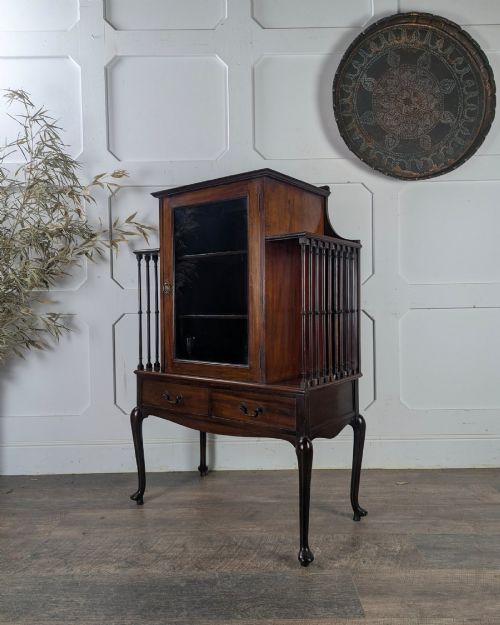
Glazing with glass panels appeared on display and bookcase variants, whilst specialised pieces integrated velvet or leather linings within drawers and writing surfaces.
Listings feature mahogany cabinets spanning the Georgian, Victorian, and Edwardian periods, constructed with brass, glass, satinwood, and boxwood details.
What varies in quality
The standard of a small mahogany side cabinet rests upon the choice of timber and the precision of its construction. Pieces displaying finely figured mahogany veneers and careful matching of the grain patterns across drawer fronts demonstrate greater workshop ambition.
Secondary detailing dictates the grade of the piece, from hand-cut dovetail joints in the drawers to the subtlety of inlaid satinwood or boxwood stringing. Well-executed carving, reeded pilasters, and original brass hardware elevate the standing of the cabinet.
Proportion and structural integrity separate everyday utility items from finer examples. Balanced scaling, neat turning on legs, and tight door fitments indicate careful domestic commissioning rather than mass production.
Gillows·Maple and Co·Liberty and Co·Whytock and Reid
The Small Mahogany Side Cabinet Glossary
- Chiffonier
- A low sideboard or small cabinet developed in the nineteenth century, typically featuring shelves or drawers beneath a tiered superstructure.
- Dovetail
- A joint used in drawer construction formed by interlocking wedge-shaped fingers, prized for its mechanical strength and durability.
- Ebonised
- Wood treated with a dark stain or finish to imitate ebony, frequently utilised for contrast on nineteenth-century mouldings and handles.
- Serpentine
- A curved furniture front characterised by a convex centre flanked by concave sides, demanding advanced woodworking skill.
- Stringing
- Thin inlay lines of contrasting light or dark wood used to outline drawer edges and cabinet doors in revival styles.
Small Mahogany Side Cabinet: Frequently Asked Questions
How were these cabinets used historically?
These cabinets served varied functions across the home, acting as bedside tables, music cabinets, or small serving surfaces in dining and living rooms. Their compact proportions made them ideal for stashing papers, linens, or personal belongings out of sight.
In bedrooms they held night-time essentials, whilst parlour variants often incorporated glass doors to showcase small decorative objects and books.
How do I date a mahogany cabinet?
Dating relies on observing structural characteristics, hardware styles, and decorative motifs associated with specific periods like the Georgian, Victorian, or Edwardian eras. Regency pieces often display classical reeding and brass fittings, while Edwardian examples frequently feature delicate stringing and light inlay.
Secondary woods inside drawers and the method of construction also provide clues to the age, distinguishing eighteenth-century dovetails from later machine-cut equivalents.
How do I care for mahogany furniture?
Mahogany furniture benefits from stable indoor humidity and protection from direct sunlight to prevent the timber and polished finishes from fading or drying out. Regular dusting with a soft, dry cloth maintains the surface sheen without the need for heavy silicones.
Application of traditional beeswax can nourish the timber periodically, preserving the depth of the grain and the rich colour of the wood.