
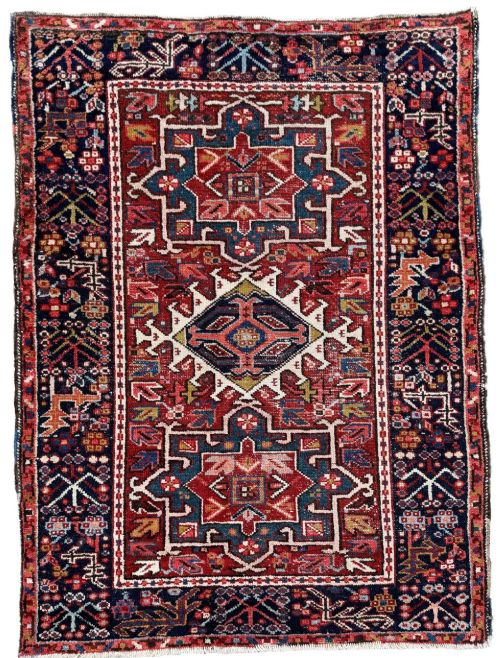
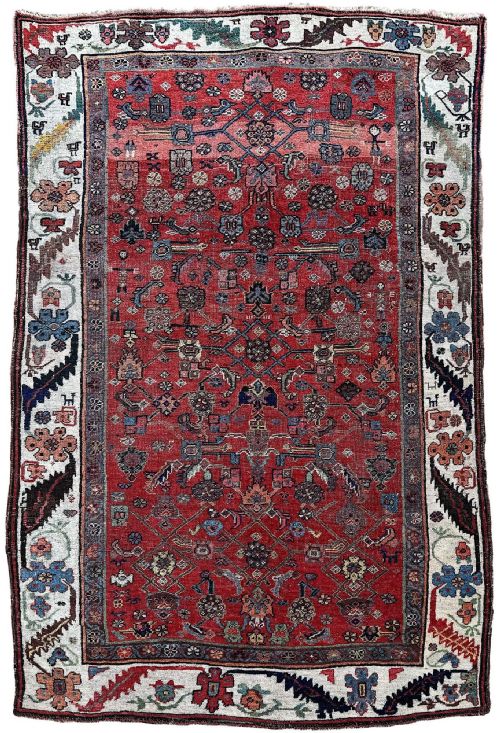
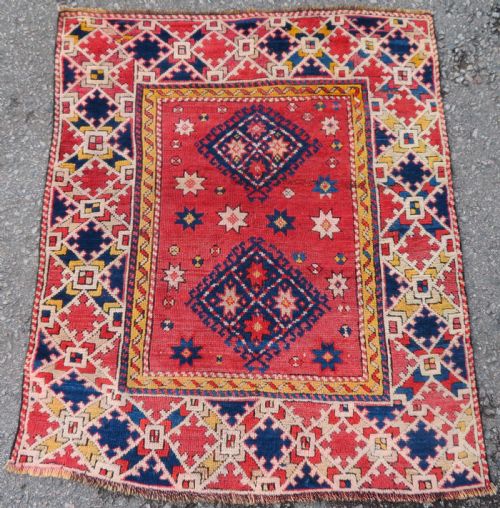
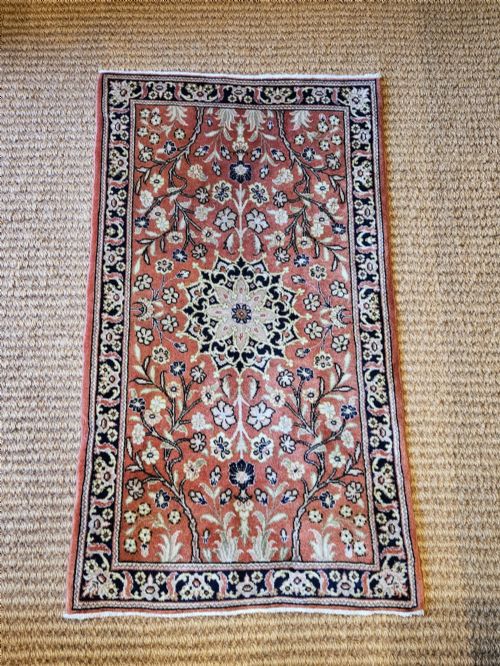
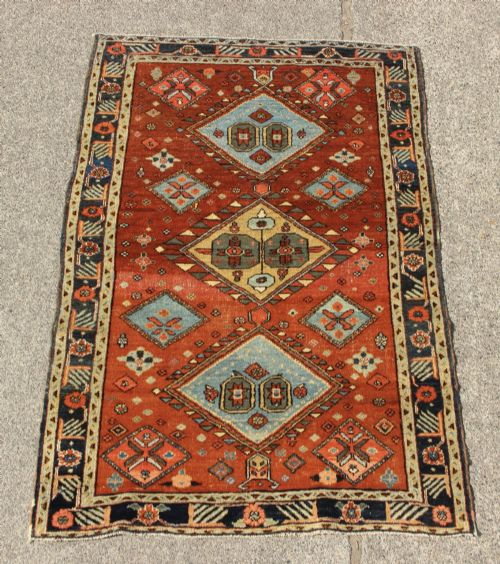
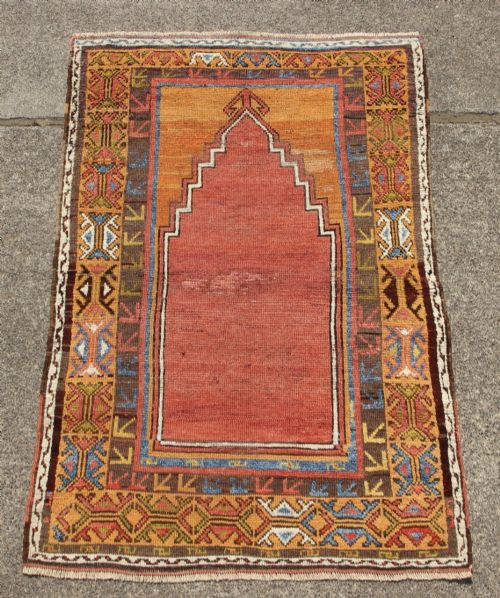

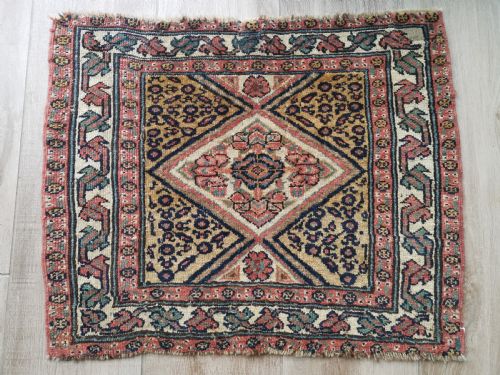
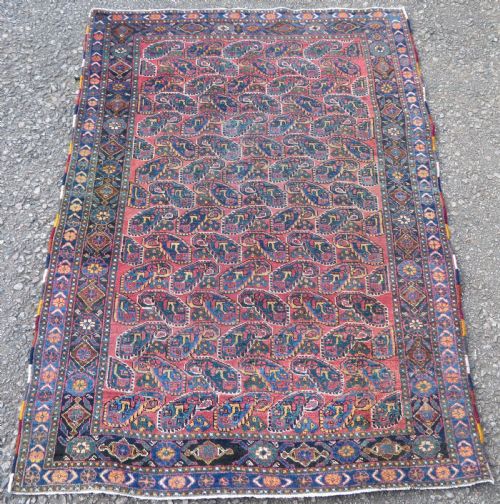
Small Hand Knotted Rug
A small hand knotted rug brings centuries of village craftsmanship and dense wool into a room with striking presence.
Small Hand Knotted Rug
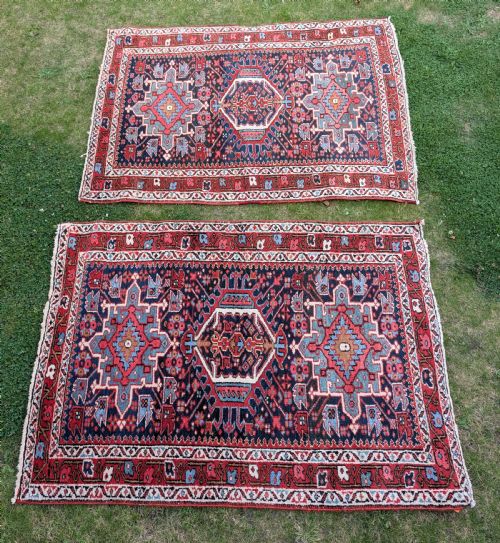
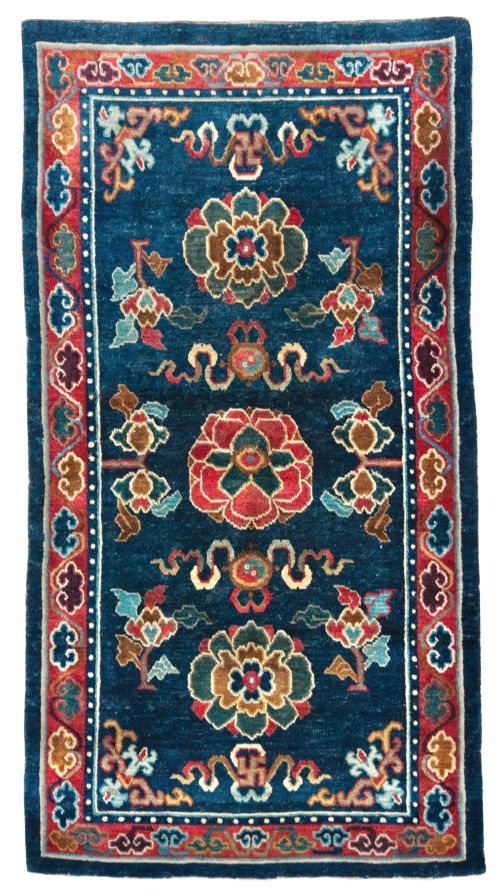
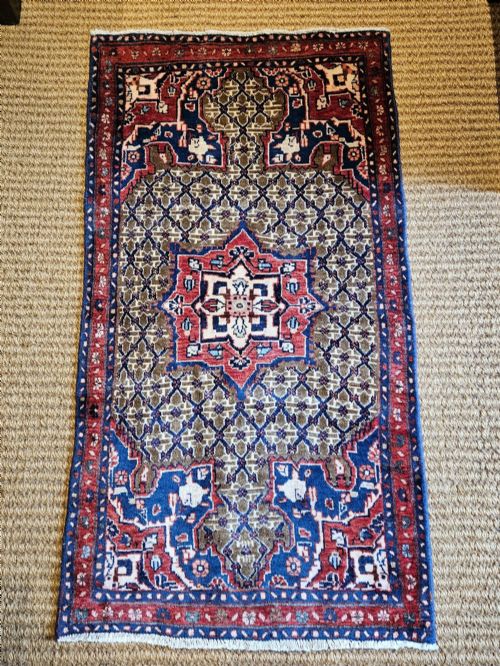
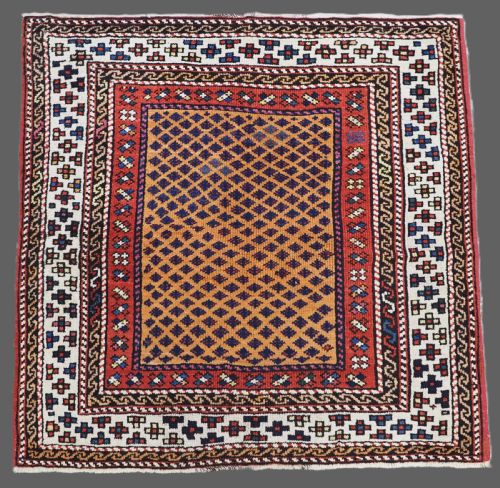
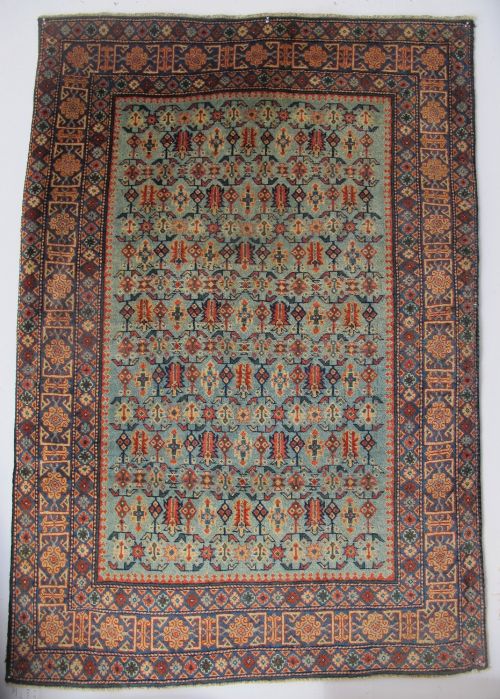
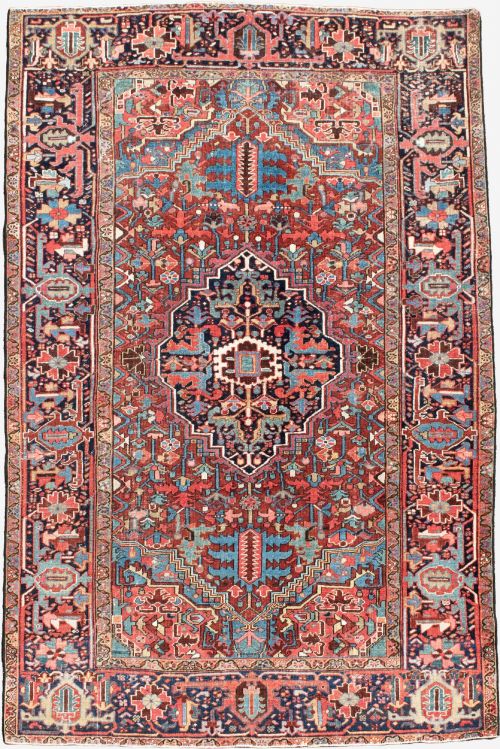
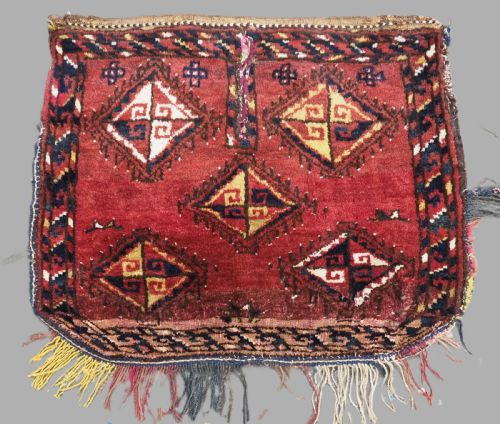
When searching for a small hand knotted rug, a buyer looks at floor coverings and textile pieces produced across Persia, Anatolia, the Caucasus, and Central Asia. These items range from hearth-sized floor rugs and square formats to prayer formats, bagfaces, and tent door hangings.
The versions most likely to meet a browser on this page originate from tribal and village traditions dating between the mid-nineteenth century and the early twentieth century. Examples span specific regional groupings such as Karaja, Bidjar, Bergama, Heriz, Baluch, Afshar, Khamseh, and Oushak.
Many of these compact textiles serve functional roles in domestic spaces as mats, runners, and localized floor accents. Their dimensions suit smaller rooms, hallways, and focal points where full-sized carpets overwhelm the floor plan.
How they were made
The construction relies fundamentally on wool piles tied by hand onto cotton or wool foundations using precise knotting techniques. Artisans often utilised hand-spun wool, which absorbs dye with subtle variations across the surface.
Natural dyes provide the characteristic palette seen throughout these regional textiles, yielding deep reds, blues, and earth tones. The combination of durable fibre and vegetable colouring ensures that the pile ages with a softened texture.
Listings feature wool and cotton materials across periods spanning from the mid-nineteenth century up to 1930.
What varies in quality
Quality in these textiles rests upon the density of the knotting and the crispness of the geometric or floral design. Tighter foundations allow intricate motifs to remain sharp and hold their structure over decades of use.
The integrity of the wool pile and the balance of the natural dye palette dictate the visual impact of each piece. Variations arise from the skill of the individual weaver and the specific regional traditions governing the loom.
The Small Hand Knotted Rug Glossary
- Knot
- The individual loops of wool tied around the warp threads that form the pile of the rug. Higher knot counts often indicate finer weaving.
- Warp
- The stationary vertical strings stretched on the loom that carry the structural tension of the piece. The horizontal weft threads cross these to secure the weave.
- Prayer rug
- A textile featuring a distinct mihrab or arch design traditionally oriented toward Mecca during daily devotions. These formats often display specific regional iconography.
- Bagface
- The decorated front panel of a nomad's storage sack, removed and preserved as a small decorative mat. These pieces display concentrated tribal patterns.
- Natural dye
- Colouring matter derived from plants, insects, or minerals rather than synthetic chemicals. These dyes produce complex, muted tones that age gracefully.
Small Hand Knotted Rug: Frequently Asked Questions
Where were these small rugs made?
These pieces originate from weaving centres and nomadic tribes across Persia, Anatolia, the Caucasus, and Central Asia.
Specific towns and tribal groups like Bidjar, Heriz, Baluch, and Bergama each developed distinct design vocabularies and knotting styles.
How do I use a small rug at home?
Compact antique rugs suit entryways, hearths, small seating areas, or spaces beside a bed where a concentrated splash of colour is needed.
They also function effectively as wall hangings or table covers due to their manageable scale and intricate patterning.
What materials make up these rugs?
The pile consists predominantly of wool, frequently hand-spun to create varied texture and depth across the surface.
Foundations generally employ cotton or wool warps and wefts, dyed using natural plant and mineral colourants.
How can I tell different tribal designs apart?
Distinction relies on noting the specific geometry, border arrangements, and colour combinations characteristic of regions like the Caucasus or South Persia.
Motifs such as repeated medallions, lattices, and stylized animal or plant forms point directly to specific weaving communities.