
Small Georgian Drop Leaf
When you search for small georgian drop leaf, you are looking at clever timber tables designed to expand when needed and fold away compactly.
Small Georgian Drop Leaf
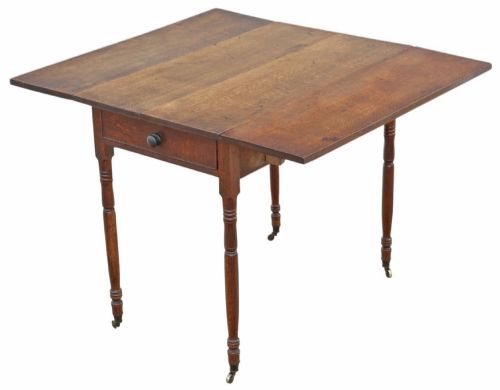
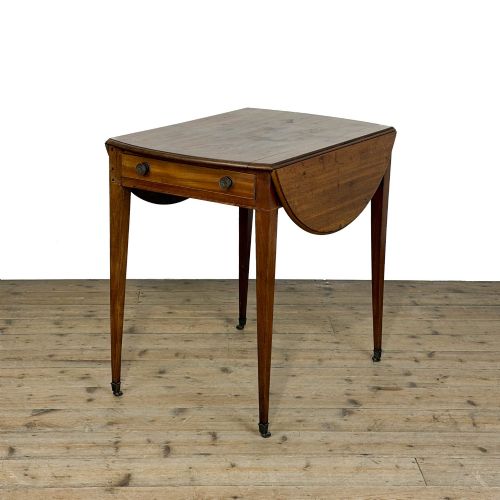
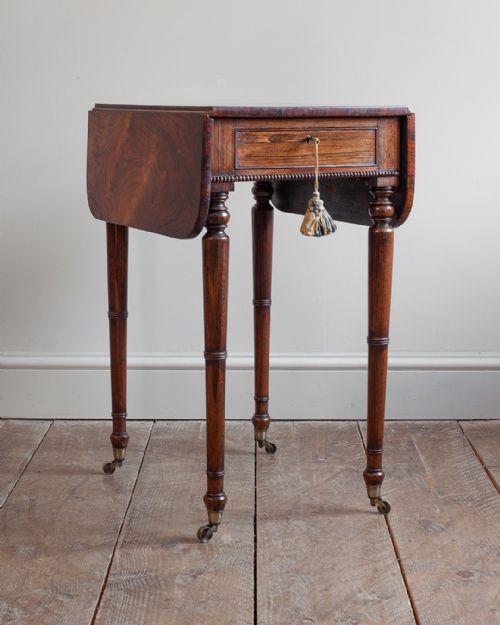
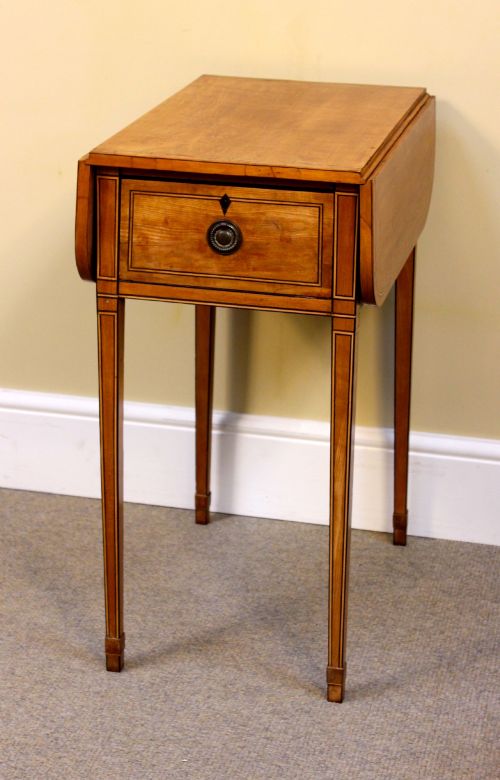
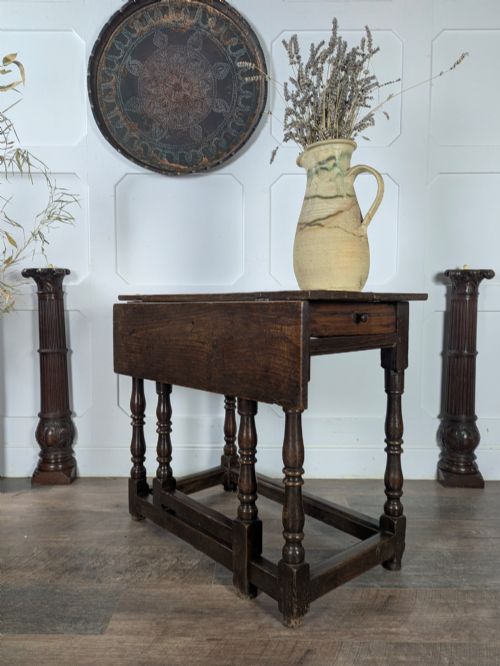
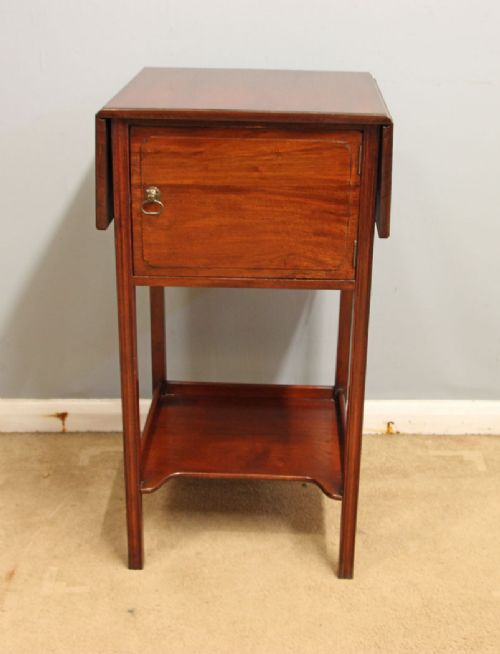
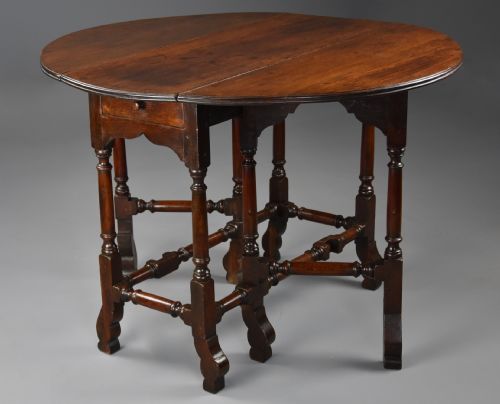
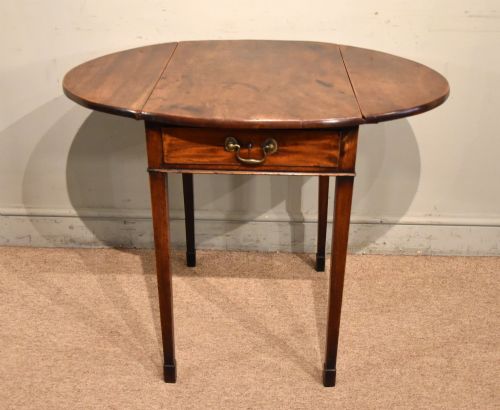
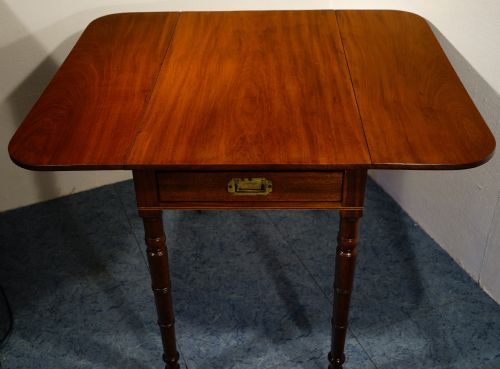
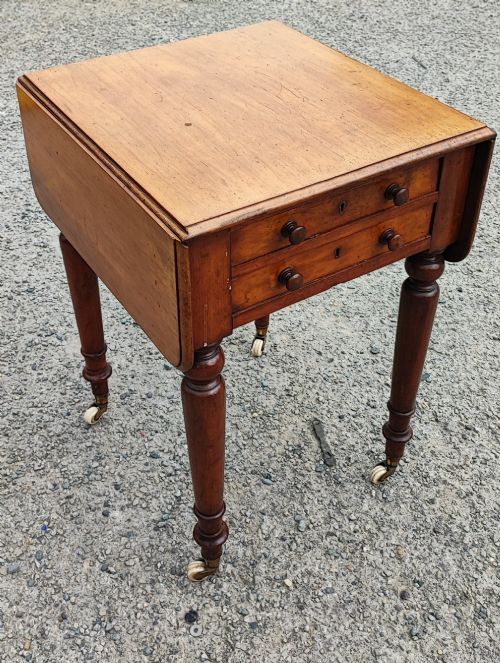
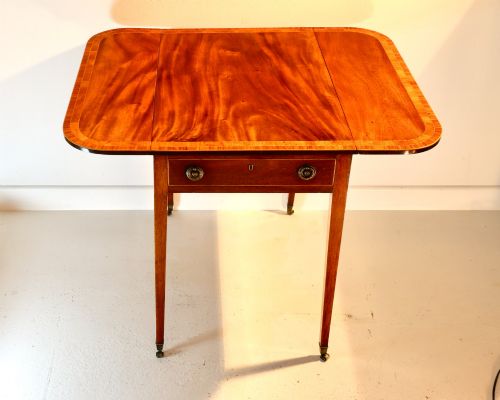
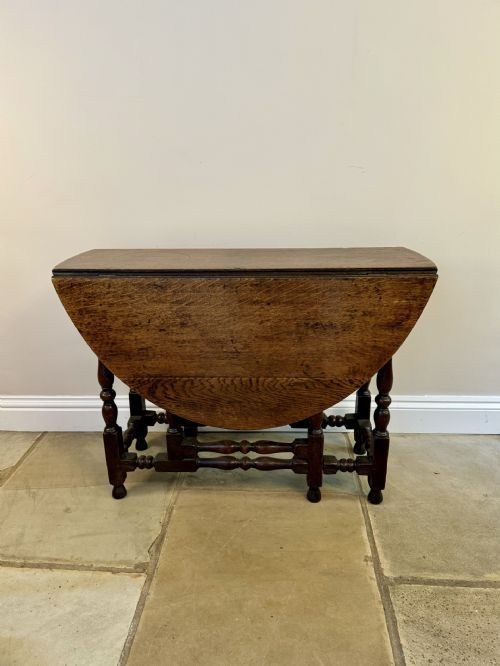
Small Georgian drop leaf tables are adaptable folding furniture pieces that serve as dining surfaces, side tables, and work spaces. A buyer searching this phrase encounters compact gateleg tables, Pembroke tables with hinged flaps, and occasional tables originating from the Georgian period and related later revivals.
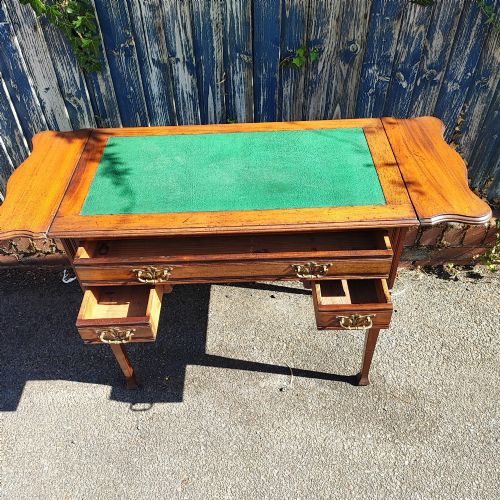
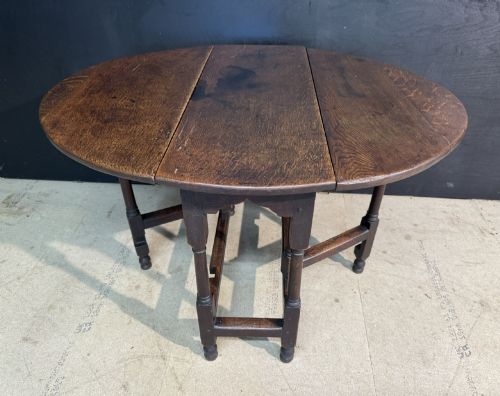
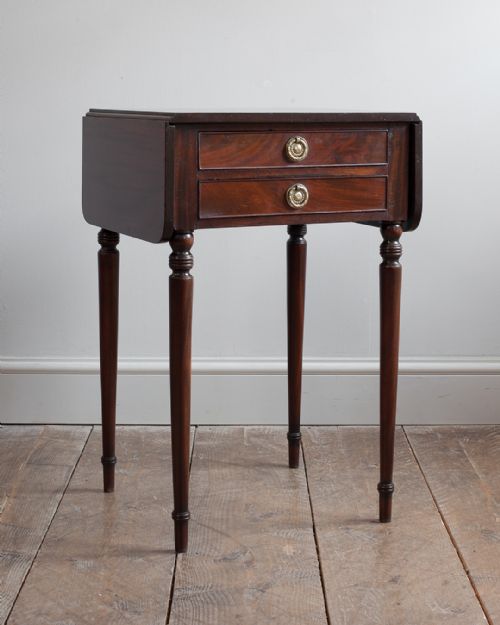
The versions most commonly met on this page include mahogany and oak Pembroke tables featuring single drawers and drop flaps, alongside early gateleg designs in solid oak or walnut. These tables suit smaller rooms where flexibility of floor space matters as much as timber quality.
How they were made
Cabinetmakers constructed these tables primarily using dense hardwoods such as mahogany, oak, and walnut, often accenting them with lighter decorative timbers like satinwood and boxwood. Structural integrity relied on sturdy frame joints and hinged flap mechanisms supported by swing legs or folding brackets.
Turning and joinery techniques shaped the slender legs and drop leaves, while brass fittings provided functional movement for drawers and pivoting supports. Surface finishes applied by hand brought out the natural grain and deep tones of the wood.
Listings feature woods including mahogany, oak, walnut, satinwood, and rosewood across Georgian, Regency, and Victorian periods.
What varies in quality
Quality in these drop leaf tables rests upon the selection of timber and the subtlety of its grain, where richly figured mahogany or dense old-growth oak elevate a piece above standard utility items. The proportion of the legs relative to the top determines the visual balance of the table when opened or closed.
Refinement in the joinery of the drop flaps and the crispness of turned or tapered legs distinguish finer workshops from simpler provincial work. Original brass hardware and the preservation of a warm surface patina complete the distinction.
Morison of Ayr
The Small Georgian Drop Leaf Glossary
- Pembroke table
- A small rectangular table with two hinged drop leaves on opposing sides, frequently incorporating a single drawer. This form gained popularity during the 18th century for light dining or writing.
- Gateleg table
- A table featuring hinged leaves supported by swing-out legs that resemble a swinging gate when opened. This construction provides robust support for larger folding surfaces.
- Drop leaf
- A hinged section of a table top that folds down when not in use to save space. It is lifted and held horizontally by a pivoting bracket or leg.
- Patina
- The deep, lustrous surface sheen developed on timber over decades of use and polishing. It serves as an indicator of age and careful maintenance.
- Spider leg
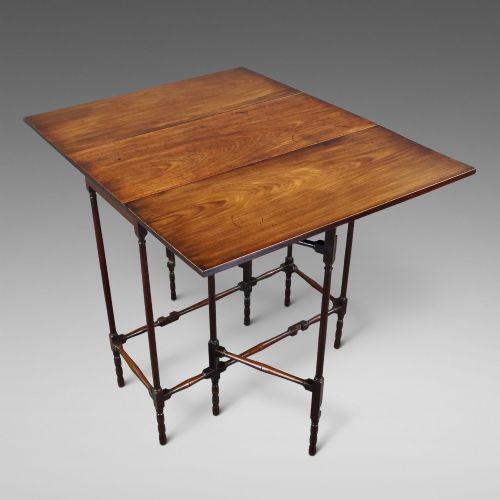
- A style characterised by exceptionally slender, delicate turned legs joined by thin stretchers. This design is commonly found on lighter occasional and Pembroke tables.
Small Georgian Drop Leaf: Frequently Asked Questions
How were small drop leaf tables originally used?
These tables served flexible daily functions in domestic interiors, moving easily between dining, sewing, and writing tasks. Their folding leaves allowed them to sit flat against a wall when floor space was required.
In larger rooms, smaller Pembroke and gateleg formats functioned as tea tables or occasional surfaces for lamps and books. Their mobility made them central to the adaptable room layouts of the period.
How do I tell an 18th-century table from a later copy?
Examination of the timber movement, construction joints, and hand tool marks provides clear clues to a piece's age. Older tables often show irregular hand-sawn board widths and peg joinery rather than modern machine screws.
Furthermore, genuine age reveals itself in the natural wear around the hinge areas and the deep, soft lustre of the surface finish. Later revival pieces typically display more uniform machine-cut elements and different internal timber choices.
Can I use a small drop leaf table for daily dining?
Many of these compact tables comfortably seat two to four people when both leaves are raised. Their sturdy gateleg or Pembroke support mechanisms are engineered to bear everyday dining weight.
Care should be taken with antique surfaces regarding heat and moisture, making the use of protective mats advisable. Otherwise, their footprint makes them practical for modern apartments and dining nooks.
What timber types should I look for?
Mahogany, oak, and walnut dominate the listings, each bringing a distinct character to the furniture. Cuban mahogany and dense old-growth oak frequently indicate earlier Georgian production.
Secondary woods and decorative accents like satinwood or boxwood inlay highlight specific regional styles and finer cabinetmaking traditions. Each timber reacts differently to light and polishing over the centuries.