


Small Georgian Desk
A small georgian desk brings compact proportions and period craftsmanship into a room without dominating the floor plan.
Small Georgian Desk
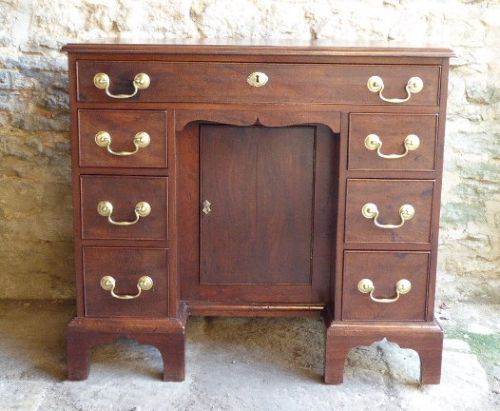
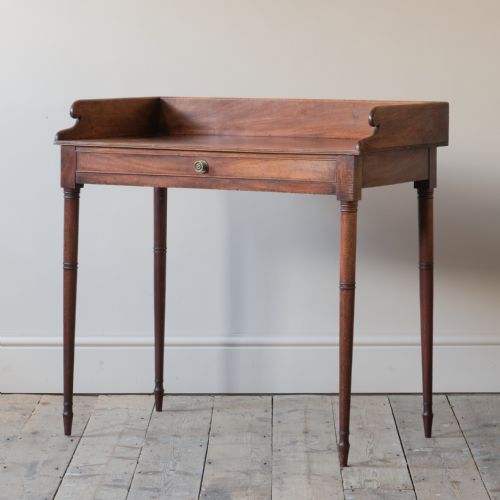
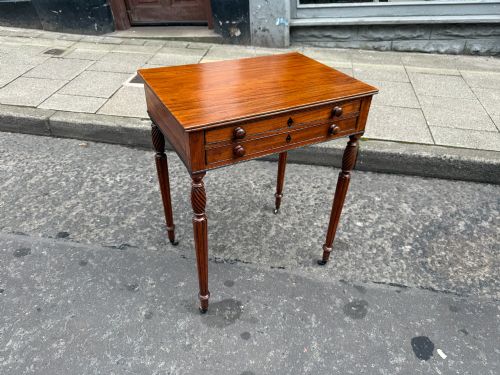
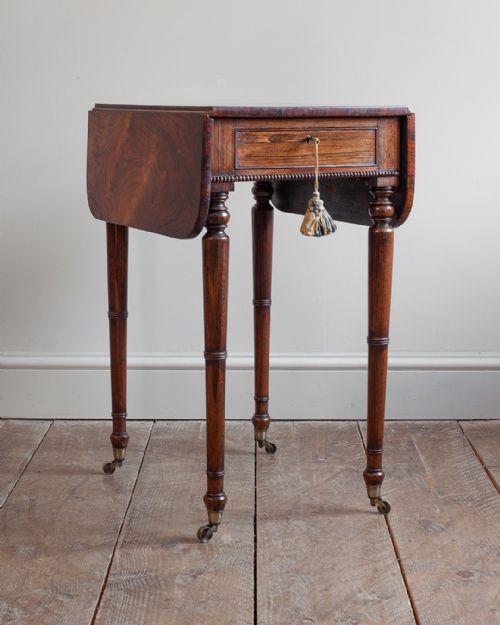
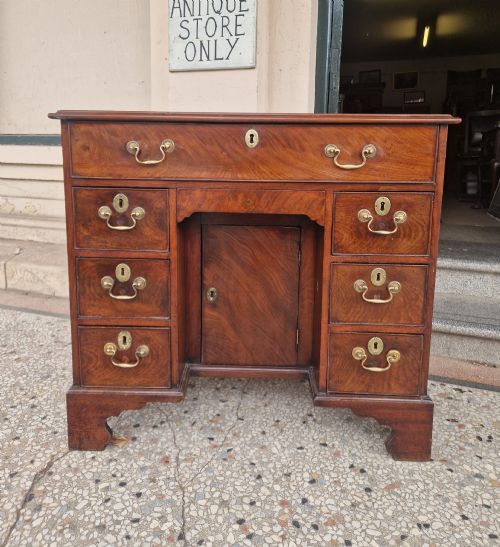
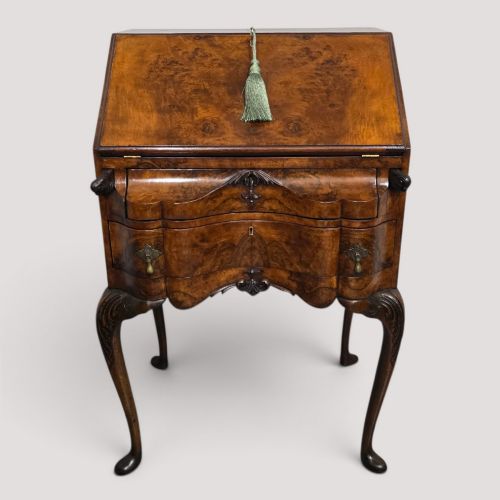
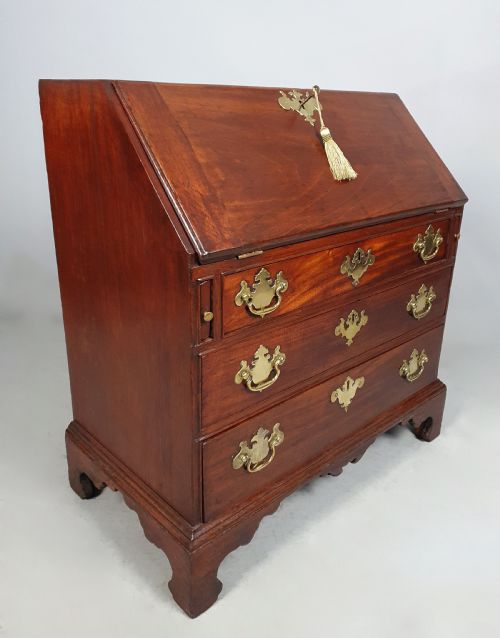
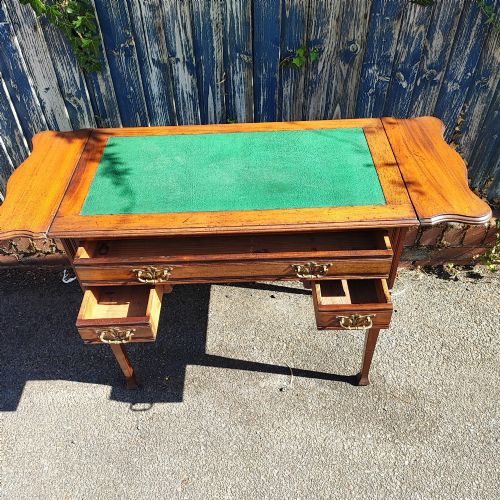
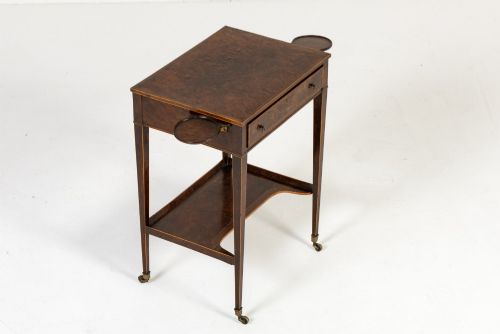
A small georgian desk encompasses various compact writing formats originating from the eighteenth and early nineteenth centuries, including kneehole desks, bureaus, and writing tables.
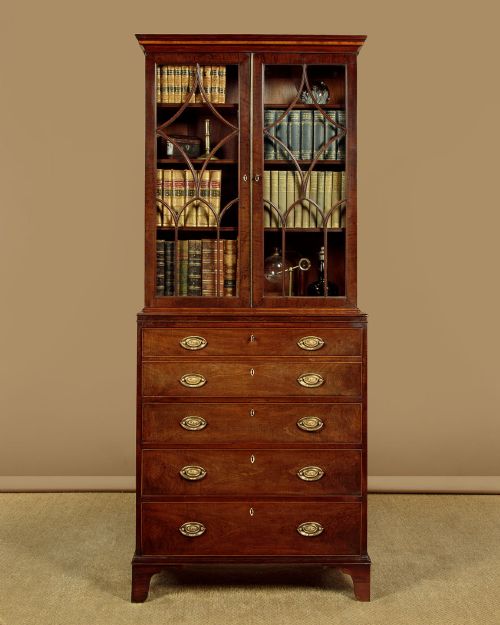
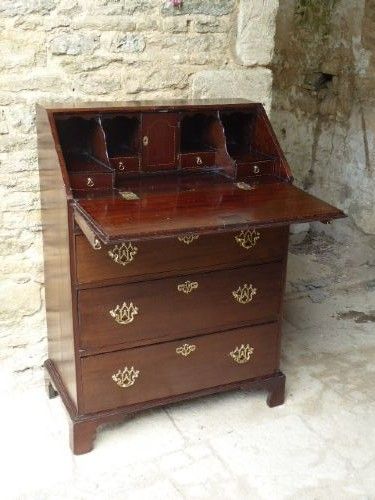
The version most commonly encountered on this page is the mahogany kneehole desk or bureau, often dating from the George III period and constructed with fitted interior drawers.
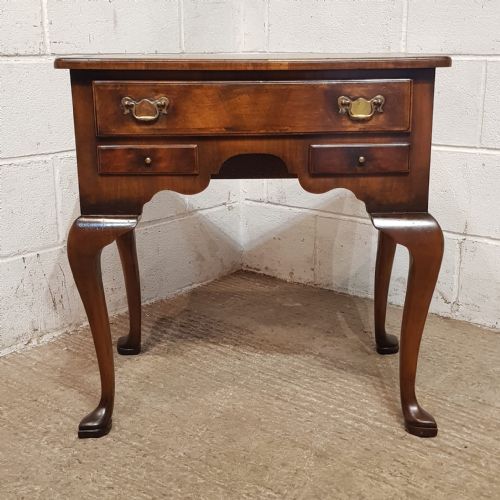
Makers and cabinetmakers of the era also produced lowboys and writing tables that served domestic correspondence needs within modest chamber spaces.
Materials and Construction
Makers relied primarily on dense timbers such as mahogany, oak, and walnut, frequently applying figured veneers or cross-banding to primary surfaces.
Secondary elements often incorporated cedar or pine, while hardware typically consisted of cast brass handles and escutcheons secured to drawer fronts.
Joinery involved traditional techniques including dovetailing for drawer construction and panel framing for carcases, sometimes paired with leather writing inserts.
One miniature bureau bookcase was built as a one-quarter size furniture sample by an apprentice.
Distinctions in Execution
The upper tier of pieces displays superior timber selection, such as closely matched flame mahogany or burr walnut veneers, aligned carefully across drawer fronts.
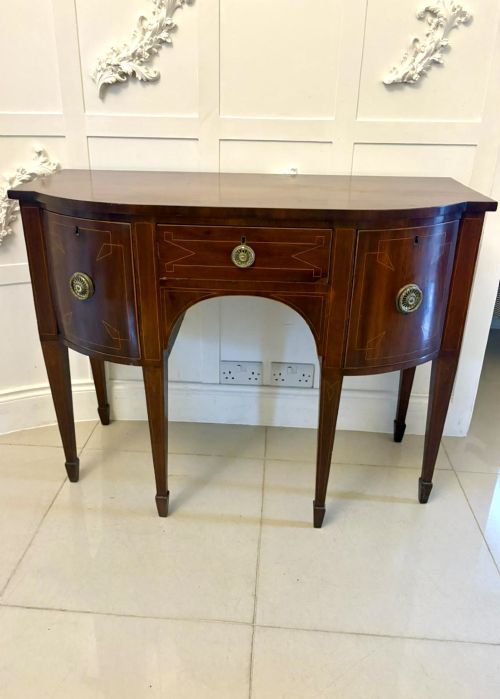
Execution quality reveals itself in the fineness of internal drawer pigeonholes, secret compartments, and the crispness of inlaid satinwood stringing.
Secondary wood choices and the retention of original brass hardware and surface finishes further separate standard workshop output from exceptional cabinet work.
Gillows of Lancaster
The Small Georgian Desk Glossary
- Bureau
- A writing cabinet featuring a sloping fall-front that opens to reveal a fitted interior of small drawers and pigeonholes. It usually rests upon a chest of drawers or a dedicated stand.
- Kneehole desk
- A compact desk configuration with a central recessed kneehole space flanked by banks of small drawers. A concealed cupboard door is frequently positioned at the back of the recess.
- Lowboy
- A small side table fitted with one or more rows of drawers, commonly used as a dressing table or writing surface during the eighteenth century.
- Cross-banding
- A decorative border technique where thin strips of veneer are laid so the grain runs perpendicular to the main panel surface. It frames the primary wood of a drawer front or table top.
- Dovetail
- A corner joint formed by interlocking wedge-shaped fingers, prized for its structural strength in drawer and carcase construction.
Small Georgian Desk: Frequently Asked Questions
What is a small georgian desk used for today?
These compact pieces function well as laptop workstations or writing surfaces in studies, bedrooms, and living spaces where floor area is restricted.
Their numerous small drawers also provide practical storage for stationery, documents, and household items.
Which woods are typical for these desks?
Mahogany is the predominant timber found in eighteenth-century and Regency examples, often displaying deep figuring and rich dark tones. Oak and walnut appear frequently in earlier pieces dating from the early seventeen hundreds.
Finer versions also incorporate decorative secondary woods like satinwood, rosewood, and burr walnut for contrast.
Are these desks suitable for daily use?
Solid period construction allows these pieces to withstand regular daily tasks such as writing or computer work. Their sturdy dovetail joints and durable hardwood surfaces endure routine handling well.
Care should be taken with historic leather writing inserts and polished wood surfaces to prevent moisture marks or scratching.