




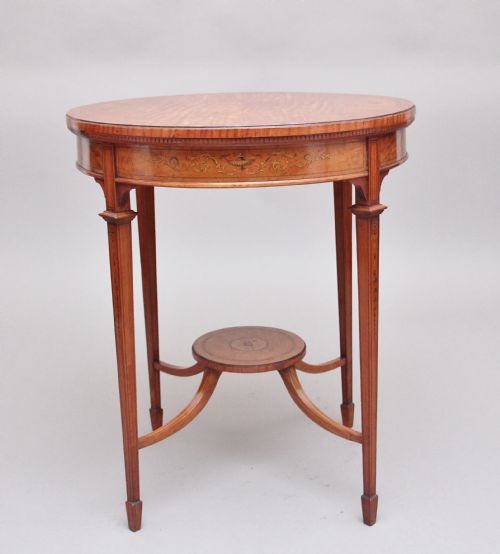


Honey Satinwood Table
These honey satinwood table pieces bring warm timber tones and refined craftsmanship to a room, offering both practical utility and elegant character.
Honey Satinwood Table
When you search for a honey satinwood table, you are looking at items created from a distinctive timber known for its warm, reflective sheen and pale golden hue. The examples found here span several distinct periods, including Georgian, Victorian, Edwardian, and Art Deco eras, alongside Swedish Grace designs.
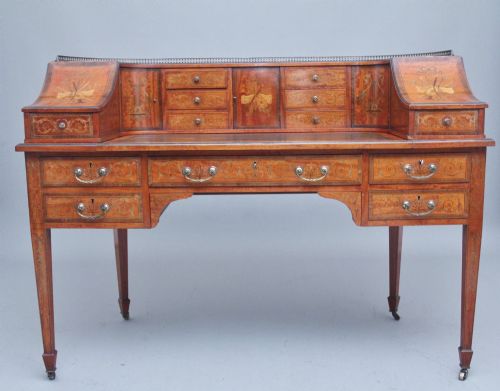
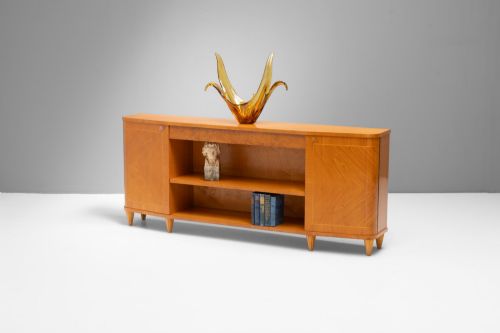
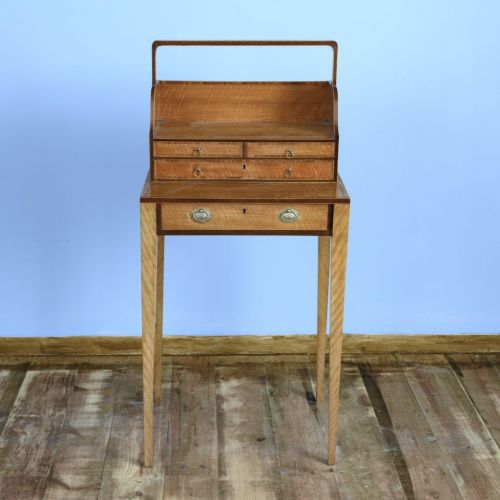
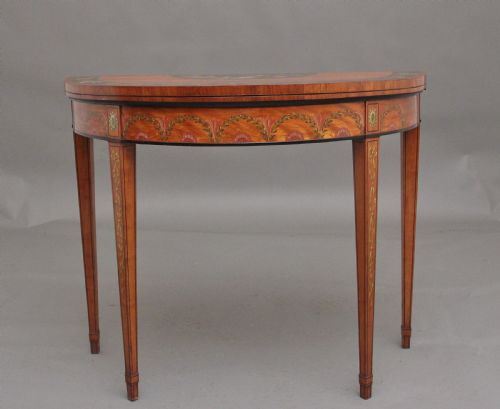
The forms vary considerably across the selection, ranging from occasional tables and card tables to writing desks and bedside cabinets. You are most likely to encounter compact occasional tables and bedside pieces, though larger writing tables and sideboards also appear.
Origin and styling shift according to the period of manufacture, moving from formal Georgian and Regency lines to lighter Edwardian Sheraton Revival pieces and later geometric Art Deco shapes. Each piece demonstrates how cabinetmakers utilised this timber to create striking surfaces for domestic interiors.
How they were made
Makers utilised satinwood veneers and solid timbers, often combined with contrasting woods such as rosewood, birch, and flame birch to create decorative borders and geometric patterns. Brass fittings, leather writing surfaces, and glass elements were integrated into functional forms like writing desks and card tables.
Surface preparation involved careful polishing to enhance the natural chatoyancy of the timber, resulting in the warm honey colour that defines these pieces. Painted decoration also appears on specific items, adding delicate motifs directly onto the wood surface.
Listings feature items spanning the Georgian, Victorian, Edwardian, and Art Deco periods, alongside Swedish Grace designs.
What varies in quality
The standard of timber selection largely determines the visual appeal of each piece, particularly the intensity of the grain figure and the uniformity of the warm hue. Highly figured satinwood or well-matched flame birch veneer demonstrates superior workshop practices.
Construction details such as the integration of secondary timbers, the crispness of brass mounts, and the preservation of original polished surfaces set the finer examples apart from simpler utilitarian items.
Maple and Co
The Honey Satinwood Table Glossary
- Satinwood
- A dense, durable timber native to Ceylon and other regions, prized for its lustrous, light-reflecting grain that finishes to a natural golden tone. It serves as the primary surface material for many decorative tables and cabinets.
- Cheveret
- A small writing table fitted with a removable bookstand or small drawers on top, developed during the eighteenth century. This compact form combines storage with a portable writing surface.
- Carlton House Desk
- A distinctive form of writing desk featuring a curved superstructure of small drawers and pigeonholes enclosing the writing area. It typically offers numerous small compartments for correspondence.
- Étagère
- A set of open shelves for displaying small objects, supported by slender columns or pillars. These freestanding pieces often function as decorative occasional furniture.
- Guerridon
- A small circular table supported by a central pillar or figures, originating in seventeenth-century France. Later versions adopt the lighter proportions seen in Edwardian and twentieth-century design.
Honey Satinwood Table: Frequently Asked Questions
What is honey satinwood?
Honey satinwood refers to timber finished to a warm, pale golden colour that highlights the natural shimmer of the wood grain. It was widely utilised across various periods for decorative furniture surfaces.
Cabinetmakers valued the material for its ability to reflect light and take a high polish, making it central to fine occasional tables and desks.
How do I date a table?
Dating relies on stylistic clues, construction methods, and materials combined with the timber. Georgian and Regency pieces show classical proportions, while Edwardian and Art Deco items reflect later aesthetic movements.
Examining secondary woods and hardware also helps establish the era of manufacture alongside the primary satinwood exterior.
Were these tables used for writing?
Certain forms, such as the Carlton House desk and specific writing tables, were designed explicitly for correspondence and paperwork. They incorporate specialised drawers, compartments, and leather inserts.
Other variations, including occasional tables and card tables, served different social functions within the home rather than daily writing tasks.
How do I care for satinwood?
Maintaining satinwood involves keeping surfaces away from direct sunlight and excessive moisture to preserve the polished finish and timber tone. Gentle dusting with a soft cloth is generally sufficient.
Harsh chemical cleaners should be avoided to protect the delicate grain and historical polish of the wood.