
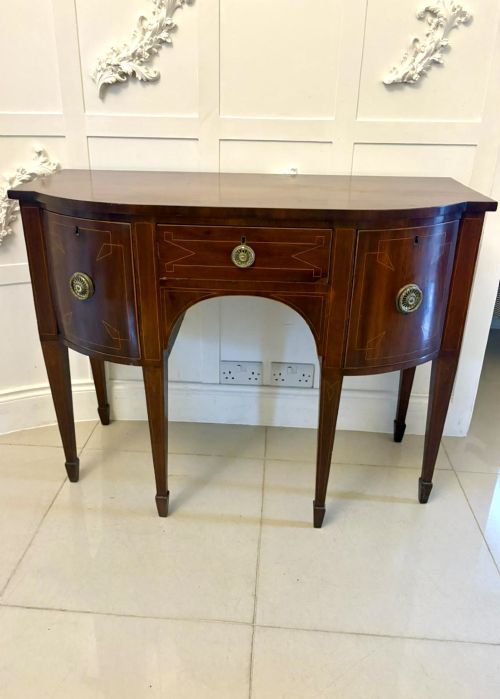
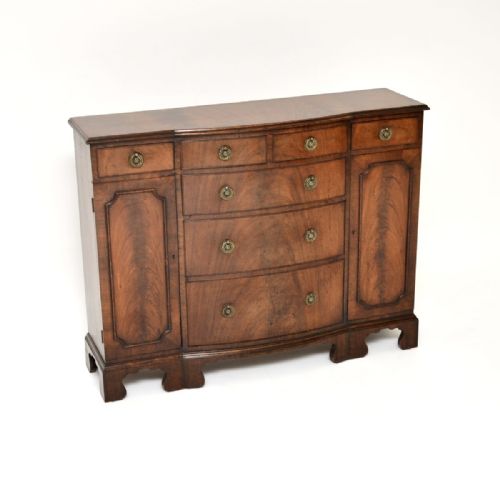
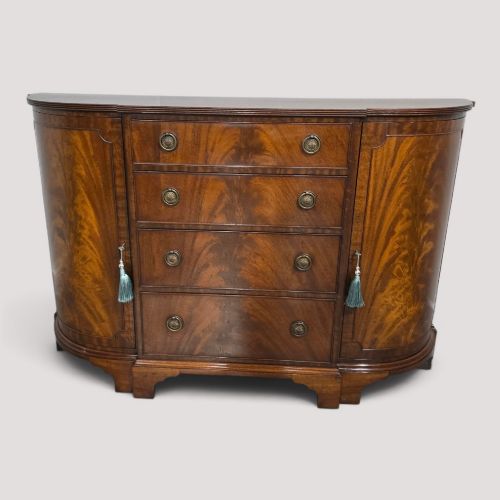
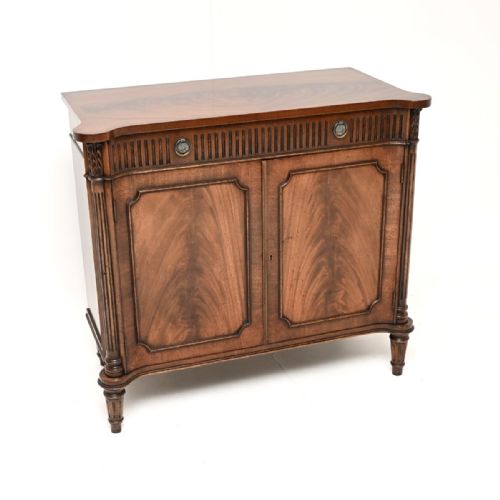
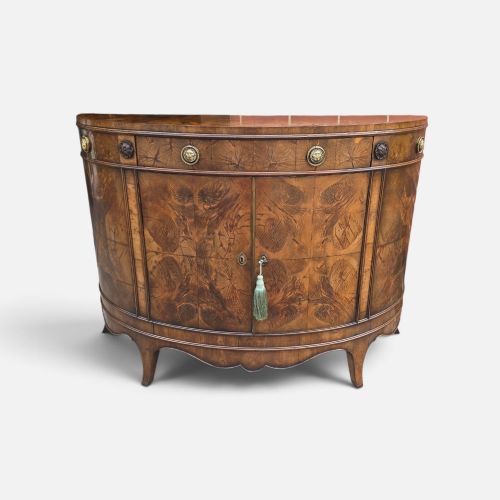
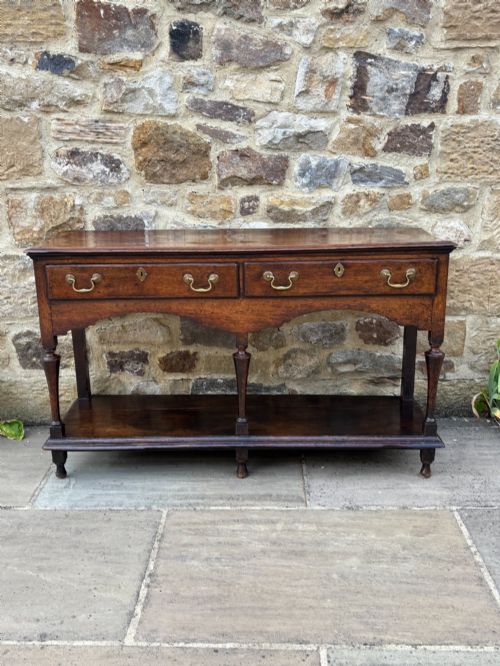
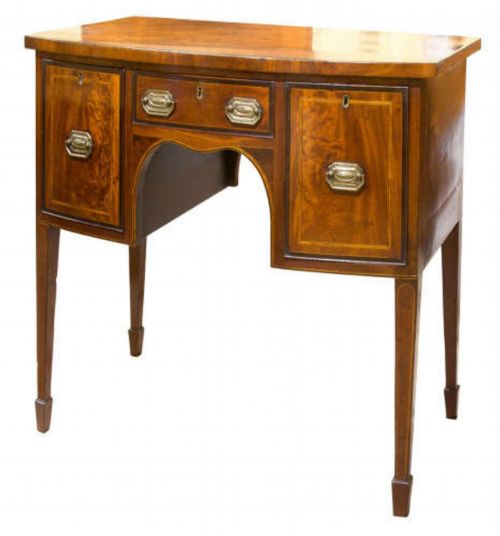
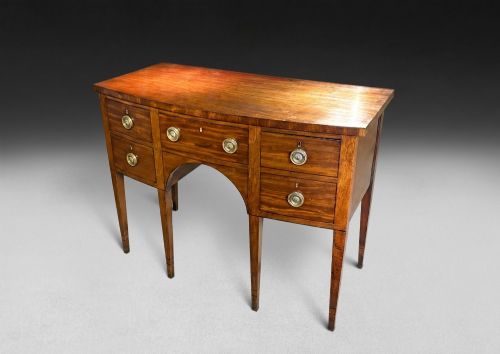
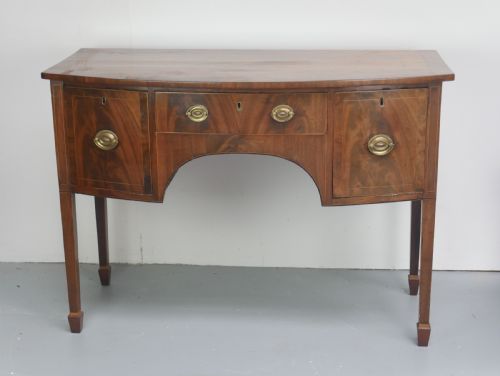

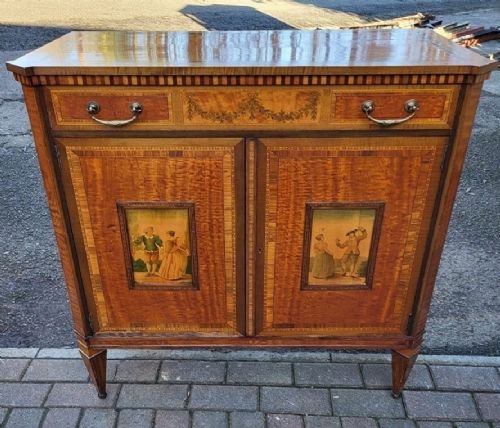


Small Georgian Credenza
The small georgian credenza brings compact storage and refined lines into modern rooms through authentic eighteenth and nineteenth-century craftsmanship.
Small Georgian Credenza
The pieces originating from these earlier eras serve as versatile surface furniture and storage units in contemporary interiors. Mahogany and satinwood versions dominate the selection, often displaying inlaid details or figured veneers that reflect the aesthetic priorities of their makers.
Construction and materials
Cabinet makers built these pieces using solid timbers like mahogany, oak, and pine for the main structure, applying figured mahogany veneer, satinwood, and rosewood to visible surfaces. Detail work frequently incorporated boxwood and ebony stringing, along with brass fixtures.
Joinery techniques relied on precise dovetailing for drawers and mortise-and-tenon joints for frames, ensuring structural integrity. Secondary timbers such as oak lined the interior drawers, while decorative flourishes utilised purpleheart banding and boxwood inlay.
Listings feature mahogany, satinwood, rosewood, and yew wood, spanning eighteenth-century Georgian eras through to twentieth-century revivals.
Distinctions in standard and execution
Quality separates pieces through the selection of timber veneers and the precision of decorative inlay work. Superior items display finely figured mahogany or satinwood paired with crisp boxwood and ebony stringing that remains intact across curved surfaces.
The handling of structural proportions and secondary timbers also defines the tier of execution. Finer examples maintain crisp edge moulding and well-fitted oak drawer linings that demonstrate careful workshop assembly rather than hasty production.
Gillows·Maple & Co
The Small Georgian Credenza Glossary
- Credenza
- A low cabinet or sideboard designed for serving or storage, frequently featuring doors enclosing shelving.
- Bowfront
- A convex curving front profile popular on sideboards and cabinets from the Georgian and Regency periods.
- Chiffonier
- A compact sideboard or low cupboard, often fitted with a shelf on top, originating in the early nineteenth century.
- Serpentine
- A furniture front characterised by a double-concave curve flanking a central convex projection.
- Stringing
- Thin inlaid lines of contrasting timber used to outline panels and drawer fronts for decorative effect.
Small Georgian Credenza: Frequently Asked Questions
What is a small georgian credenza used for?
These versatile pieces function as serving surfaces, hallway consoles, or media units while providing enclosed storage inside living areas or dining rooms.
Their compact scale allows them to fit into narrower rooms where standard furniture would overwhelm the floor plan.
How do I identify a genuine period piece?
Examine the secondary timbers inside the drawers, such as oak, and look for hand-cut dovetails that indicate older construction methods.
Check for natural timber shrinkage and consistent wear patterns that align with eighteenth or nineteenth-century workshop practices.
What is the difference between a sideboard and a chiffonier?
Sideboards typically offer longer surfaces with multiple drawers and cupboards intended for dining room service and storage.
Chiffoniers generally appear as smaller, shorter cabinets that often include a small superstructure or shelf on top.
How should I care for mahogany and satinwood surfaces?
Keep the timber away from direct sunlight and extreme heat sources to prevent the veneers from drying out or splitting.
Apply traditional beeswax occasionally and buff gently with a soft cloth to maintain the natural lustre of the polished wood.