

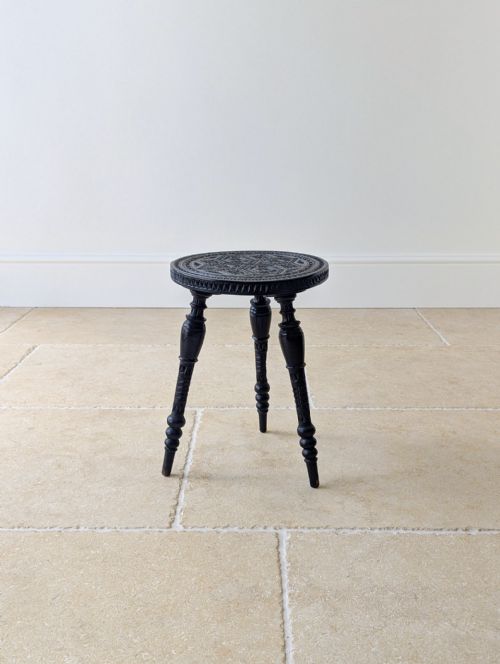
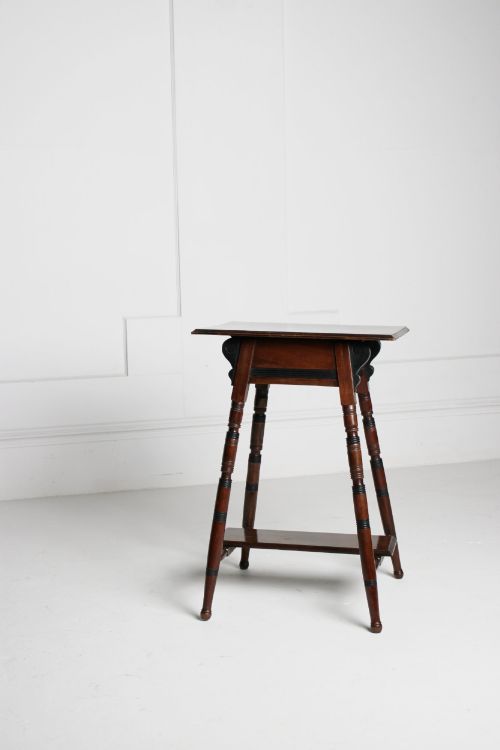


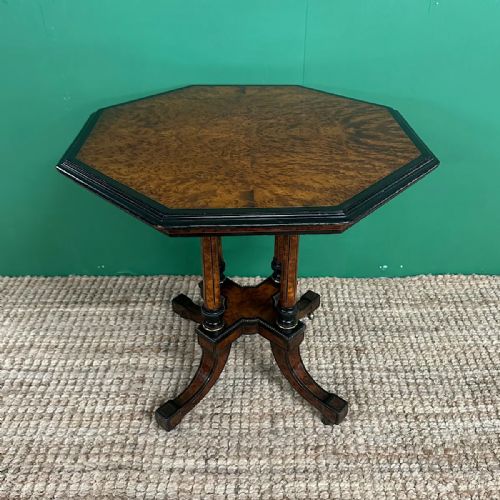

Small Ebonised Accent Table
These small ebonised accent tables bring dark timber elegance and compact utility to a room, offering surface space without crowding the floor.
Small Ebonised Accent Table
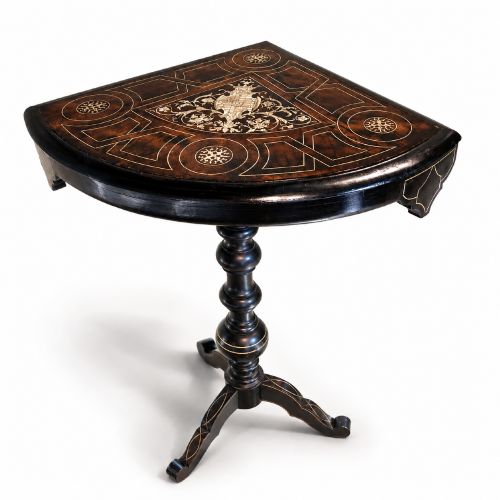
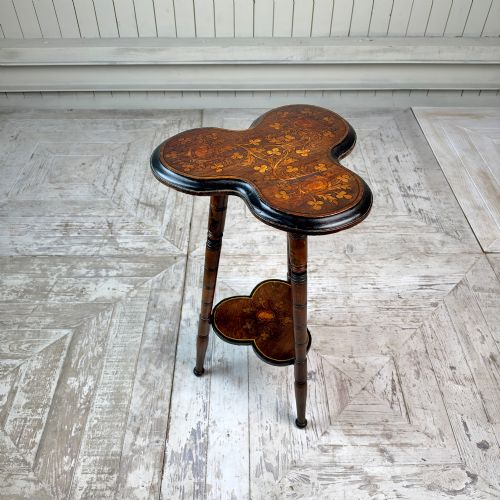
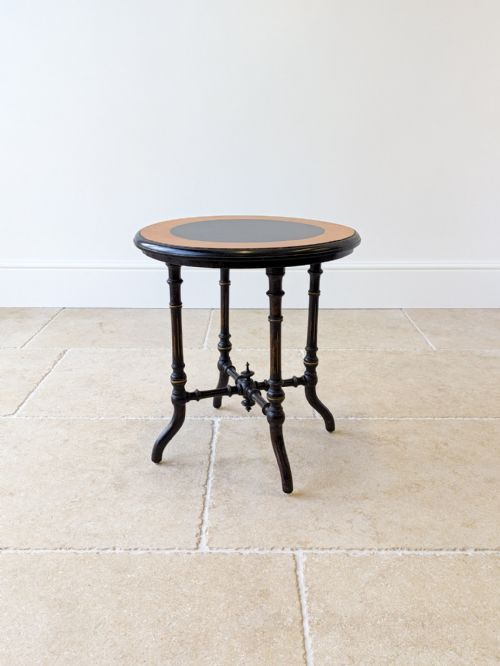
A small ebonised accent table is typically encountered as a Victorian or nineteenth-century occasional piece, designed for holding lamps, books or decorative objects in compact spaces. The titles show forms ranging from circular and octagonal side tables to drop leaf and Sutherland tables, reflecting the Victorian appetite for versatile occasional furniture.
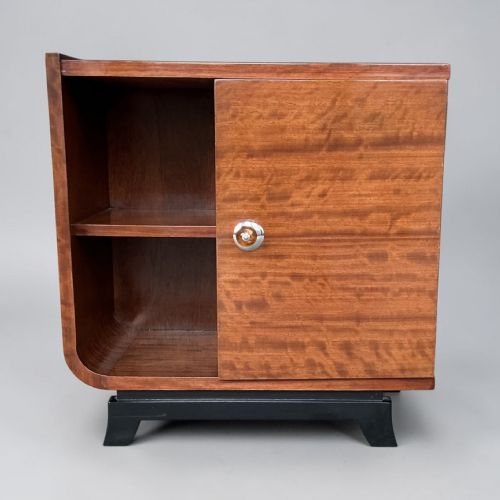
While the search specifies ebonised finishes, the pieces on this page also encompass related Victorian and revival styles, including Aesthetic Movement designs, Japanese Meiji examples, and later Art Deco items. Buyers will find that ebonised wood frequently appears alongside brass, marble tops, and contrasting veneers such as burr walnut and amboyna.
How they were made
Construction relies on timber foundations treated with ebonising to imitate expensive solid ebony, a technique popularised during the nineteenth century to achieve a deep black finish. Workshops also utilised solid ebony for specific octagonal forms, alongside supporting structural elements in mahogany and elm.
Surface ornamentation on these tables often includes parcel gilt highlights, chip-carving, and inlays of ceramic or marble. Makers combined ebonised woodwork with contrasting materials like brass hardware and exotic veneers to create the decorative effects seen in Aesthetic Movement and Art Deco pieces.
Small Ebonised Accent Table Retail Price Guide 2026
Typical asking prices for small ebonised accent table among the pieces listed under this phrase on Sellingantiques today, from the lower quarter to the upper quarter. They describe what is for sale here now, not the wider market.
Some tables hide their versatility in narrow folding leaves, ready to expand at a moment's notice for an unexpected cup of tea.
What varies in quality
Quality in a small ebonised accent table is distinguished by the crispness of its carved detail and the integrity of the ebonised finish. Pieces featuring specialist elements like marble tops, parcel gilding, or documented maker attribution demonstrate superior craftsmanship.
The choice of secondary timbers and the precision of joinery separate standard production items from finer workshop pieces. Tables incorporating marquetry, complex turning, or high-grade veneers such as burr walnut show a higher standard of execution.
Druce & Co London·Jenks & Woods
The Small Ebonised Accent Table Glossary
- Ebonised
- Wood finished to resemble ebony, typically by staining or painting a lighter timber black. This treatment was widely used in Victorian and Aesthetic Movement furniture.
- Aesthetic Movement
- A late nineteenth-century design style emphasising visual beauty over narrative subject matter, often incorporating Japanese influences and ebonised surfaces.
- Sutherland table
- A narrow drop-leaf table with exceptionally small flaps supported by swinging gates. It folds flat for storage when not in use.
- Parcel gilt
- Partially gilded with gold leaf or paint, frequently used to accent carved details on ebonised or dark wood surfaces.
- Occasional table
- A small, movable table intended for intermittent use in a sitting room or bedroom, such as for holding a lamp or drinks.
Small Ebonised Accent Table: Frequently Asked Questions
Where should I place a small ebonised accent table?
These pieces suit tight spots where a larger surface will not fit, such as beside a reading chair or at the end of a sofa. Their dark finish contrasts well against lighter walls and upholstered seating.
Because they occupy minimal floor space, they also function effectively as lamp stands or bedside tables in guest rooms. Their compact proportions allow them to sit quietly in a corner while providing a practical resting place for everyday items.
How do I care for ebonised wood?
Ebonised surfaces respond best to gentle dusting with a soft, dry cloth to prevent the accumulation of grit. Avoid harsh chemical polishes that can degrade the dark finish over time.
Keep these tables away from direct sources of heat and strong sunlight, which can fade or crack the ebonised coating. Using coasters will protect the surface from moisture rings left by glasses and cups.
Are these tables sturdy enough for daily use?
Most occasional tables from the nineteenth and early twentieth centuries were built for light domestic service rather than heavy weight-bearing tasks. They easily accommodate lamps, books, and decorative accessories.
Care should be taken when moving them, particularly drop leaf or Sutherland variants with folding mechanisms. Lifting rather than dragging the table preserves the stability of the joints and legs.
How can I tell a Victorian ebonised table from a later revival piece?
Victorian examples often display period characteristics such as hand-cut joinery, chip-carving, or stylistic influences from the Aesthetic Movement and Japanese design. Examining the underside and interior timber helps reveal the age of the construction.
Later revivals, such as pieces from the 1920s or 1930s, tend to show cleaner lines or different manufacturing marks consistent with Art Deco and twentieth-century production methods. Comparing the finish and hardware style alongside the timber offers further clues to the date.