

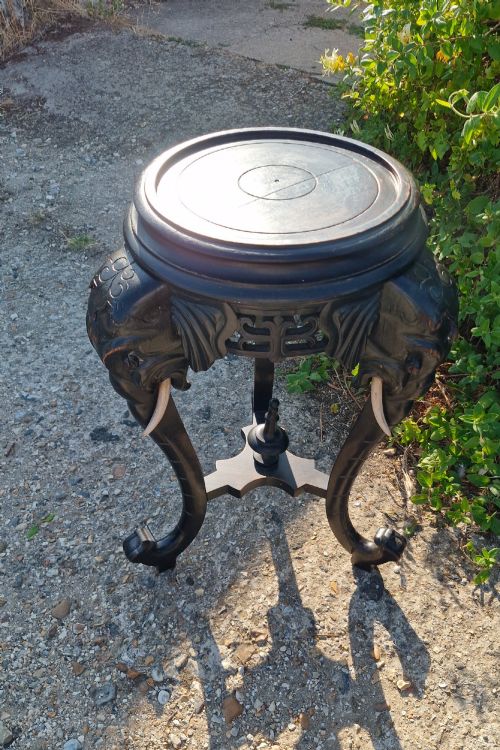
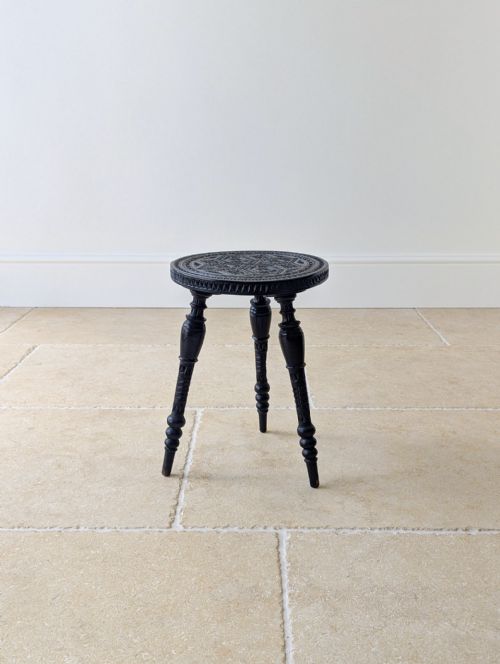


Ebonised Wooden Stool
An ebonised wooden stool brings deep, dark elegance to a room, offering a striking silhouette rooted in nineteenth-century design.
Ebonised Wooden Stool
An ebonised wooden stool encompasses seating forms primarily drawn from the Victorian and nineteenth-century periods, alongside earlier examples. These pieces range from simple upholstered stools to adjustable designs influenced by the Aesthetic Movement.
Buyers frequently encounter variations that include parcel gilt details, chip-carving, or textile tops. The selection reflects diverse design languages, stretching from English domestic workshops to Anglo-Indian and Japanese Meiji inspirations.
While forms overlap with benches and occasional tables in the wider record, the core focus remains on solid wooden frames treated with a dark, ebony-like finish. Such seating serves both utilitarian and decorative roles within period interiors.
How they were made
The construction relies heavily on hardwoods subjected to ebonising processes, which stain or paint timber to imitate expensive ebony. Makers frequently integrated carved details, parcel gilt highlights, and contrasting materials such as marble or inset textiles.
Upholstered versions pair the blackened wooden frames with period fabrics and textiles for the seat pads. Structural joinery uses traditional methods suited to nineteenth-century cabinet making, accommodating adjustable mechanisms where the design demands.
Ebonised Wooden Stool Retail Price Guide 2026
Typical asking prices for ebonised wooden stool among the pieces listed under this phrase on Sellingantiques today, from the lower quarter to the upper quarter. They describe what is for sale here now, not the wider market.
The recorded items span multiple eras, including Victorian, Regency, Edwardian, and eighteenth-century periods.
What varies in quality
Quality reveals itself in the crispness of the carving and the depth of the ebonised finish on the timber. Superior pieces exhibit precise hand-carved details, intact parcel gilding, and stable joinery across the frame.
The treatment of secondary materials, such as the integration of inset marble tops or high-grade upholstery fabrics, further separates standard production from finer examples. Age-related wear on the blackened surface distinguishes genuine period patination from later touch-ups.
The Ebonised Wooden Stool Glossary
- Ebonised
- Wood treated with stain, paint, or chemical processes to achieve the dense black appearance of ebony. This technique gained widespread popularity during the Victorian era to mimic luxury materials.
- Parcel Gilt
- Partial application of gold leaf or gilt paint upon specific carved details or raised portions of a wooden frame. It creates a striking contrast against the dark ebonised background.
- Aesthetic Movement
- A late nineteenth-century design style emphasising visual beauty over narrative subject matter, often drawing inspiration from Japanese art and employing clean ebonised surfaces.
- Anglo-Indian
- Furniture made in the Indian subcontinent under British colonial rule, frequently combining local dense hardwoods with European forms. These pieces often feature intricate carving work.
- Meiji
- Pertaining to the period of Japanese history spanning from the late nineteenth to early twentieth century, characterised by fine craftsmanship that influenced Western design aesthetics.
Ebonised Wooden Stool: Frequently Asked Questions
How do I clean an ebonised wooden stool?
Dust the blackened wooden frame gently with a dry, soft cloth to prevent the accumulation of grit. Avoid harsh chemical cleaners or excessive moisture, which can damage the dark finish and any underlying gilt.
For upholstered sections, consult a professional textile conservator rather than applying liquid spot treatments. Regular, minimal care preserves the integrity of both the wood and the period fabric.
Can I use an antique stool for daily seating?
Most nineteenth-century stools are structurally sound enough for gentle daily use, provided the joints remain tight. However, some delicate adjustable or heavily carved examples function better as display pieces or lamp stands.
Assess the weight capacity and frame stability of each individual piece before placing it in a high-traffic area of your home. Occasional seating placement minimises excessive wear on antique joinery.
What is the difference between ebonised wood and solid ebony?
Ebonised wood consists of a domestic timber, such as pine, walnut, or hardwood, treated to look like ebony through surface staining or painting. Solid ebony is a naturally dense, dark exotic heartwood imported from tropical trees.
Using ebonised finishes allowed nineteenth-century makers to achieve the luxurious look of ebony while utilising more accessible local materials. This technique is standard across the majority of Victorian decorative furniture.
How do I identify an Aesthetic Movement stool?
Aesthetic Movement pieces typically feature ebonised surfaces, minimal ornamentation, and clear references to Japanese design principles. They often incorporate adjustable mechanisms or simple, geometric lines rather than heavy classical revival carving.
Look for refined proportions and a focus on surface finish rather than ostentatious decoration. These designs prioritize visual harmony within the interior space.