
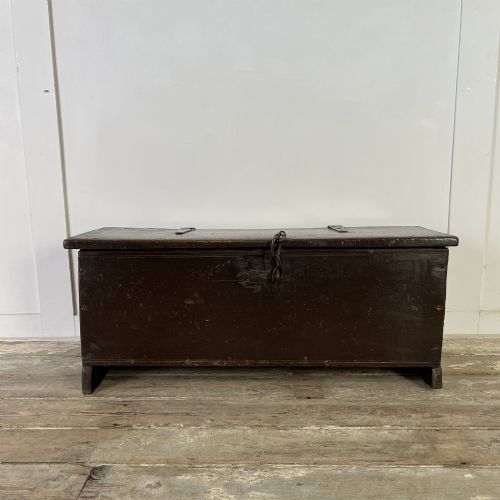


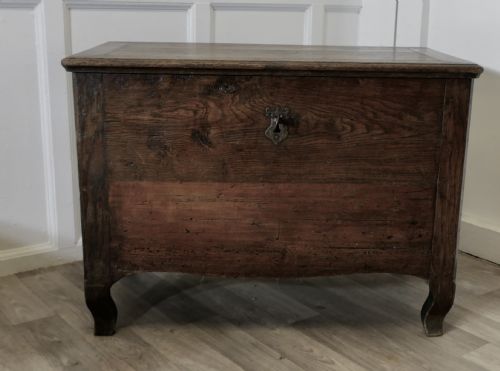


Small Dark Wood Coffer
A small dark wood coffer is a compact storage box built for household valuables, offering tangible history and rich timber grain.
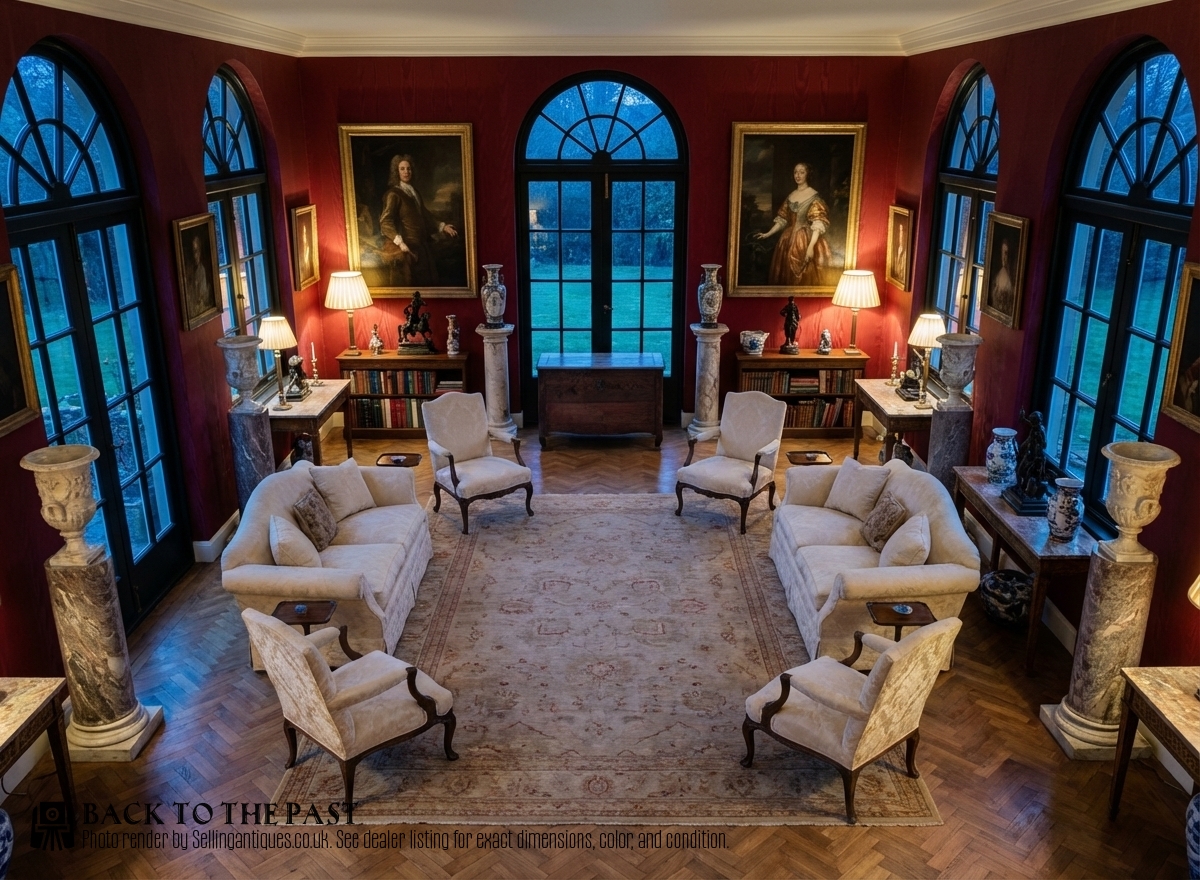
Small Dark Wood Coffer
A small dark wood coffer functions primarily as a compact storage vessel for domestic valuables, documents, and textiles. These pieces appear across several historical periods, ranging from sixteenth-century examples to nineteenth-century interpretations.
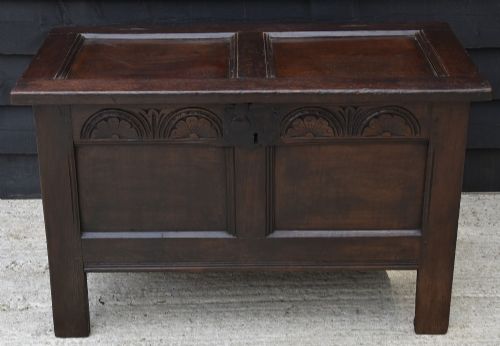
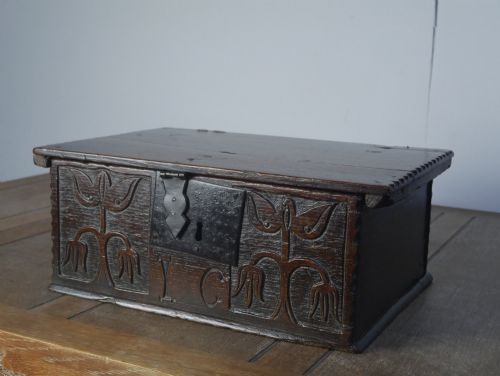
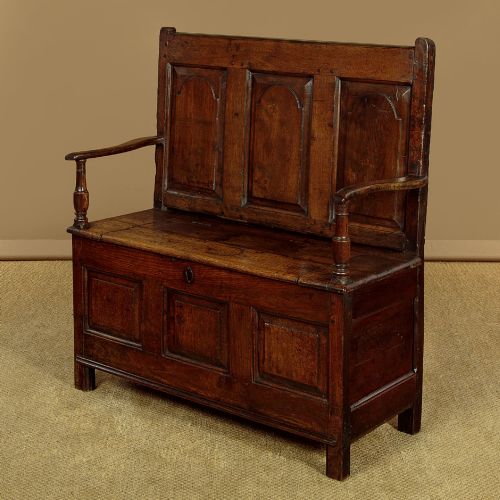
The most common version met on this page is the seventeenth-century oak coffer or box, often featuring panelled construction or carved details. Alongside these English styles, buyers encounter regional variations including Welsh coffer bach chests, French chestnut deed boxes, and Spanish walnut boxes.
How they were made
Construction relies heavily on solid timber, with oak, walnut, chestnut, and mahogany forming the primary structural bodies. Joinery techniques from earlier periods utilise traditional panelling methods to accommodate wood movement over centuries.
Metalwork provides both structural reinforcement and decorative accent through iron, wrought iron, and brass hinges, locks, and corner mounts. Surface finishes develop naturally through age, highlighting the deep tones of hardwood boards.
Some miniature Welsh coffers are so small they look like heavy timber jewellery boxes built by someone who only knew how to frame a barn.
What varies in quality
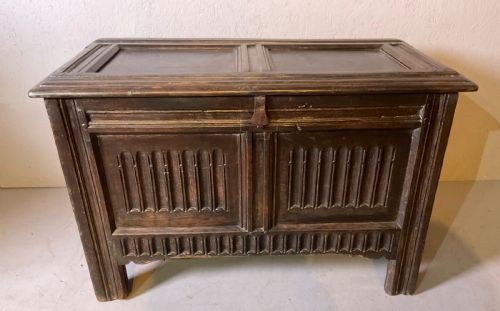
Quality separates objects by the crispness of surviving carving, such as linen fold panels or chip-carved geometric patterns, versus plain or heavily worn surfaces. The integrity of the original timber framing and the retention of period metal fittings also dictate the standing of a piece.
Proportion and scale play a significant role, where genuine miniature forms and small proportions demand finer joinery than standard utilitarian storage boxes. The distinction between regional vernacular execution and formal cabinet-making shapes the character of each individual item.
The Small Dark Wood Coffer Glossary
- Coffer bach
- A traditional Welsh miniature coffer used historically for holding precious items or as a bridal gift. These small chests frequently sit on short feet or drawers.
- Linen fold
- A style of relief carving resembling folded linen cloth, commonly found on fifteenth and sixteenth-century panels. This decorative technique adds vertical texture to the front boards.
- Chip carving
- A method of removing small chips from a wooden surface with a gouge or knife to create geometric patterns. It appears frequently on seventeenth-century boxes.
- Deed box
- A secure container designed specifically for storing legal documents, land titles, and important papers. They often feature robust iron locks and carrying handles.
- Table cabinet
- A miniature cabinet designed to sit upon a desk or table for stationery and valuables. These pieces bring domestic storage into upper-level rooms.
Small Dark Wood Coffer: Frequently Asked Questions
How old is an oak coffer?
Oak coffers on this page span several centuries, with examples dating from the sixteenth century through to the nineteenth century. Seventeenth-century pieces are particularly common.
Determining age involves examining the construction methods, tool marks, timber shrinkage, and stylistic indicators such as chip carving or panel assembly.
Where were these small chests used?
These small chests served domestic purposes across various European regions, including England, Wales, France, and Spain. They sat in parlours, bedrooms, and halls.
Owners stored personal documents, textiles, and valuables inside them, relying on sturdy locks and heavy timber construction for security before the widespread use of fitted furniture.
What woods were used for coffers?
The primary timber utilised is oak, though makers also employed walnut, chestnut, mahogany, and general hardwood depending on regional availability. Dark patination develops over centuries of handling.
Metal components in iron, wrought iron, and brass provided necessary hinges and locking mechanisms to secure the lids and drawers.