





Cabriole Leg Coffer
A cabriole leg coffer brings together sturdy storage and elegant curved lines, offering a practical antique for modern interiors.
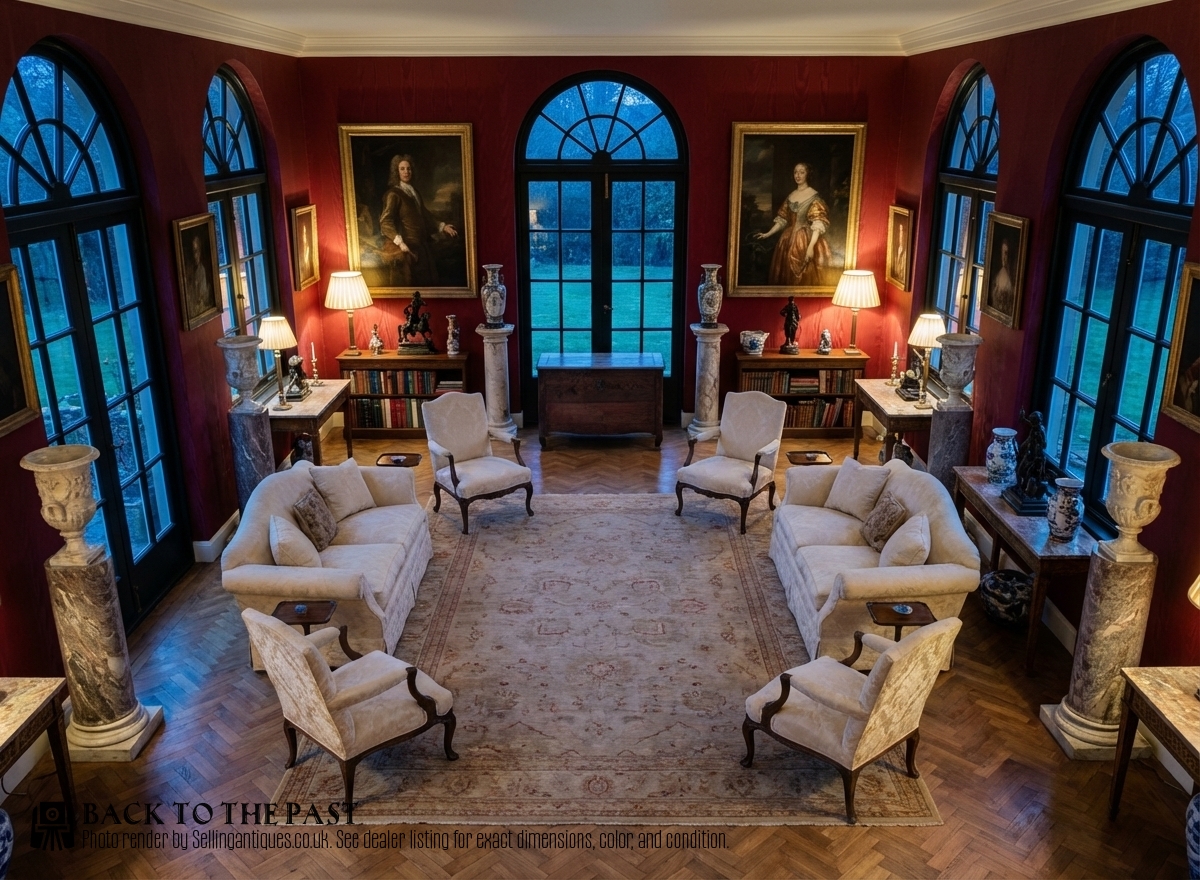
Cabriole Leg Coffer
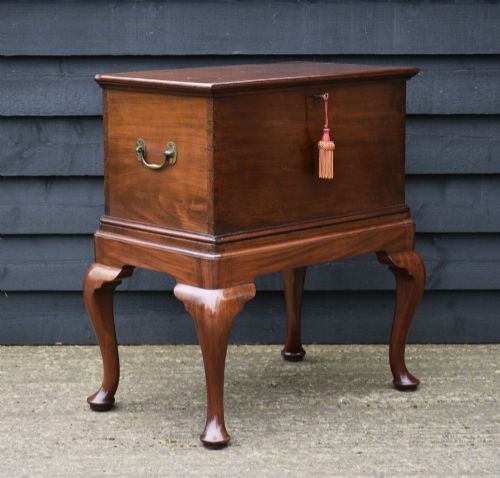
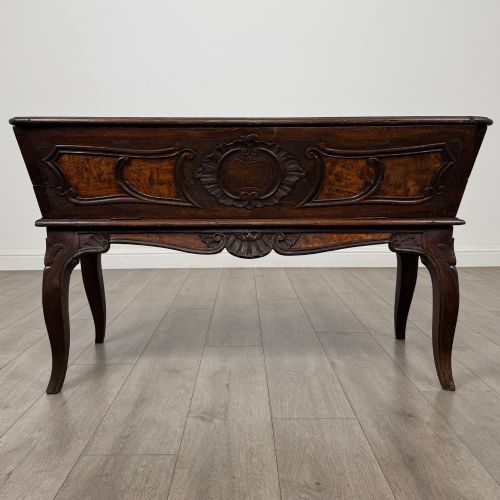
When you search for a cabriole leg coffer, you are looking at elevated storage furniture supported by distinctive double-curved legs that typically sweep outward and taper down to a pad or foot. These pieces frequently appear as coffers on stands, chests, and dough bins dating from the eighteenth and nineteenth centuries.
The examples available here span Georgian, Victorian, and Edwardian periods, encompassing styles from French Provincial to George II and George III. Makers built these items primarily to hold valuables, documents, or household goods while introducing refined ornamentation to domestic spaces.
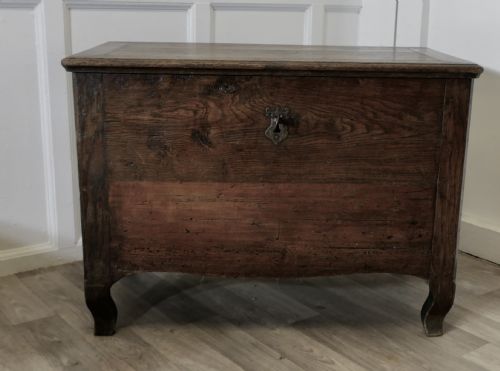
You are most likely to encounter oak and walnut versions, often elevated on tall stands or designed with fitted interiors and brass hardware. The combination of a robust trunk body with graceful, curved supports defines the visual character of these survivals.
Construction and materials
Carpenters constructed the bodies of these pieces using solid timbers like oak, walnut, and mahogany, frequently employing panel-and-frame joinery to accommodate wood movement over time. Cabinetmakers then shaped the distinctive supports by hand, carving the sweeping contours directly from solid blocks of wood or integrating them into sturdy stands.
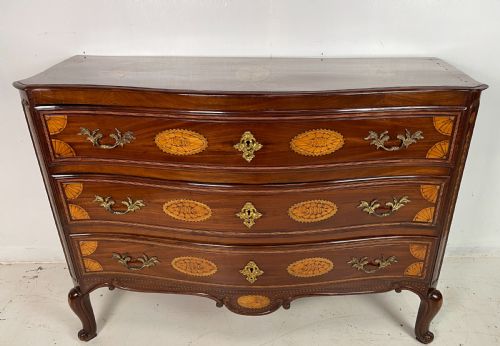
Surface decoration relies on natural grain figures, such as burr walnut veneers, alongside delicate boxwood inlay and wrought iron hinges or brass keyplates. Craftsmen finished the timber with oils and waxes to highlight the depth of the grain without obscuring the material texture.
Listings span the eighteenth and nineteenth centuries, featuring walnut, oak, and mahogany built into chests, coffers, and stands.
Judging quality and proportion
Quality rests upon the harmony of proportion between the heavy storage body and the slender grace of the supporting legs. Finer examples display fluid, confident carving along the curves, whereas lesser pieces show stiffer lines and heavier, unrefined joinery.
The choice of primary timber and secondary wood dictates the grade of the piece, with solid red walnut or burr walnut veneers sitting at the higher end of the scale. Original brass mounts, well-fitted drawers within stands, and minimal timber replacement elevate the standing of an individual item.
The Cabriole Leg Coffer Glossary
- Cabriole leg
- A furniture support featuring a convex curve that tapers downward to a pad, hoof, or foot, inspired by animal limbs. This form became prominent in furniture design during the early eighteenth century.
- Coffer
- A heavy timber chest traditionally used for storing valuables, linen, or documents securely. Many examples feature hinged lids and sturdy iron or brass locking mechanisms.
- Chest on stand
- A two-part form consisting of a main storage cabinet or chest raised upon an open frame with legs. This elevation protected contents from damp floors and lightened the visual weight of heavy timber.
- Dough bin
- A specialised wooden trough or chest used historically for rising bread dough, often set upon a dedicated stand. In later periods, makers adapted these forms into cupboards with similar proportions.
- Boxwood inlay
- A decorative technique where thin strips or shapes of pale boxwood are set flush into recesses cut into darker primary woods. This creates contrasting geometric or floral patterns across the surface.
Cabriole Leg Coffer: Frequently Asked Questions
What is a cabriole leg coffer used for?
These pieces serve as practical storage trunks for blankets, linens, or household items while functioning as decorative focal points in living spaces.
Their elevated design allows them to double as side tables or statement furniture in hallways and reception rooms.
How do I date an antique coffer?
Dating relies on examining the construction techniques, tool marks, timber species, and stylistic details such as leg profiles and hardware.
Georgian and eighteenth-century pieces typically exhibit hand-cut dovetails and pegged joinery, whereas later nineteenth-century examples show different manufacturing signatures.
Are these pieces made of solid wood?
Most listings feature solid timbers like oak, walnut, and mahogany for the primary structure and carved elements.
Some refined examples incorporate decorative veneers, such as burr walnut, laid over secondary backing woods to create striking surface patterns.
How do I care for a wooden coffer?
Keep the timber away from direct heat sources and strong sunlight to prevent the wood from drying out or splitting.
Apply a traditional beeswax polish occasionally to nourish the surface and maintain the natural lustre of the aged finish.