
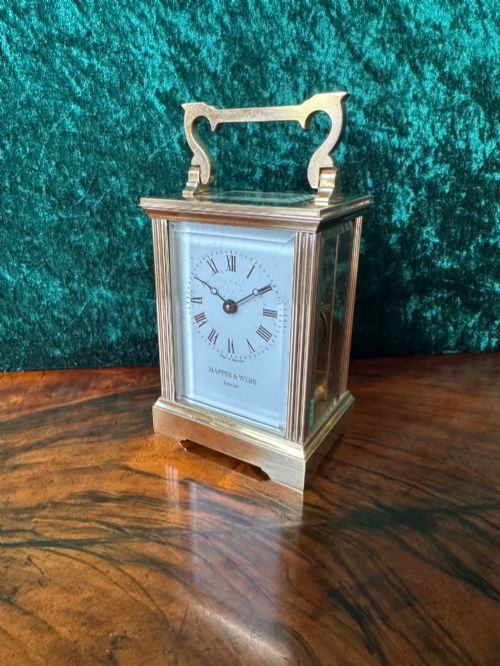
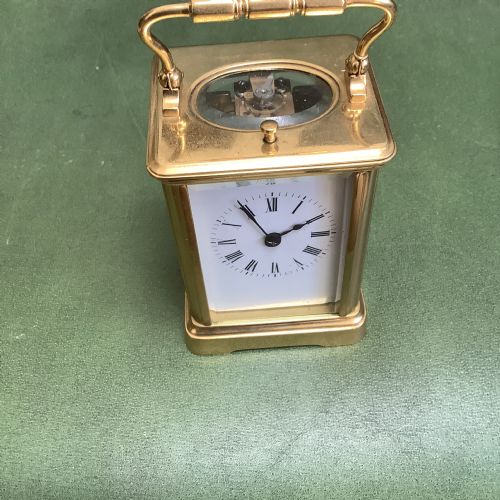
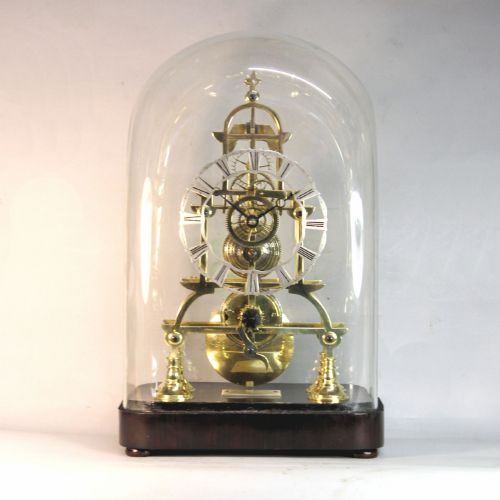


Small Brass Desk Clock
A small brass desk clock sits on a writing surface, measuring time in polished metal and glass while keeping the study orderly.
Small Brass Desk Clock
When you search for a small brass desk clock, you encounter portable timepieces designed for travel, writing desks or mantel shelves, predominantly taking the form of miniature carriage clocks or compact four-glass mantel designs.
The selections span the nineteenth century through the Edwardian period and into the mid-twentieth century, originating from English makers in London alongside French workshops producing gilt brass and ormolu cases.
Most examples function as simple timepieces or incorporate delicate mechanisms like platform escapements, enamel dials, and occasionally striking trains housed within glazed brass or wooden frameworks.
Materials and construction
Cases rely heavily on brass, gilt brass, or ormolu, often paired with bevelled glass panels that reveal the intricate gear trains and escapements within.
Wood varieties such as mahogany, walnut, burr walnut, and rosewood appear frequently as supporting or primary structures, complemented by hand-painted or Delft enamel dials.
Clockmakers employed mechanical movements driven by springs and fusees, fitted with platforms for portability and finished with engraved brass masks or silvered chapters.
One petite boudoir clock carries the inscription "Presented by Sporting Sketches", recording a Victorian competition win.
Distinctions in quality
Quality rests upon the crispness of the cast brass or ormolu mounts, the depth and precision of hand engraving on the mask, and the clarity of the bevelled glass panels.
The refinement of the movement itself distinguishes standard pieces from superior work, seen in the inclusion of platform escapements, fusee movements, and signed plates from known makers.
Integration of secondary materials like alabaster, bronze plinths, or burr walnut veneer elevates the visual weight and artistic ambition of the object.
Mappin and Web·Richard Winter of Chieveley·Tiffany·Lenzkirch·Joseph Jump of London·Richard Co·J C Vickery London·McCabe London·Purvis of London·Baldwin of Loughborough
The Small Brass Desk Clock Glossary
- Carriage clock
- A portable spring-driven timepiece originally designed for travellers, featuring a rectangular brass case with glazed sides and a handle on top.
- Fusee
- A conical pulley used in mechanical clocks to ensure even force from the mainspring as it unwinds, improving timekeeping accuracy.
- Platform escapement
- A self-contained assembly holding the balance wheel and hairspring, allowing portable clocks to keep time regardless of orientation.
- Ormolu
- Finely ground high-carat gold-copper mercury gilding applied to bronze or brass objects, giving a rich metallic lustre.
- Timepiece
- A clock that measures and indicates the time without any striking mechanism to sound the hours.
Small Brass Desk Clock: Frequently Asked Questions
How do I wind a small brass desk clock?
Most portable timepieces use a dedicated key fitted to arbours on the back plate or dial face. Turn the key gently until firm resistance indicates full tension.
Avoid over-winding to protect the mainspring from damage, and consult the specific requirements of fusee or spring-driven movements before adjustment.
Where should I place a carriage clock?
Select a stable, level surface away from direct sunlight, excessive moisture, and sudden temperature shifts. Desks, mantelpieces, and side tables offer ideal display spots.
Ensure the location protects the glass panels from accidental knocks while allowing the ticking sound to be appreciated in a quiet room.
How do I tell an English clock from a French one?
English examples often favour wooden cases like mahogany or rosewood alongside fusee movements, while French pieces typically utilise gilt brass or ormolu carriage frames with platform escapements.
Signatures on the dial or back plate often provide definitive proof of origin, alongside stylistic cues from the Victorian or Edwardian eras.