
Small Drop Table
A small antique drop table offers ingenious space-saving utility through hinged leaves that lift when needed and drop away quietly.
Small Drop Table
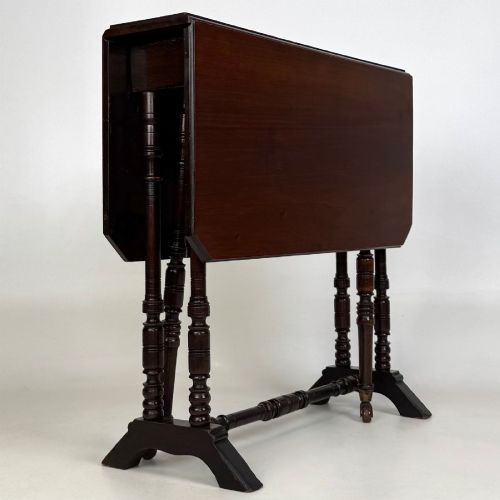
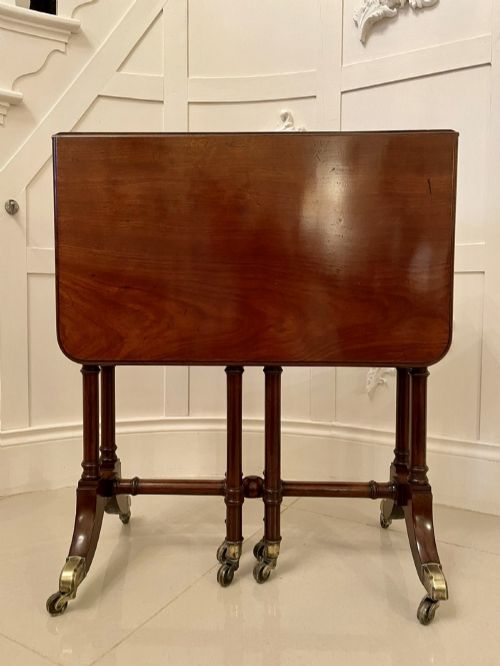
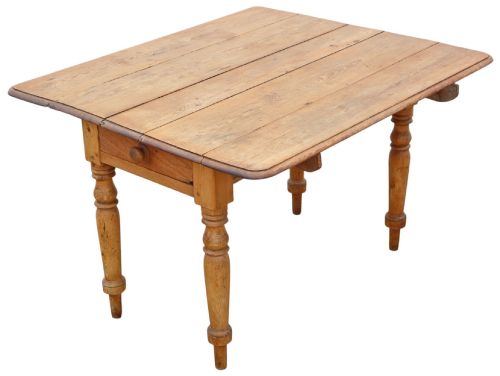
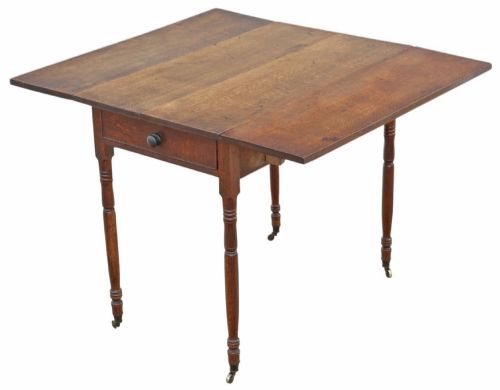
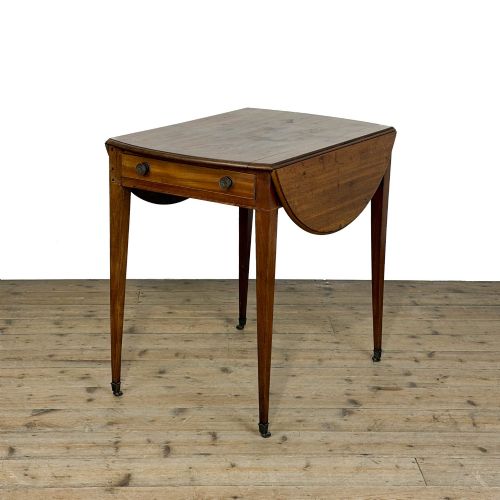
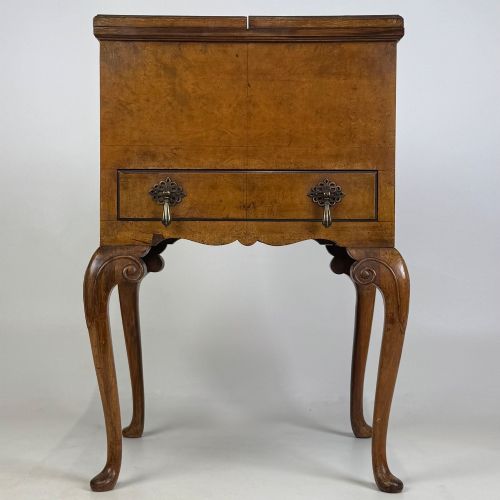
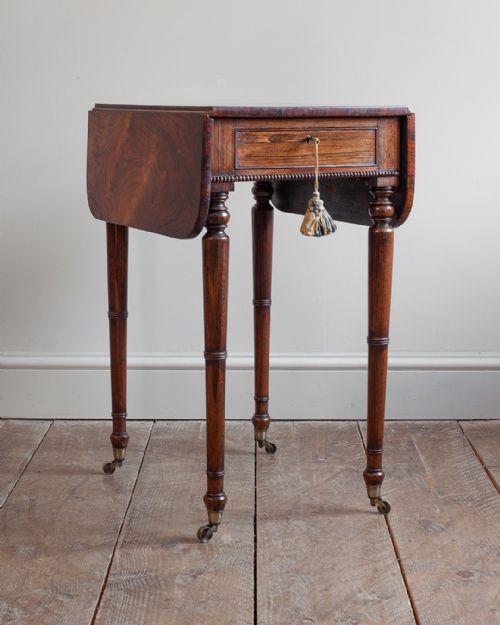
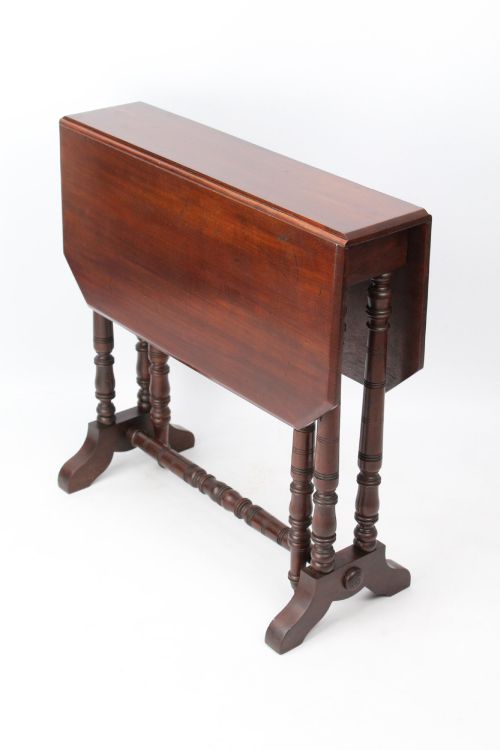
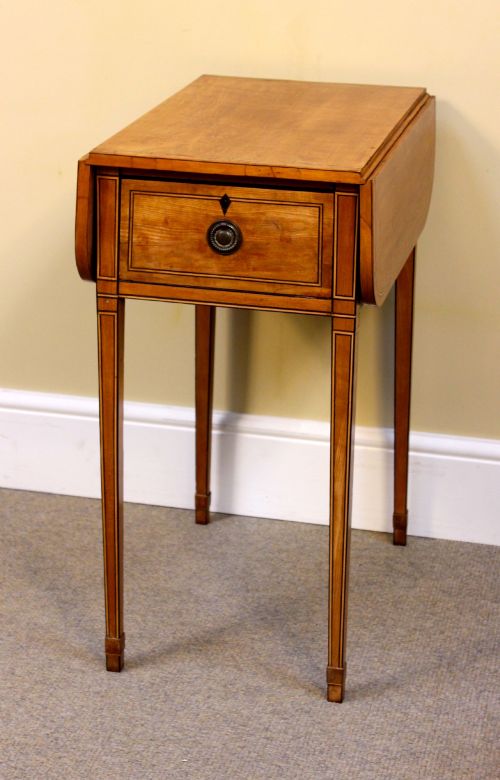
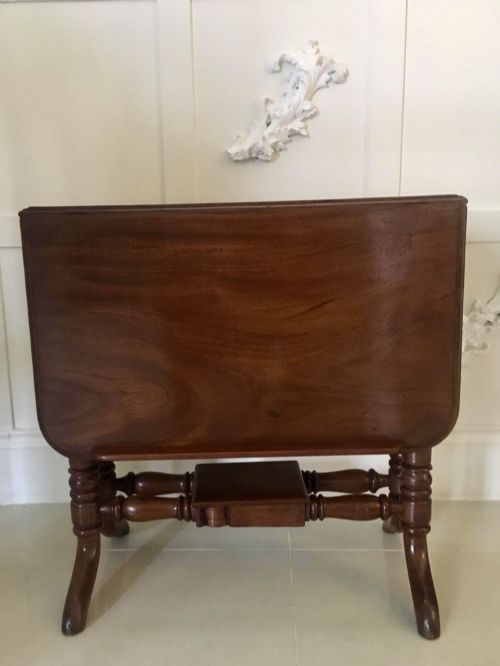
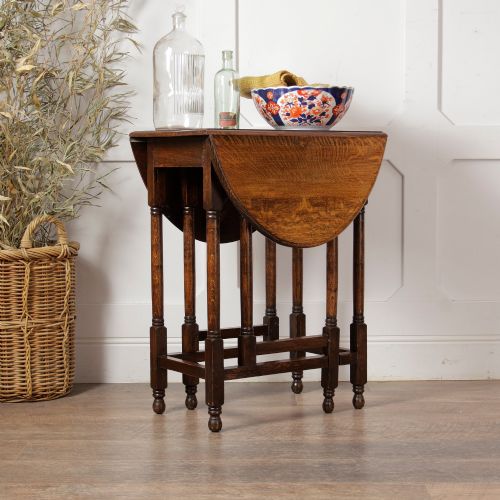
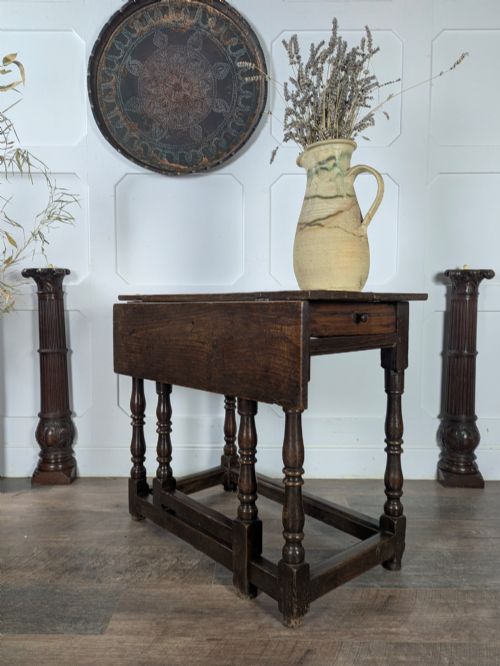
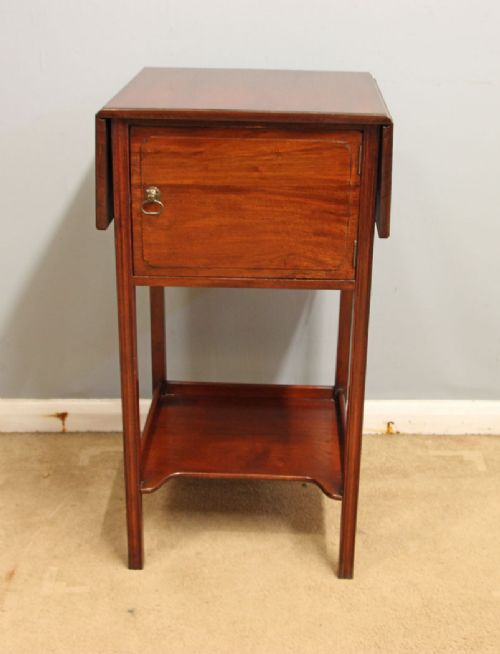
A small antique drop table is a versatile surface designed to expand or contract according to room and function, spanning periods from the late seventeenth century through the Edwardian era. The forms seen most frequently on this page include Pembroke tables with slender drawers, gateleg tables supported by pivoting swing legs, and compact Sutherland tables with narrow profiles.
Originating in timber workshops across England, these folding designs served domestic needs in dining rooms, parlours, and bedrooms. Oak and mahogany dominate the offerings, interpreted through styles ranging from vernacular Jacobean gatelegs to refined Georgian and Regency Pembroke designs.
How they were made
Cabinetmakers constructed these pieces primarily using dense hardwoods such as mahogany, oak, and walnut, often accentuating surfaces with burr veneers or satinwood inlay. Timber selection dictated how well hinges and drop flaps endured daily folding and lifting over centuries.
Joinery techniques relied on pegged mortise and tenon joints for early oak gateleg frames, while later Georgian and Victorian makers utilised precise dovetailing for drawers and subtle rule joints to bridge tabletops and flaps seamlessly.
What varies in quality
The distinction between ordinary and exceptional examples rests upon the selection of figured timber, such as strongly marked burr walnut or rich red mahogany, paired with crispness in turned elements like barley twist or bobbin legs. Superior pieces retain their original patination and operational integrity without excessive timber shrinkage around the hinges.
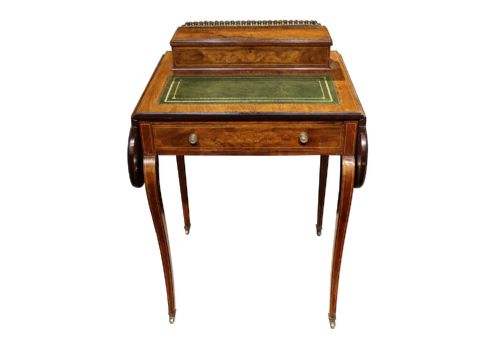
Refinement of proportion and interior detail further separate workshop tiers, seen in fitted writing drawers with delicate compartments versus simpler utility tables intended strictly for utilitarian kitchen or bedside use.
The Small Drop Table Glossary
- Pembroke table
- A small rectangular table featuring two hinged drop leaves on either side and typically one or two small drawers at the ends. It gained widespread popularity during the eighteenth century for breakfasting or light writing.
- Gateleg table
- A table with hinged leaves supported by legs that swing outward like gates to hold the flaps aloft. This sturdy seventeenth-century form maximised surface area while folding flat against walls.
- Sutherland table
- A remarkably slender drop-leaf table characterised by very narrow central leaves and exceptionally wide drop flaps. Victorian makers favoured this design for tight spaces where floor clearance was paramount.
- Rule joint
- A specialised moulding joint connecting a table top to its drop leaf, featuring a rounded knuckle that conceals the gap when the leaf is raised. It provides both structural strength and a neat visual transition.
- Spider leg
- A style of exceptionally thin, delicate turned wooden legs often braced by fine stretchers. These slender supports give lightweight occasional tables an airy, graceful stance.
Small Drop Table: Frequently Asked Questions
Where did people use drop tables?
These folding tables served flexibly across domestic interiors, acting as breakfast surfaces in dining rooms, writing desks in private chambers, and bedside stands. Their folding leaves allowed households to clear floor space rapidly when rooms required multiple uses throughout the day.
In smaller parlour settings, Pembroke and Sutherland variations stood against walls or beside seating until guests arrived and extra surface space became necessary for tea or correspondence.
How do I spot an 18th-century gateleg?
Early oak and walnut gateleg examples display pegged joinery, heavy turned underframe stretchers, and deep timber patination developed over centuries of wax polishing. The swinging leg actions rely on traditional wooden pivots rather than modern metal hinges.
Closer inspection of the board thickness and underside construction reveals hand-sawn timber marks distinct from later mass-produced Victorian machinery methods.
Can I use one as a desk?
Many Pembroke and writing table variations incorporate integrated drawers specifically designed for stationery, inkwells, and correspondence materials. Their modest dimensions and drop leaves provide adequate knee clearance and adjustable surface workspace.
Stability depends upon the tightness of the drop leaf hinges and the rigidity of the swing brackets underneath, ensuring the writing surface remains level during daily tasks.
How do I care for old mahogany?
Maintenance requires regular dusting with a soft dry cloth and occasional application of traditional beeswax to nourish the timber grain. Avoid placing antique timber directly beside heat sources or in intense sunlight to prevent veneer lifting.
Moisture control remains vital for protecting rule joints and hinged drop flaps from warping or sticking during seasonal humidity changes.