
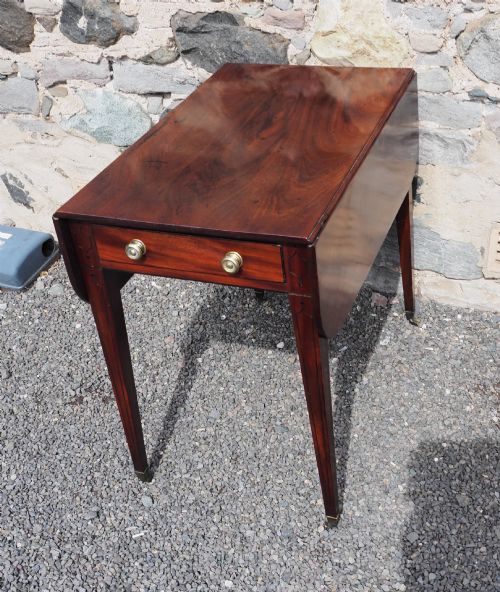
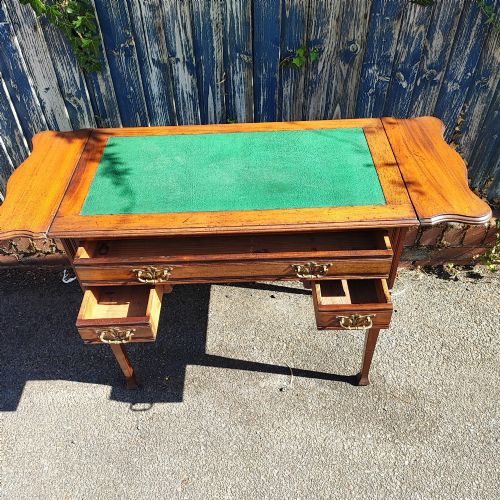
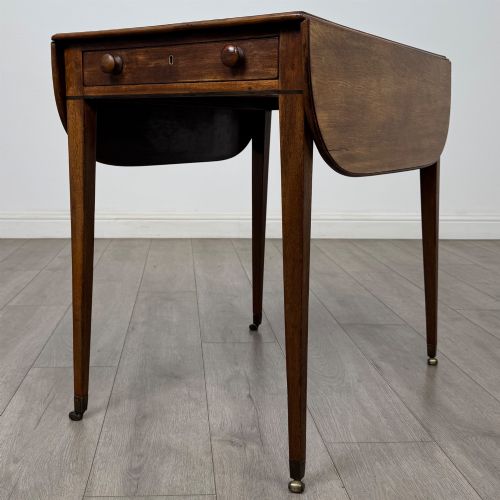
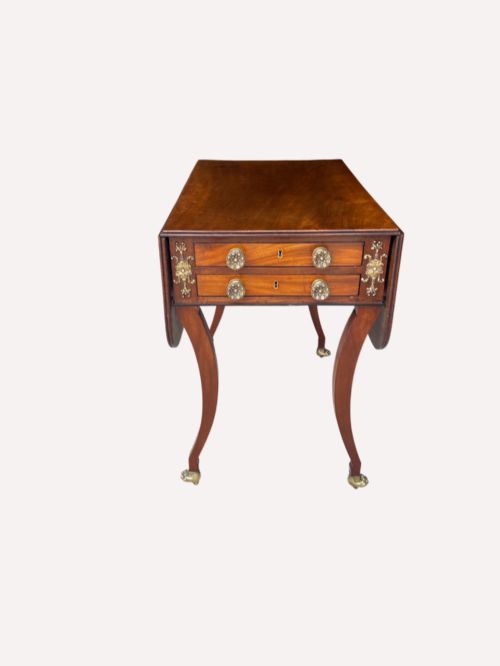
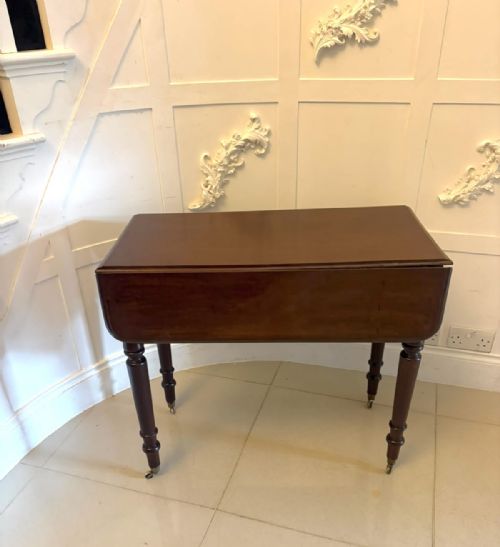
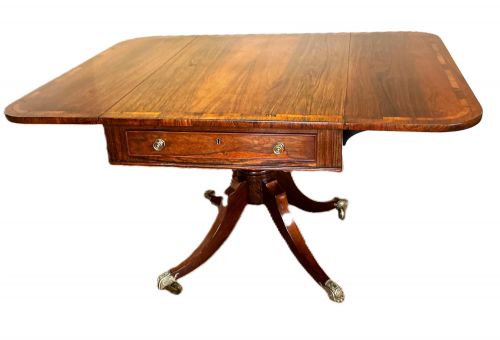
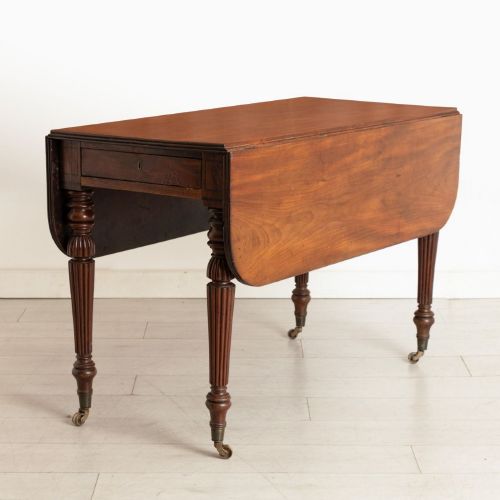
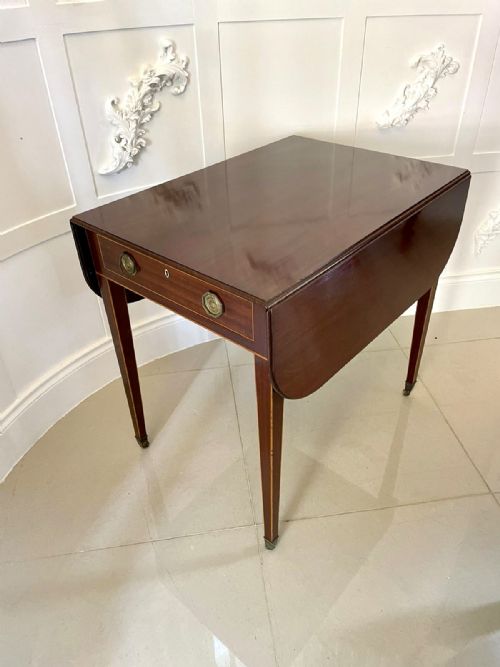
Mahogany Flap Side Table
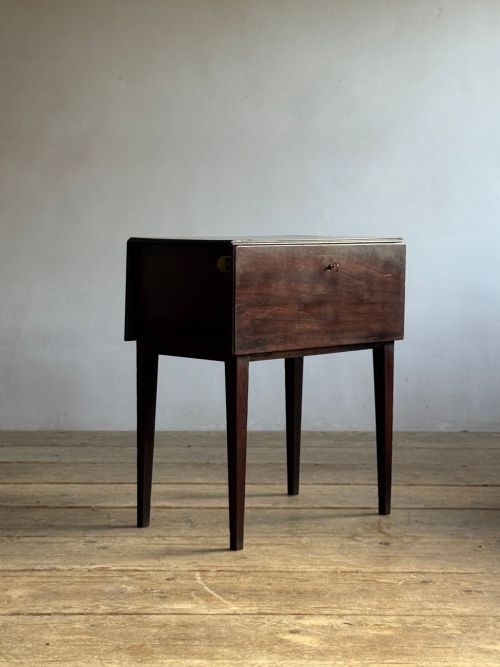
A mahogany flap side table brings versatile drop leaves and rich timber to compact spaces, offering practical surfaces that fold away neatly when not in use.
Mahogany Flap Side Table
When you search for a mahogany flap side table, you encounter versatile drop-leaf designs intended for flexible use in smaller rooms. The selection spans the eighteenth, nineteenth, and early twentieth centuries, encompassing Georgian, Regency, Victorian, and Edwardian periods.
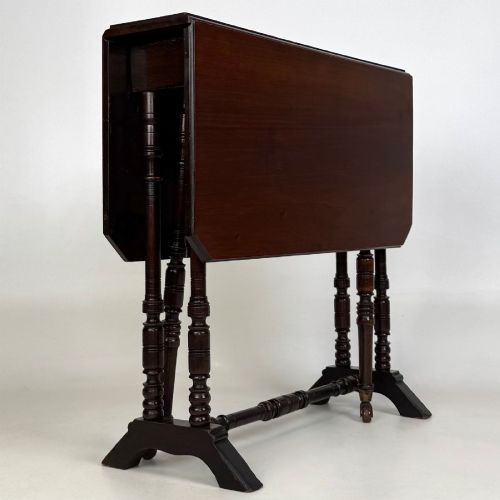
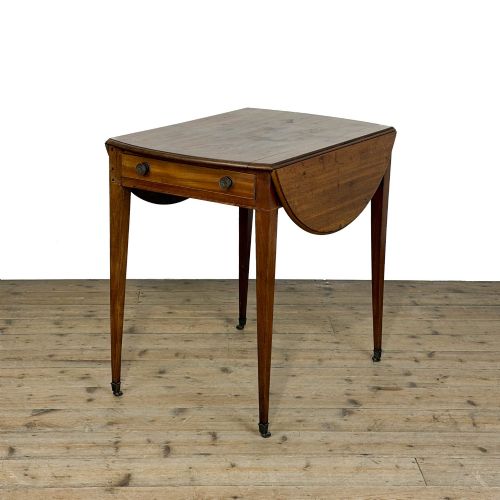
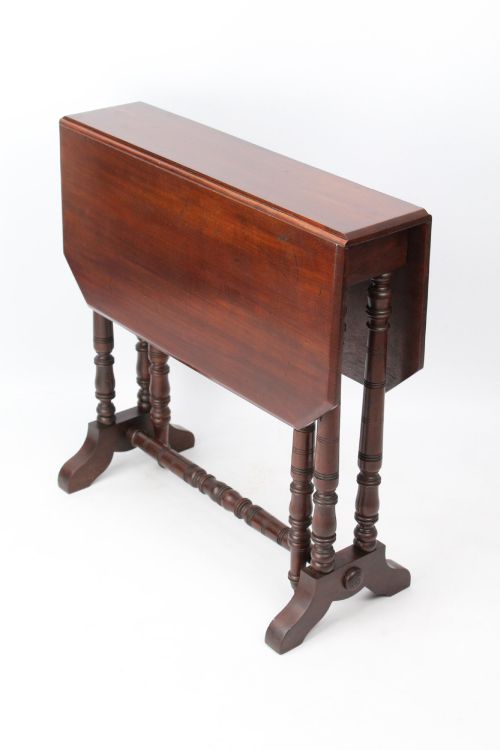
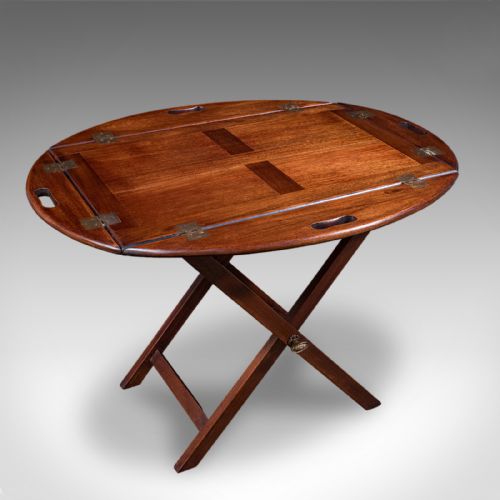
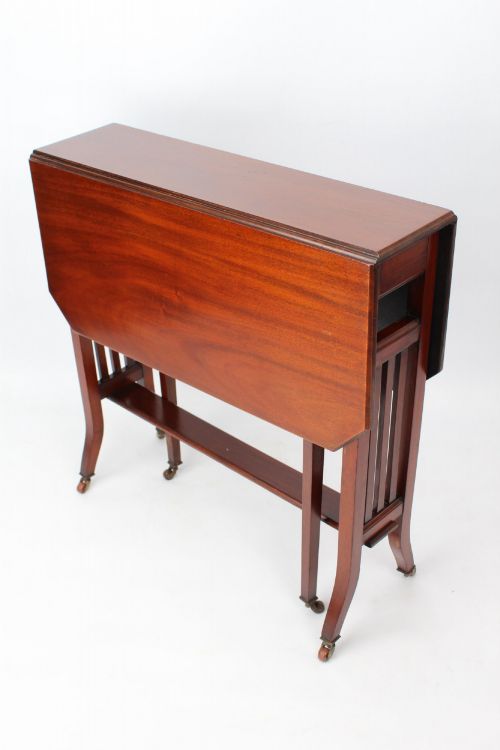
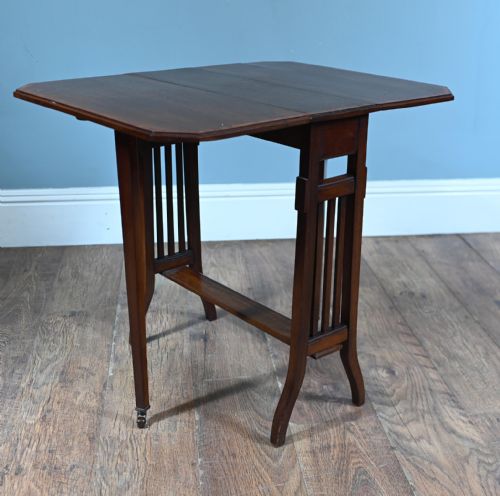
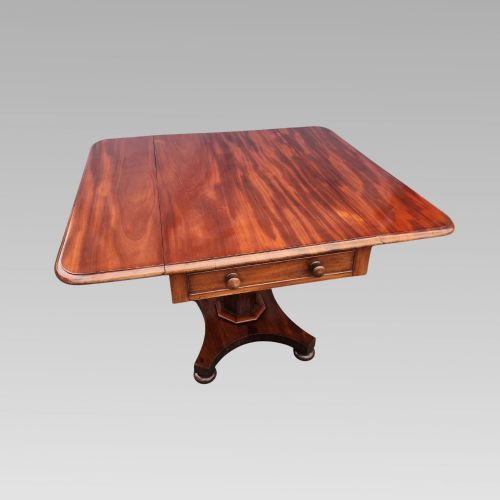
The most common form on this page is the Pembroke table, accompanied by Sutherland tables, sofa tables, and gateleg variants. These pieces originate from workshops spanning the Georgian era through to the Edwardian period, often featuring pivoting leaves supported by hinged brackets or swinging legs.
Materials and Construction
Makers utilised solid mahogany and Cuban mahogany, frequently enhanced by contrasting veneers of satinwood and boxwood inlay. Structural integrity relied on traditional joinery to support the folding flaps and occasional drawers.
Hardware typically includes brass castors, handles, and hinges, while selected pieces incorporate leather writing surfaces, ceramic elements, or painted decoration.
Listings feature mahogany, satinwood, boxwood, brass, leather, and ceramic elements across Georgian, Regency, Victorian, and Edwardian periods.
Grading Quality
Superior examples display finely figured timber grain and precise inlay work, reflecting the skill of the cabinetmaker. The smoothness of the drop-leaf action and the stability of the hinged supports indicate the standard of original construction.
Proportions also dictate distinction, with smaller, more uncommon formats generally commanding greater appreciation among collectors than standard dining variants.
The Mahogany Flap Side Table Glossary
- Pembroke table
- A small rectangular table with two hinged drop leaves on opposite sides, often fitted with a drawer. This form emerged in the eighteenth century and remained popular through the Victorian period.
- Sutherland table
- A narrow drop-leaf table featuring exceptionally wide flaps supported by pivoting gate legs. When folded down, the top becomes very slender for storage against a wall.
- Cuban mahogany
- A dense, dark timber harvested in the Caribbean, prized for its rich grain and deep colour. Cabinetmakers utilised it heavily during the eighteenth and early nineteenth centuries.
- Gateleg table
- A table with hinged leaves supported by legs that swing outward like a gate. This mechanism provides sturdy support for the extended surface.
- Marquetry
- Decorative veneer patterns formed by fitting together small pieces of various woods. Makers applied this technique to tabletop surfaces to create intricate geometric or floral designs.
Mahogany Flap Side Table: Frequently Asked Questions
How do I use a drop flap table in a small room?
Drop flap tables fit easily against walls with both leaves lowered, taking up minimal floor space until an extra surface is required.
Raising one or both flaps provides adequate space for writing, serving, or casual dining before folding the leaves back down.
How can I tell a Georgian table from a Victorian one?
Georgian tables often display restrained classical lines, Cuban mahogany timber, and fine inlay work associated with eighteenth-century cabinetmaking.
Victorian pieces tend to be heavier in construction, utilising darker finishes and occasional machinery-made components alongside traditional joinery.
Are these tables suitable for everyday dining?
Certain larger Pembroke and drop-leaf formats provide sufficient surface area for meals, though their primary historic use varied from writing to tea service.
Checking the stability of the leaf supports ensures the table safely handles daily use without straining the hinges.