


Slatted Luggage Bench
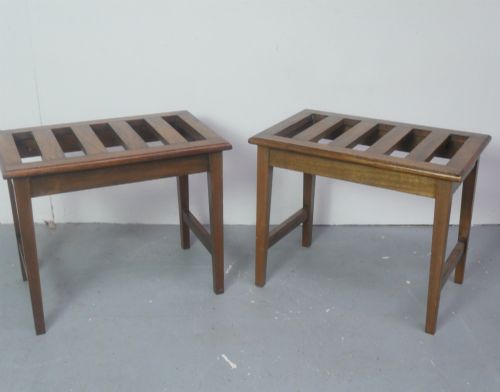
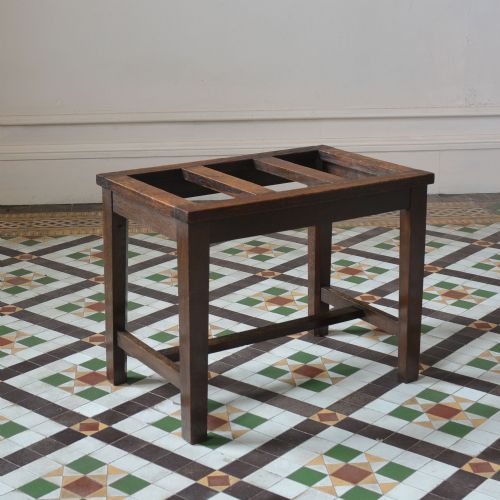
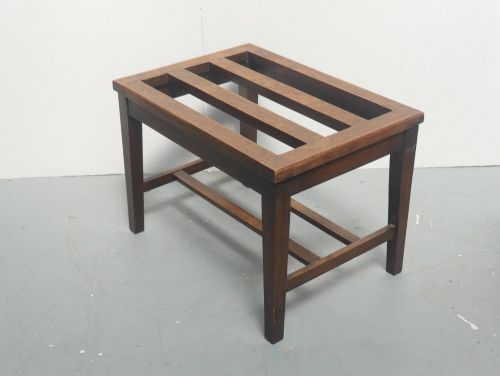
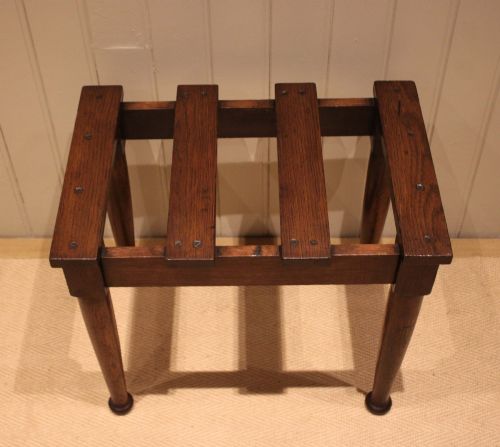
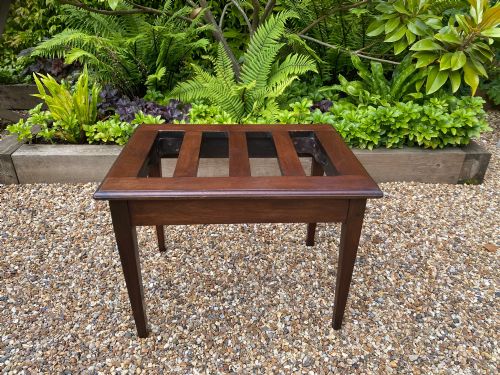
A slatted luggage bench solves the perennial problem of guestroom storage with robust, timber-slatted utility and compact proportions.
Slatted Luggage Bench
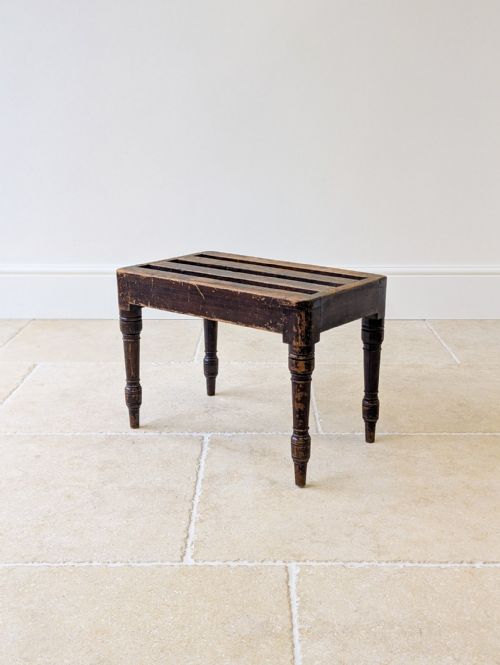
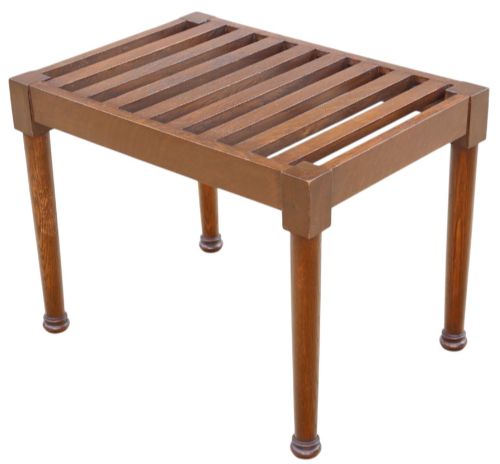
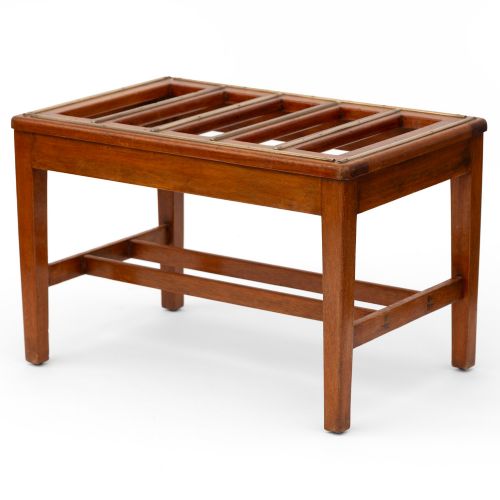
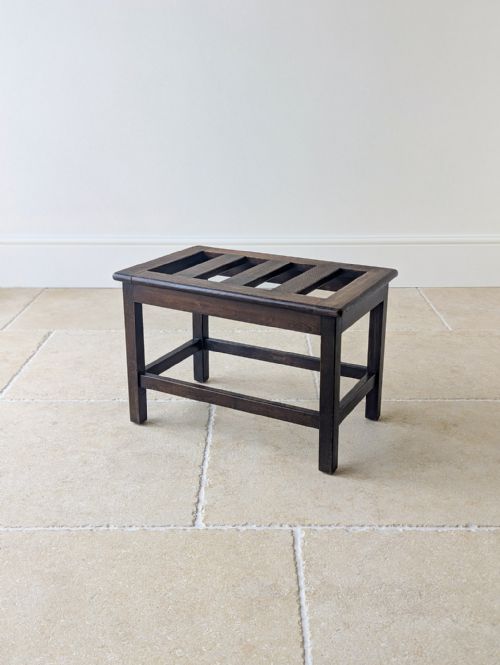
A slatted luggage bench provides a dedicated raised platform for unpacking cases, functioning equally well as a compact stool or bedside surface. These items appear across the Victorian, Edwardian, and mid-century periods, spanning simple utilitarian hotel furniture to more refined domestic examples.
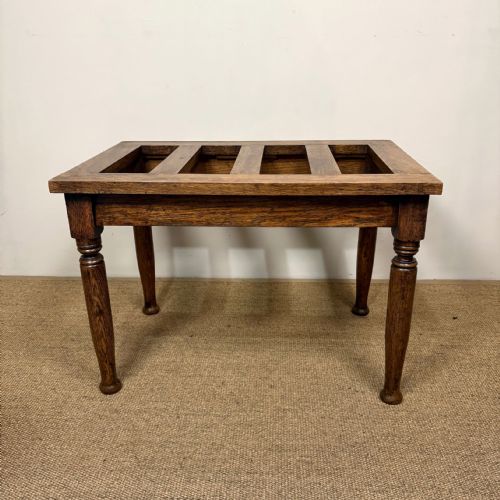
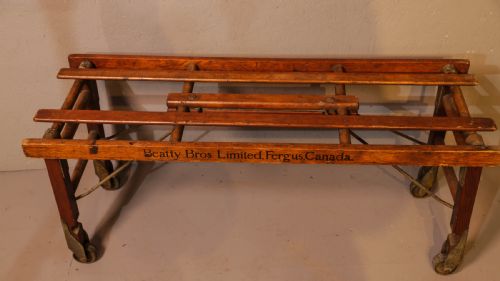
The most common forms on this page are oak and mahogany stands dating from the late nineteenth century through to the nineteen-twenties. These pieces typically feature folding or rigid frames topped with parallel wooden slats.
Makers ranged from large institutional suppliers to regional cabinet makers, often utilising durable hardwoods to withstand frequent loading. Regional items, such as Scottish oak variations, sit alongside hotel clearances and Canadian imports.
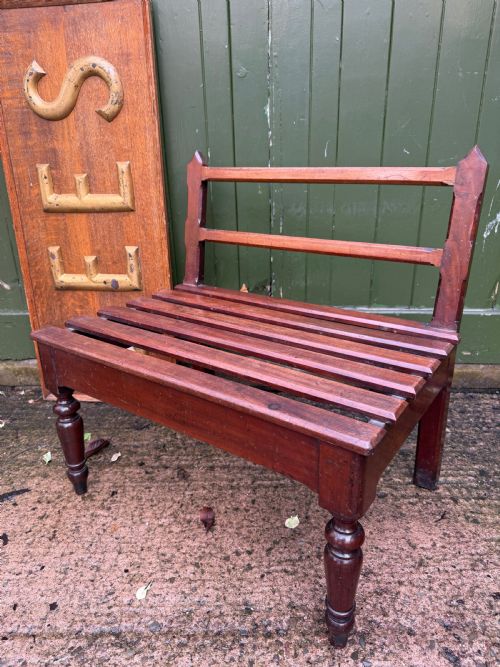
Whether designed with a raised rear upstand for protecting bedroom walls or built with plain rails, each piece serves its original domestic purpose with straightforward functionality.
How they were made
Construction relies heavily on durable hardwoods like oak, mahogany, walnut, beech, and ash, chosen for their structural strength under heavy luggage weights. Timber components are joined with traditional methods to endure regular folding or weight bearing.
Metal fittings such as brass hinges, screws, and iron brackets provide the structural articulation on folding models. These hardware elements are selected for hard wear, securing the slatted upper framework to the supporting legs.
Listings feature woods including oak, mahogany, walnut, beech, ash, yew wood, and painted pine across Victorian and Edwardian periods.
What varies in quality
The distinction between standard utility items and finer examples lies in the selection of timber and the finish of the woodwork. Superior pieces employ dense hardwoods with carefully turned supports and integrated structural details like raked rear upstands.
Proportions and stability dictate the upper tier of the range, where deeper dimensions and substantial timber thicknesses prevent shifting under loads. Lesser pieces utilise plain pine or basic softwood frames designed purely for short-term institutional function.
Beatty Bros Fergus Canada·Brown & Lamont·Waring & Gillow
The Slatted Luggage Bench Glossary
- Upstand
- A raised vertical barrier at the rear of a stand designed to protect walls from scuffs and luggage marks. This feature is often found on country house examples.
- Slats
- The parallel strips of timber forming the upper surface of the bench that support the weight of a trunk or bag. These are spaced to allow air circulation.
- Luggage stand
- A low support frame historically placed at the foot of a bed for guest luggage. The terms rack and bench are often used interchangeably.
- Hardwood
- Timber derived from broad-leaved deciduous trees such as oak, mahogany, and walnut. These materials provide the necessary strength for luggage support furniture.
- Turned leg
- A wooden support shaped on a lathe to create decorative contours and profiles. This method distinguishes more refined domestic furniture from utilitarian models.
Slatted Luggage Bench: Frequently Asked Questions
What is a slatted luggage bench used for today?
These benches serve as practical guestroom luggage stands, auxiliary seating, or low display surfaces in hallways.
Their compact footprints make them suitable for modern dressing rooms and compact bedrooms where floor space is limited.
How do I identify a Victorian luggage stand?
Victorian examples generally display heavier timber dimensions, darker patination, and robust joinery typical of nineteenth-century cabinet making.
Details such as turned ash or beech legs and deep proportions often point toward this earlier nineteenth-century window.
Are these benches sturdy enough for daily use?
Built primarily from dense hardwoods like oak and mahogany, these stands were originally constructed to support heavy leather travel trunks.
Their resilient timber frames and metal hardware ensure they remain fully capable of handling modern travel bags.
How do Edwardian luggage racks differ from earlier pieces?
Edwardian versions tend to exhibit slightly lighter proportions and simpler geometric forms compared to their mid-Victorian predecessors.
They frequently utilise polished oak and reflect the cleaner aesthetic preferences current in the early twentieth century.