


Dark Wood Luggage Stand
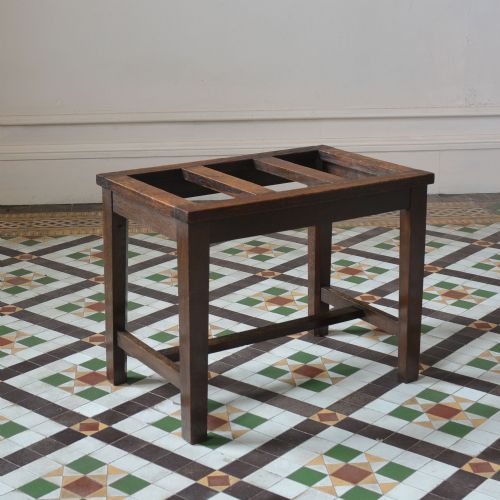
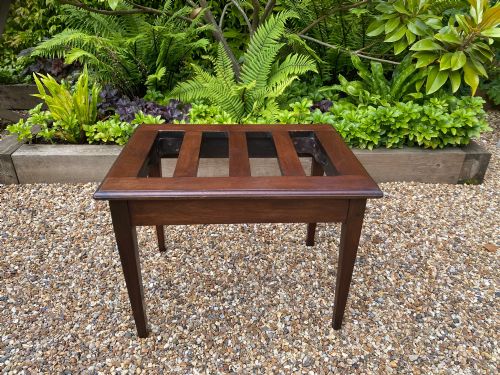
A dark wood luggage stand offers instant guest-room utility and classic timber character.
Dark Wood Luggage Stand
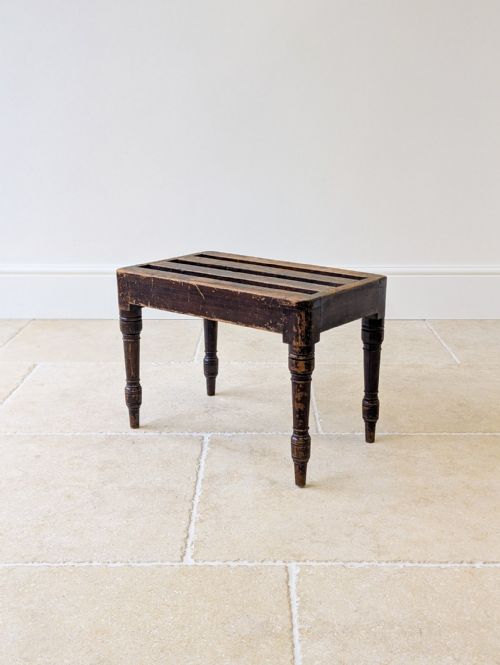
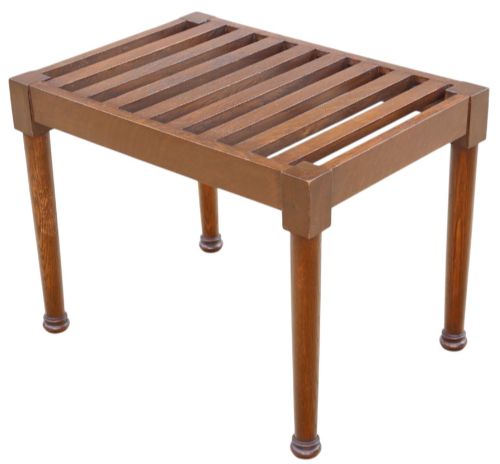
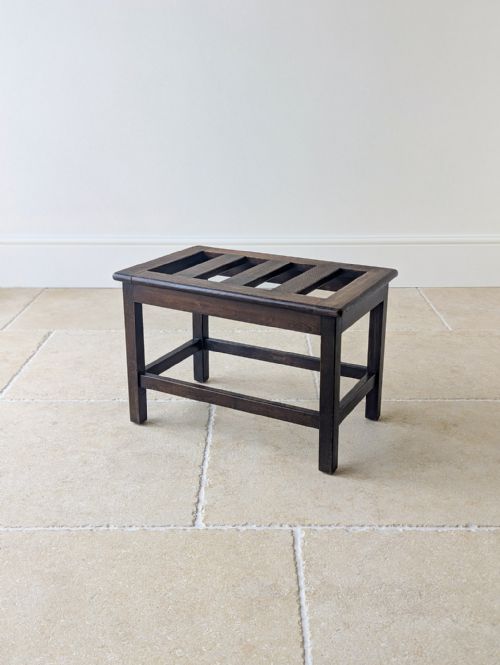
A dark wood luggage stand serves as a convenient folding platform for bags in a bedroom or dressing room. These pieces appear in forms such as luggage stands and luggage racks, providing a sturdy surface at a comfortable height.
The pieces on this page span from the late nineteenth century through the Edwardian era and into the early twentieth century. Buyers encounter styles ranging from Victorian and Edwardian to French Art Deco and Mid-Century Modern.
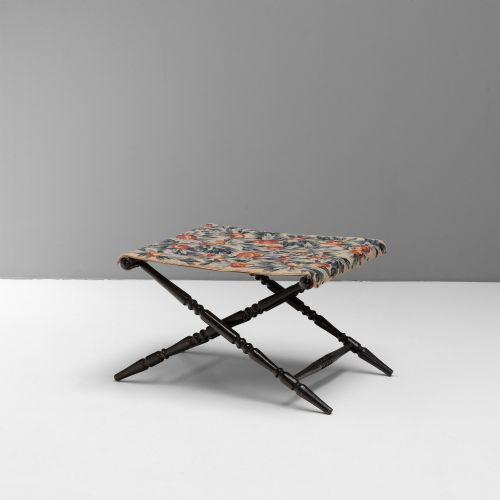
Makers utilised dark timbers and practical folding frames to create pieces that fold away when not in use. Oak, mahogany, and ebonised wood dominate the selection, often complemented by textile or tapestry straps.
Assessing quality
Quality in these pieces rests upon the selection of timber and the tightness of the structural joints. Superior examples feature dense mahogany or quarter-sawn oak with crisp mouldings and robust turning.
The condition and original tension of the webbing straps separate standard items from finer pieces. Well-preserved tapestry or textile webbing and original brass hardware elevate the desirability of a stand.
Some stands wear their original travel scuffs with pride, whispering tales of grand Victorian railway journeys.
The Dark Wood Luggage Stand Glossary
- Mahogany
- A dense, reddish-brown tropical hardwood prized for its stability and fine grain. Furniture makers utilised it extensively throughout the nineteenth century.
- Ebonised wood
- Timber treated with a dark stain or chemical process to imitate ebony. This finish provides a sleek, uniform dark surface.
- Edwardian
- Pertaining to the reign of King Edward VII, spanning from 1901 to 1910. Pieces from this era often display lighter proportions than their Victorian predecessors.
- Tapestry
- A heavy textile featuring woven designs used for upholstery and support webbing. It adds texture and colour to functional furniture pieces.
Dark Wood Luggage Stand: Frequently Asked Questions
How do I use a luggage stand at home?
Place the stand at the foot of a guest bed to hold visitor suitcases and travel bags. It folds flat for easy storage in a wardrobe when not in use.
Alternatively, position the piece in a dressing room as a convenient temporary surface for laying out clothing and accessories.
What woods are typical for these stands?
Makers relied heavily on mahogany and oak for their strength and rich dark tones. Ebonised wood also appears among the listings, offering a polished black finish.
These timbers provided the structural integrity needed to support heavy travel luggage without warping.
Are these stands easy to fold away?
Most antique examples utilise a hinged X-frame design that collapses flat in seconds. This mechanism allows for quick deployment when guests arrive.
The inclusion of original brass hinges ensures smooth movement across the folding joints.
How do I date an antique stand?
Examine the timber species, hardware style, and construction methods to determine the period. Victorian pieces tend to be heavier, whilst Edwardian examples often show lighter proportions.
Consulting the listed period details helps confirm whether a piece originates from the nineteenth or early twentieth century.