


Guest Room Luggage Bench
A guest room luggage bench offers visitors a sturdy place to settle their bags, combining period woodwork with practical hospitality.
Guest Room Luggage Bench
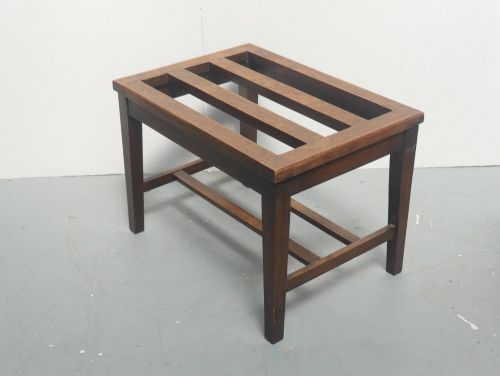
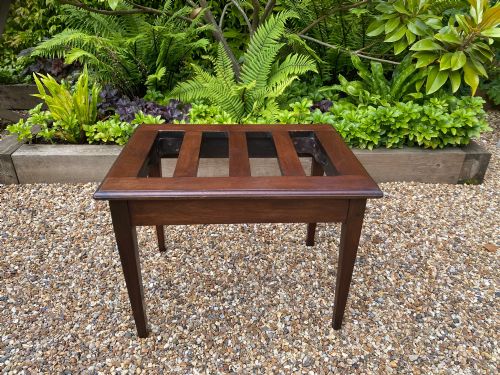
A guest room luggage bench provides a dedicated surface for visitors to unpack their bags without using the bed or floor. These practical items appear in forms such as luggage stands and luggage racks.
The selection on this page spans several eras, including the Victorian, Edwardian, and Mid-Century Modern periods. Pieces date from the nineteenth century through the early twentieth century, encompassing years like 1900, 1910, and 1920.
Makers and origins vary across the inventory, with examples ranging from Scottish oak pieces to specific workshop items like those by Brown and Lamont. Regional variations in English Country styles sit alongside formal architectural designs.
How they were made
Construction relies heavily on traditional timber framing using hardwoods such as oak, mahogany, walnut, beech, and yew wood. Workshops also utilised painted pine and stained finishes to achieve different surface appearances.
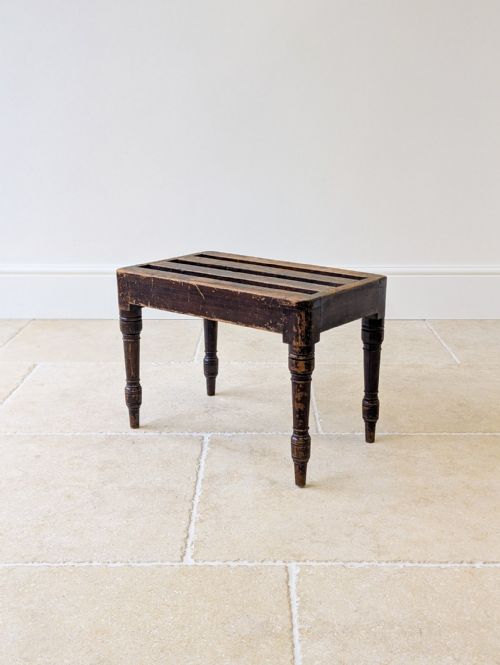
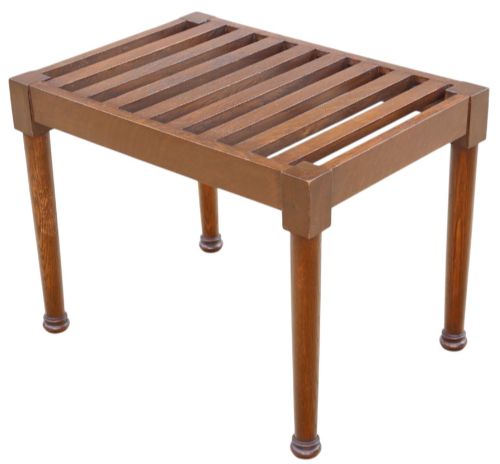
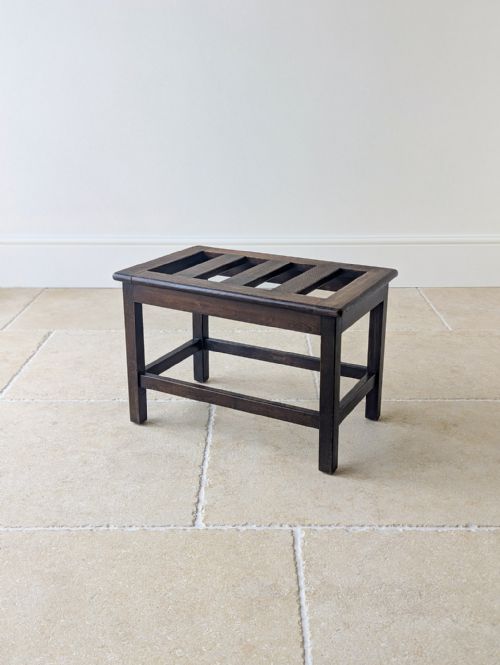
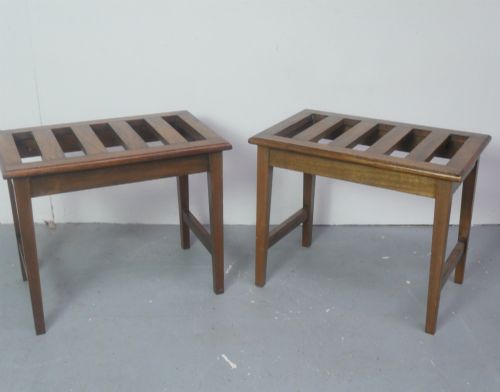
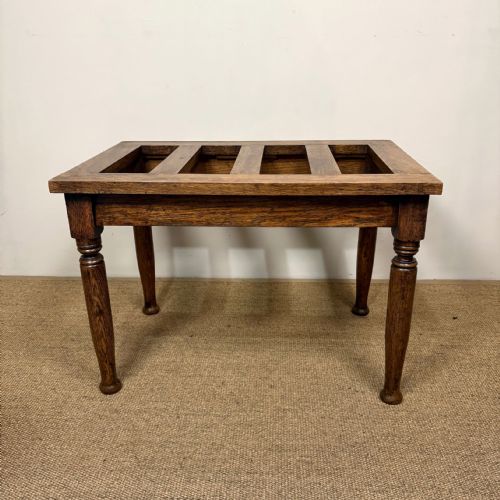
Joinery techniques focus on weight-bearing stability, ensuring the stands can support heavy travelling trunks and modern suitcases alike. Turned legs, folding frames, and slatted tops characterise the standard structural approach across these examples.
Listings feature timbers including oak, mahogany, walnut, beech, yew wood, and painted pine across Victorian and Edwardian periods.
What varies in quality
The distinction between standard examples and superior pieces rests on timber selection and decorative detail. Finer stands employ figured woods like yew or walnut and feature careful turning on the legs rather than plain utility framing.
Makers' marks and attribution elevate specific pieces above anonymous workshop production, as seen in signed Victorian items. Structural integrity also separates utilitarian survivors from refined pieces intended for principal guest chambers.
Brown and Lamont
The Guest Room Luggage Bench Glossary
- Luggage stand
- A low wooden frame designed to hold a suitcase or trunk at a convenient height for unpacking. These pieces typically fold for storage when not in use.
- Luggage rack
- An alternative term for a stand, often featuring slatted timber tops to support travel bags. They appear in various woods including oak and mahogany.
- Victorian
- A period spanning the reign of Queen Victoria, associated here with robust nineteenth-century timber construction. Pieces from this era often display heavier proportions.
- Edwardian
- A style period covering the early twentieth century, noted for lighter forms and refined aesthetic touches. Oak and mahogany were common during this time.
- Yew wood
- A dense, highly figured timber prized by makers for its distinctive grain patterns. It yields unusual pieces with rich visual character.
Guest Room Luggage Bench: Frequently Asked Questions
What is a guest room luggage bench?
A guest room luggage bench is a raised wooden stand designed to hold a suitcase off the floor. It gives visitors a convenient surface for unpacking.
These pieces combine traditional furniture craftsmanship with everyday practicality. They fold or stay rigid depending on the specific period design.
How do I date a luggage stand?
Dating relies on timber choices, construction methods, and stylistic cues linked to periods like the Victorian or Edwardian eras. Nineteenth-century examples often feature heavier turning and denser hardwoods.
Later pieces from the 1920s show different proportions and finish treatments. Maker signatures can also help pinpoint the exact decade of manufacture.
Where should I place a luggage rack?
A luggage rack belongs in a spare bedroom or guest suite where visitors need a place for their bags. Placing it near a wardrobe makes unpacking straightforward.
Many owners fold them away in a cupboard until guests arrive. Others leave them out permanently as part of the room's traditional furniture arrangement.
Are these benches strong enough for heavy bags?
These benches were originally built to support heavy nineteenth-century travel trunks and leather suitcases. Their solid wood construction makes them well-suited for modern luggage.
Timbers like oak, mahogany, and beech provide the structural rigidity needed for daily guest use. Period joinery ensures they remain stable under significant weight.