

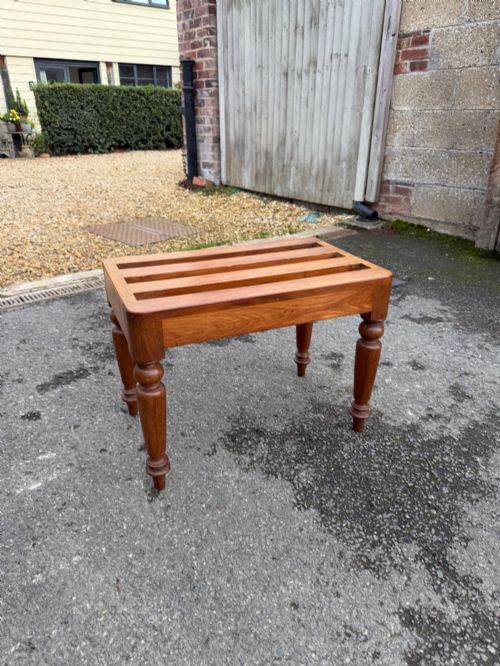
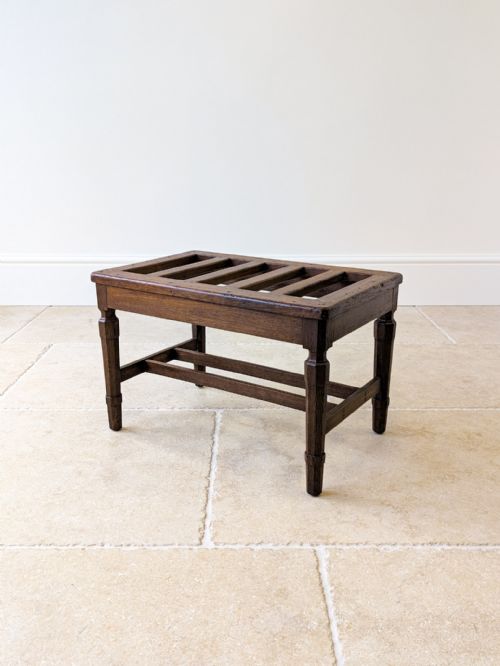
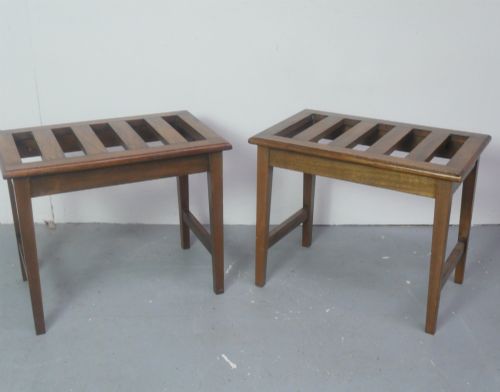
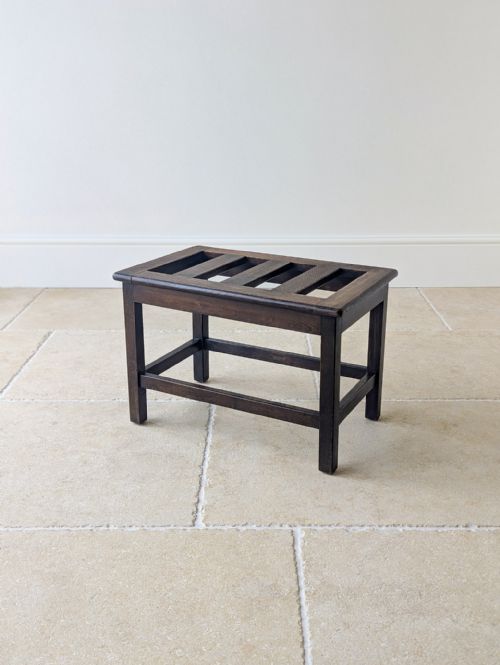
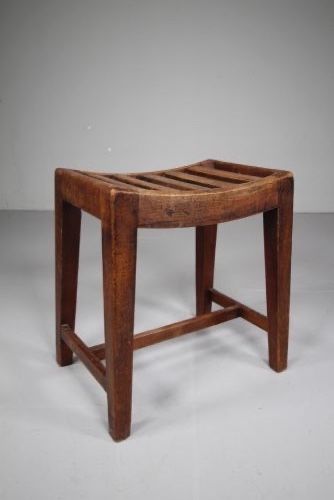
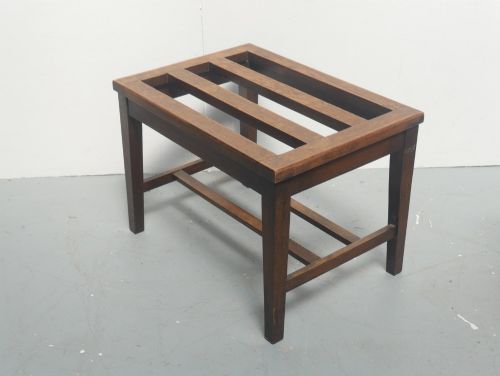
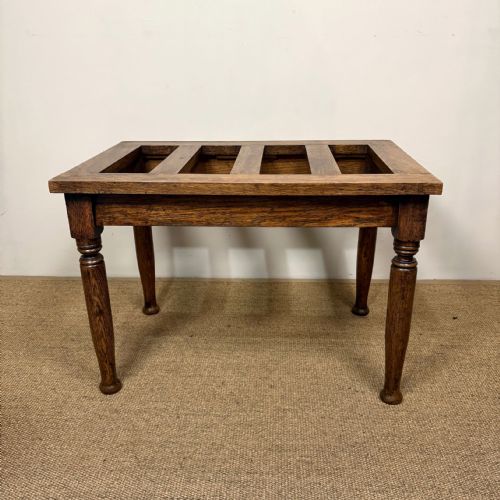


Low Slatted Wooden Bench
A low slatted wooden bench offers practical surface space and traditional seating, built from diverse timbers across multiple historical periods.
Low Slatted Wooden Bench
A low slatted wooden bench usually appears in luggage rack, luggage stand, stool, or garden chair forms within the evidence. These functional pieces provide sturdy utility and compact seating for bedrooms, halls, or gardens.
The versions most likely to meet you on this page date from the nineteenth century, the Victorian era, and the Edwardian period. Examples stretch from eighteenth-century Georgian designs up to the nineteen-twenties.
Makers shaped these forms from oak, mahogany, walnut, teak, hardwood, timber, yew wood, and painted pine. Certain items incorporate cast iron alongside wooden slats, while others originate from specific contexts like the Calcutta Polo Club.
How they were made
Carpenters utilised solid timbers including oak, mahogany, walnut, teak, and yew wood to construct the slatted surfaces and supportive frames. Some variants combined timber slats with durable cast iron elements for structural reinforcement.
Working across Georgian, Victorian, Edwardian, and later twentieth-century styles, makers shaped timber into functional luggage stands, shaped stools, and garden chairs.
Low Slatted Wooden Bench Retail Price Guide 2026
Typical asking prices for low slatted wooden bench among the pieces listed under this phrase on Sellingantiques today, from the lower quarter to the upper quarter. They describe what is for sale here now, not the wider market.
One set of Victorian garden chairs on record served the Calcutta Polo Club before finding its way to the marketplace.
What varies in quality
The choice of material creates a distinct hierarchy, ranging from standard painted pine to rich hardwoods such as mahogany, walnut, and yew wood. Selected timbers determine both the weight and the visual depth of the slatted top.
Period origin and construction details separate standard examples from pieces carrying specific regional or institutional origins, such as Scottish oak or items linked to the Calcutta Polo Club.
The Low Slatted Wooden Bench Glossary
- Luggage rack
- A low stand featuring horizontal slats designed originally for holding travel bags in bedrooms or dressing rooms.
- Luggage stand
- A stable elevated frame with a slatted top used for resting cases and trunks at a convenient height.
- Slatted
- Constructed with narrow parallel strips of wood spaced evenly apart to form a surface.
- Yew wood
- A dense, characterful timber with distinct grain patterns utilised for select furniture pieces.
Low Slatted Wooden Bench: Frequently Asked Questions
What is a low slatted wooden bench used for?
These items function primarily as luggage stands or low stools to hold bags, support seating, or display objects.
Historically placed in guest rooms or hallways, they provide accessible surface space without blocking light or views.
How do I date a wooden luggage stand?
Dating relies on observing construction methods, timber choices, and stylistic cues associated with periods like the Victorian or Edwardian eras.
Georgian and nineteenth-century examples often exhibit hand-cut joints and denser native hardwoods compared to later items.
Are these benches suitable for daily seating?
Many sturdy luggage racks and stools function well as low seats or footrests in domestic spaces.
Their slatted wooden construction is designed to bear significant weight from luggage or bodies alike.
Which woods were commonly used?
Makers constructed these pieces from a wide selection of timbers including oak, mahogany, walnut, teak, yew wood, and pine.
Some variants also integrated cast iron supports alongside the wooden slats for added strength.