

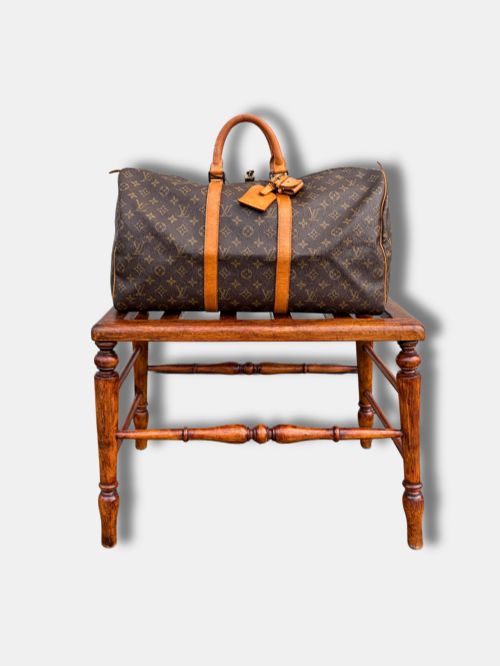
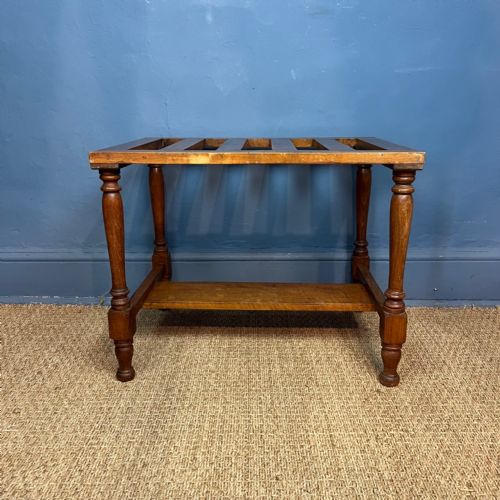
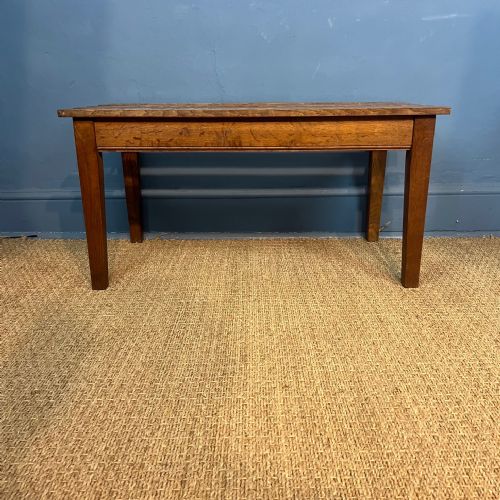
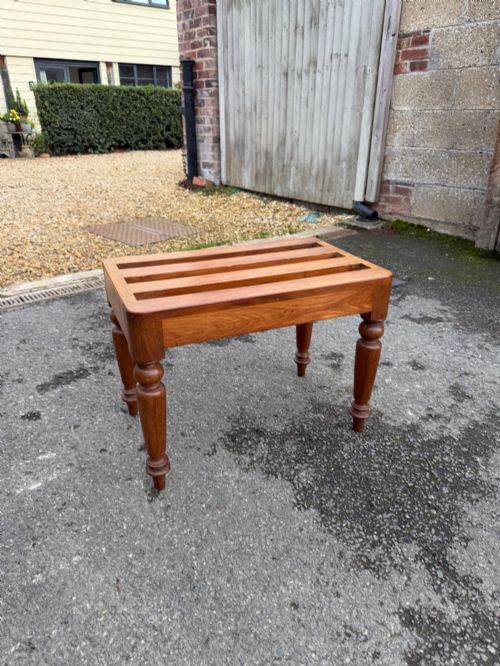
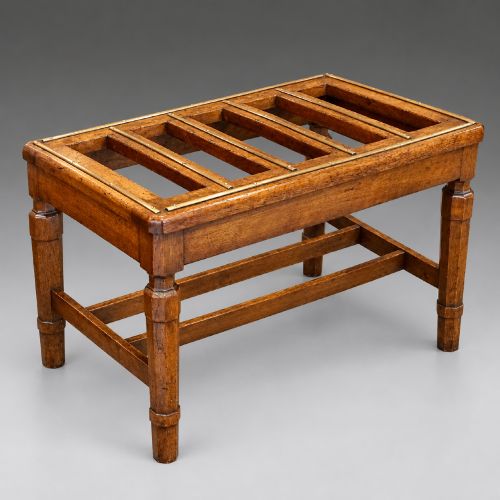
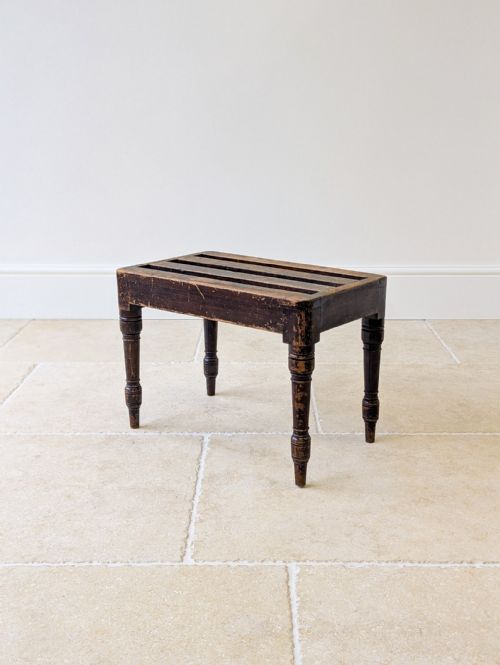
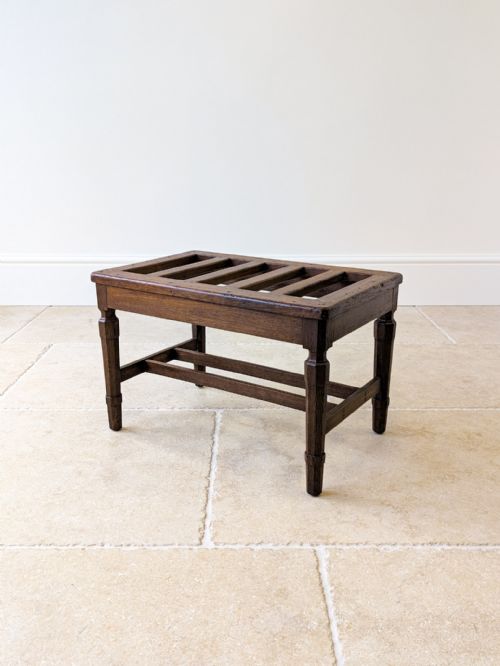
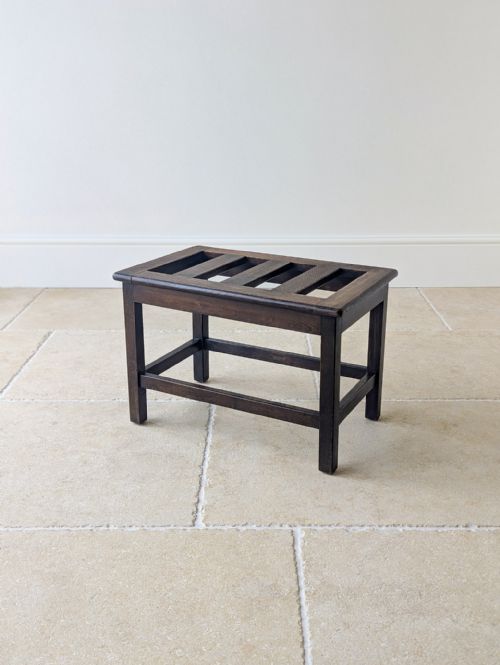
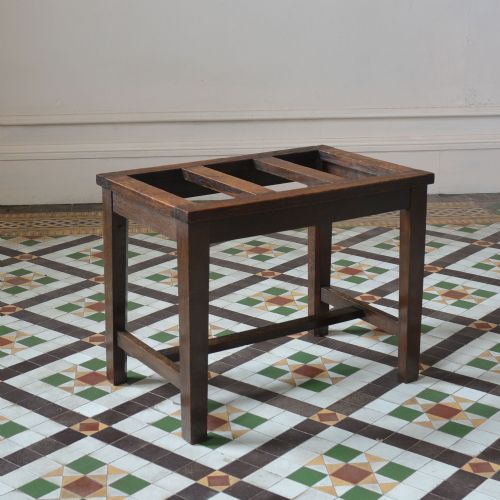
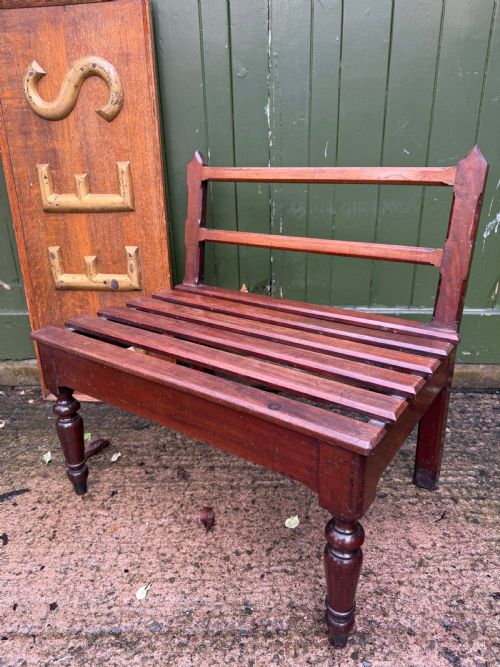


Slatted Wooden Trunk Stand
A slatted wooden trunk stand is a practical piece of period furniture designed to hold heavy luggage off the floor.
Slatted Wooden Trunk Stand
A slatted wooden trunk stand serves as a sturdy platform for luggage in bedrooms and dressing rooms, originating in periods from the nineteenth and early twentieth centuries. These pieces appear in forms such as luggage racks, luggage stands, and wardrobes, reflecting the travel habits of the Victorian and Edwardian eras. Buyers searching for a slatted wooden trunk stand will encounter variations spanning Victorian, Edwardian, and mid-century styles.
The materials used across these items include oak, beech, mahogany, ash, and painted pine, often joined by brass, iron, canvas, and leather. Certain examples carry stamps or signatures from makers such as Brown & Lamont, Beatty Bros Fergus Canada, Waring & Gillow, and Louis Vuitton. Others reflect specific provenances like West End hotels or take the form of French luxury luggage.
Most selections on this page date from the Victorian and Edwardian periods, alongside nineteenth-century examples and pieces from the decades around nineteen hundred and nineteen-twenty. The structures range from simple folding racks to stands with raised and raked rear upstand supports of deep proportions. Every piece provides a functional surface intended to elevate trunks and bags for easy access.
Materials and construction
Makers built these stands using domestic and imported hardwoods including oak, mahogany, beech, ash, and pine. The horizontal slats allowed airflow beneath heavy leather and canvas trunks, preventing dampness in period guest chambers.
Metal components such as iron brackets and brass fittings added structural integrity to folding and stationary frames. Selected trunks incorporate exterior canvas and leather coverings over wooden carcasses, secured with metal studs and reinforced corners.
Slatted Wooden Trunk Stand Retail Price Guide 2026
Typical asking prices for slatted wooden trunk stand among the pieces listed under this phrase on Sellingantiques today, from the lower quarter to the upper quarter. They describe what is for sale here now, not the wider market.
Listings feature woods such as oak, mahogany, beech, ash, and pine, alongside iron, brass, canvas, and leather.
Distinctions in quality
Quality rests upon the selection of timber and the robustness of the joinery supporting heavy loads. Stands featuring dense hardwoods like oak or mahogany demonstrate greater durability than softer pine alternatives.
Maker marks from established firms such as Waring & Gillow or Louis Vuitton elevate an item's status. Subtle details like a raised and raked rear upstand support or polished finishes distinguish finer examples from utility pieces.
Brown & Lamont·Beatty Bros Fergus Canada·Waring & Gillow·Louis Vuitton
The Slatted Wooden Trunk Stand Glossary
- Upstand
- A vertical barrier at the rear of a furniture piece designed to prevent items from sliding off. This feature appears on deeper country-house stands.
- Slats
- Parallel strips of wood arranged with spaces between them to form a flat supporting surface. They allow air circulation beneath luggage.
- Malle
- French for a large trunk or chest used for travel. These pieces often feature fitted interior compartments and reinforced exterior structures.
- Luggage rack
- A folding or fixed stand designed to hold travel bags at a convenient height. They were standard furnishings in period bedrooms and hotel rooms.
Slatted Wooden Trunk Stand: Frequently Asked Questions
What is a slatted wooden trunk stand?
A slatted wooden trunk stand is a traditional piece of furniture built to support heavy luggage above floor level.
These stands use parallel wooden slats to hold leather and canvas trunks safely in bedrooms or dressing rooms.
How were trunk stands used originally?
Hotels and grand private houses utilised these stands so guests could pack and unpack without bending to the floor.
The raised design also protected expensive luggage from damp floors and drafty rooms.
Where should I place a trunk stand today?
A trunk stand fits well in a guest bedroom as a functional luggage holder or an open storage shelf.
You can also use smaller stands as occasional tables or plant displays in hallways and living spaces.
How do I identify a Victorian trunk stand?
Victorian stands typically feature dense timbers like oak, mahogany, or beech with heavier proportions and robust joinery.
Many incorporate turned legs and supportive rear upstands characteristic of nineteenth-century domestic furniture.