
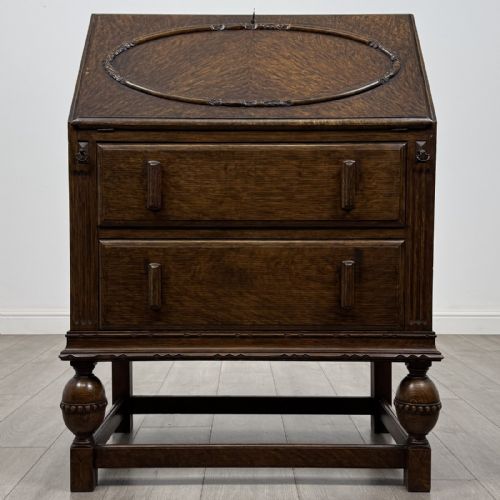
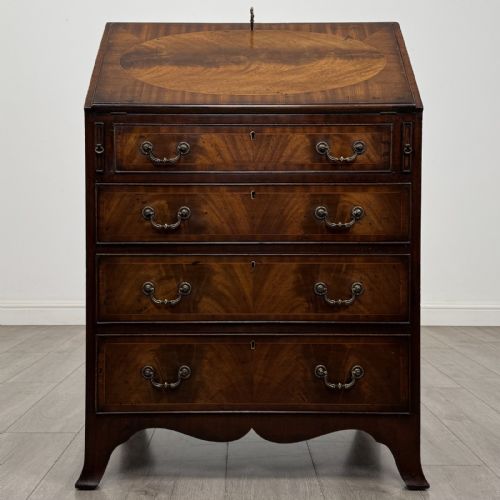
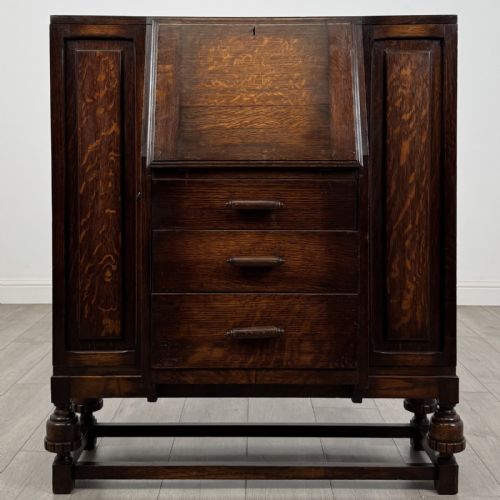
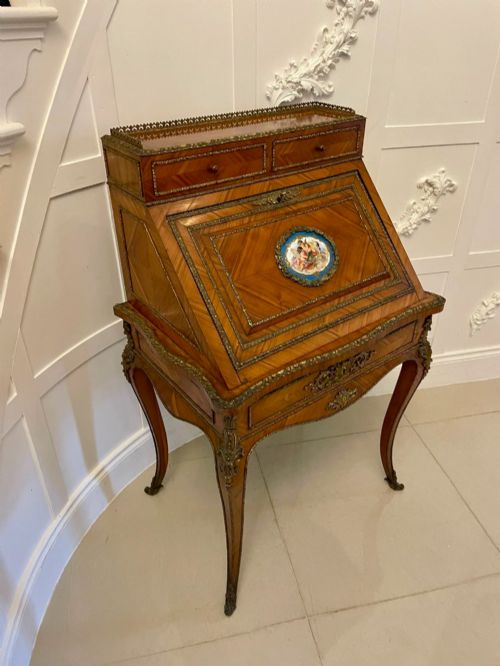
Slanted Front Bureau Desk
These slanted front bureau desk pieces offer fitted writing compartments behind sloping lids, combining practical workspace with concealed storage for everyday use.
Slanted Front Bureau Desk
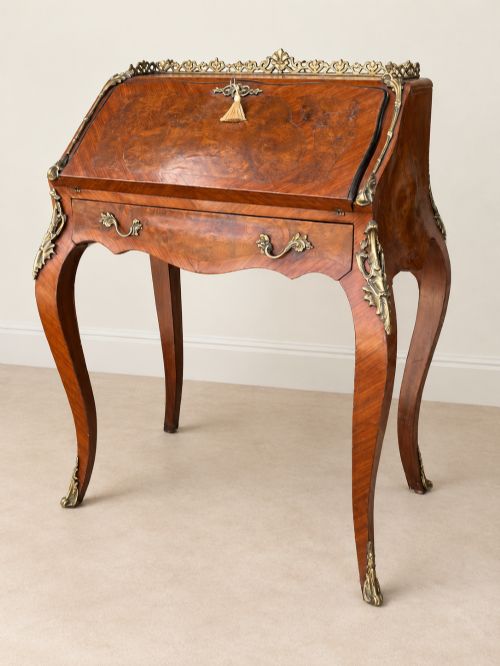
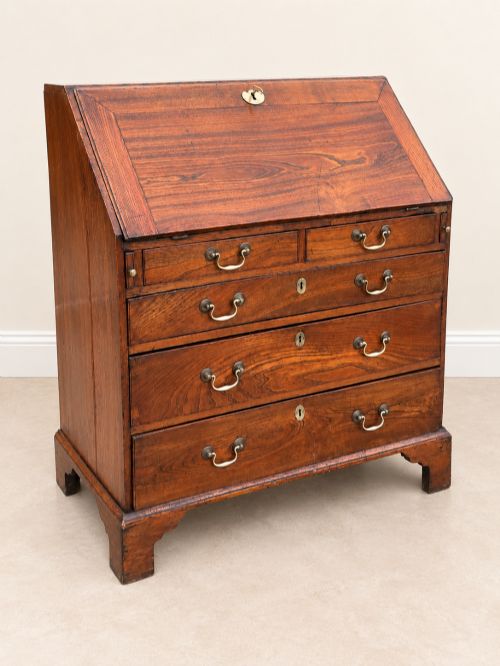
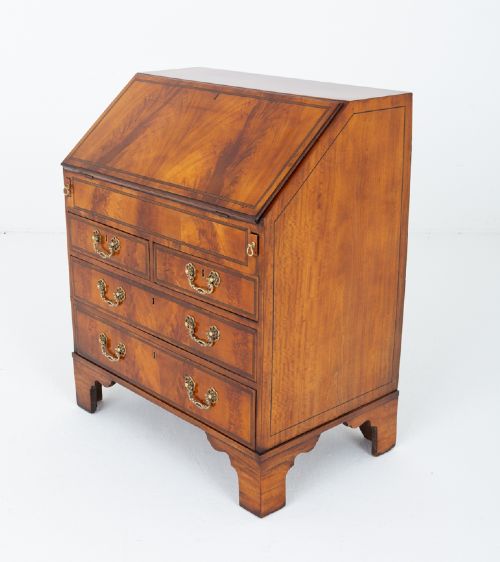
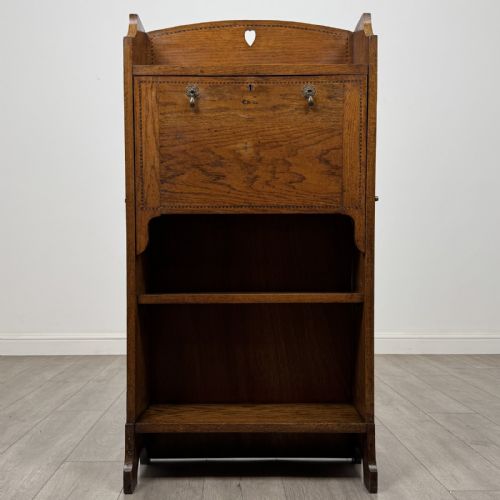
When you search for a slanted front bureau desk, you encounter writing furniture spanning the seventeenth century through to the Edwardian period and the nineteen-twenties. The forms range from compact writing desks and table-top versions to large bureau bookcases and two-part cabinets with fitted interior compartments.
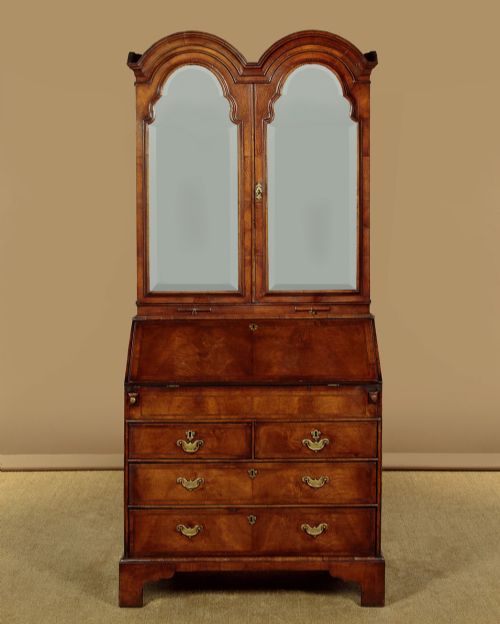
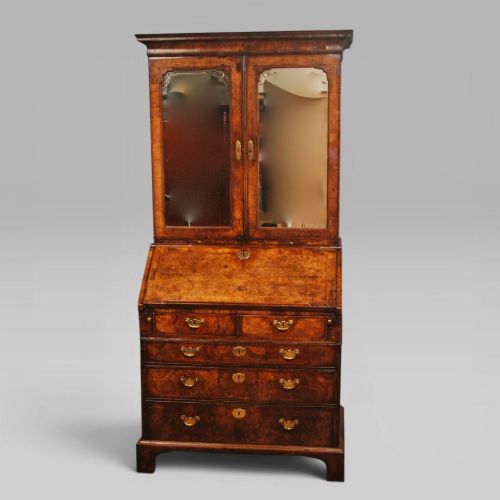
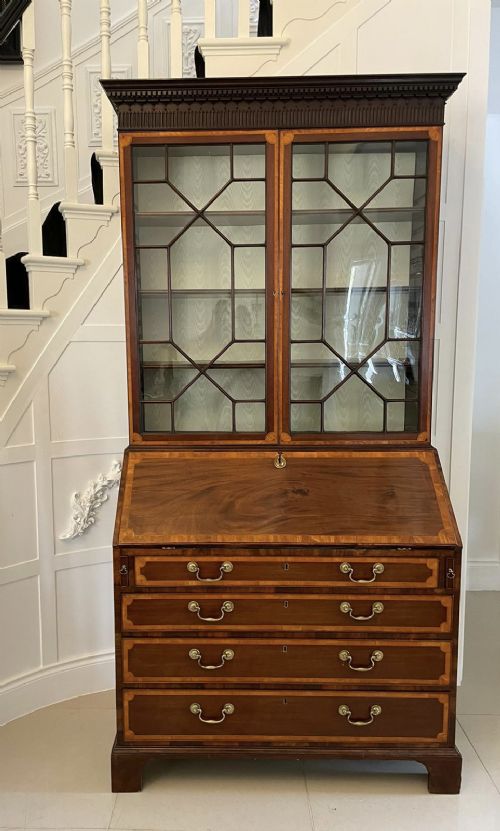
The pieces appearing most frequently originate from Georgian and Edwardian workshops, utilising timber construction scaled for domestic studies and reception rooms. Bureau bookcases combine the sloping writing desk base with upper shelving enclosed by glass or wooden doors.
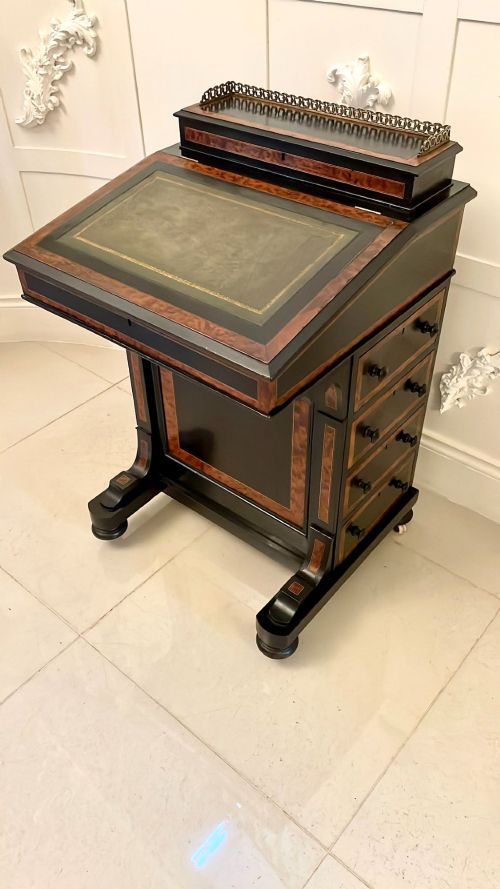
Examples stretch across varied regional styles including George II, George III, Queen Anne, Arts and Crafts, and Jacobean Revival. Bureau on stand formats and Davenport desks also appear alongside standard cabinet designs.
Materials and construction
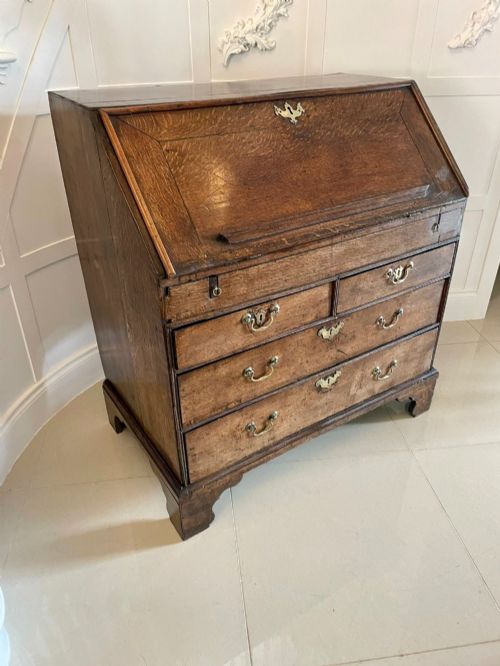
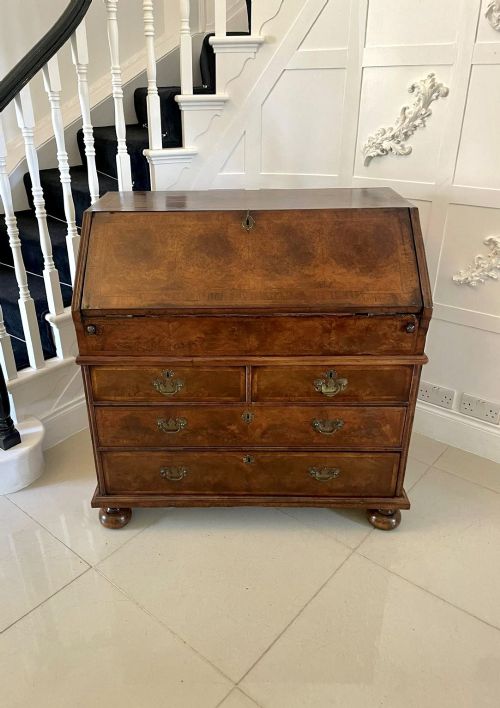
Cabinet makers constructed these pieces primarily in solid oak and mahogany, often employing burr walnut veneers for enriched surface grain. Specialised examples incorporate satinwood, yew wood, kingwood, and painted finishes.
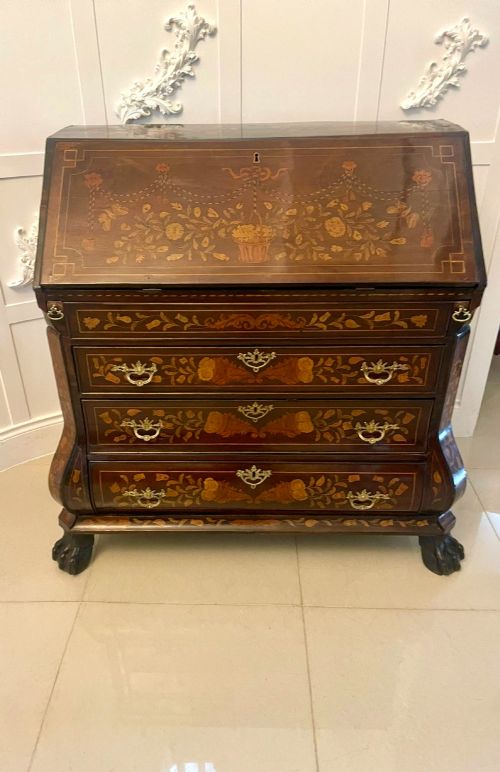
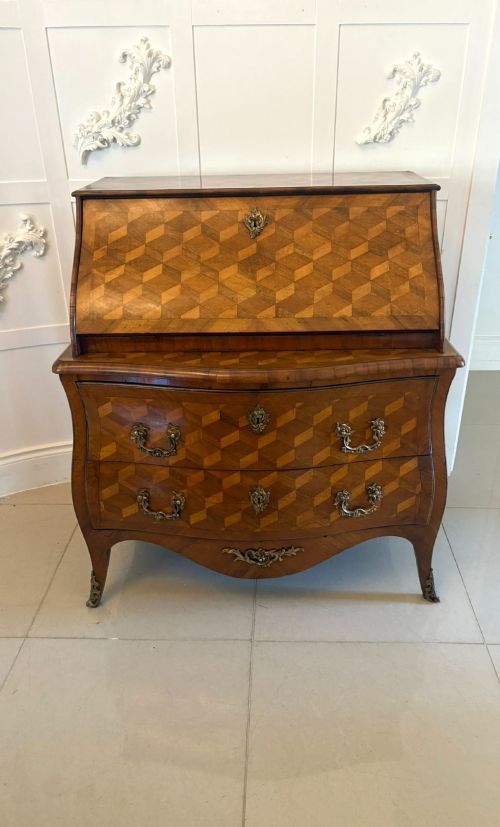
Surface decoration relies on floral marquetry, herringbone inlay, and parquetry, paired with brass handles and escutcheons. Internal writing surfaces frequently feature fitted compartments with stepped drawers, pigeon holes, and inset leather panels.
One early oak bureau bookcase adapted for television proves that historic cabinetry can still accommodate modern viewing habits.
Craftsmanship and timber selection
Quality rests upon the choice of timber figures, such as figured mahogany and burr walnut, matched across the sloping lid and drawer fronts. Superior pieces display intricate internal drawer arrangements and precise floral marquetry or parquetry.
Structural refinement shows in the execution of bracket feet, bombe shaping, and well-fitted interior writing compartments that operate smoothly within the cabinet frame.
Gillows·Heals of London
The Slanted Front Bureau Desk Glossary
- Bombe
- A bulging or convex outward curve on the front and sides of a cabinet or bureau. This swelling contour requires advanced woodworking skill.
- Marquetry
- Decorative patterns formed by fitting together thin veneers of wood and other materials onto a carcase. Floral designs and geometric motifs appear frequently on eighteenth-century pieces.
- Bureau bookcase
- A writing bureau combined with a shelving unit or cabinet on top. The upper section is enclosed by glazed or solid doors.
- Davenport
- A compact form of small writing desk featuring a sloped writing surface above a pedestal of drawers. These pieces became popular during the nineteenth century.
- Herringbone inlay
- A V-shaped arrangement of veneer strips resembling the skeleton of a fish. Cabinet makers used this technique to frame drawer fronts and bureau flaps.
Slanted Front Bureau Desk: Frequently Asked Questions
What is a slanted front bureau desk?
A slanted front bureau desk is a piece of furniture featuring an angled hinged flap that opens to reveal a writing surface and internal compartments. Below this writing flap sit a series of drawers for storage.
Such furniture developed to provide a private, enclosed space for correspondence and record keeping within domestic interiors. The sloping lid conceals the papers when closed.
How do I identify a Georgian bureau?
Georgian bureaus typically employ solid mahogany or walnut veneers, often displaying figured grain patterns on the sloping fall front. They commonly stand on bracket feet and feature brass handle hardware.
Inside, these pieces present fitted pigeon holes and small drawers, sometimes arranged in a stepped configuration. Construction details include hand-cut dovetails on the drawer carcasses.
What is a bureau bookcase?
A bureau bookcase combines a writing bureau base with an upper shelving cabinet enclosed by doors. This tall form maximises storage capacity by uniting desk space and a bookcase in one footprint.
Early versions from the walnut and mahogany periods feature glazed upper doors to display books. The lower section retains the characteristic sloping writing flap.
Where were bureau desks used?
Bureau desks served as practical writing stations in parlours, studies, and bedrooms of period homes. Their enclosed storage kept stationery and financial papers out of sight.
Compact variants like table-top bureaus and Davenport desks suited smaller rooms or dressing areas. Larger bureau bookcases functioned as primary administrative hubs in households before dedicated offices became common.