

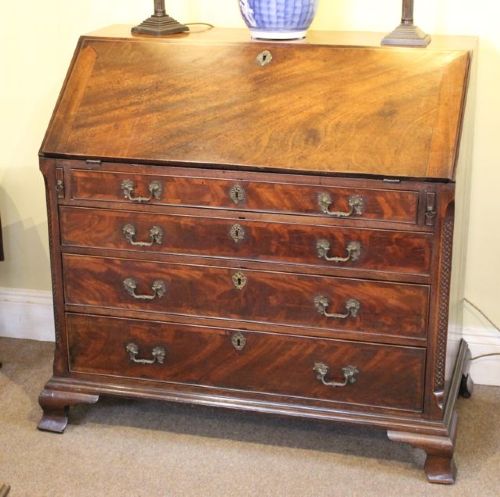
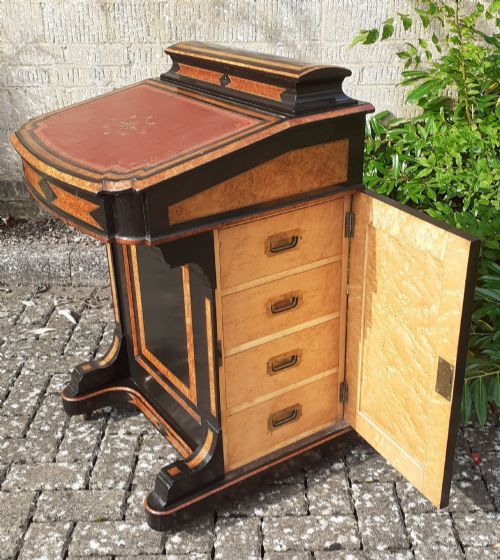
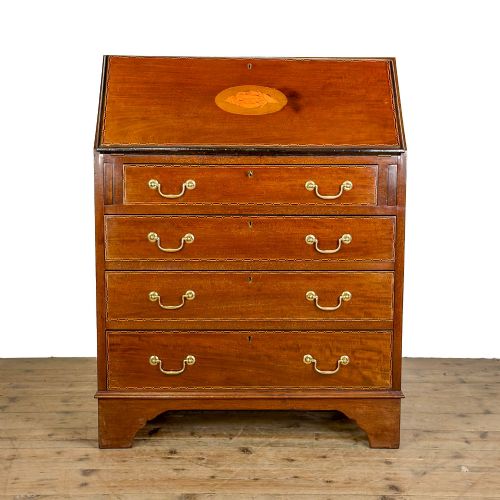
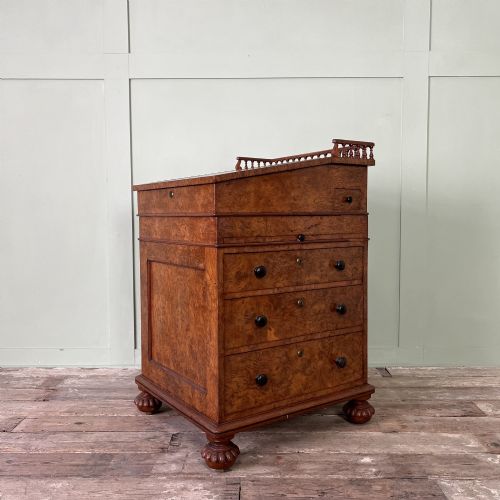




Slant Top Desk Drawers
These slant top desk drawers combine a sloping writing flap with practical storage, offering a traditional workspace built for serious correspondence.
Slant Top Desk Drawers
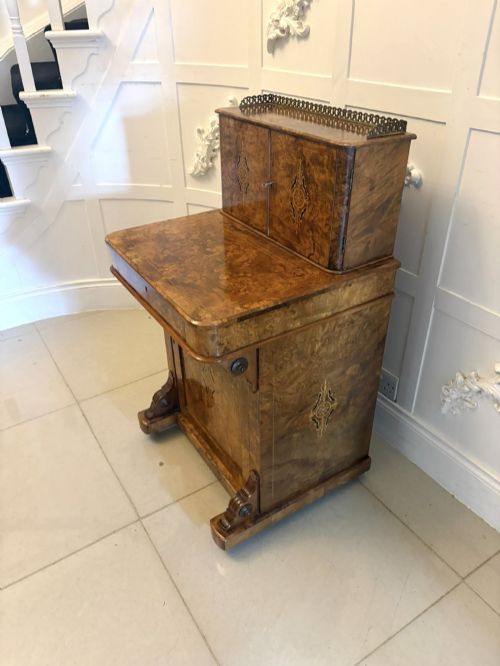
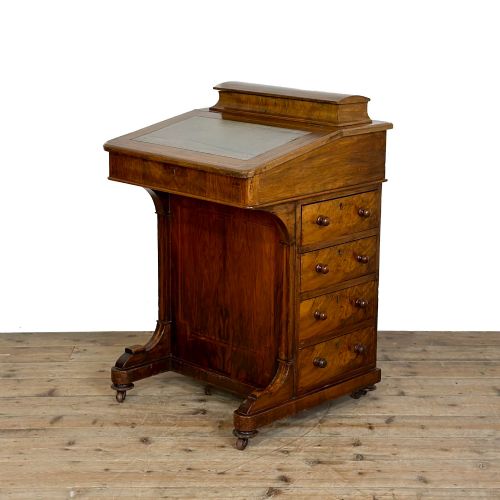
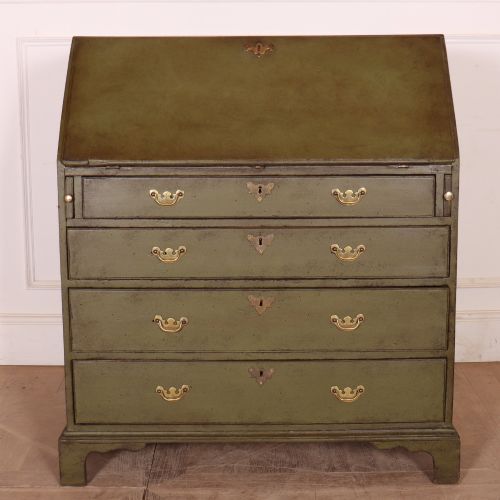
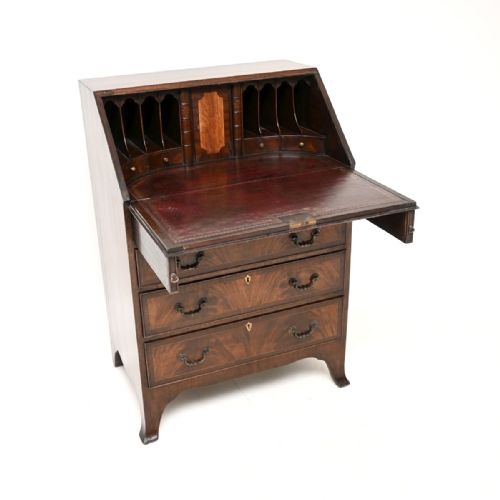
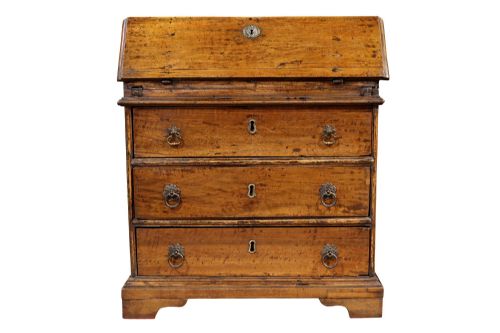
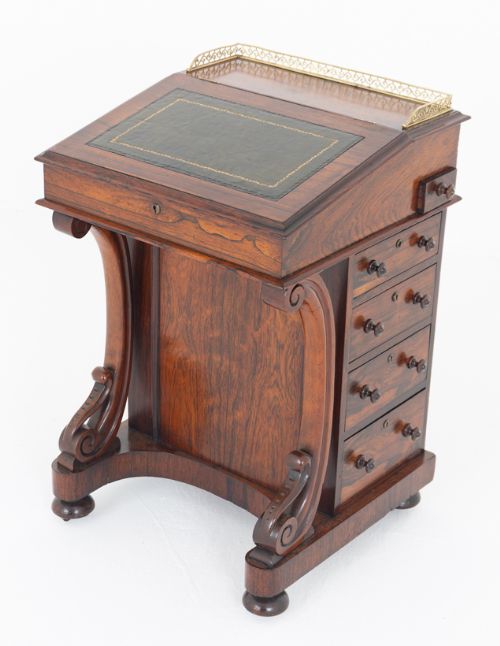
Slant top desk drawers encompass writing furniture built with hinged sloping lids that conceal fitted interiors and compartments. The pieces seen here range from compact Davenport desks to full-sized Georgian and Victorian bureaux.
The most common forms on this page include mahogany and walnut bureaux alongside smaller Victorian Davenport desks. These items span periods from the seventeenth century through to the Edwardian era, featuring vernacular oak and crossbanded hardwoods.
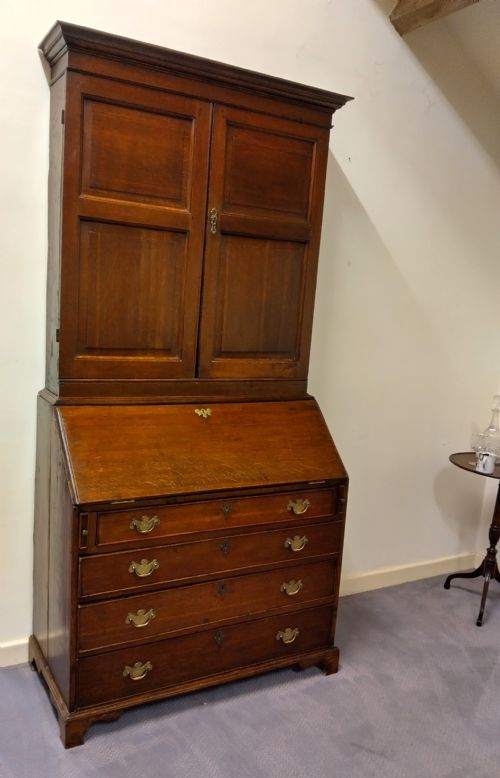
Buyers will encounter both standalone writing cabinets and bureau bookcases fitted with glazed upper sections. Tabletop versions also appear, demonstrating the diverse scale of these historical writing forms.
Materials and construction methods
Cabinet makers utilised dense native and imported timbers, including mahogany, walnut, oak and rosewood, frequently selecting figured veneers and burr walnut for decorative surfaces. Secondary woods such as elm support internal partitions and secondary drawer linings.
Construction techniques involve dovetail joints for drawer boxes and intricate framing for stepped interiors containing secret compartments. Brass hardware, leather writing inserts and original ironwork complete the structural and functional design.
Compact Davenport desks appear alongside large bureau bookcases and tabletop variants.
Distinctions in quality
Quality rests upon the selection of timber veneers, the precision of internal pigeonholes and the preservation of original handles, keys and hinges. Finer examples display elaborate crossbanding, marquetry inlay and well-figured grain across the primary surfaces.
Structural integrity, the smoothness of drawer operation and the retention of a patinated finish determine the standing of each piece. Later alterations or replaced internal elements differentiate standard vernacular items from superior cabinet-maker pieces.
Gillow and Co·Maple and Co
The Slant Top Desk Drawers Glossary
- Bureaus
- A sloping writing desk featuring a hinged lid that opens to reveal drawers and pigeonholes. These items typically sit atop a chest of drawers.
- Davenport
- A compact pedestal desk popular in the nineteenth century featuring a sloped writing surface and drawers opening to the side. They often incorporate writing ledges and stationery compartments.
- Crossbanding
- A decorative border of veneer laid perpendicular to the surrounding grain to frame a panel or drawer front. This technique defines higher grade cabinet work.
- Stepped interior
- An arrangement of internal drawers and pigeonholes rising in tiers within the desk cavity. They frequently conceal hidden compartments.
- Marquetry
- The art of forming decorative patterns using fitted pieces of various coloured woods and veneers. It appears on Victorian walnut surfaces.
Slant Top Desk Drawers: Frequently Asked Questions
What is a Davenport desk?
A Davenport desk is a compact writing cabinet featuring a sloped, leather-inset top above a pedestal of side drawers. These pieces emerged during the nineteenth century to serve domestic writing needs in smaller spaces.
They combine a stationery box on top with functional storage below, making them practical for modern studies while retaining a decorative silhouette.
How do I date an antique bureau?
Dating relies on timber choices, construction methods like hand-cut dovetails, and stylistic markers such as bracket feet or turned legs. Eighteenth-century pieces frequently utilise oak and mahogany with simpler internal arrangements.
Victorian and Edwardian examples often display richer burr walnut veneers, marquetry inlay, or more elaborate stationery fittings inside the sloping lid.
Where were bureau bookcases used?
Bureau bookcases served as multifunctional furniture for libraries, studies and principal reception rooms in large homes. The upper glazed section stored books while the lower slant top provided a private writing surface.
They allowed owners to manage correspondence and display prized volumes within a single grand piece of cabinetry.
How do I care for leather writing surfaces?
Leather inserts require gentle cleaning with a damp cloth and occasional treatment with appropriate leather balms to prevent cracking. Avoiding direct sunlight preserves both the hide and the surrounding wood veneer.
Maintaining a stable room humidity prevents the timber of the desk from warping or shrinking around the fitted interior components.