


Antique Painted Fall Front Desk
An antique painted fall front desk brings practical writing space and decorative charm together, offering hidden compartments behind a sloping writing flap.
Antique Painted Fall Front Desk
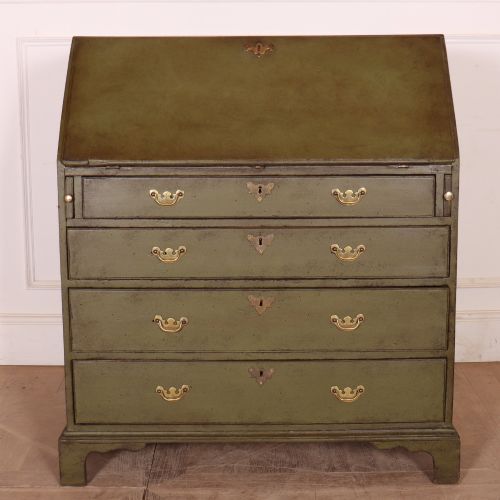
Buyers seeking an antique painted fall front desk encounter a range of forms, from compact country bureaus to taller bureau cabinets and secrétaires à abattant. These pieces combine a slanted or drop-down writing surface with internal pigeonholes and drawers, resting atop a chest of drawers or a stand.
The selections span multiple centuries and regional traditions, showing influences from Georgian, Victorian, and Edwardian eras alongside continental styles such as Scandinavian country and Louis XV revival. English painted pieces and Swedish pine escritoires appear frequently among these offerings.
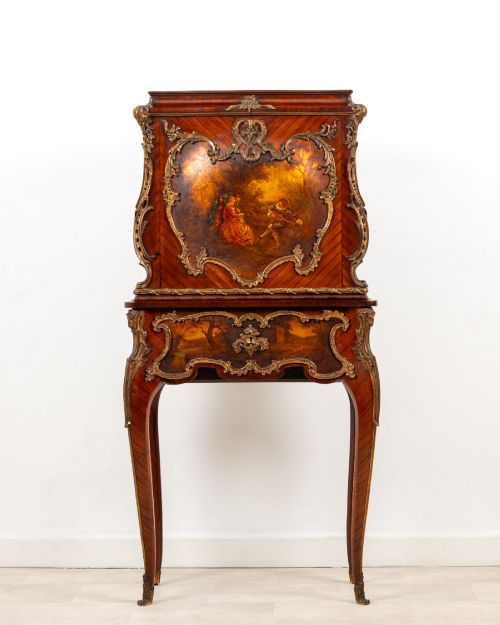
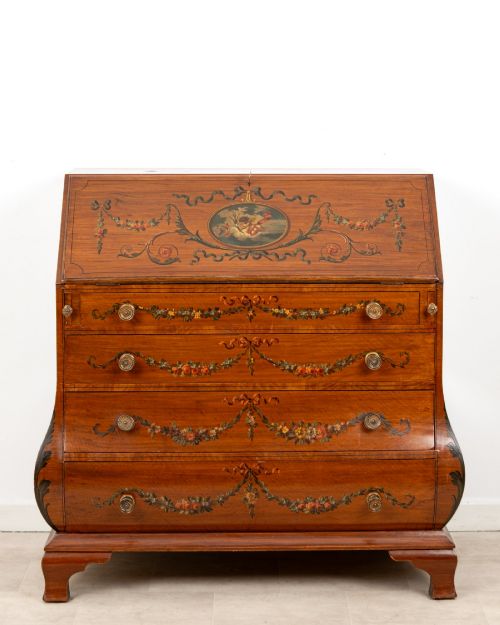
Many examples utilise decorative surface treatments including hand-painted floral motifs, Chinoiserie scenes, and Vernis Martin finishes. Buyers often find smaller satinwood desks alongside larger pine and hardwood carcases finished in layered paint.
Materials and construction methods
Carpenters constructed the carcases using solid timbers such as pine, satinwood, and kingwood, often applying layered paint or lacquer directly to the wood surface. Finer decorative examples incorporate ormolu mounts and specialised varnishes to mimic Asian lacquerwork.
The fall front flap requires sturdy brass hinges and internal supports to bear the weight of writing, while internal drawers utilise traditional dovetailed joinery. Cabinet makers integrated fitted compartments and secret drawers behind small doors within the main writing compartment.
Many writing compartments hide miniature secret drawers designed for stashing private correspondence away from curious household staff.
Distinctions in quality and finish
Quality rests significantly on the execution of the painted surface, ranging from simple country folk art to highly detailed hand-painted satinwood or pictorial Chinoiserie. The subtlety of the brushwork and the preservation of original pigment layers separate standard examples from finer decorative works.
Structural integrity of the fall front mechanism and the precision of the internal pigeonholes indicate the standard of craftsmanship. Pieces retaining original brass hardware, working locks, and untouched secondary timbers command greater attention from discerning collectors.
The Antique Painted Fall Front Desk Glossary
- Fall front
- A hinged writing flap that drops down to provide a horizontal surface for correspondence. When closed, it conceals a collection of small drawers and pigeonholes.
- Bureau
- A desk featuring a sloping lid that opens to reveal fitted interior compartments. In British usage, this term specifically denotes a writing cabinet with a sloping front.
- Secrétaire à abattant
- A tall upright cabinet with a vertical drop-front panel that opens for writing. This continental form often includes storage space or shelving above and below.
- Vernis Martin
- A simulated lacquer finish developed in eighteenth-century France using multiple layers of varnish. It frequently depicts pastoral scenes or exotic figures in the Asian taste.
- Ormolu
- Gilded bronze used for decorative mounts and furnishings, particularly on nineteenth-century revival pieces. It adds ornamental detail around drawers, corners, and legs.
Antique Painted Fall Front Desk: Frequently Asked Questions
How do I use a fall front desk?
Lower the hinged flap to access the internal writing surface and stationary compartments. The angled board provides a traditional platform for letters and paperwork.
When finished, lift the flap back into the vertical or sloping position and secure it with the lock to keep documents concealed.
Are painted finishes original?
Many pieces retain their original period paint or decorative schemes, particularly Scandinavian country furniture and Edwardian satinwood items. Paint was often applied to softer woods like pine to provide colour and pattern.
Over time, surfaces may show wear, crackling, or subsequent layers of overpainting applied during later redecoration campaigns.
Where were these desks placed in a home?
These desks served as private writing stations in drawing rooms, bedrooms, and studies. Their compact footprints made them suitable for family correspondence and managing household accounts.
The decorative painted exteriors allowed them to function as ornamental furniture pieces in principal reception rooms.