


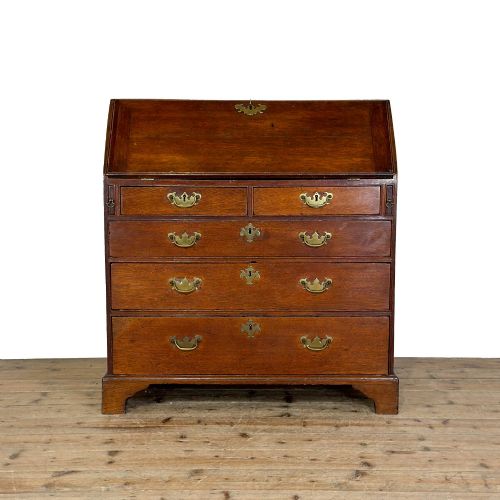
Slant Front Cabinet
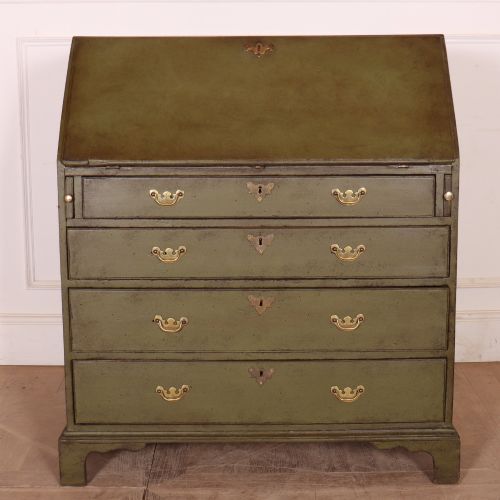
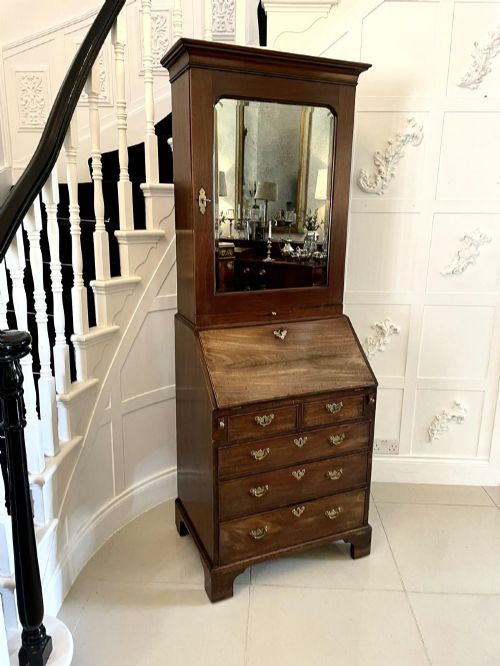
A slant front cabinet brings together fitted interior drawers and a sloping writing flap in forms ranging from compact oak desks to tall walnut bookcase combinations.
Slant Front Cabinet
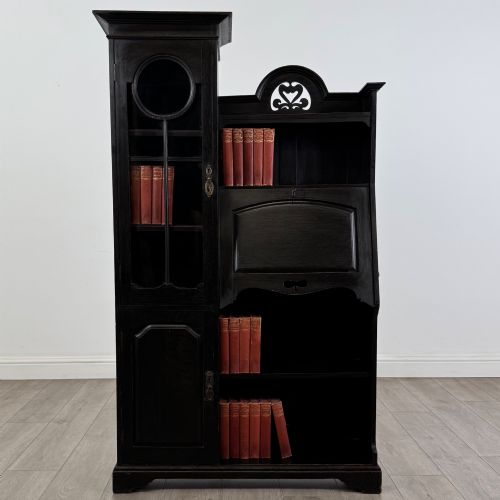
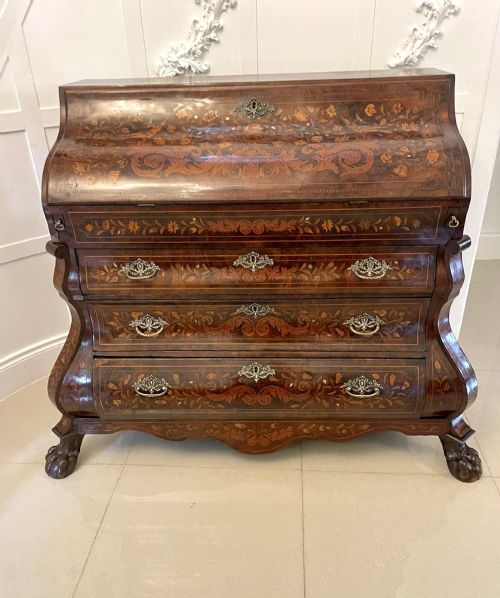
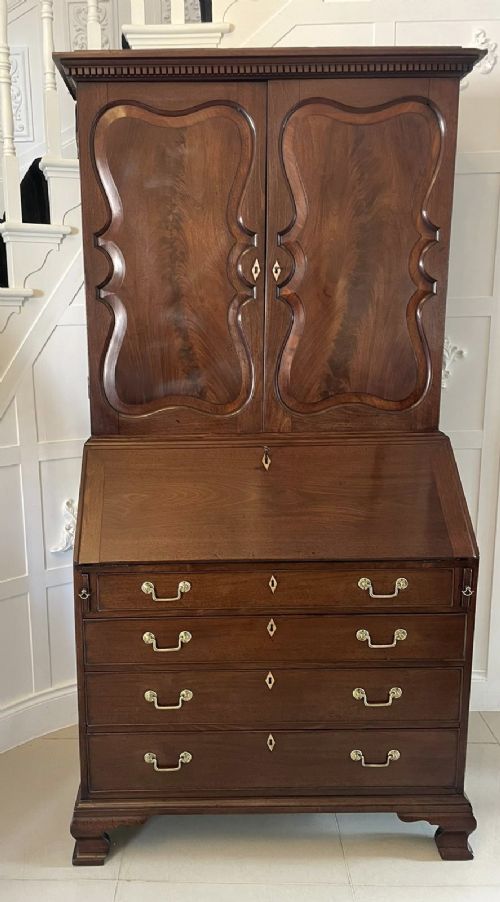
When you search for a slant front cabinet, you encounter forms that span several centuries, including bureau bookcases, writing desks, and two-part bureaux. The selection ranges from robust seventeenth-century oak pieces and elaborate eighteenth-century burr walnut marquetry to Edwardian iterations in oak and walnut.
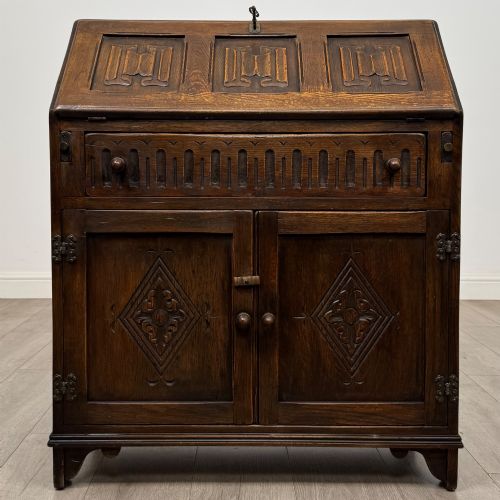
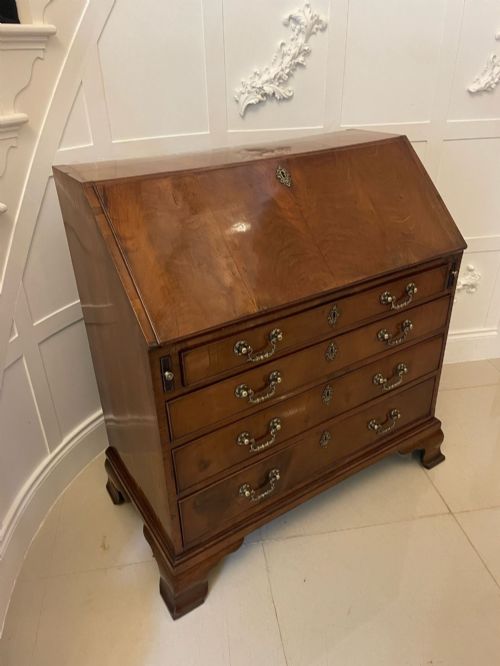
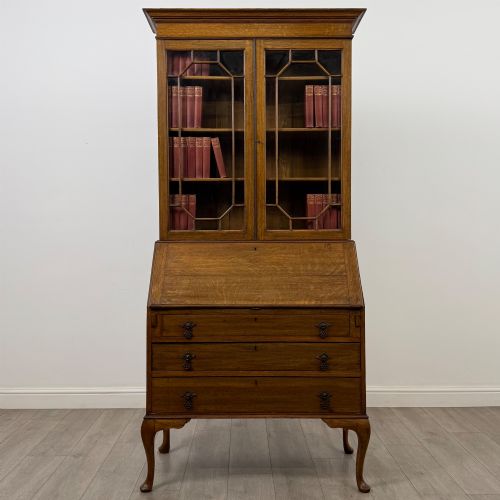
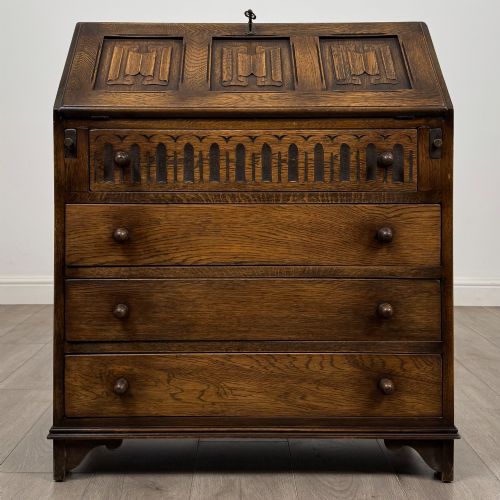
The most frequent examples on this page are Georgian mahogany pieces and Edwardian oak desks, often incorporating linenfold carving or glazed upper bookcase sections. These items served primarily for correspondence and storage, combining a sloping fall front with internal pigeon holes and small drawers.
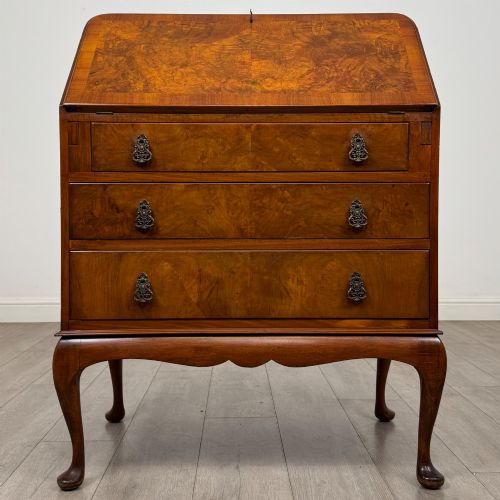
Early seventeenth-century and Queen Anne examples showcase rich burr walnut and herringbone inlay, while later twentieth-century pieces adopt simpler oak constructions. Buyers find both standalone writing desks and taller bookcase configurations designed to house libraries.
Markers of construction quality
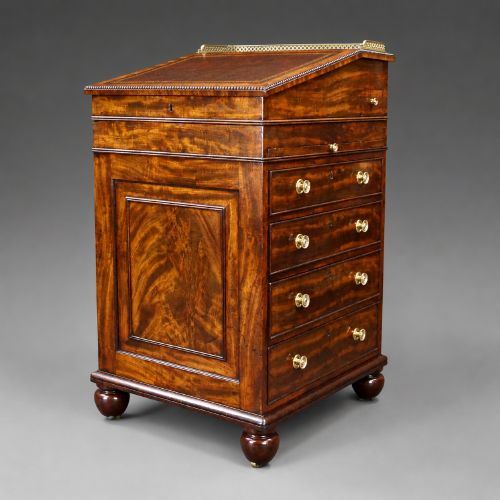
The distinction between tiers rests upon the choice of timber figurations, such as highly figured flame mahogany and matched burr walnut veneers with herringbone inlay. Superior examples display meticulous attention to internal configurations, including stepped drawers and secret compartments within the writing section.
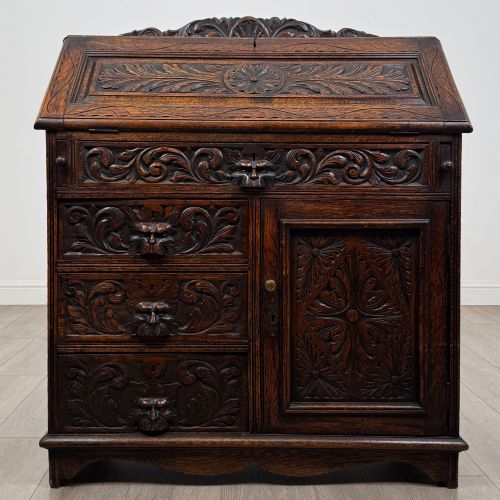
Structural integrity relies on the precision of joinery in the fall front mechanism and the weight and finish of applied brass hardware. Cabinet proportion and the sophistication of decorative carving, such as green man motifs or linenfold panels, further separate standard utilitarian items from finer examples.
Listings span multiple centuries, ranging from seventeenth-century William and Mary oak pieces to twentieth-century Edwardian and 1930s examples.
Gillows·Arthur Basil Reynolds·Larkin
The Slant Front Cabinet Glossary
- Bureau bookcase
- A two-part cabinet featuring a sloping writing flap over drawers, surmounted by a glazed or panelled bookcase section. These taller pieces provided comprehensive library and writing facilities in one item.
- Fall front
- A hinged writing flap that angles downwards to create a horizontal desk surface. This panel conceals internal pigeon holes and small drawers when closed.
- Marquetry
- Decorative veneer patterns formed from different woods and materials arranged in floral or geometric designs. Craftsmen applied these to exterior surfaces on high-status cabinets.
- Herringbone inlay
- A distinctive banding motif made of small veneer segments laid in a zig-zag pattern. It frames the primary burr walnut panels on seventeenth and eighteenth-century pieces.
- Stepped interior
- An internal arrangement where the small drawers and pigeon holes recede in tiers. This tiered layout adds depth and architectural complexity to the writing compartment.
Slant Front Cabinet: Frequently Asked Questions
How do I use a slant front cabinet?
The hinged writing flap lowers to form a flat surface for correspondence, supported by internal arms or the edge of the lower drawers. Inside, small compartments and drawers organise stationery and documents.
The lower section provides general storage through a configuration of horizontal drawers. Taller bookcase variants hold books and display items in the upper glazed section.
What is the difference between an 18th-century and an Edwardian bureau?
Eighteenth-century pieces typically feature solid mahogany or figured walnut veneers, often displaying hand-cut dovetails and period brasses. The internal drawers often include complex stepped layouts or hidden compartments.
Edwardian versions frequently utilise oak or walnut with machine-assisted construction methods. They often incorporate popular revival motifs like linenfold carving or simpler glazed bookcase tops.
Where should I place a slant front cabinet at home?
These cabinets suit studies, living rooms, and bedrooms where their compact footprint provides both surface workspace and vertical storage. Placing them away from direct sunlight protects vulnerable walnut and mahogany veneers.
Ensure adequate clearance in front of the cabinet for the fall front flap to lower fully without obstructing walkways.
How do I identify a bureau bookcase?
A bureau bookcase consists of two distinct stacked sections, combining a sloping desk base with an upper shelving unit enclosed by glass or wooden doors. The lower portion houses the primary writing flap and internal compartments.
These taller hybrid units emerged to consolidate household administration and book storage into a single architectural piece of furniture.