




Swan Neck Bookcase
Swan neck bookcase pieces combine architectural wooden cresting with generous shelving, offering period presence and storage for collections.
Swan Neck Bookcase
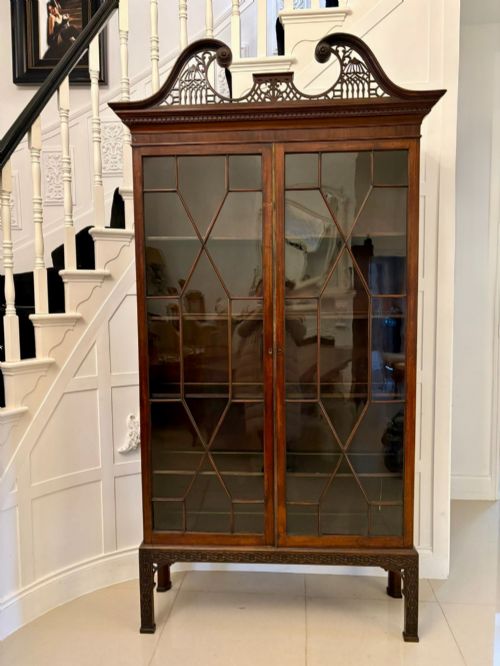
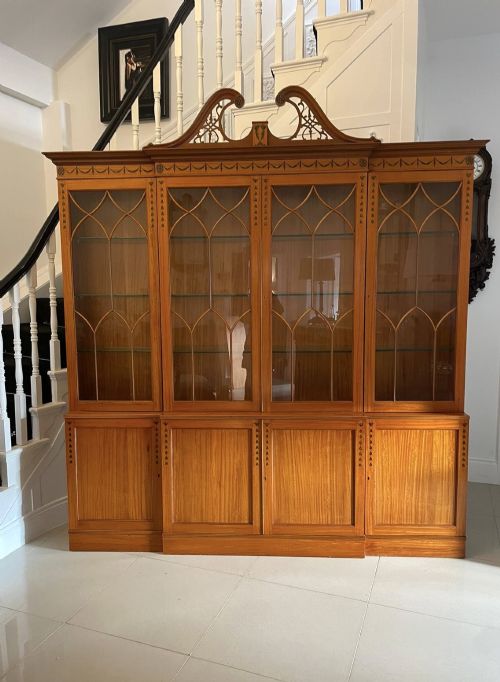
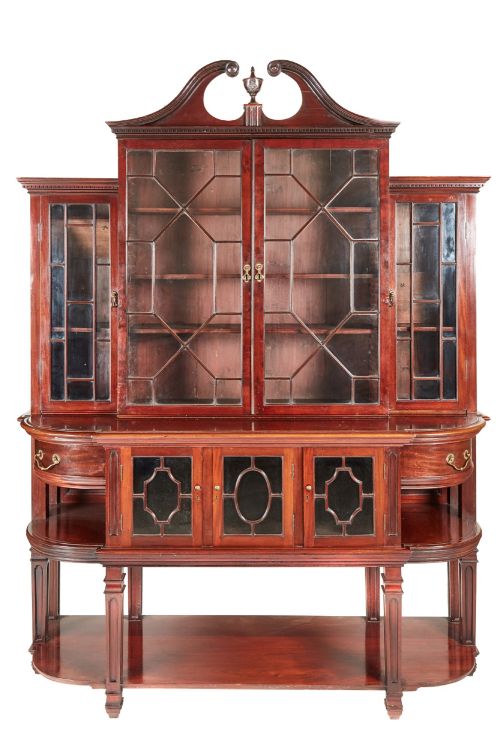
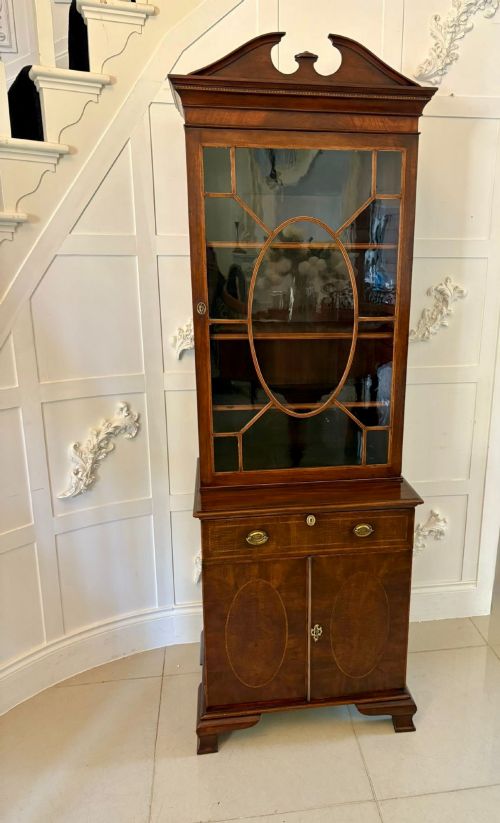
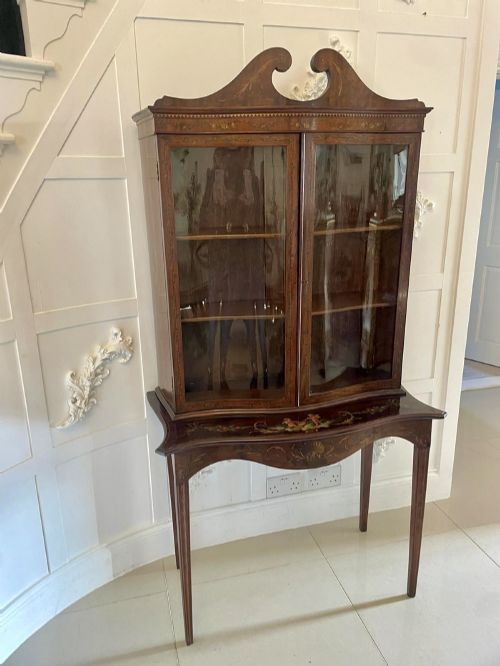
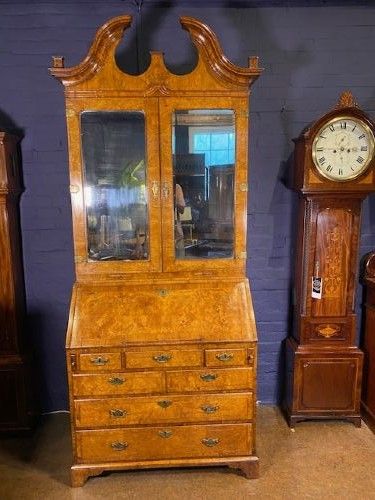
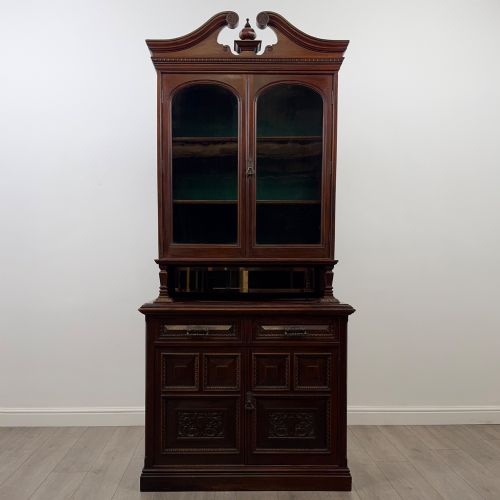
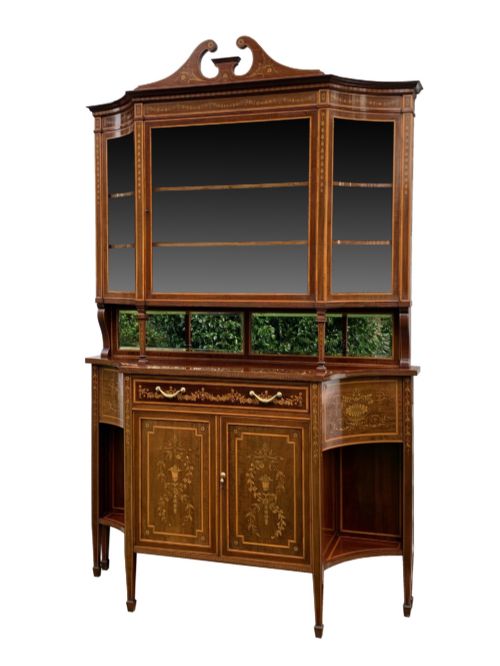
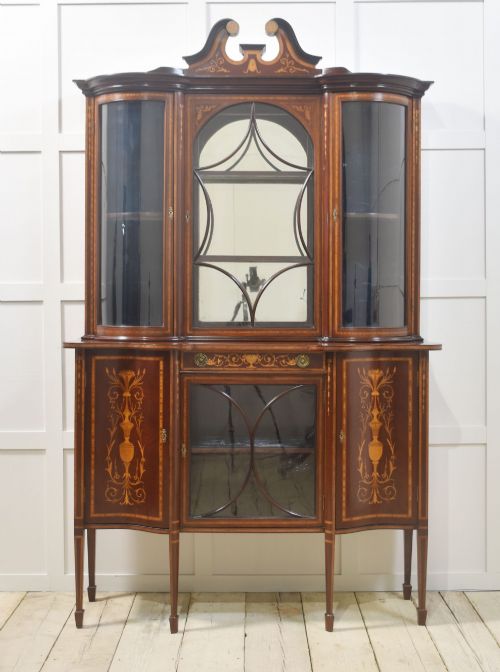
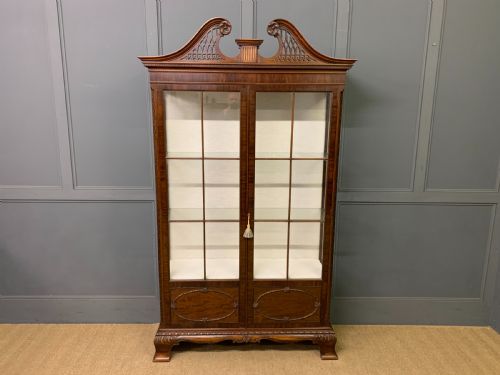
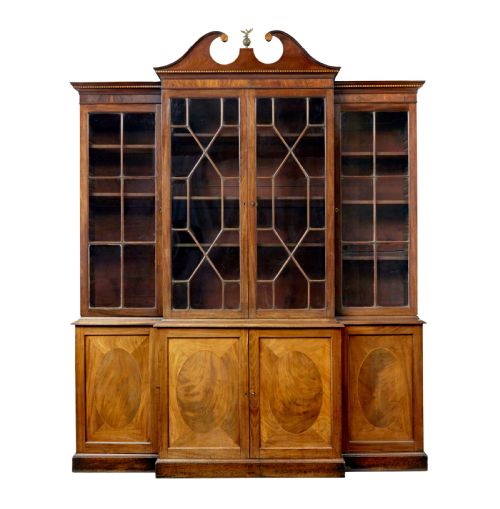
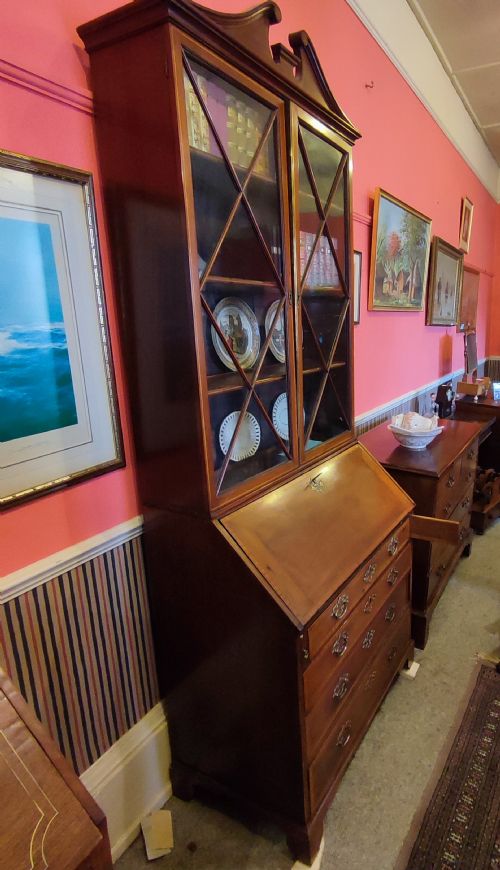
A swan neck bookcase centres on a shaped pediment curving outward and upward, terminating in scrolls, which crowns the upper section of tall timber furniture. These pieces appear across Georgian, Victorian, and Edwardian periods, taking forms that range from bureau bookcases with drop fronts to large breakfront display cabinets and corner cupboards.
The version most commonly met on this page is the mahogany bureau bookcase or glazed display cabinet, often bearing inlaid decoration or astragal glazing bars. Pieces span the eighteenth, nineteenth, and early twentieth centuries, shifting from formal George III proportions to lighter Edwardian revival designs.
The structural layout typically pairs upper glass doors enclosing shelves with a lower base comprising drawers, cupboards, or a fall-front desk compartment. Regional workshops and London makers produced variations in satinwood, walnut, and oak alongside the predominant mahogany.
Materials and Construction
Makers utilised solid and veneered mahogany as the primary timber, complemented by accents of satinwood, walnut, rosewood, and oak. Carved architectural mouldings and applied marquetry or stringing define the decorative surface work across different eras.
Glazing employs individual glass panes held by timber astragal bars, while brass hardware secures doors and fall-front desks. Painted decoration occasionally appears on satinwood cabinets, supplementing the natural grain and inlay.
Listings feature woods including mahogany, satinwood, walnut, rosewood, and oak, paired with glass, brass, mirror, and fabric.
Assessments of Quality
The refinement of the swan neck pediment and the crispness of carved details set superior examples apart from standard production. Cabinetmakers invested greater skill into balanced proportions, tight timber joints, and carefully selected veneer grains.
Original glass panes, matching brass fittings, and intact painted decoration or marquetry elevate a piece. The integration of the upper cresting with the main cornice demonstrates the maker's architectural capability.
Edwards and Roberts·S and H Jewell London·Thomas Bradshaw
The Swan Neck Bookcase Glossary
- Swan neck pediment
- A broken pediment featuring curved mouldings that rise upward and outward like the neck of a swan, often terminating in a scroll or rosette. This architectural feature crowns the top of tall furniture.
- Astragal glazing
- Wooden bars dividing glass panes in a door or window. These form geometric or curving patterns across the front of the bookcase.
- Breakfront
- A cabinet design where the central section projects forward from the flanking wings. This creates a layered architectural facade.
- Bureau bookcase
- A combination form featuring a sloping fall-front desk over drawers, topped by a glazed bookcase section. It serves multiple functions within a single piece of furniture.
- Marquetry
- Decorative woodwork where pieces of veneer are fitted into a ground material to form pictures or ornamental patterns. It often incorporates contrasting timbers.
Swan Neck Bookcase: Frequently Asked Questions
What is a swan neck bookcase?
A swan neck bookcase is a tall timber storage unit featuring glazed upper doors and a characteristic scrolled double-curved pediment at the top.
These pieces evolved through the Georgian and Victorian eras, serving primarily to display and protect books or decorative collections.
How were bureau bookcases used?
Bureau bookcases combined a writing desk with upper shelving, allowing owners to write correspondence and store volumes in one piece of furniture.
The fall-front desk provided a writing surface that concealed pigeonholes and small drawers when closed.
How do I date a mahogany bookcase?
Dating relies on stylistic shifts, timber selection, and construction methods, moving from heavy Georgian proportions to lighter Edwardian revival forms.
Details such as astragal bar thickness, inlay types, and pediment carving help distinguish eighteenth-century examples from nineteenth-century revivals.
Where should I place a breakfront cabinet?
Breakfront cabinets require wall space with sufficient depth and width to accommodate their projecting central sections and large proportions.
Placing them away from direct sunlight protects vulnerable timber veneers and historic glass panes.