

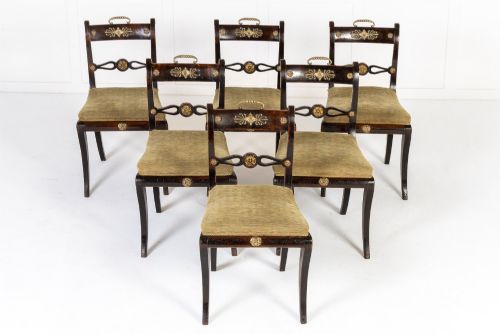
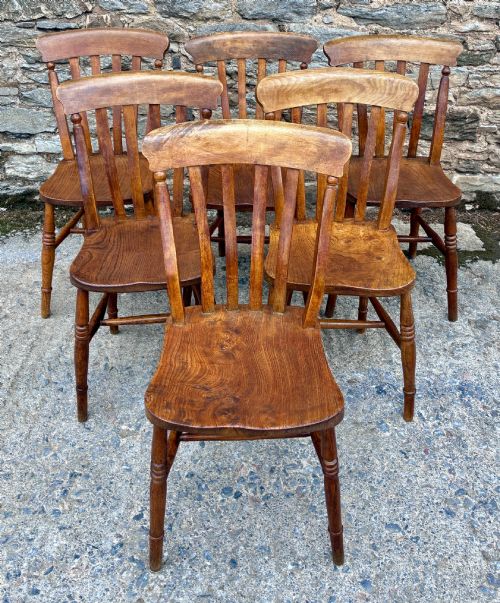
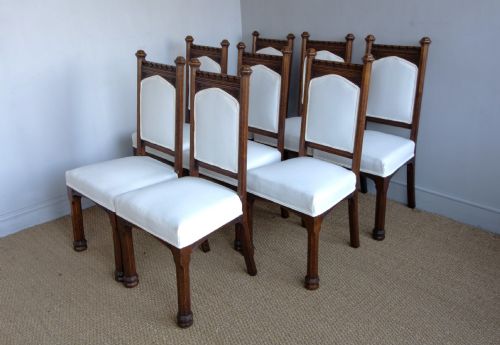
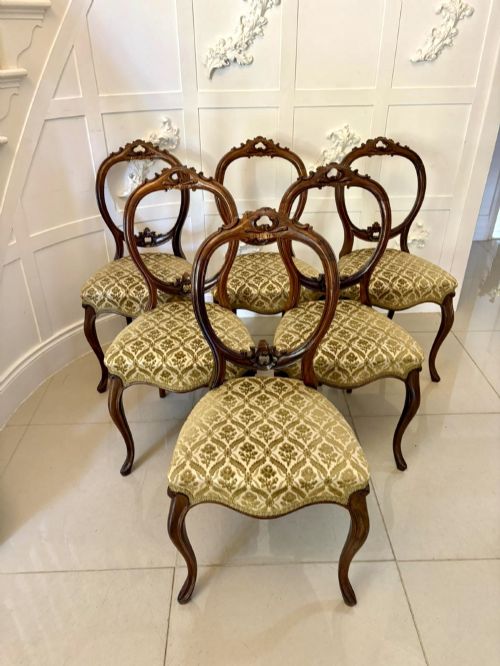
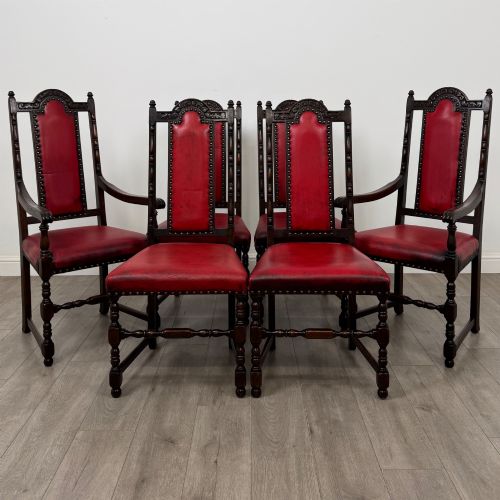
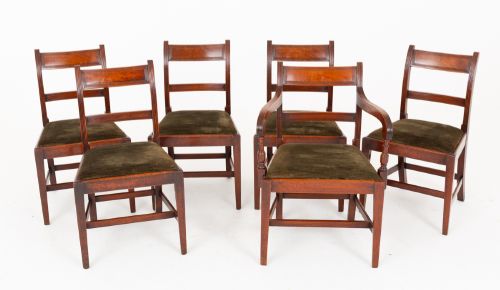
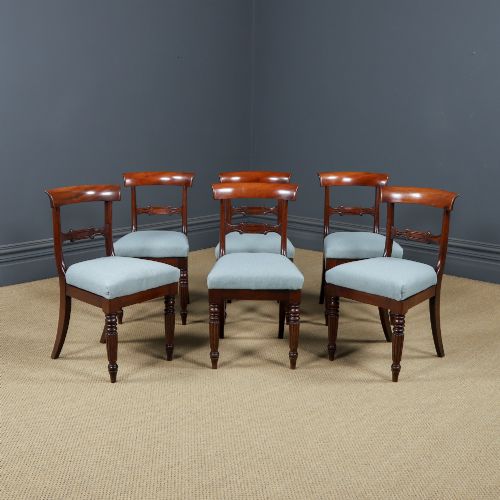
Six Dining Chairs
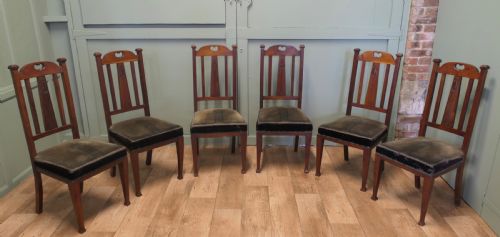
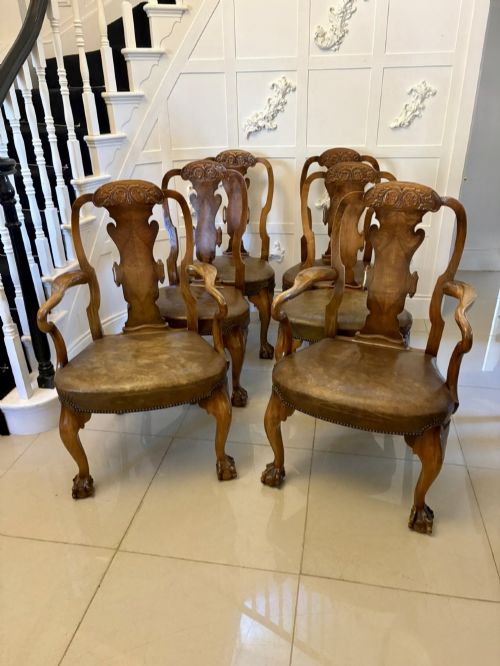
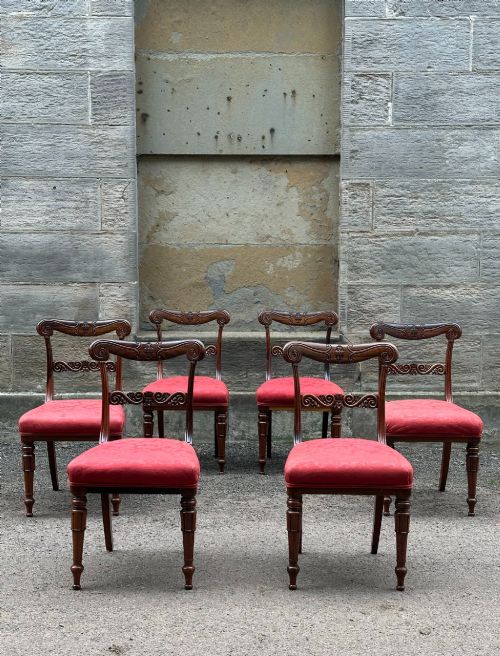
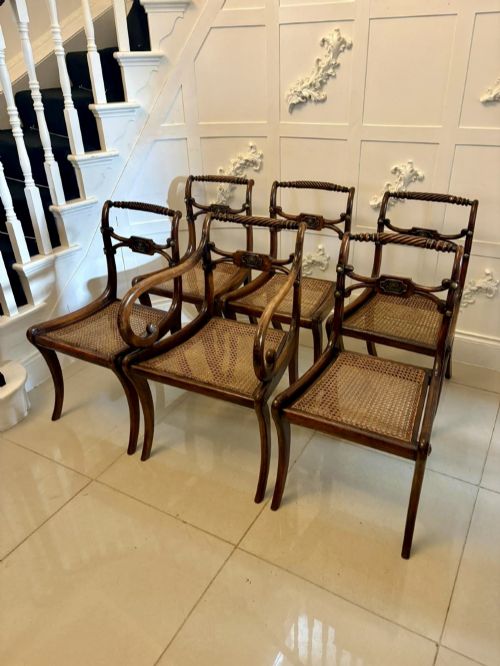
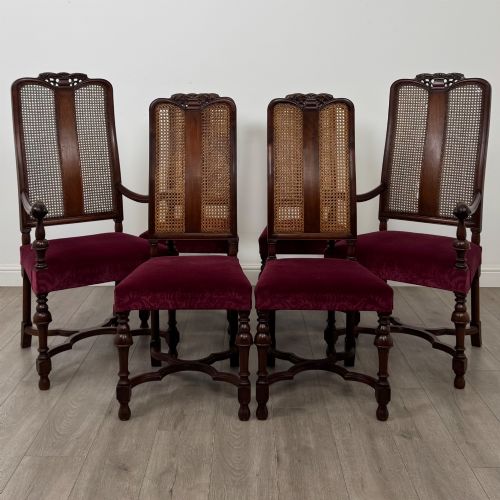
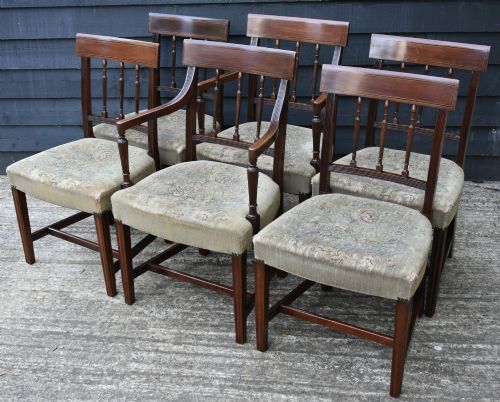
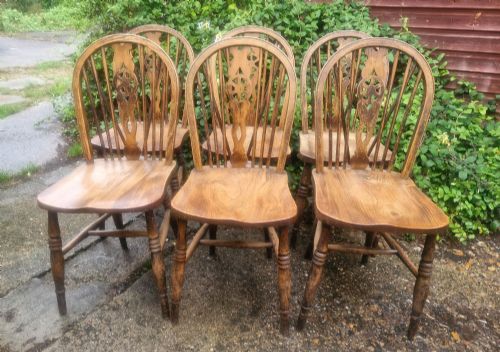
Six dining chairs bring together uniform seating for a table, spanning formal mahogany sets to robust country elm.
Six Dining Chairs
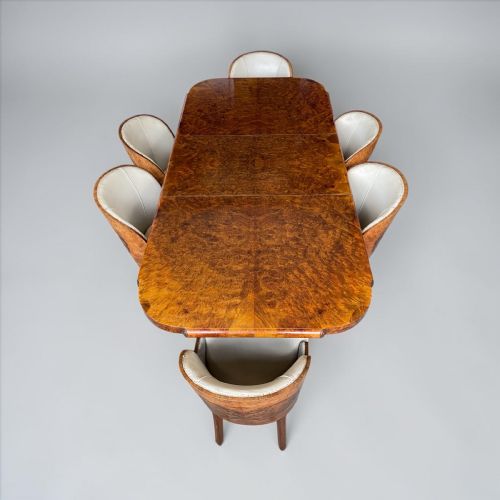
Six dining chairs encompass matching groups assembled for domestic dining rooms, ranging from formal urban parlours to rural farmhouses. Buyers searching for six dining chairs encounter formations spanning the Georgian, Regency, and Victorian periods, alongside later Arts and Crafts and 1930s designs.
The configurations vary between matching sets of six single chairs and harlequin arrangements that share a period or regional style. Formal variants display mahogany and rosewood solids, whilst country iterations utilise native elm, ash, and oak with spindle or Windsor backs.
Materials and construction
Cabinetmakers utilised dense hardwoods such as mahogany, walnut, and rosewood for formal urban seating, often employing carved details and veneered splats. Regional makers constructed vernacular Windsor and ladderback chairs from resilient domestic timbers including elm, ash, beech, and oak.
Joinery methods relied on traditional mortise and tenon joints to withstand daily domestic use. Seating platforms incorporated drop-in upholstered pads, cane webbing, or solid timber squabs secured within the frame.
Listings feature eighteenth-century Georgian mahogany alongside twentieth-century oak and beech models.
Evaluating craftsmanship
Quality rests upon timber selection and the integrity of the structural frame rather than surface finish alone. Superior examples retain original timber colour and patination without excessive sanding or replaced components.
Carved ornament depth and crispness differentiate high-status workshop production from simpler provincial output. Consistency across all six frames indicates a true matching set rather than assembled harlequin groupings.
Gillows·Maurice Adams·Harry and Lou Epstein·Edward Barnsley·Gordon Russell
The Six Dining Chairs Glossary
- Carver
- An armchair designed with elbow supports, historically placed at the head of a dining table alongside matching single chairs.
- Bar back
- A horizontal tablet top rail spanning the uprights of a dining chair, frequent in Regency and William IV designs.
- Balloon back
- An oval or rounded upholstered backrest profile popular during the Victorian era, offering padded lumbar support.
- Spindle back
- A chair back constructed from multiple slender turned wooden rods, typical of vernacular country seating.
- Harlequin set
- A collection of chairs sharing similar periods or styles but assembled from disparate sources rather than a single workshop order.
Six Dining Chairs: Frequently Asked Questions
What is a harlequin set?
A harlequin set is a collection of dining chairs that share a common period, timber, or style but were not originally manufactured together as a single group. These assemblies often bring together individual pieces purchased over time to create a uniform seating arrangement around a table.
Harlequin groupings allow collectors to acquire matching quantities of period chairs where complete original sets of six are scarce or unavailable. The individual chairs typically display minor variations in turning or carving whilst maintaining an overall visual harmony.
How do I spot a true set?
A true matching set displays identical timber grain, consistent dimensions, and uniform joinery methods across all six frames. Workshop marks, numbering stamps, or shared tool signatures on the underside of the rails further confirm original manufacture.
Assembled sets often reveal subtle discrepancies in height, seat depth, or wood species upon close inspection. Examining the interior frame blocks helps determine if individual chairs belong to the same original commission.
Were carvers used with singles?
Traditional dining arrangements paired two armed carver chairs with four single chairs to total six seats around the table. The carvers stood at the head and foot positions for the host and hostess.
Single chairs lacked arms to allow full freedom of movement during dining and to fit neatly beneath the table apron when not in use.
How do I care for antique wood?
Antique timber requires stable indoor humidity away from direct heat sources and strong sunlight to prevent wood shrinkage and joint separation. Regular dusting with a dry, soft cloth preserves the historic wax polish without building up chemical residues.
Applying a traditional beeswax polish sparingly helps nourish dry hardwood surfaces and maintains the natural lustre developed over centuries. Avoid commercial silicone sprays, which can penetrate porous timber and damage the original patina.