




Sitzendorf Floral Porcelain
Sitzendorf floral porcelain brings exuberant continental charm to the room through modelled blossoms and painted detail.
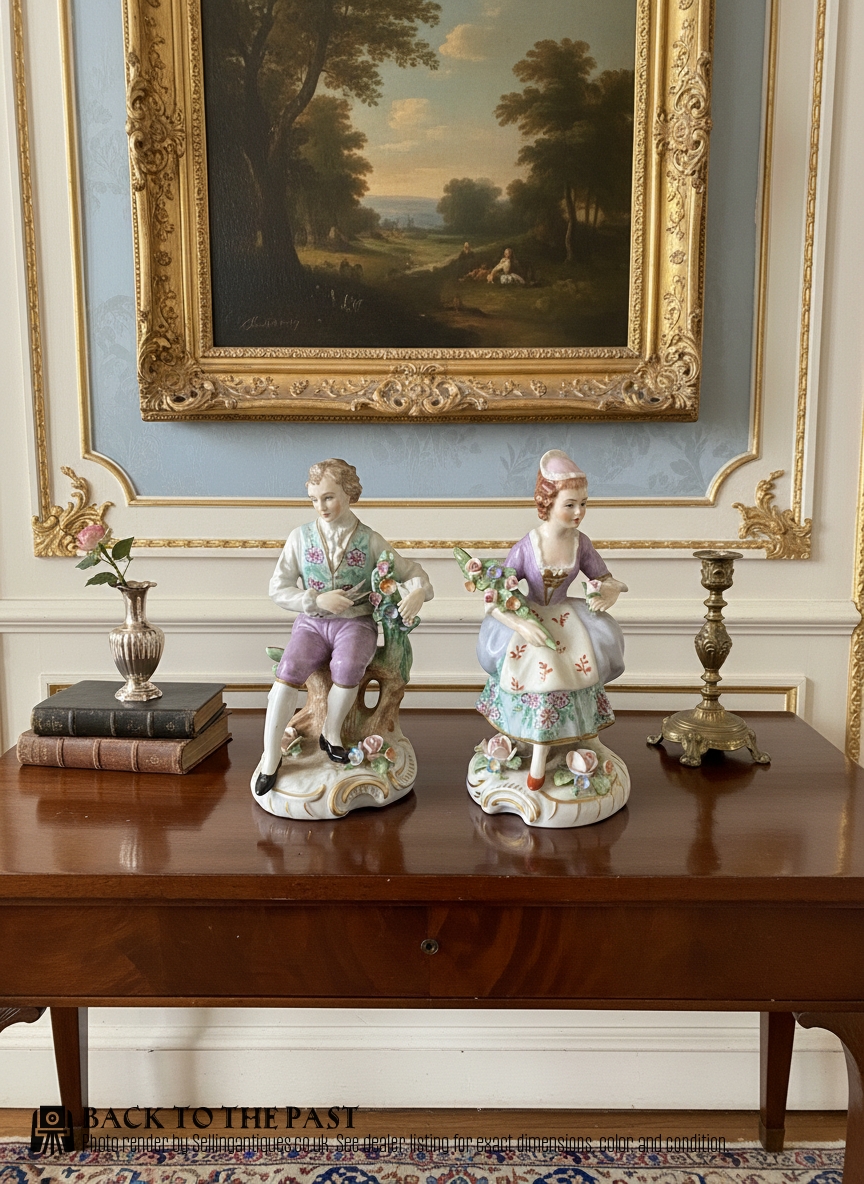
Sitzendorf Floral Porcelain
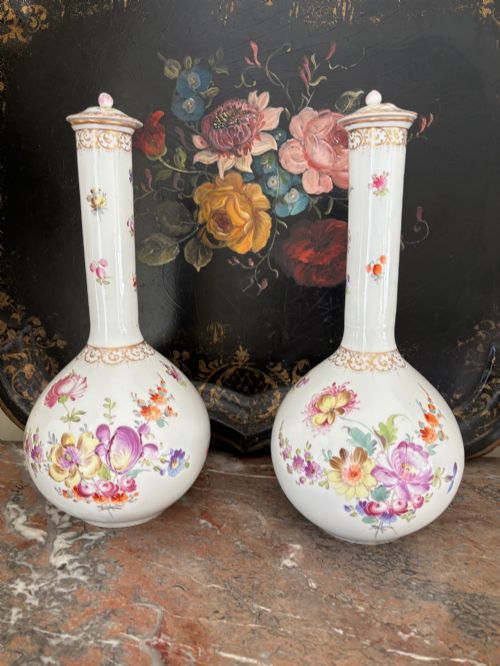
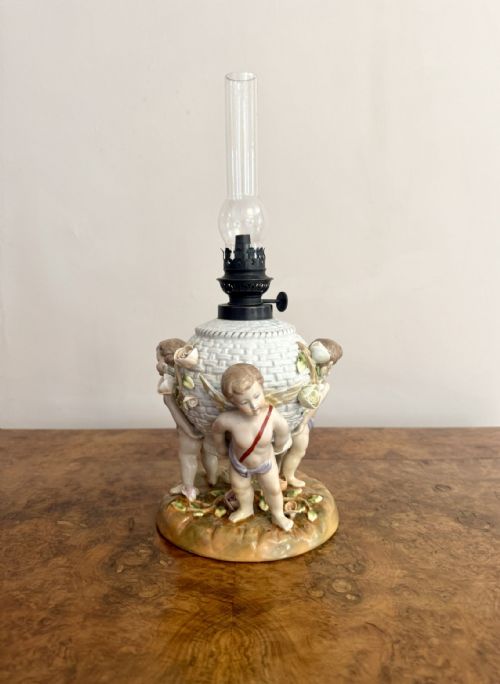
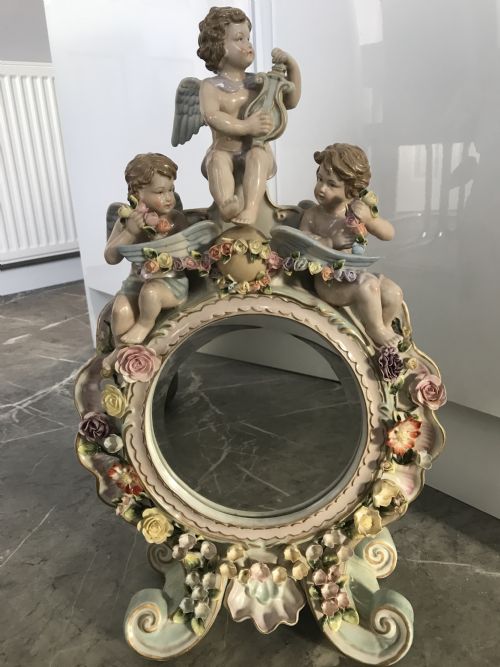
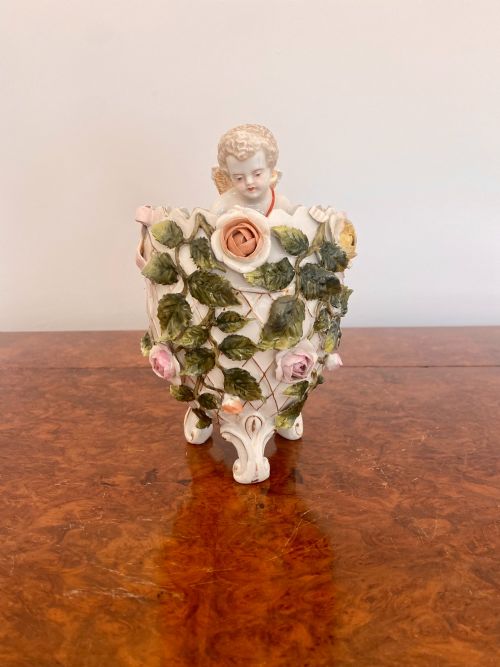
Sitzendorf floral porcelain encompasses ornamental figures, candlesticks, oil lamps, mirrors, and vases created in the German factory during the nineteenth and early twentieth centuries. These pieces display distinct influences from Rococo Revival and Victorian styles, often pairing sculptural figures with applied floral decoration.
Buyers browsing this selection will frequently encounter matched pairs of figural candlesticks, oil lamps, and lidded vases featuring hand-painted floral motifs and cherubs. The objects date primarily from the late nineteenth century through to the early twentieth century, spanning periods such as 1880, 1890, 1900, and 1920.
How they were made
Finishing touches often included gold leaf, gilding, and brass components on items such as oil lamps, dressing table mirrors, and candelabra. Glass elements occasionally appear alongside the ceramic bodies to complete functional pieces like lamps and mirrors.
Listings feature items spanning 1880 to 1920, utilising porcelain, enamel, gold leaf, gilding, glass, brass, and ceramic materials.
What varies in quality
The sophistication of the modelling determines the standing of a piece, particularly in the rendering of hands, facial expressions, and complex figural groupings like gardeners with baskets. Crisp detail in the applied porcelain flowers and careful placement of enamel colours separate standard domestic wares from superior sculptural items.
The integration of decorative gilding and gold leaf enhances the overall visual weight, especially on large pairs of vases, comports, and multi-arm candelabra. Greater ambition in scale and form, such as four-arm candelabra and lidded potpourri vases, indicates a higher order of factory production.
The Sitzendorf Floral Porcelain Glossary
- Comport
- A large ornamental bowl or centrepiece raised on a stem, used historically for serving fruit or display.
- Blanc de chine
- A French term denoting white porcelain without coloured glaze, utilised for monochromatic figures and candlesticks.
- Potpourri
- A lidded vessel perforated to allow the scent of dried aromatic plant materials to diffuse into a room.
- Rococo Revival
- A decorative style popular in the nineteenth century characterised by asymmetrical scrolls, C-scrolls, and organic plant forms.
- Gilding
- The application of a thin layer of gold or gold-coloured material to the surface of porcelain or metal.
Sitzendorf Floral Porcelain: Frequently Asked Questions
What is Sitzendorf porcelain?
Sitzendorf porcelain refers to ceramic items produced by the German factory of that name, famous for elaborate figural ornaments, mirrors, and lamps.
These pieces typically date from the nineteenth and early twentieth centuries, incorporating hand-painted botanical motifs and applied floral details.
How are these lamps used?
Antique oil lamps and table lamps in this category serve both decorative and functional roles in traditional interiors.
Many have been adapted for modern electrical use while retaining their original ceramic reservoirs and bases.
How do I date Sitzendorf pieces?
Dating relies on stylistic markers such as Rococo Revival moulding, Victorian design conventions, and factory marks where present.
Pieces frequently correspond to specific production eras spanning the late nineteenth century through to the 1920s.
Where should I display figures?
Figural candlesticks, mirrors, and comports suit placement on mantelpieces, side tables, and dressing chests.
Their detailed hand-painted decoration requires secure placement away from heavy traffic areas to protect delicate applied flowers.