




Gilded White Porcelain Statues
Gilded white porcelain statues combine luminous ceramic bodies with bright gold leaf, offering sculptural elegance for a mantelpiece.
Gilded White Porcelain Statues
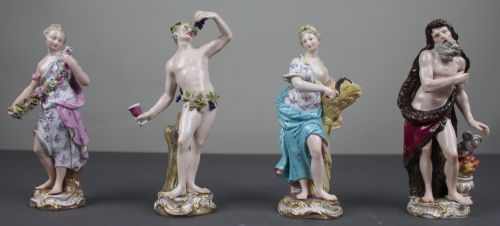
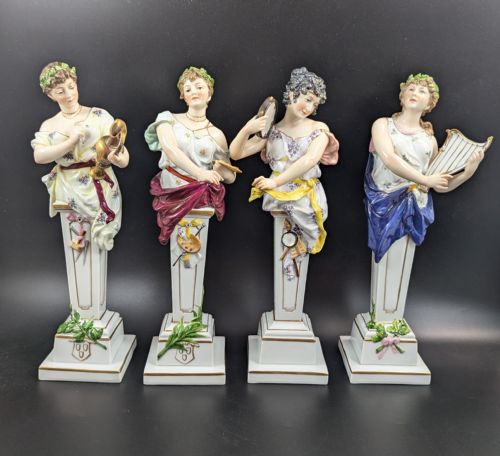
Gilded white porcelain statues encompass glazed ceramic figures, groups, and statuettes produced across the eighteenth and nineteenth centuries. These sculptural works range from classical mythological deities and allegorical representations of the seasons to playful animal pairings and courtly figures.
Most examples encountered on this page date from the nineteenth century, drawing heavily on earlier eighteenth-century Rococo and Neoclassical vocabularies. Figurines from Meissen, Derby, and Staffordshire dominate the selection, showing both single characters and paired compositions.
The objects serve primarily as decorative ornaments rather than utilitarian vessels. They capture human, animal, and divine subjects rendered in white ceramic bodies accented with gilding and enamel colouration.
Materials and construction
Makers utilised hard-paste porcelain and earthenware bodies, shaping them into detailed figures through specialised moulding techniques. Glaze was applied to seal the ceramic surface before secondary firing stages fixed enamel paints and gold leaf or liquid gilding.
Application of gold leaf and burnished gilding highlighted garments, bases, and decorative trim, contrasting with the stark white porcelain beneath. Enamel colours frequently added naturalistic flesh tones and costume details to the modelled subjects.
Listings feature hard-paste porcelain, earthenware, and enamel materials spanning the eighteenth and nineteenth centuries, including Victorian and Art Deco examples.
Assessing the pieces
The presence of factory marks, model numbers, and attribution to specific European manufactories or known modellers elevates the standing of a piece. Preservation of the original gold leaf and glaze integrity across complex sculptural forms distinguishes superior examples.
Meissen·Bow·Limbach·Kutani·Minton·Ludwigsburg·Chelsea·Achille Mollica·Frankenthal·Derby·Royal Worcester·James Hadley·Sitzendorf
The Gilded White Porcelain Statues Glossary
- Hard-paste porcelain
- A dense, vitrified ceramic compound fired at very high temperatures, composed of kaolin and petuntse. It produces a durable, bright white body that accepts fine glazes and intricate overglaze decoration.
- Gilding
- The application of gold leaf or powdered gold to the surface of porcelain. This decorative layer is often burnished to create a bright metallic sheen alongside painted details.
- Blanc de Chine
- A French term for white Chinese porcelain, later adopted to describe European white-glazed figures without enamel painting. These pieces rely entirely on sculptural form and glaze texture for effect.
- Rococo revival
- A nineteenth-century design style that imitated the asymmetrical scrolls, shell motifs, and exuberant curves of the mid-eighteenth century. It frequently influenced the bases and poses of Victorian decorative figurines.
Gilded White Porcelain Statues: Frequently Asked Questions
What rooms suit these statues?
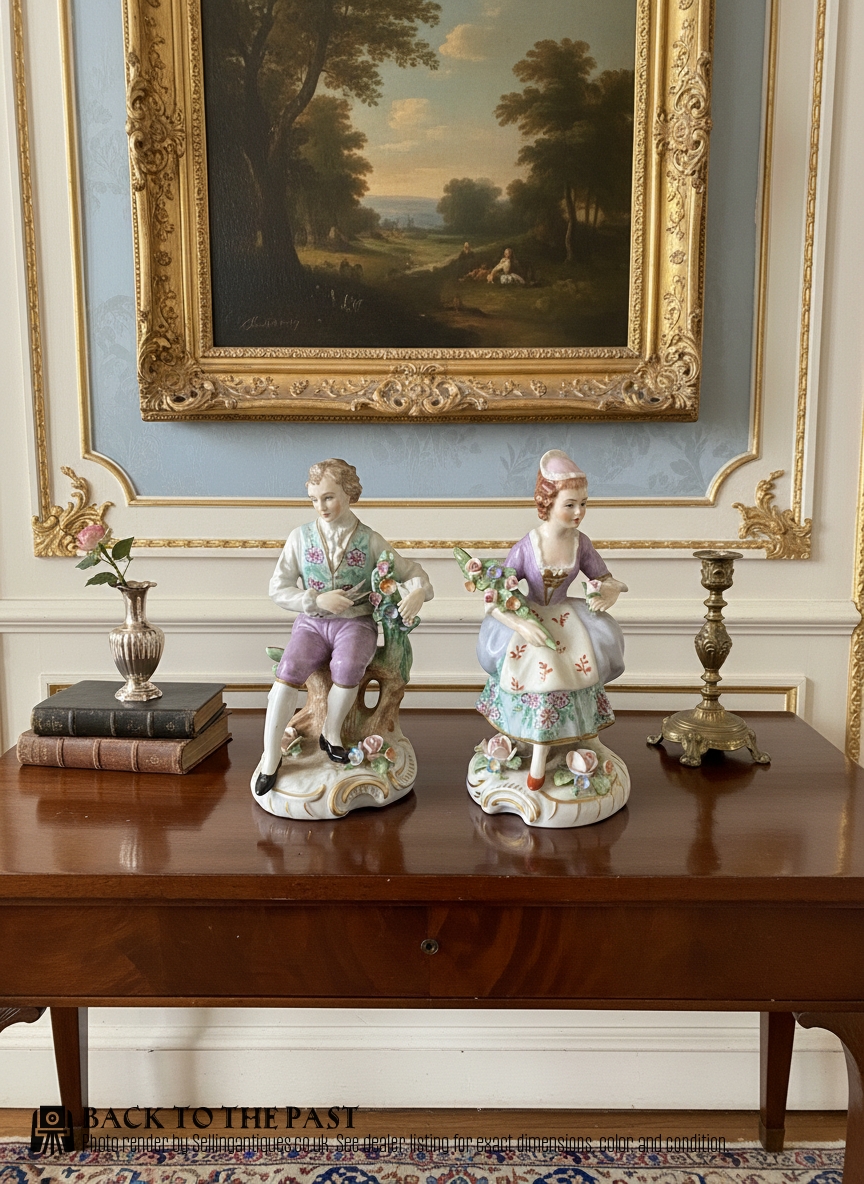
These decorative figures sit well upon mantelpieces, enclosed display cabinets, and side tables where their detailed modelling can be observed up close.
Because glazed porcelain and gold leaf are sensitive to heavy knocks and direct moisture, dry indoor spaces away from busy foot traffic provide the safest environment.
How do I clean them?
Dusting gently with a soft dry brush is the safest method to remove everyday particles without disturbing delicate gilding or porcelain encrustations.
Avoid liquid cleaners, chemical solvents, and abrasive cloths, as these can wear away the overglaze enamel colours and sensitive gold leaf over time.
How are periods identified?
Dating relies on identifying factory marks stamped or painted on the unglazed base, alongside the specific modelling style and costume details.
Earthenware bodies and heavy Staffordshire spaniels generally point to nineteenth-century production, while eighteenth-century pieces often feature distinct soft-paste or early hard-paste characteristics.
Were they made as sets?
Many figures were produced as part of larger thematic groups, such as the four seasons, the four continents, or pairs of companion animals and human figures.
Finding a complete set or an original matched pair is less common than encountering individual surviving figures from larger series.