
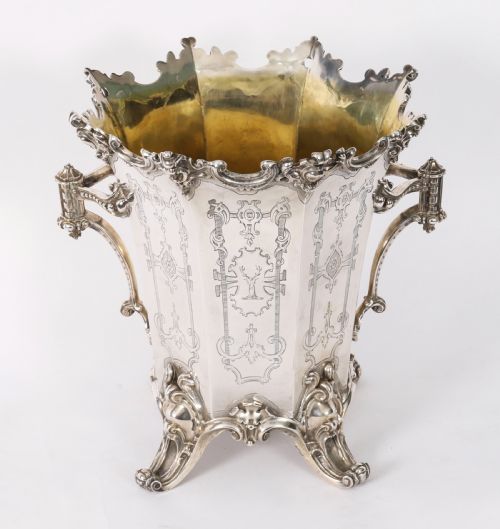

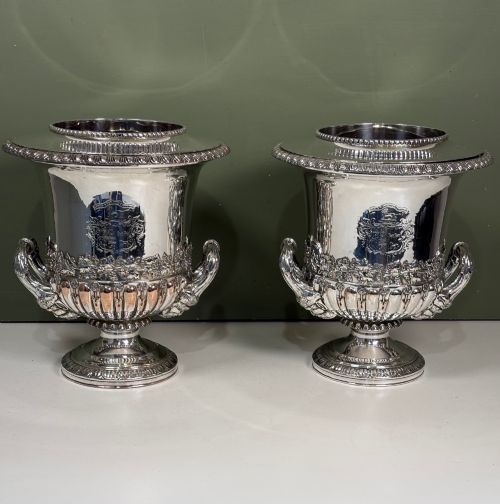


Silver Wine Chiller Bucket
A silver wine chiller bucket holds bottles at table, combining practical cooling with enduring metalwork from the nineteenth and twentieth centuries.
Silver Wine Chiller Bucket
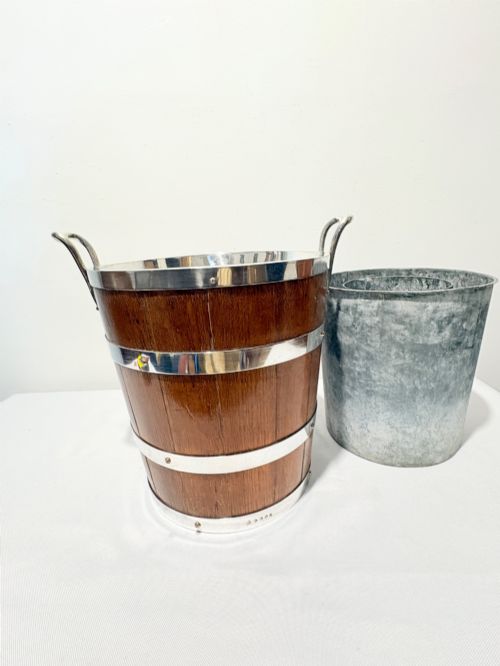
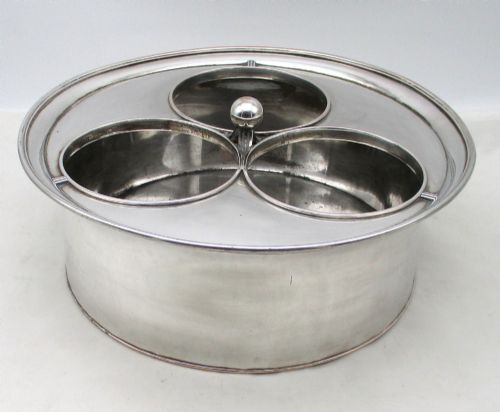
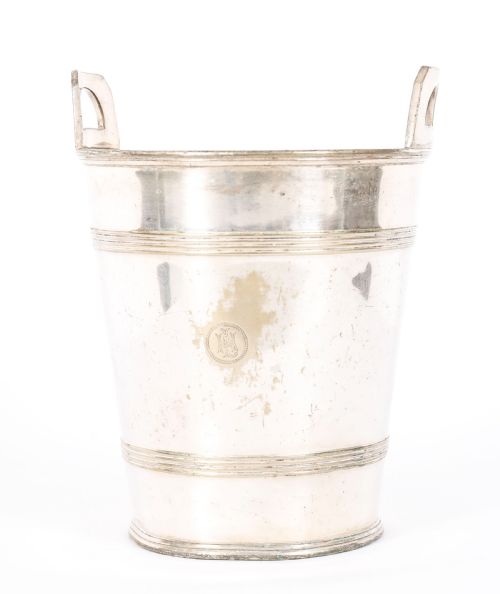
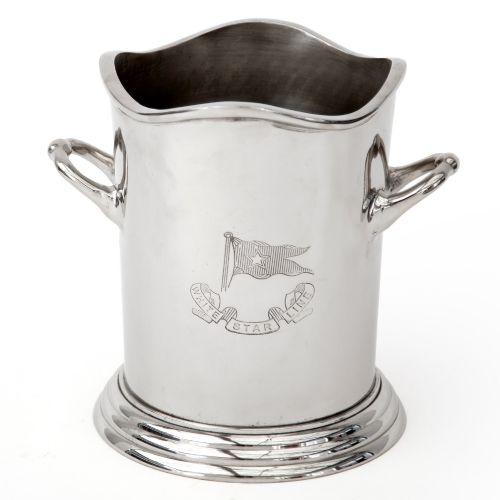
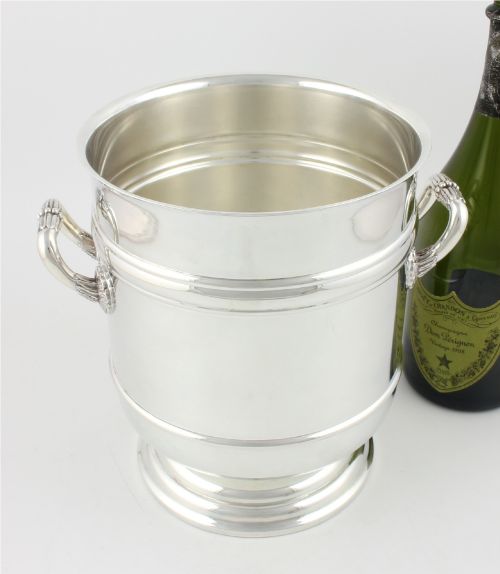
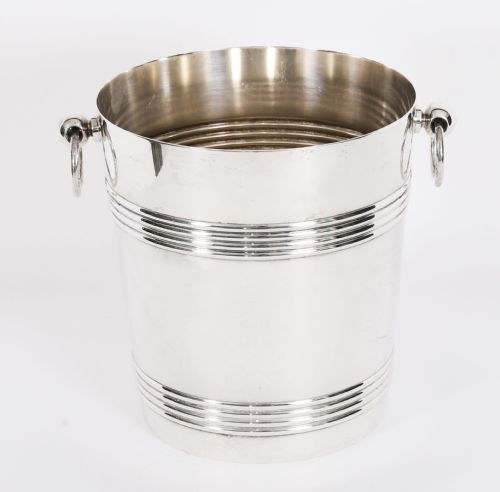
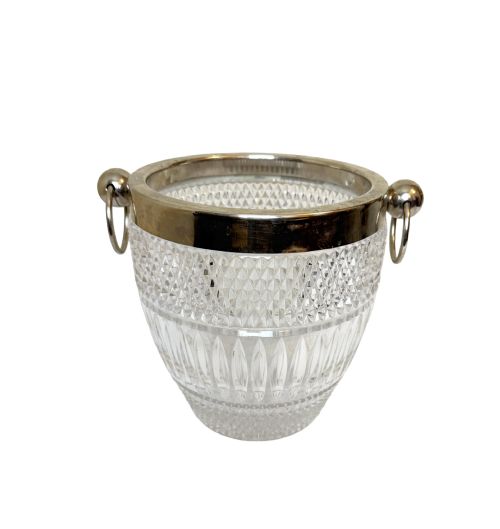
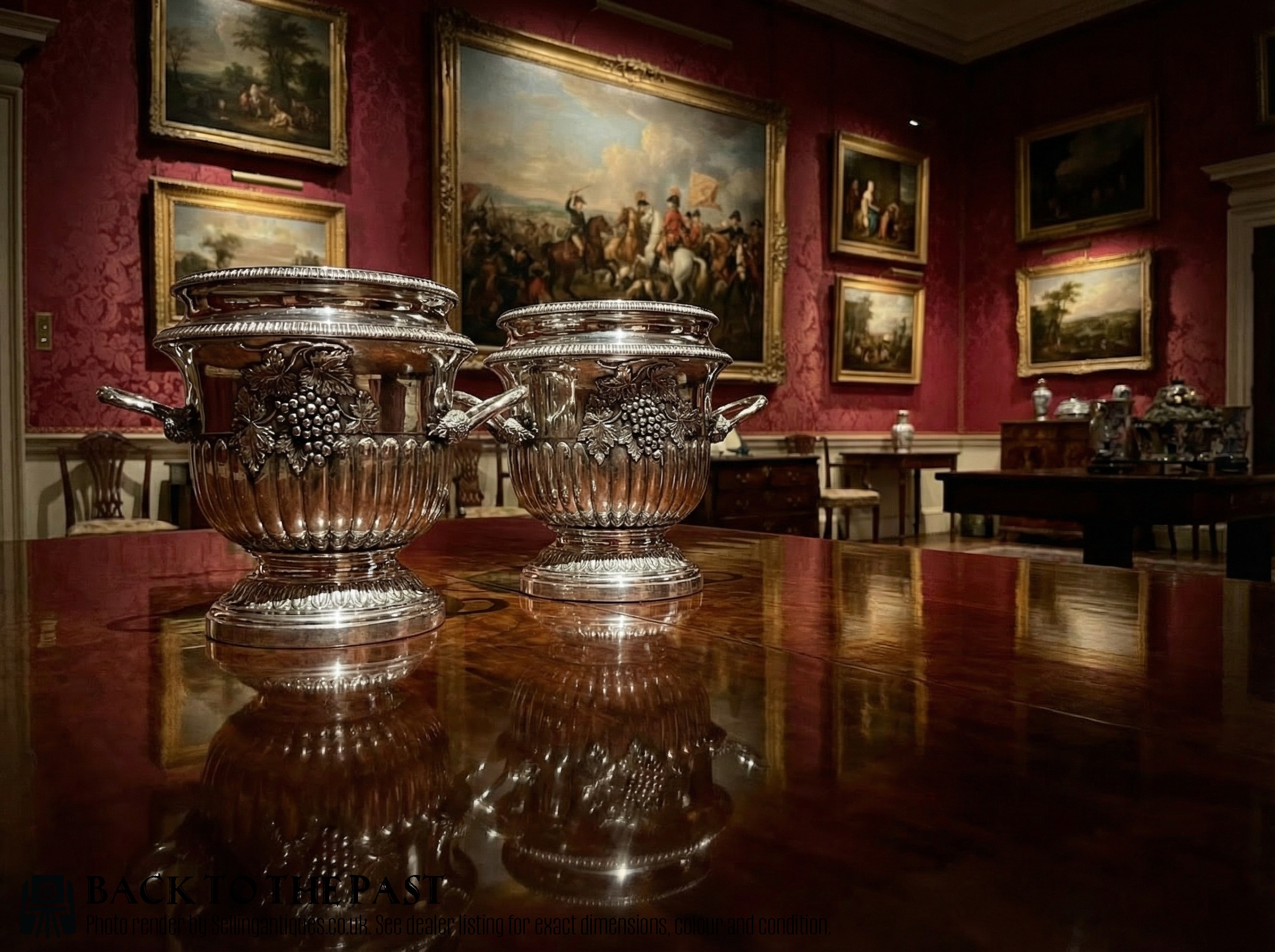
A silver wine chiller bucket serves to keep wine and champagne at temperature during dining, appearing in forms ranging from simple ice pails to monumental floor-standing coolers. When searching for a silver wine chiller bucket, buyers encounter various vessel types including champagne coolers, ice buckets, and multi-bottle table vessels designed for social hospitality.
The objects span multiple eras, with Georgian and Regency campana designs sitting alongside Art Deco French pieces and Mid-Century Modern creations. Pieces originate from diverse workshops across England, France, and Italy, reflecting changing dining habits from the nineteenth century onward.
Distinctions in Execution
Quality rests upon the weight of the metal blank, the crispness of chased or embossed ornament, and the integrity of applied rims and handles. Substantial gauge metal resists dents and maintains thermal mass more effectively than thin-walled alternatives.
Renowned makers apply superior finishing techniques, retaining distinct detail in cast mounts such as cherubs, dolphins, or heraldic coats of arms. The durability of the silver plating over copper or base metal dictates the longevity of the piece under repeated polishing.
Listings feature items spanning the Georgian, Regency, Art Deco, and Mid-Century Modern periods in silver plate, copper, glass, and Old Sheffield Plate.
Hutton Sheffield·Christofle·PH Vogel·Elkington Mason And Co·WMF·Ercuis Paris·Luc Lanel·James Dixon And Sons·Lino Sabatinni
The Silver Wine Chiller Bucket Glossary
- Old Sheffield Plate
- A composite material made by fusing a sheet of silver to a copper ingot before rolling them together into plates. This technique was largely superseded by electroplating in the mid-nineteenth century.
- Campana
- A bell-shaped vessel profile popular during the Regency and Georgian periods. These coolers often feature flared rims and mounted side handles.
- Silver Plate
- A thin layer of pure silver bonded to a base metal substrate, such as nickel silver or brass. The process allowed makers to produce luxurious tableware at a lower cost than solid silver.
- Art Deco
- A design style prevalent in the 1920s and 1930s characterised by stylised geometric motifs, clean lines, and streamlined forms. Pieces from this era often utilise chrome or heavy silver plating.
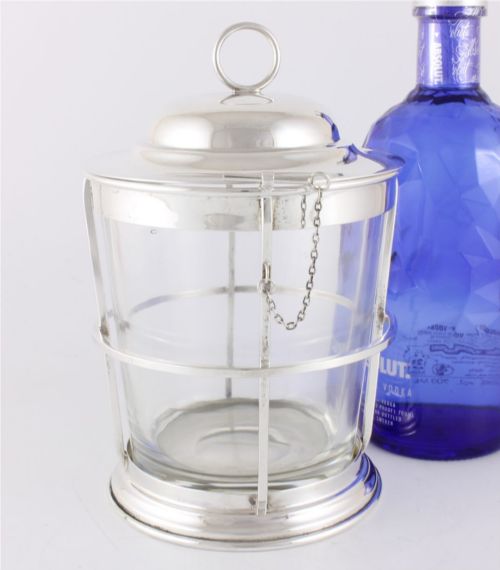
- Ice Pail
- A lidded container specifically built to hold ice cubes rather than chill upright wine bottles. These frequently incorporate glass liners to protect the exterior metal from melting condensation.
Silver Wine Chiller Bucket: Frequently Asked Questions
How do I clean a silver wine chiller?
Wash the vessel in warm soapy water using a soft cloth to remove surface grime and wine splashes. Avoid abrasive scouring pads that strip thin plating layers from the base metal.
Dry the surface completely with a microfiber cloth to prevent water spots. Apply a specialist silver polish sparingly only when necessary to maintain the lustre without wearing down raised details.
Can I use these buckets for ice?
Most wine coolers and champagne buckets accommodate ice alongside bottles for chilling at the table. Dedicated ice pails often include fitted glass liners to hold loose cubes safely.
Leaving wet ice sitting directly against antique silver-plated interiors for extended periods can accelerate tarnishing. Empty and dry the vessel promptly after each gathering to preserve the metal lining.
How do I date an old silver bucket?
Examine the style of the handles, feet, and overall silhouette against known design periods such as Regency, Georgian, or Art Deco. Heavy campana shapes typically point to the early nineteenth century.
Look for maker's marks, stamps, and registry numbers stamped on the base or rim. Reference these hallmarks against maker databases to pinpoint the workshop and decade of production.
What is Old Sheffield Plate?
Old Sheffield Plate is an early composite material created by thermally fusing a sheet of sterling silver onto a thick copper core. This method predates modern electroplating techniques.
Pieces made this way sometimes reveal faint lines of copper showing through along high wear points or cut edges. This subtle telegraphing of the underlying copper confirms the traditional manufacturing process.