
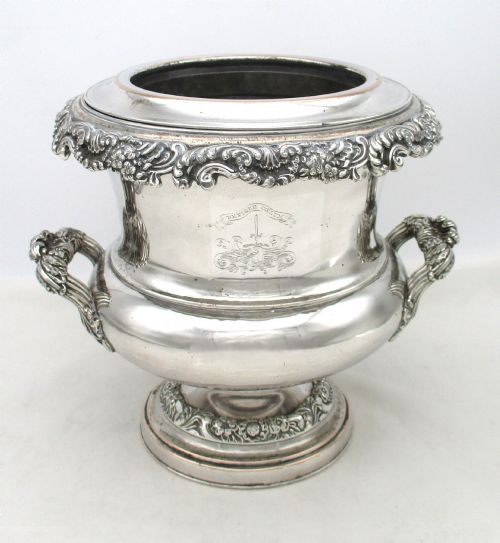
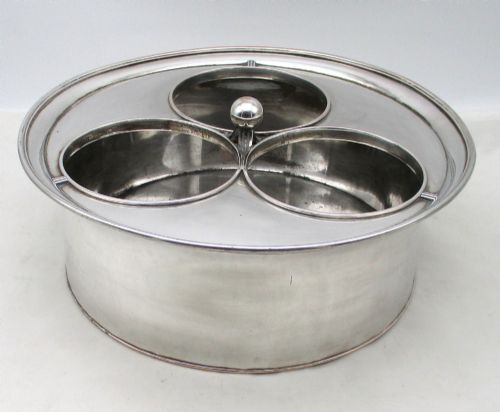
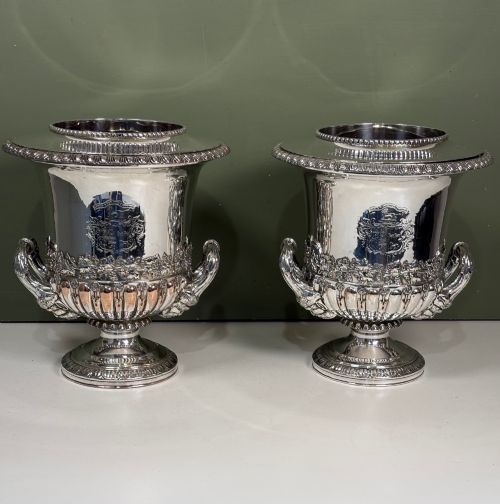


Regency Silver Ice Bucket
These regency silver ice bucket pieces are stately dining table essentials from the early nineteenth century that bring period elegance to any interior.
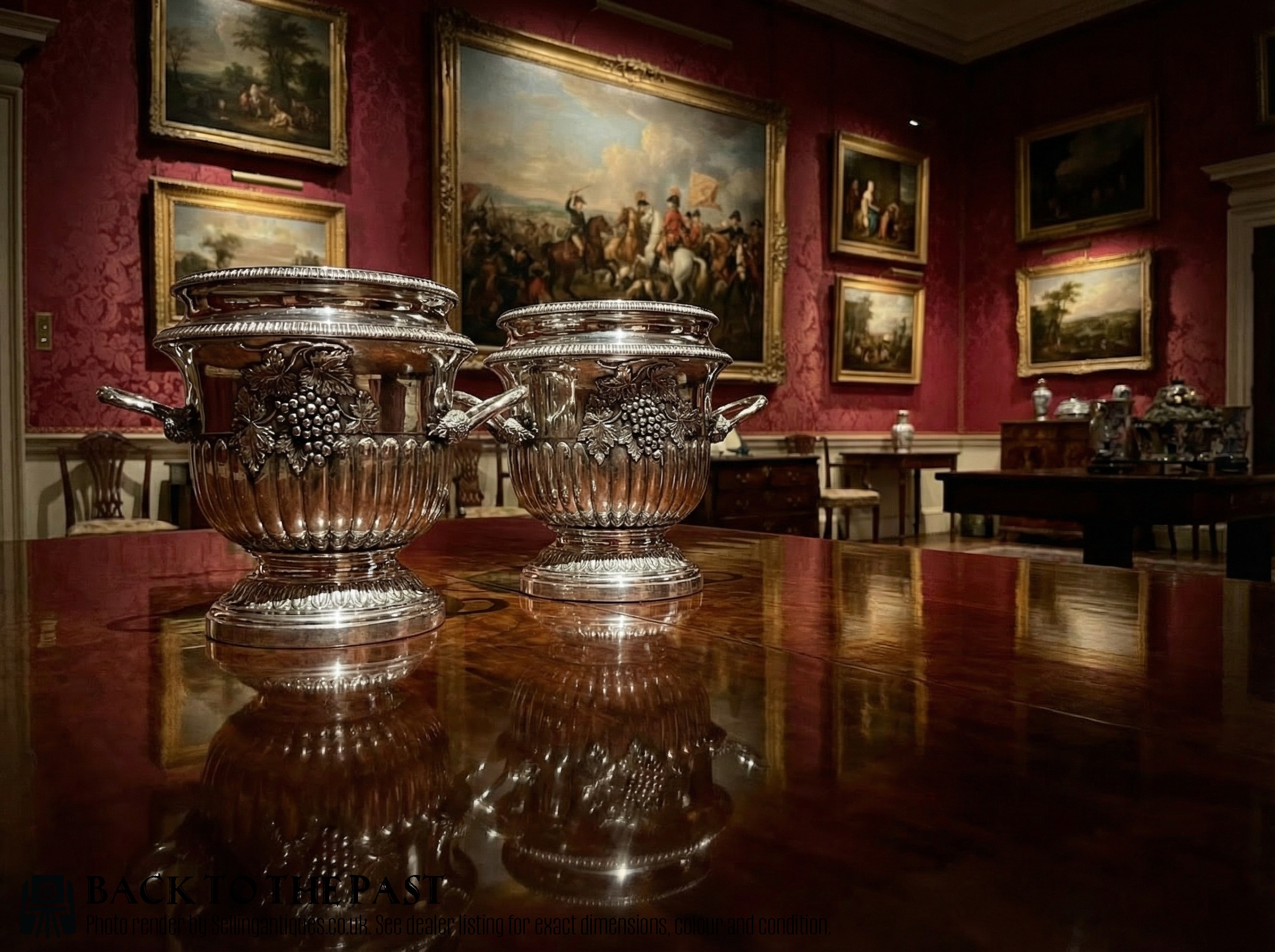
Regency Silver Ice Bucket
When you search for a regency silver ice bucket, you are looking at substantial wine coolers and ice vessels originating from the nineteenth century, Georgian, and Regency eras. The pieces you are most likely to meet on this page take the classic campana design, often formed as pairs or occasionally multi-bottle holders designed for formal dining.
The evidence shows these dining vessels span the Georgian, Regency, William IV, and Victorian periods, with dates centring around 1800, 1820, and 1830. Originating primarily from the early nineteenth century, they reflect the opulent entertaining styles of the era through classical vase and urn silhouettes.
Materials and construction
The pieces recorded in the evidence rely heavily on Old Sheffield Plate, a specialised method of fusing a thin sheet of silver to a thicker copper base before shaping. This technique creates durable tableware that exhibits the rich lustre of silver while maintaining structural integrity through the underlying copper.
Silver plate and solid silver also appear amongst the materials, alongside associated copper elements. Makers shaped these metals into commanding campana forms, frequently incorporating applied crests or coats of arms to individualise the vessels for elite households.
Listings span the nineteenth century, Georgian, Regency, and William IV periods, executed predominantly in Old Sheffield Plate and copper.
Distinguishing quality amongst pieces
Quality in a regency silver ice bucket rests upon the crispness of the campana casting and the preservation of the fused silver over copper. Pieces featuring distinct armorial crests or finely chased heraldry sit at the higher end of the range.
Pairs matching in proportion and detail demonstrate superior workshop execution compared to isolated survivors. The subtlety of the handles and the integration of the collar rim further distinguish masterworks of Old Sheffield Plate from standard production.
Matthew Boulton & Co
The Regency Silver Ice Bucket Glossary
- Old Sheffield Plate
- A composite material formed by fusing silver to a copper core before rolling and fabrication. This technique preceded modern electroplating and leaves a characteristic thin line of copper visible at cut edges.
- Campana
- A bell-shaped vessel with a flared rim and footed base, heavily favoured for wine coolers during the Regency period. Its classical silhouette mimics ancient Greek pottery forms.
- Crest
- A heraldic device or family symbol engraved or applied to the body of the cooler. Such markers indicate the original aristocratic lineage of the tableware.
- Georgian
- The stylistic period spanning the reigns of the four Georges, noted for neoclassical symmetry and refined proportions. It overlaps closely with the subsequent Regency era in dining silver.
Regency Silver Ice Bucket: Frequently Asked Questions
What is a regency silver ice bucket used for?
These vessels served to chill wine bottles and hold ice on formal dining tables during the Georgian and Regency periods. Their deep basins kept bottles submerged in ice water throughout lengthy banquets.
Today, they function as striking decorative centrepieces or practical wine coolers for modern entertaining, bringing period character to a dining room.
How do I identify a Regency period cooler?
Look for classical architectural motifs such as campana urn shapes, bold handles, and heraldic crests typical of the early nineteenth century. The use of Old Sheffield Plate is a strong indicator of this specific manufacturing era.
Consult the listed periods and styles, which predominantly point to dates around 1800 to 1830, aligning with the Regency and late Georgian reigns.
Are these pieces solid silver?
The majority of pieces recorded in the evidence are constructed from Old Sheffield Plate rather than solid silver. This traditional material uses a layer of silver fused onto a copper base.
This method provided the appearance and wear of solid silver at a slightly lower weight, which was standard practice for large wine coolers of the period.
How should I clean Old Sheffield Plate?
Clean Old Sheffield Plate gently using a non-abrasive silver polish and a soft cloth to protect the thin exterior silver layer. Avoid harsh scrubbing that might expose the underlying copper base at the rims or raised details.
Regular, careful dusting and minimal polishing preserve both the antique patina and the integrity of the fused metal over decades of display.