

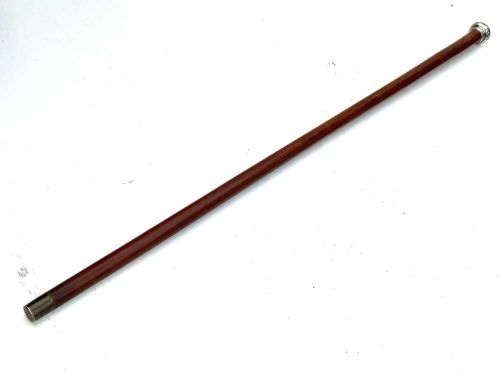
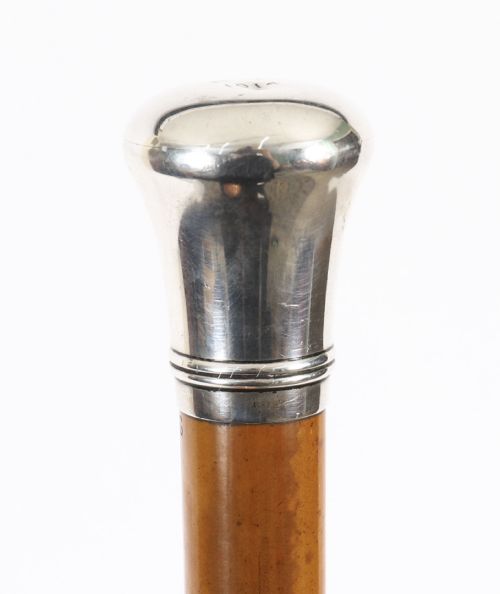
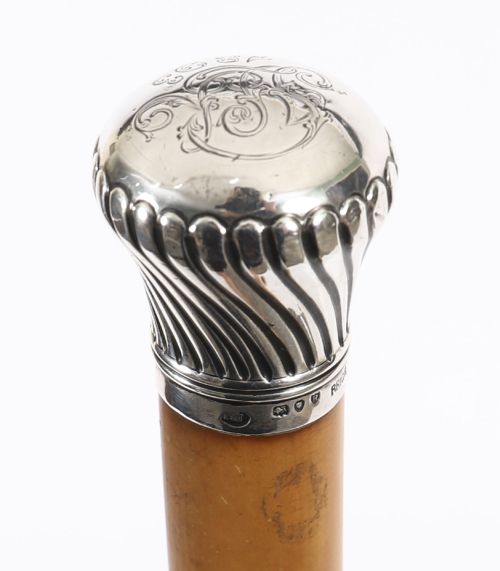
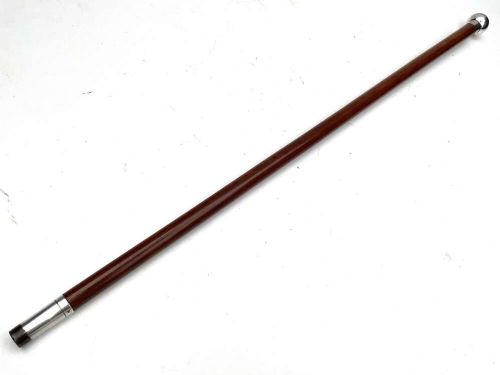
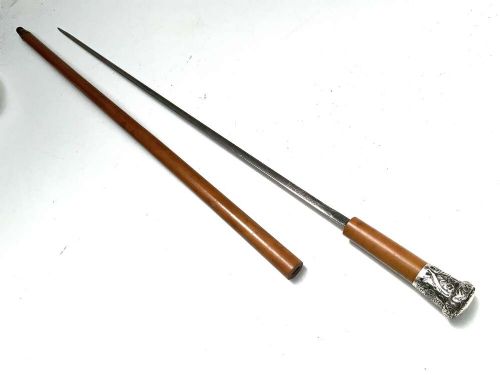

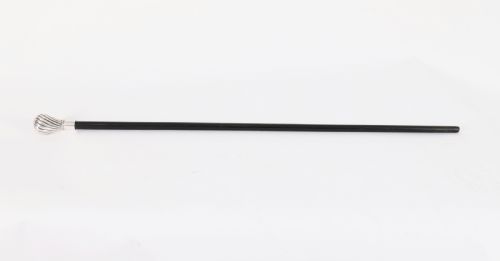


Silver Top Walking Cane
A silver top walking cane combines functional support with decorative metalwork, serving as an accessory of distinction from the nineteenth and early twentieth centuries.
Silver Top Walking Cane
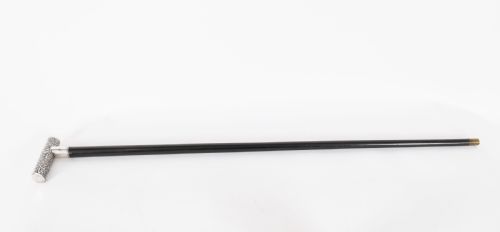
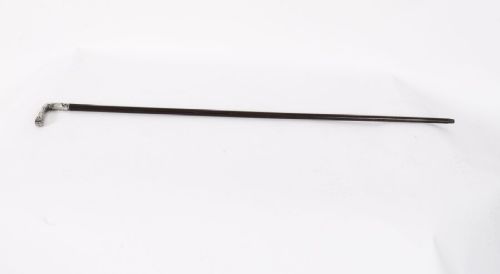
A silver top walking cane is a traditional support implement finished with a precious metal handle or mount, appearing frequently in nineteenth-century and Edwardian forms. These pieces range from standard gentleman's walking sticks to specialised swagger sticks, military canes, and parasol handles.
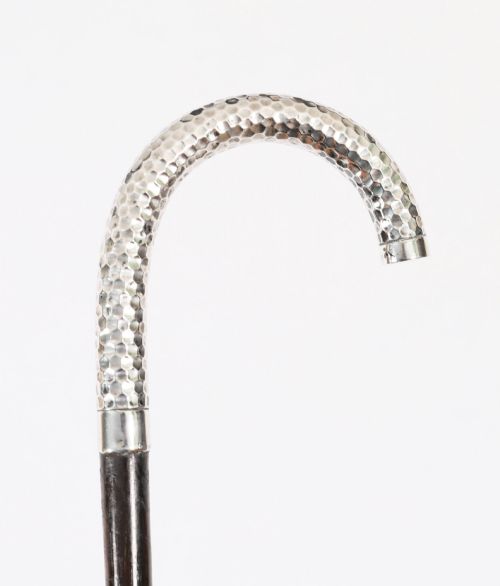
The versions most commonly met on this page include French, English, and Continental examples featuring embossed or repoussé silver handles mounted on wooden shafts. Materials paired with the silver top often include malacca, ebonised wood, bamboo, and hardwood.
How they were made
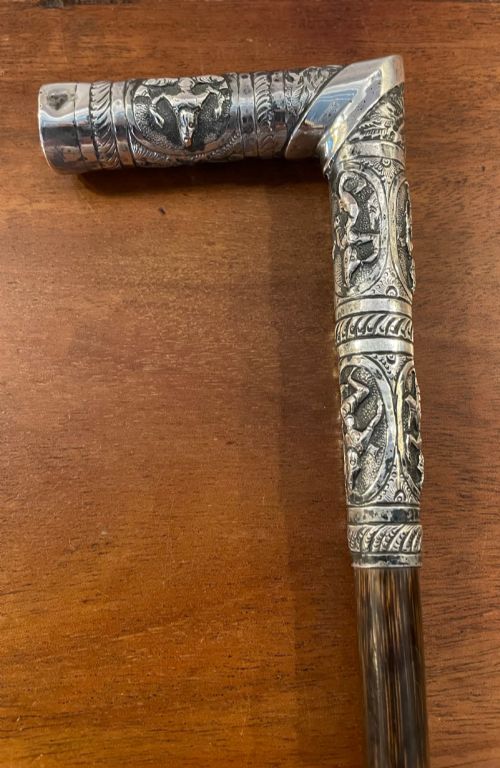
Makers formed the handles from sterling silver, silver plate, or Chinese export silver, frequently applying repoussé, chasing, or engraving techniques to create floral, animal, or geometric motifs. These metal tops were then secured to tapered wooden shafts made from materials such as malacca, palm wood, snakewood, or ebonised oak.
Specialised examples integrated mechanical elements into the construction, concealing watch movements within the handle or incorporating steel sword and dagger blades within the wooden shaft.
Silver Top Walking Cane Retail Price Guide 2026
Typical asking prices for silver top walking cane among the pieces listed under this phrase on Sellingantiques today, from the lower quarter to the upper quarter. They describe what is for sale here now, not the wider market.
Watch out for handles that double as timepieces and shafts that hide sharp steel blades.
What varies in quality
Quality in a silver top walking cane depends upon the substance and weight of the metal work, the depth and clarity of the hand-chased or repoussé decoration, and the integrity of the join between handle and shaft. Superior pieces exhibit crisp hallmarks, substantial silver gauge, and fine detailing such as boar heads, prunus blossoms, or figural animal forms.
The choice and preparation of the shaft material also distinguish the work, with straight-grained malacca, snakewood, or ebonised hardwoods representing careful selection by the maker.
Wang Hing And Company·Asprey
The Silver Top Walking Cane Glossary
- Repoussé
- Metalworking technique where the silver is hammered from the reverse side to form a raised design in relief on the front. This method was widely used for detailed floral and figurative cane handles.
- Malacca
- A slender, durable rattan cane imported from Southeast Asia, prized for its mottled brown finish and flexibility. It served as a favoured shaft material for quality walking sticks.
- Swagger stick
- A short, light military cane carried by officers as a mark of rank rather than for physical support. These often featured regimental silver mounts.
- Sword stick
- A walking cane concealing a hidden steel blade within the wooden shaft, secured by a locking mechanism near the handle. Examples range from gentleman's civilian models to military pieces.
- Hallmark
- An official stamp applied to precious metals indicating purity, maker, and assay office. English and foreign silver marks help date these pieces accurately.
Silver Top Walking Cane: Frequently Asked Questions
What is a silver top walking cane?
A silver top walking cane is a traditional accessory featuring a precious metal handle mounted on a wooden shaft. They were carried by gentlemen and ladies during the nineteenth and early twentieth centuries as an item of fashion and status.
These pieces combine functional support with decorative craftsmanship, often displaying hallmarks, chased metalwork, or specialised hidden compartments such as watch faces and sword blades.
How do I know the age of a cane?
Dating relies upon examining silver hallmarks, maker marks, style periods, and construction methods. British pieces often feature date letters and assay office stamps that pinpoint the exact year of manufacture.
Continental and Asian export pieces are assessed through stylistic indicators such as Art Nouveau curves or specific regional silver standards recorded on the handle mount.
Were all canes used for walking?
Not all pieces functioned primarily as physical support aids. Many items served as fashion accessories, ceremonial objects, or military insignia.
Categories like swagger sticks were carried by officers for parade use, while parasol handles and watch canes performed entirely different domestic functions while sharing the same craftsmanship.
What woods were used for shafts?
Makers selected dense and resilient timbers capable of withstanding daily use without warping. Common materials include malacca rattan, ebonised oak, snakewood, bamboo, and palm wood.
The choice of wood frequently reflected the intended formality and origin of the piece, with imported tropical canes commanding higher status.