



Silver Top Glass Jar
A silver top glass jar combines utilitarian glass vessels with precious metal lids, offering practical storage for the dressing table or dining room.
Silver Top Glass Jar
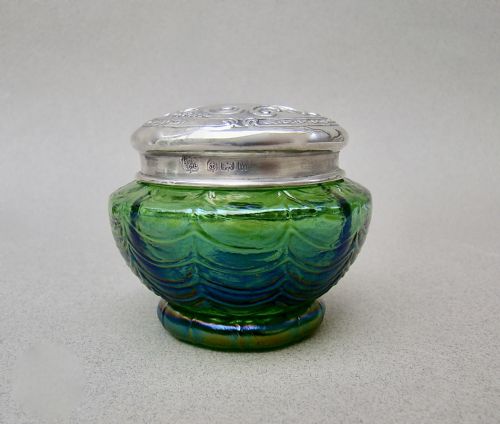
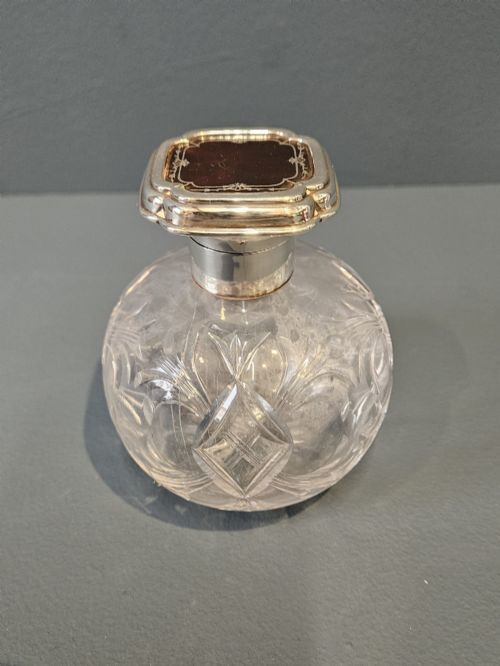
A silver top glass jar encompasses a diverse array of vessels designed for personal grooming, vanity storage, and the dining table. The selection spans dressing table jars, scent bottles, trinket boxes, and biscuit barrels created across the Victorian, Edwardian, and Art Deco periods. Buyers encounter containers intended for perfume, powder, trinkets, and preserves, many bearing hallmarks from Birmingham, London, and Sheffield.
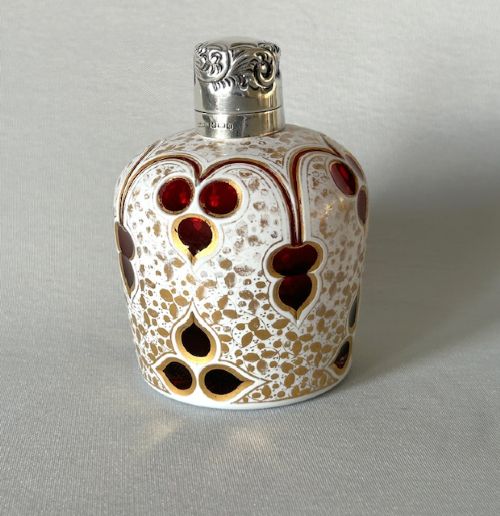
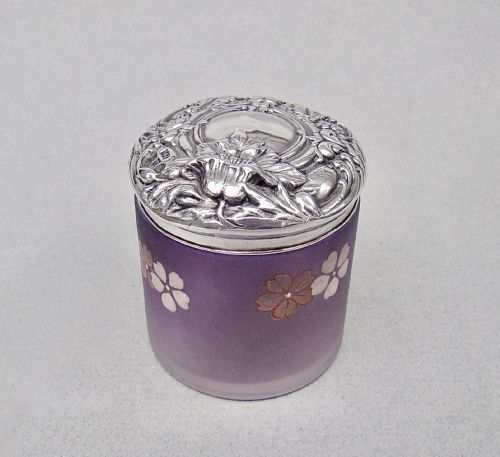
The most common formats on this page are dressing table jars and scent bottles dating from the early twentieth century. These domestic accessories frequently exhibit cut crystal, frosted glass, or coloured glass bodies paired with removable sterling silver or silver-plated lids. Makers adapted these forms from small vanity containers to larger preserve pots and tea caddies.
Materials and construction
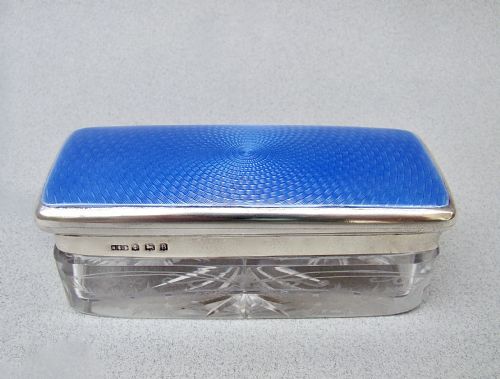
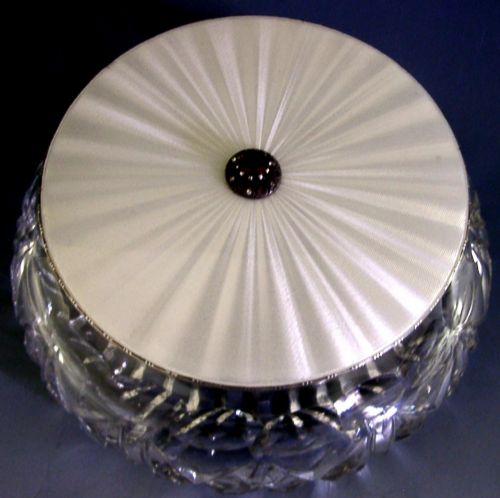
Makers combined heavy moulded or cut glass with sterling silver, silver plate, and occasionally tortoiseshell or guilloche enamel. Glass bases utilise cutting, etching, and moulding techniques to refract light through clear, cranberry, amethyst, or frosted surfaces. Metal tops are stamped, chased, or engine-turned, then fitted securely to the glass collars.
Artisans applied decorative elements such as enamel work in blue and other shades directly onto the silver lids. Internal collars and mounts join the metal components to the glass bodies, requiring precise metalworking to ensure a snug fit over the glass rims.
Silver Top Glass Jar Retail Price Guide 2026
Typical asking prices for silver top glass jar among the pieces listed under this phrase on Sellingantiques today, from the lower quarter to the upper quarter. They describe what is for sale here now, not the wider market.
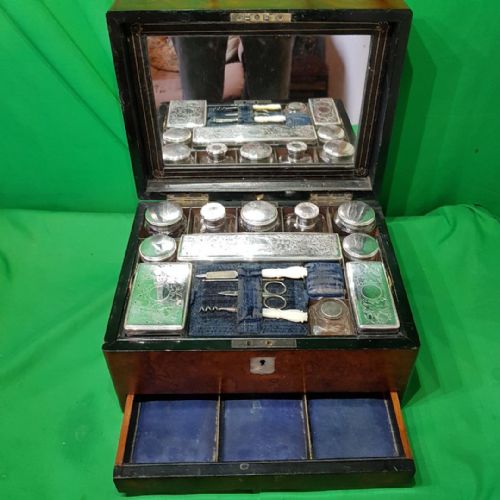
Several Victorian travellers enjoyed their tea and cosmetics on the move, packing heavy glass jars inside fitted burr walnut cases.
Assessing craftsmanship
Quality rests in the depth and clarity of the glass cutting, the weight of the silver lid, and the intricacy of any added enamel or tortoiseshell work. Superior examples display crisp, sharp facets on heavy cut crystal alongside substantial gauge silver that resists denting. Finer dressing table pieces also incorporate maker marks from notable silversmiths and luxury retailers.
The precision of the fit between the silver mount and the glass body indicates the standard of manufacture. Well-executed engine turning and intact, undamaged enamel or tortoiseshell panels elevate a piece above standard utilitarian containers.
A J Pepper & Co·Henry Clifford Davis·Walker & Hall·Jonathan Douglas·Barnsley & Co·Adie Brothers Ltd·William Comyns·W J Myatt & Co·Asprey·Baccarat
The Silver Top Glass Jar Glossary
- Guilloche enamel
- A decorative technique where translucent enamel is layered over machine-turned metal engraving. This process creates geometric patterns that show through the glossy coloured surface.
- Hallmark
- An official stamp applied by an assay office to indicate the purity of precious metal, the maker, and the year of manufacture. British sterling silver pieces frequently carry town marks and date letters.
- Engine turning
- A mechanical engraving method that cuts intricate geometric patterns into metal surfaces. It appears frequently on twentieth-century vanity jar lids.
- Cut crystal
- Glass containing lead oxide that increases weight, brilliance, and refractive index. Artisans cut geometric patterns into the surface to catch the light.
Silver Top Glass Jar: Frequently Asked Questions
How are these jars dated?
Silver lids typically bear hallmarked date letters corresponding to specific assay offices and years. Checking the stamp on the metal component provides the most accurate production date.
Glass bodies can sometimes pre-date the silver mount, particularly if an older vessel received a replacement lid or custom silver collar later.
What were vanity jars used for?
Victorian and Edwardian vanity jars held powders, creams, hairpins, and trinkets on dressing tables. Scent bottles and perfume vials stored fragrances for daily personal use.
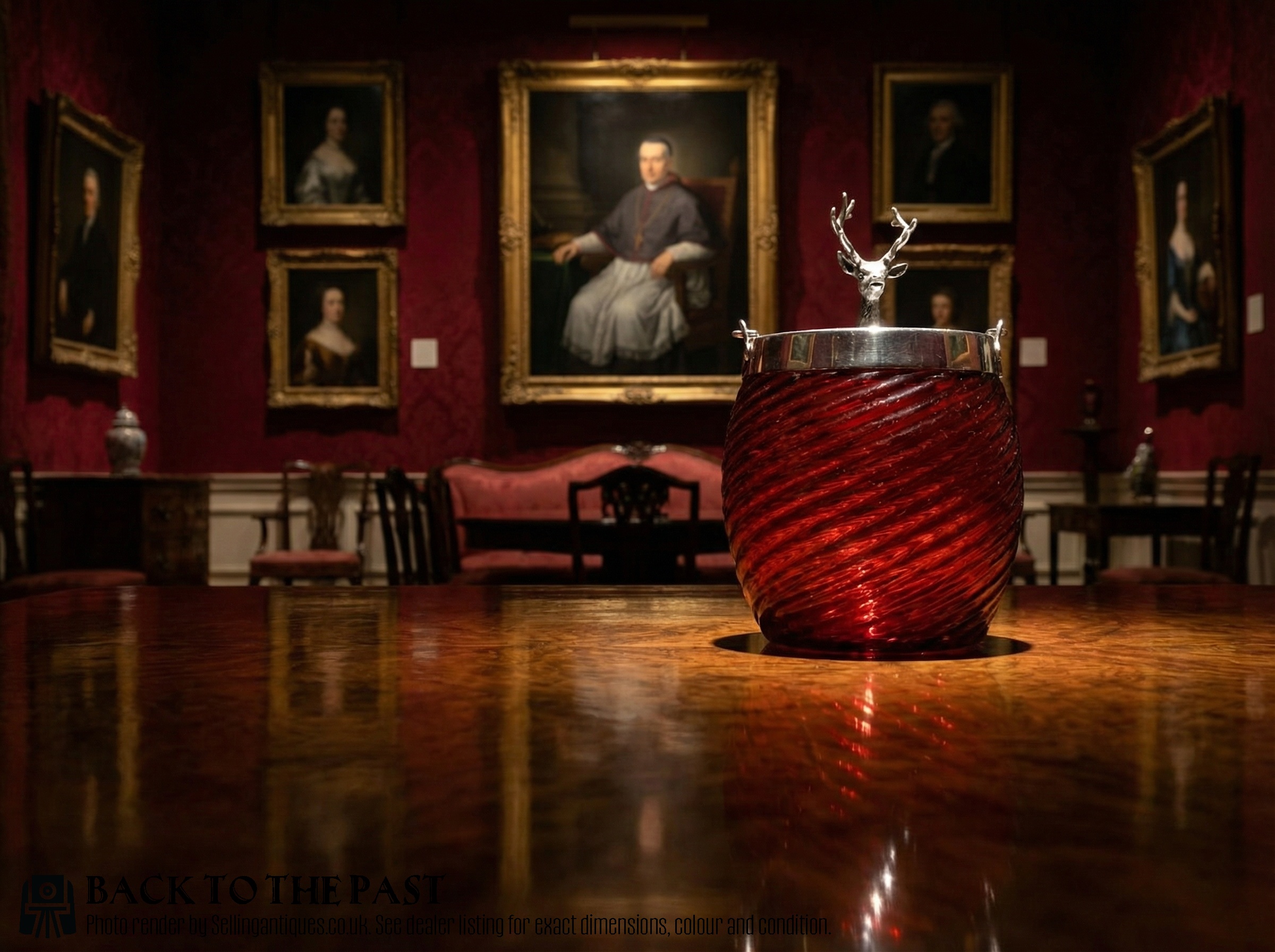
Larger variations functioned as biscuit barrels, preserve pots, or tea caddies in dining rooms and drawing rooms.
How should glass and silver be cleaned?
Glass components tolerate warm soapy water and soft bottle brushes to remove interior residue. Silver lids require dedicated polish applied carefully to avoid staining adjacent glass or enamel.
Enamelled or tortoiseshell tops demand gentle dusting with a dry cloth rather than liquid immersion to protect fragile adhesives and surfaces.
Did these jars come in sets?
Many dressing table jars formed part of larger travelling sets or matching vanity services housed in fitted leather cases. These collections included multiple glass bottles alongside brushes and mirrors.
Individual pieces appear frequently today because sets became separated over decades of use and inheritance.