

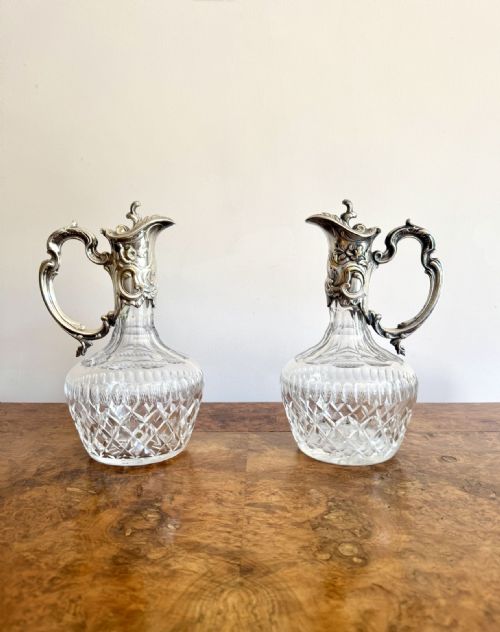


Silver Top Glass Carafe
A silver top glass carafe combines bright metalwork with heavy glass vessels, offering a practical way to serve wine and spirits at the table.
Silver Top Glass Carafe
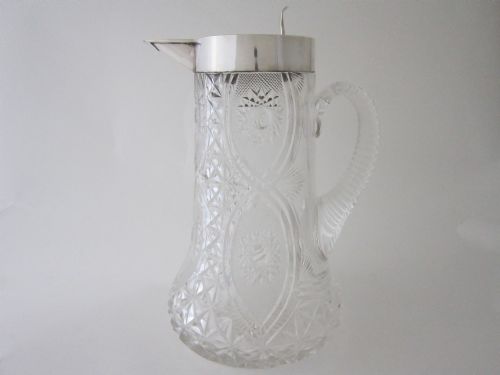
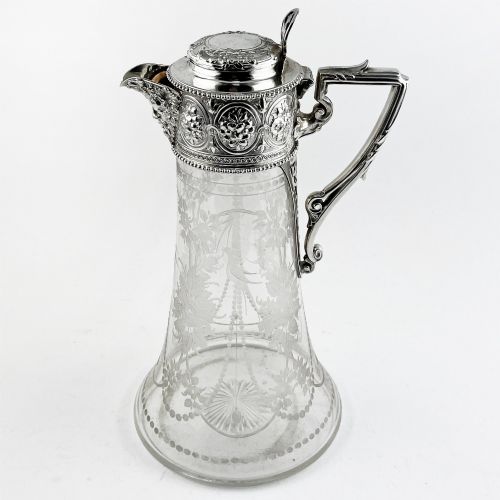
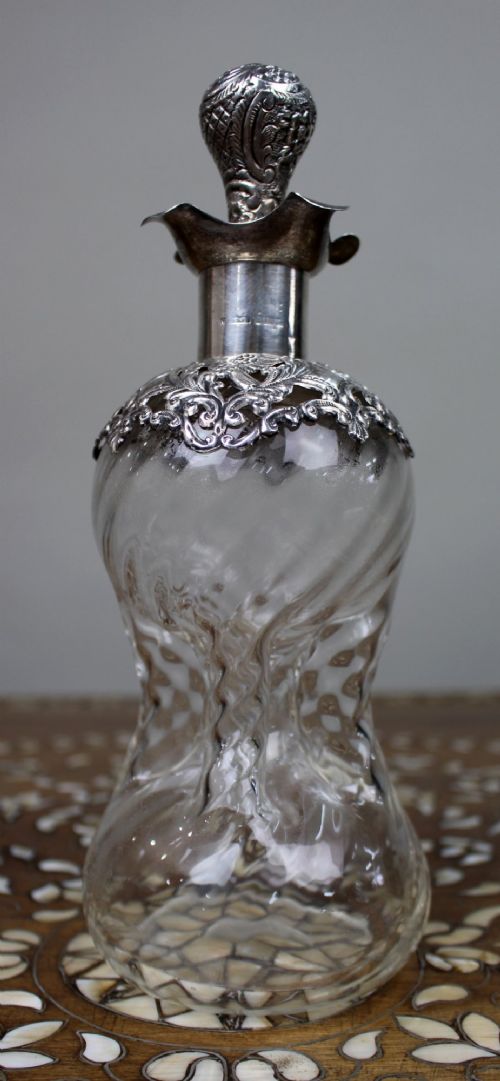
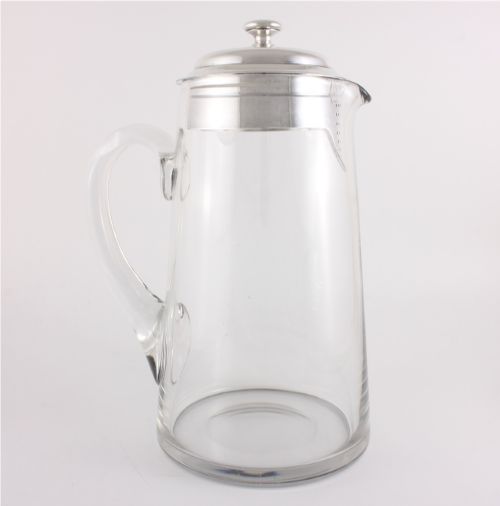
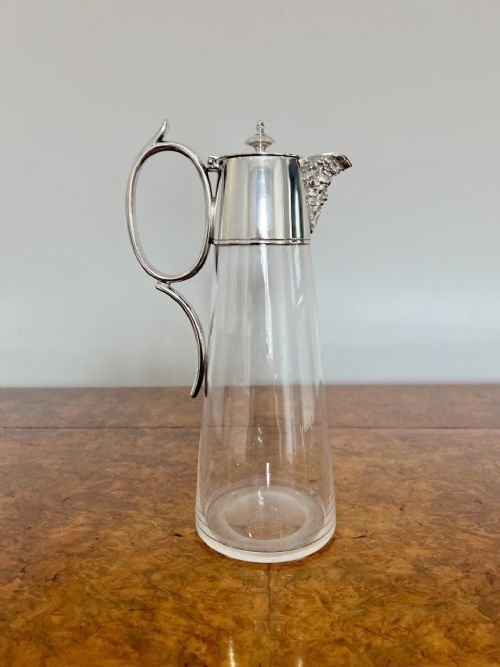
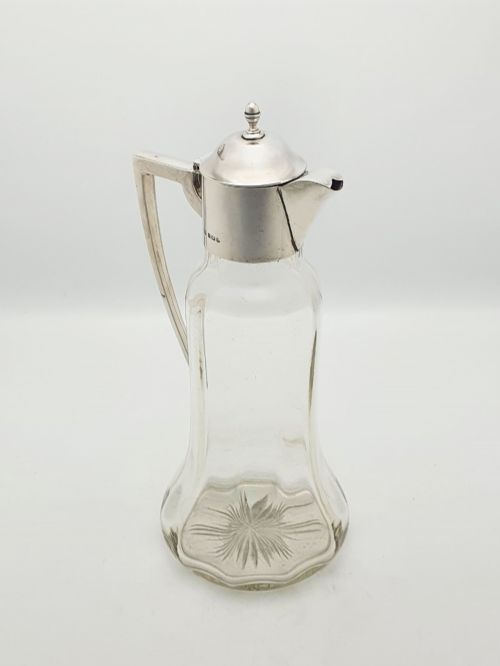
A silver top glass carafe brings together refined metal mounts and glass bodies designed for holding wine, claret, and whiskey. When searching this phrase, buyers encounter vessels ranging from tall Victorian claret jugs to compact Edwardian whisky noggins.
The forms span the nineteenth and twentieth centuries, appearing in clear cut crystal, coloured glass, and etched patterns. These pieces showcase diverse styles such as Victorian floral engraving, Edwardian elegance, and later Art Deco geometric lines.
Most examples combine glass bodies with either sterling silver collars and hinged lids or durable silver plate. Makers applied these precious and plated mounts to form functional jugs, decanters, and pitchers for entertaining.
Materials and construction
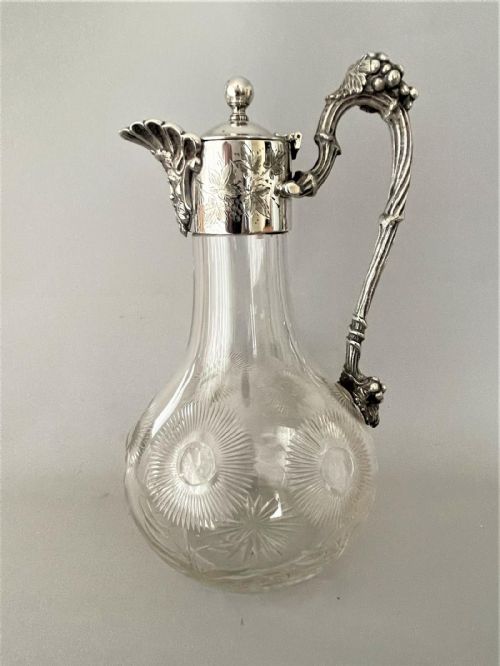
Silversmiths formed the mounts from sterling silver or applied silver plate over base metals, shaping collars, hinged covers, and handles to fit securely over the glass necks. Many mounts feature detailed chasing, floral engraving, or plain polished surfaces.
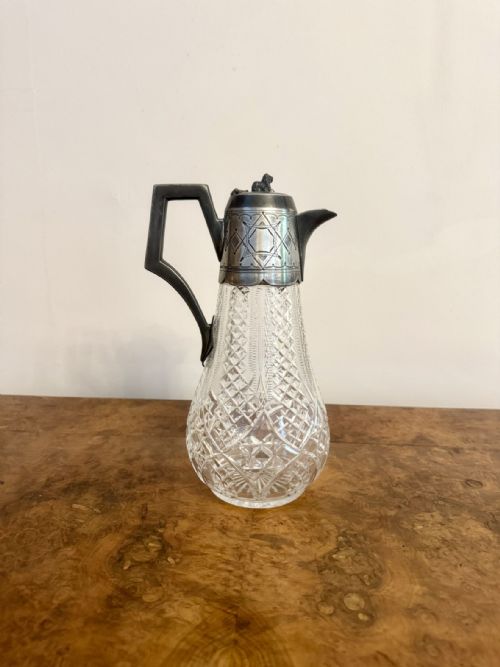
Glassmakers produced the bodies through heavy moulding, hand-blowing, or deep cutting to create faceted crystal and textured surfaces that catch the light. Coloured glass variants in cranberry, green, blue, and amethyst appear alongside transparent crystal.
Makers united the two elements using secure collars and cork seals, sometimes incorporating figural elements like Bacchus masks into the silver spouts and handles.
Listings feature periods spanning from the Victorian era through the Edwardian period and into mid-century designs.
Distinctions in quality
The heaviness and clarity of the glass vessel set the foundation for quality, with deep, crisp wheel-cutting and substantial weight distinguishing superior pieces. Thicker crystal and well-balanced proportions create a solid feel in the hand during pouring.
The substance and detail of the silver mount reveal much about the craftsmanship, particularly the weight of the metal and the precision of the hinge mechanism. Crisp chasing and secure fitting of the silver collar to the glass neck indicate careful workshop production.
Asprey and Co. Ltd·Christofle·Hukin & Heath·Tiffany
The Silver Top Glass Carafe Glossary
- Claret jug
- A specialised pouring vessel designed specifically for serving red wine at the dining table. These pieces usually feature a handle and a hinged silver cover.
- Whisky noggin
- A small drinking vessel or decanter intended for individual portions of spirits. They often include a silver mount and a matching pouring lip.
- Sterling silver
- An alloy consisting of pure silver and other metals to increase durability while maintaining a high standard of purity. Marks on the mount often indicate the assay office and date.
- Silver plate
- A layer of silver fused to a base metal foundation. This technique allowed makers to achieve the appearance of solid silver at a different cost.
- Cut glass
- Glassware decorated by grinding facets and patterns into the surface using rotating wheels. This process adds sparkle and texture to the body of the vessel.
Silver Top Glass Carafe: Frequently Asked Questions
How do I clean a silver top glass carafe?
Wash the glass body gently with warm soapy water using a bottle brush, taking care to keep moisture away from any historic cork linings inside the silver collar. Polish the silver mount separately with a soft cloth and a suitable metal cleaner.
Avoid submerging the entire piece in water if the silver mount is cemented to the glass neck with traditional adhesives. Dry the metal components thoroughly immediately after cleaning to prevent tarnishing.
Were these vessels used only for wine?
While many examples functioned as claret jugs for the dining table, makers also designed similar pieces for whisky, water, and general spirits. Smaller formats served individual portions while larger jugs held shared table drinks.
Different periods favoured specific drink pairings, reflected in the varied capacities and inclusion of items like whisky noggins or water pitchers.
How can I date a silver mount?
British sterling silver mounts frequently bear hallmarks that include a maker's mark, a standard mark, an assay office symbol, and a date letter. These stamps provide a precise year of manufacture for the metal component.
Unmarked silver plate and foreign pieces rely more on stylistic evidence, such as Victorian floral engraving or Edwardian proportions, to determine their approximate age.
Can I use these pieces for daily dining?
These carafes remain fully functional for serving beverages at modern tables, provided the interior glass and seals are clean and sound. Their sturdy construction suits regular use during meals.
Care should be taken when handling pieces with heavy cut crystal and delicate silver hinges to preserve their historic condition over time.