



Silver Tea Serving Tray
A silver tea serving tray grounds a proper gathering, offering solid weight and enduring polish across the centuries.
Silver Tea Serving Tray
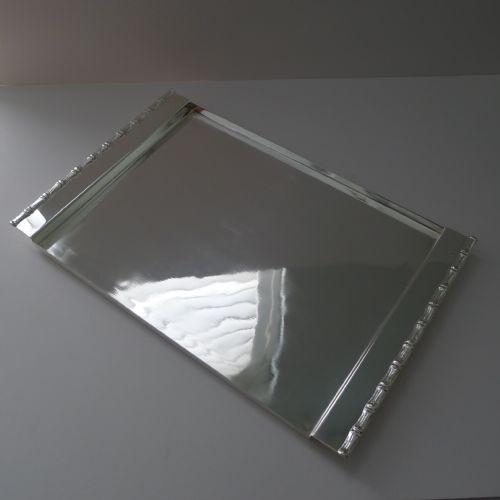
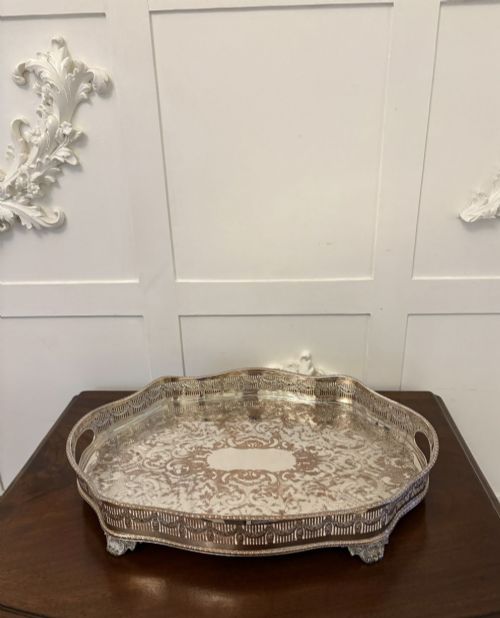
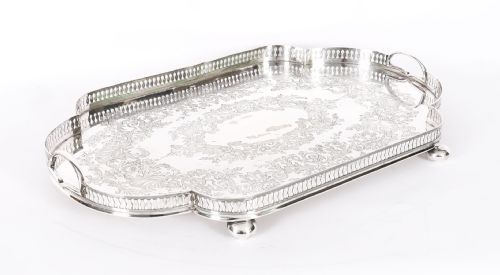
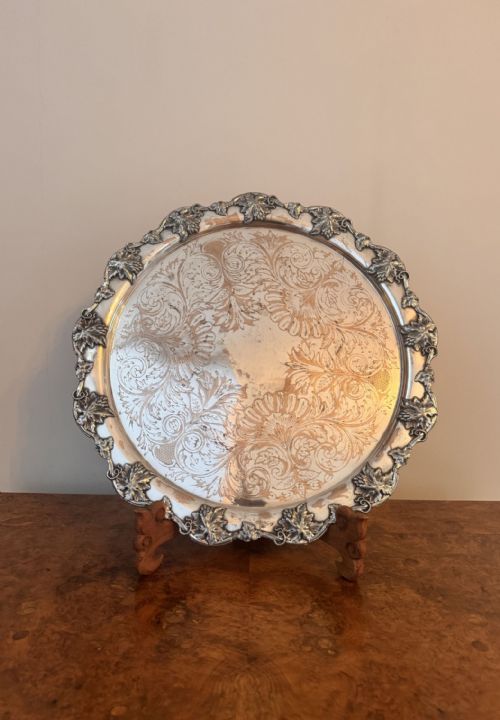
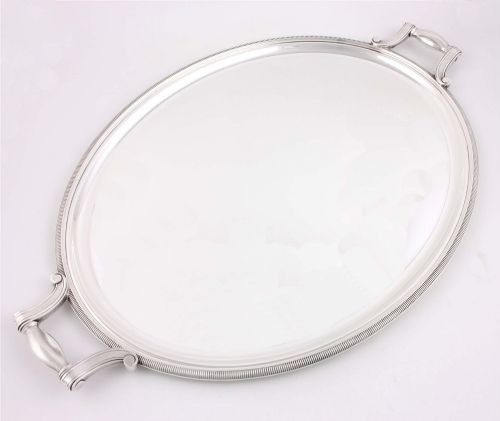
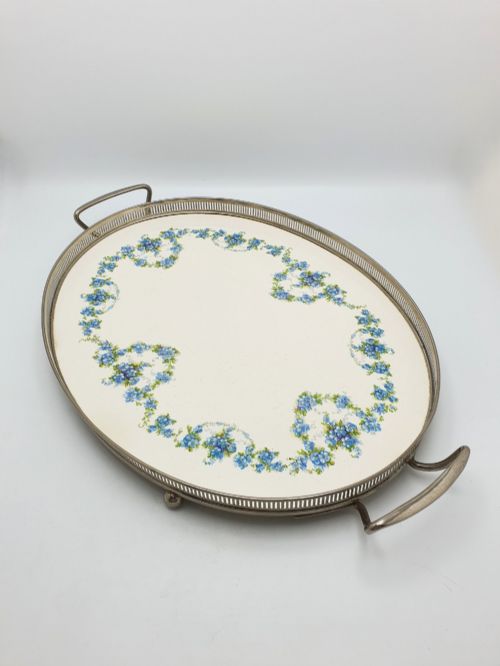
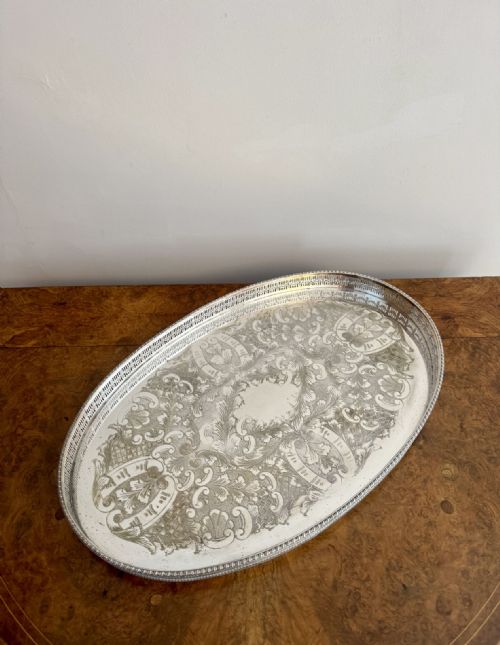
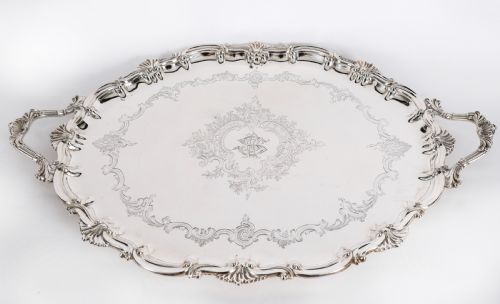
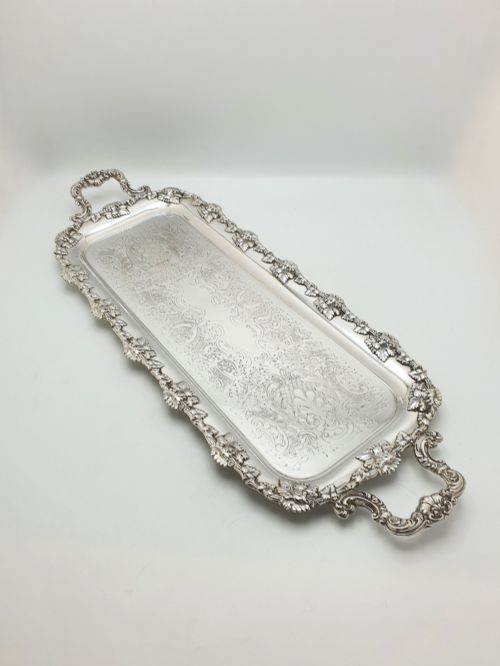
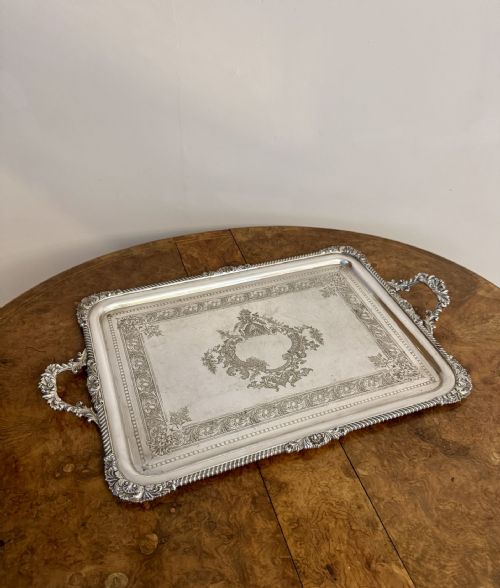
A silver tea serving tray brings together functional hospitality and period craftsmanship, spanning Victorian, Edwardian, and Art Deco eras. You will find rectangular, circular, and oval shapes designed to carry cups, teapots, and decanters with steady balance.
The selection leans heavily toward silver plate, EPNS, and electroplated nickel silver from the late nineteenth and early twentieth centuries, alongside occasional sterling silver pieces. Continental and English makers dominate the origins seen here.
Materials and technique
Makers utilised silver plate, electroplated nickel silver, and base metal cores, applying a durable layer of silver over a supportive foundation. Sterling silver pieces offer solid precious metal construction from edge to handle.
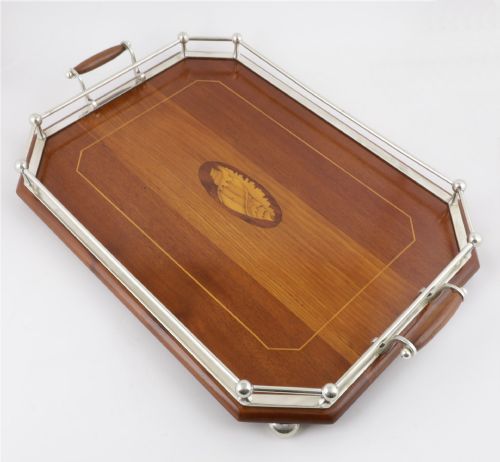
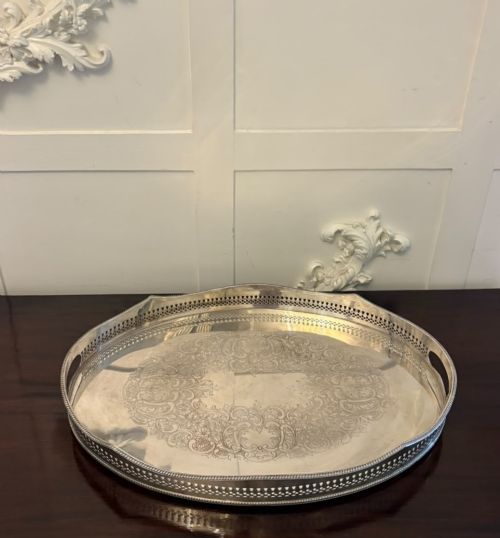
Wood elements such as mahogany and oak provide sturdy bases for gallery trays, often combined with inlaid shell or brass details. Engraving, embossed scrolls, and pierced galleries require skilled hand-chasing and metal-piercing techniques.
Listings feature silver plate, sterling silver, mahogany, oak, and copper across Victorian, Edwardian, and Art Deco periods.
Judging the work
Quality rests in the crispness of the engraved decoration and the integrity of the raised gallery walls. Deep, sharp chasing on the surface and securely joined handles distinguish superior workshop output from simpler production.
The weight of the metal and the evenness of the silver plating dictate how well the piece survives heavy use. Fine examples balance substantial proportions with delicate pierced details that remain rigid and straight.
James Deakin·Mappin & Webb·Thomas Bradbury & Sons·John Harrison·Harrison Bros·Christofle·Ralph Lauren
The Silver Tea Serving Tray Glossary
- EPNS
- Electroplated Nickel Silver. A common base metal alloy coated with a thin layer of silver.
- Gallery tray
- A tray featuring a raised pierced or solid metal border designed to keep decanters and cups secure.
- Salver
- A flat serving tray, usually circular, traditionally used for presenting letters, glasses, or visiting cards.
- Sterling silver
- A silver alloy containing 92.5 percent pure silver by mass, valued for its solid precious metal content.
- Sheffield plate
- An early method of fusing a thin sheet of silver to a thicker copper core before rolling.
Silver Tea Serving Tray: Frequently Asked Questions
How do I clean a silver plated tray?
Clean silver plated trays using a soft cloth and a specialised silver cream, avoiding harsh abrasive pads that wear through the thin plating.
Work gently around engraved lines and gallery piercings to lift tarnish without scratching the underlying base metal.
Can I use these trays for drinks?
These trays suit modern cocktail service, afternoon tea, and drinks display just as they did in Victorian and Edwardian drawing rooms.
Sturdy handles and generous proportions make them practical for carrying glassware and decanters safely from room to room.
How do I tell sterling from silver plate?
Sterling silver pieces bear hallmarks indicating purity, maker, and assay office, whereas silver plated items usually display marks denoting electroplate or EPNS.
Weight, metal colour, and signs of wear where the silver layer reveals the base metal underneath also help identify plated items.