

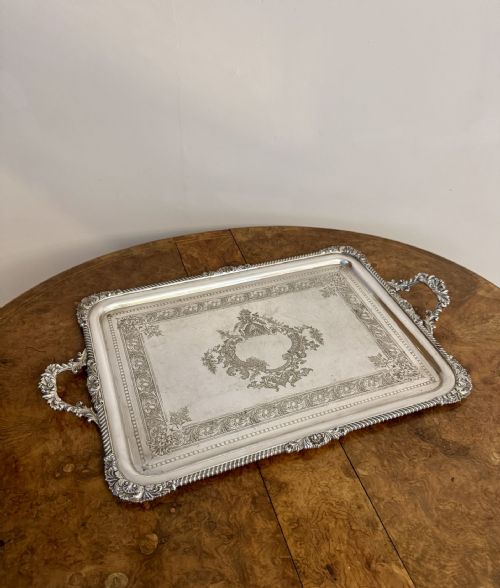
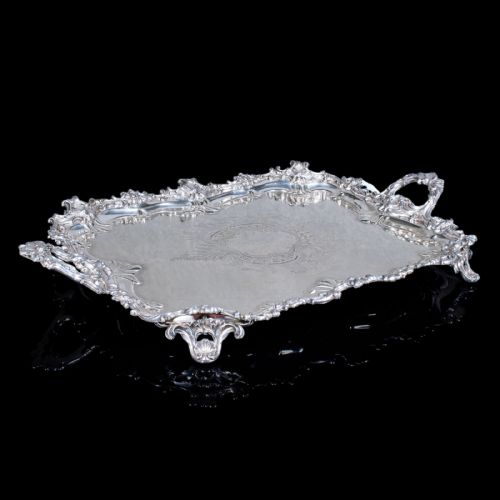


Large Butler Tray
A large butler tray provides the substantial surface required for serving drinks or displaying silver, merging practical utility with period elegance.
Large Butler Tray
A large butler tray is a generous serving surface designed for entertaining, carrying tea, cocktails, or decanters between rooms. These pieces appear in substantial wooden formats, such as mahogany and oak, often paired with folding stands, or in silver-plated and sterling silver forms with handles.
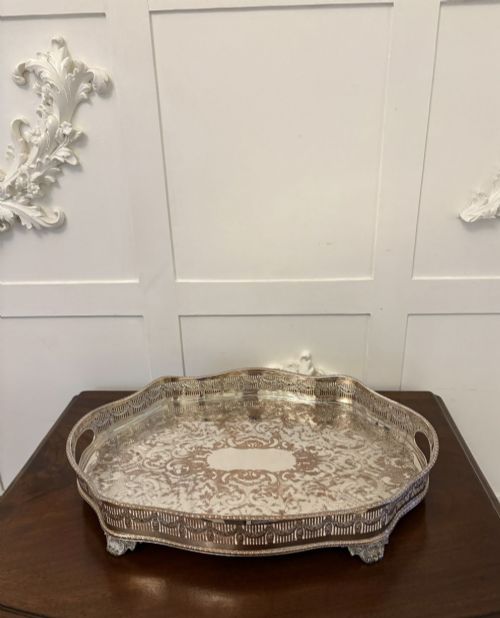
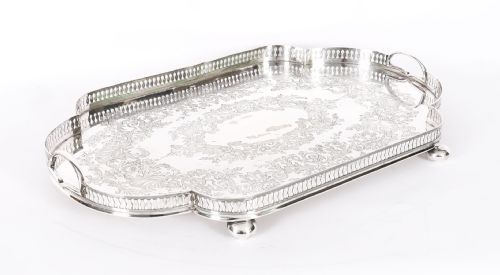
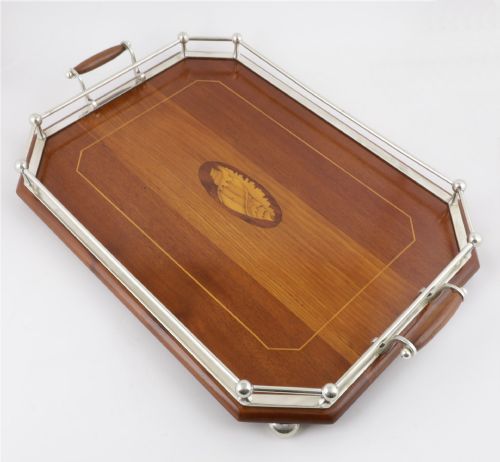
The versions most frequently encountered on this page date from the Victorian and Edwardian eras, spanning the late nineteenth and early twentieth centuries. These range from heavy silver-plated gallery trays with pierced or reticulated borders to timber trays featuring shell inlay or brass mounts.
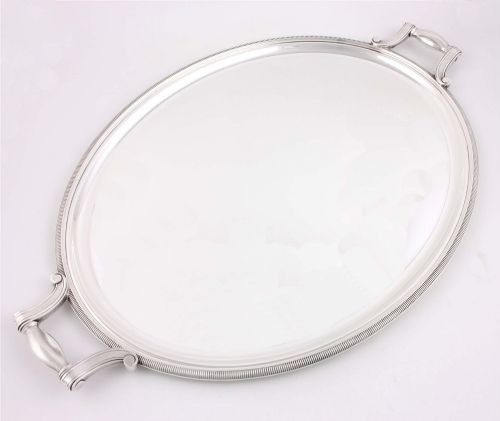
Makers often fashioned these objects for grand country houses and formal households where hospitality demanded impressive presentation. Surviving examples demonstrate forms ranging from simple oval shapes to octagonal and rectangular designs equipped with sturdy carrying handles.
How they were made
Craftsmen built wooden examples using solid timbers like mahogany, walnut, and oak, frequently applying finely turned handles and intricate inlay work such as shell motifs. Carpenters constructed folding stands to support these large timber surfaces when utilised for serving.
Metal versions rely upon silver plate, electroplated nickel silver, or solid sterling silver applied over base metals or copper foundations. Silversmiths created raised gallery borders through piercing, reticulation, and engraving, soldering handles securely to the main tray body.
Materials recorded across the inventory include sterling silver, silver plate, electroplated nickel silver, copper, mahogany, oak, and papier-mâché.
What varies in quality
The weight and thickness of the metal plating distinguish standard commercial output from workshop pieces produced by notable makers. Substantial gauge silver plate or heavy sterling silver resists warping and maintains crispness in engraved decorative borders.
Timber selection and the precision of joinery determine the excellence of wooden formats. Fine grain mahogany or quarter-sawn oak, combined with tight dovetailing and original inlay, separates simple utility items from high-status country house pieces.
James Deakin·Christofle·Mappin & Webb·Elkington & Co·Hukin & Heath·Atkin Brothers·Lee & Wigfull·J.H. Potter
The Large Butler Tray Glossary
- Gallery tray
- A tray featuring an elevated pierced or solid surrounding rim designed to prevent decanters and glassware from sliding off during transport. This raised border often showcases intricate reticulated patterns or cast handles.
- Sheffield plate
- An early method of fusing a thin sheet of sterling silver to a thicker copper core by heat and pressure. Pieces produced this way display a characteristic warmth where the underlying copper shows subtly beneath worn silver.
- EPNS
- Electroplated nickel silver, a common nineteenth- and twentieth-century manufacturing standard where a layer of pure silver is deposited onto a base alloy via an electrical current. This technique replaced older fusion plating methods.
- Reticulated
- Decorated with an openwork pattern formed by piercing metal sheets with geometric or floral cutouts. This technique lightens the visual weight of large silver-plated serving pieces.
- Butler tray on stand
- A portable serving dish resting upon a dedicated folding or fixed wooden base. This configuration allows the top to function separately as a tray or together as an occasional table.
Large Butler Tray: Frequently Asked Questions
How were large butler trays used?
Servants utilised these substantial surfaces to carry tea services, decanters, and glassware from kitchens to drawing rooms in grand houses. The raised edges and sturdy handles ensured safe transport of heavy silver and porcelain.
After service, many of these trays were placed upon dedicated folding wooden stands to function as temporary occasional tables during afternoon tea or evening gatherings.
How do I distinguish silver plate from sterling silver?
Sterling silver pieces bear official British hallmarks indicating the assay office, standard fineness, and date letter. Silver-plated items display maker marks or alternate stampings denoting electroplate over a base metal.
Examining high-wear areas can reveal the underlying copper or nickel silver base on plated versions, whereas sterling silver maintains a consistent metal colour throughout.
Are wooden trays suitable for daily use?
Mahogany and oak trays offer robust construction designed to withstand regular handling and heavy loads. Solid timber surfaces handle daily placement of cups and glasses well when treated with standard wood care.
Protecting the original polish from prolonged moisture exposure preserves the finish, while the structural joinery remains dependable for routine entertaining.
What periods do these trays represent?
The selection spans from Georgian and Regency eras through Victorian, Edwardian, and Art Deco periods up to mid-century modern designs. Earlier Georgian examples lean towards plain mahogany timber, while Victorian and Edwardian pieces frequently feature elaborate silver plating and gallery borders.
Later twentieth-century makers introduced streamlined silhouettes and alternative metal compositions while retaining the classic serving tray format.