




Silver Table Wine Cooler
A silver table wine cooler brings substance to a dining room, holding bottles at temperature while anchoring the centre of a table.
Silver Table Wine Cooler
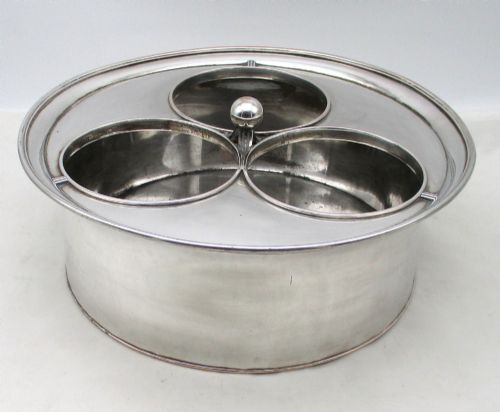
A silver table wine cooler provides a formal vessel for chilling wine and champagne at the dining table. The listings here centre on a diverse range of forms, from traditional campana vessels to multi-bottle holders and punch bowls.
Most examples found on this page date from the nineteenth century through to the mid-twentieth century, encompassing Georgian, Regency, Victorian, and mid-century modern styles. Buyers frequently encounter Old Sheffield plate alongside later silver-plated metal, copper, and brass.
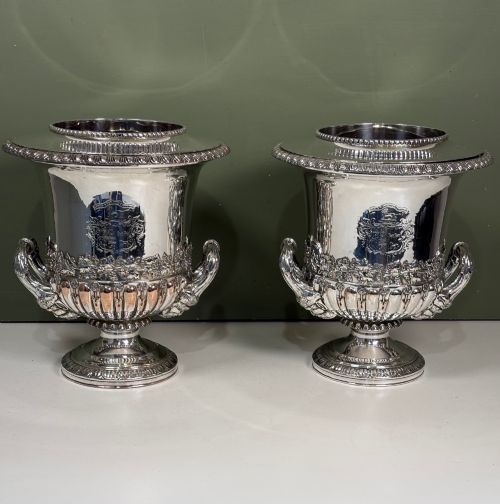
The objects serve multiple functions across different periods, doubling as ice buckets, champagne holders, or planters. Selecting the right piece involves matching the historical style - such as a Regency campana urn - to the character of a room.
What varies in quality
Quality in a silver table wine cooler rests on the crispness of the chased or embossed ornament and the weight of the metal. Early Old Sheffield plate pieces display careful craftsmanship in their applied borders and handles, whereas later silver-plated items rely on different plating depths.
Proportion and structural integrity distinguish finer examples from standard production. A well-balanced campana form with intact handles and a solid base represents the upper tier of the range.
Listings feature pieces spanning the nineteenth and twentieth centuries, including Georgian, Regency, Victorian, and Mid-Century Modern periods.
Christofle·Lino Sabattini·Macabo
The Silver Table Wine Cooler Glossary
- Campana
- A bell-shaped vessel with a flaring rim and a footed base, typical of classical and Regency wine coolers.
- Old Sheffield Plate
- An early method of fusing silver to a copper core before electroplating was invented.
- Punch Bowl
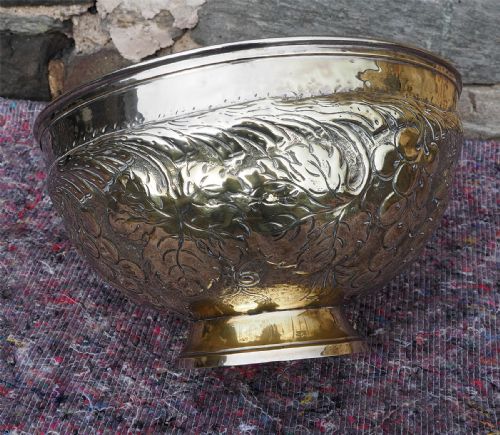
- A large open bowl designed for mixing and serving punch, frequently adapted for chilling multiple wine bottles.
- Silver Plate
- Base metal coated with a thin layer of silver through electroplating or older techniques.
Silver Table Wine Cooler: Frequently Asked Questions
How do I clean a silver table wine cooler?
Maintenance requires gentle cleaning with a specialist silver cloth or mild polish to preserve the plated surface. Avoid abrasive pads that might strip thin silver layers from older copper or brass bases.
Regular dusting and careful hand washing after use keep the metal bright. Storing the vessel in a dry environment prevents tarnishing between dinner parties.
Can I use an old champagne bucket for ice?
Most antique wine coolers and champagne buckets accommodate ice cubes alongside bottles without issue. Their original design intended for chilling drinks during long meals.
Leaving melting ice sitting inside for days should be avoided to protect the interior plating. Thorough drying after every use ensures the metal remains in good condition.
What is the difference between Old Sheffield Plate and silver plate?
Old Sheffield plate uses a mechanical fusion process where a sheet of silver is bonded to copper under heat. This method produces a rich depth and allows hints of copper to show through wear over long periods.
Standard silver plate involves an electrical current depositing silver onto a base metal like nickel or brass. This later technique yields a uniform surface finish without the layered edge typical of Old Sheffield plate.
How do I date a silver wine cooler?
Dating relies on stylistic clues, manufacturing marks, and the material composition of the piece. Regency and Georgian examples often feature neoclassical campana shapes and Old Sheffield plate construction.
Mid-century pieces display cleaner lines, different maker stamps, and newer alloy bases. Comparing handles, rims, and base weights helps narrow down the decade of production.