




Silver Pedestal Wine Cooler
These silver pedestal wine cooler pieces bring period poise to a dining room, combining functional cooling with stately metalwork.
Silver Pedestal Wine Cooler
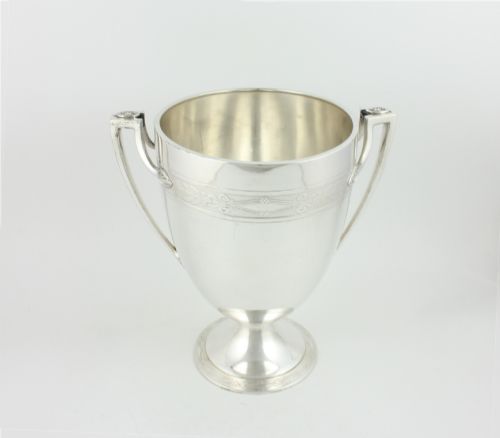
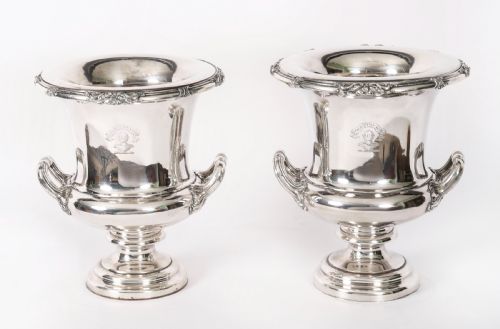
A silver pedestal wine cooler elevates bottles upon a raised foot, drawing on Regency, Georgian, and Victorian forms designed to cool wine at the table. The selections here span the eighteenth, nineteenth, and twentieth centuries, including pieces from Edwardian, Art Deco, and Belle Epoque periods.
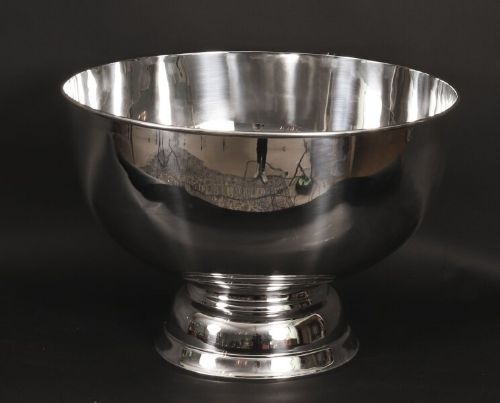
Most pieces on this page take the form of wine coolers, ice buckets, champagne coolers, and punch bowls. Makers apply styles ranging from Rococo Revival and Italian Neoclassical to clean Art Deco lines.
Formats include twin-handled vessels, lidded pails, and monteith bowls cast or plated in metals such as sterling silver, silver plate, Old Sheffield plate, copper, brass, pewter, and chrome.
How silver pedestal wine cooler items were made
Makers utilised traditional methods such as applying silver plating or fusing sterling silver onto copper bases, as seen in Old Sheffield plate production. Other examples involve solid sterling silver, pewter, and chrome, shaped into vessels with cast handles and decorative rims.
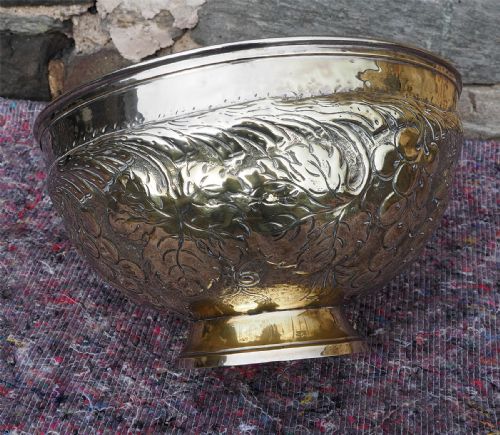
Surface ornamentation relies on chased detailing, applied cast mounts depicting cherubs or dolphins, and polished finishes that highlight the underlying metals, including brass and copper.
A sturdy pewter champagne bowl brought straight from a Parisian restaurant floor carries the clatter of past service in its dents.
What varies in quality
Quality rests on the crispness of cast decorative details, such as handles, rims, and figurative mounts, alongside the integrity of the base metal. Heavy gauge silver plate or solid sterling silver yields a more substantial weight and presence.
The distinction between standard plated wares and superior Old Sheffield plate or solid silver pieces lies in the depth of the metalwork and the precision of historical revival styles, from Regency to Rococo.
Christofle·Mappin & Webb·Barker Ellis·Alexander Clarke & Co
The Silver Pedestal Wine Cooler Glossary
- Old Sheffield Plate
- An early fusing technique where a thin sheet of silver is fused to a thicker copper core by heat and pressure. This creates a durable material with rich historical depth.
- Monteith Bowl
- A vessel featuring a scalloped removable rim designed to hold wine glasses by their stems while chilling. They often appear in solid silver or heavy plate.
- Silver Plate
- A thin layer of silver applied to a base metal such as copper, brass, or nickel silver. It offers the visual appeal of solid silver at a different scale.
- Pedestal
- A raised foot or column supporting the main body of the vessel. This elevates the cooler above the dining surface.
- Champagne Cooler
- A deep vessel designed to hold bottles upright with ice. They share forms with wine coolers and ice buckets.
Silver Pedestal Wine Cooler: Frequently Asked Questions
How do I clean a silver pedestal wine cooler?
Use a soft cloth and a specialised silver polish designed for plated or sterling surfaces. Avoid abrasive pads that can wear down thin plating.
Rinse gently with warm water and dry immediately with a clean flannel cloth to maintain the lustre.
Can I use an antique cooler for ice?
Many examples on this page served as ice buckets or champagne coolers originally. They handle ice safely provided they are dried thoroughly after use.
Check the interior lining to ensure moisture does not sit against vulnerable base metals over long periods.
What is the difference between Old Sheffield plate and silver plate?
Old Sheffield plate involves fusing silver directly onto a copper base through heat and mechanical pressure before rolling. Standard silver plate generally relies on electroplating silver onto a base metal.
Old Sheffield pieces often show subtle copper hints at high wear points, marking their age and method of manufacture.
How do I date a silver pedestal wine cooler?
Examine the style, construction marks, and any maker stamps or hallmarks present on the base or rim. Georgian and Regency pieces show different casting techniques compared to later Edwardian or Art Deco items.
Comparing the weight and decorative motifs helps place a piece within periods such as the nineteenth or twentieth century.