


Engraved Ice Bucket
An engraved ice bucket brings substance to a table, offering solid weight and etched detail for cooling wine and champagne.
Engraved Ice Bucket
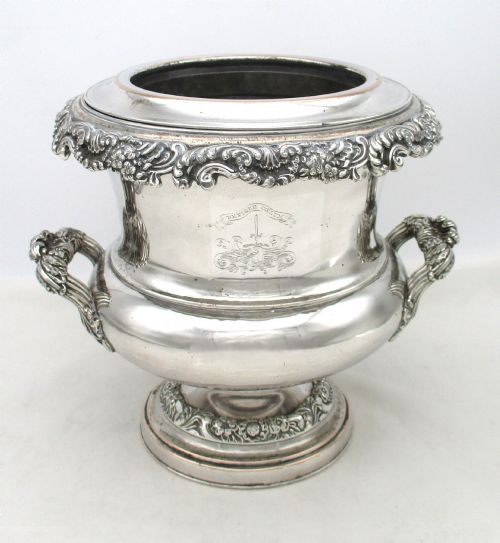
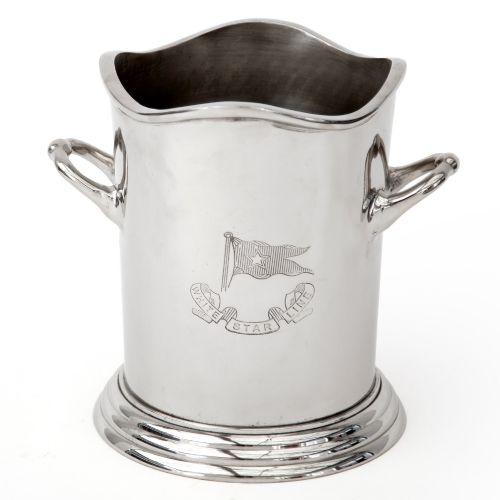
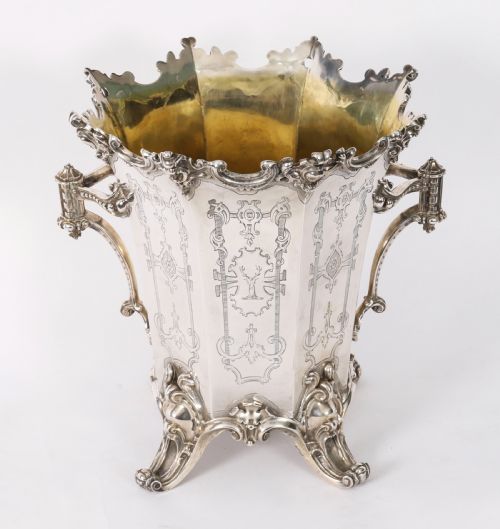
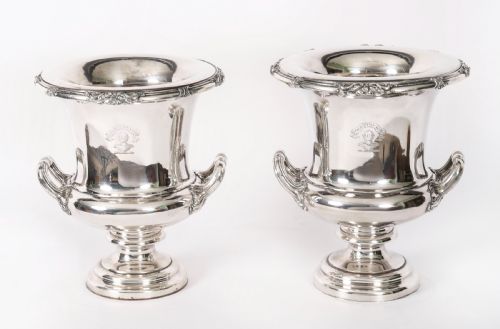
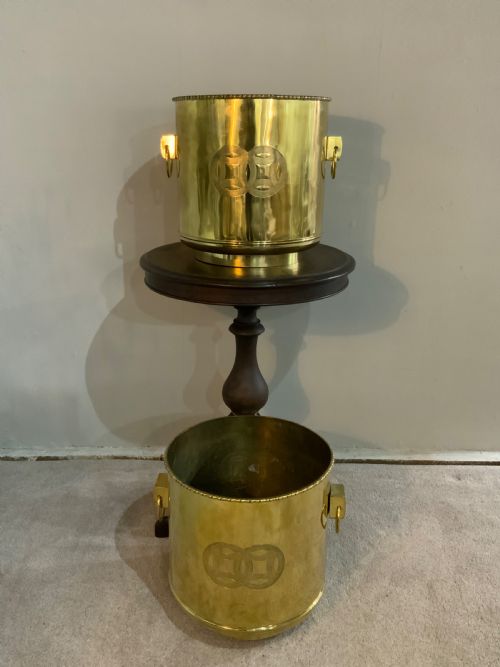
When searching for an engraved ice bucket, buyers encounter substantial vessels designed to chill wine and champagne during dining. The selections here span the eighteenth, nineteenth, and early twentieth centuries, appearing in forms such as wine coolers, champagne buckets, and jardiniers.
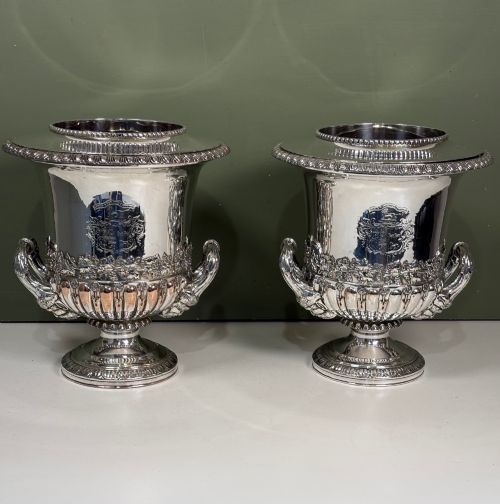
The most common examples on this page are silver plated and Old Sheffield plate vessels bearing crests, coats of arms, or inscriptions. Pieces range from single coolers to matched pairs, representing styles like Georgian, Regency, Victorian, and Maritime Edwardian.
Materials and construction
Makers utilised silver plate, Old Sheffield plate, copper, brass, and pewter to shape these cooling vessels. Techniques involved fusing thin sheets of silver to copper bases in older pieces, or applying electroplating to nickel silver and base metals in later decades.
Engraving was applied by hand to mark crests, coats of arms, or regimental titles into the metal surface. Twin handles, cast rims, and applied heraldic details were soldered or fixed to the body during assembly.
One unusual piece originated in a Paris restaurant as a pewter champagne bowl.
Judging quality in ice buckets
The crispness and depth of the hand engraving distinguish superior examples from plain production. Sharp heraldry and clear crests require skilled handwork that elevates the piece beyond standard manufacture.
Weight and the integrity of the base metal construction define the standard of the vessel. Heavy gauge metals and well-cast handles show substantial craftsmanship, whereas thinner construction lacks the same solid presence.
Elkington, Mason & Co·Matthew Boulton & Co
The Engraved Ice Bucket Glossary
- Old Sheffield plate
- A composite material made by fusing a thin sheet of silver to a copper ingot before rolling them together into sheets. This method creates a rich metallic surface characteristic of eighteenth and early nineteenth-century manufacture.
- Crest
- A specific heraldic device or family symbol engraved onto the body of the metal vessel. These symbols often denote the original owner or institutional commission.
- Electroplated nickel silver
- A base metal alloy of copper, nickel, and zinc coated with a layer of pure silver using an electrical current. This technique became widespread during the nineteenth century for producing durable tableware.
- Jardinier
- A large ornamental pot or vessel used for holding plants or flowers. Certain heavy brass and metal examples share forms similar to large wine coolers.
Engraved Ice Bucket: Frequently Asked Questions
How do I date an old ice bucket?
Dating relies on the materials used, such as Old Sheffield plate versus later electroplating, alongside stylistic details like Georgian or Regency handles.
Maker marks and engraved crests also help narrow the period of manufacture when present on the vessel.
What is Old Sheffield plate?
Old Sheffield plate is an early form of silver plating created by fusing silver to a copper core before rolling.
This technique produces a distinct appearance where the underlying copper occasionally shows through subtle wear at the edges.
How were these buckets used historically?
These vessels were filled with ice or cold water to chill wine and champagne bottles during formal dining.
Servants placed them on side tables or directly on the dining table for guests.
Can I use an antique bucket for ice?
Most silver plated and metal coolers remain functional for holding ice and chilling bottles today.
Careful cleaning with appropriate metal polishes helps maintain the surface without harming the antique plating.