


Silver Table Salt Dish
A silver table salt dish sits on the dining table to hold seasoning, blending practical utility with fine metalwork.
Silver Table Salt Dish
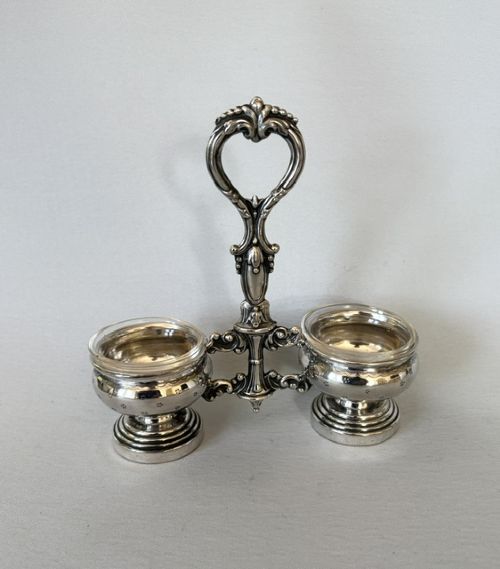
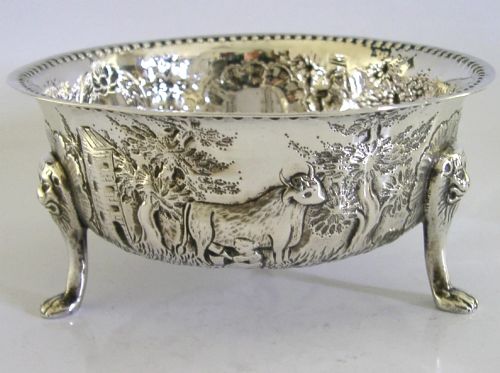
A silver table salt dish serves to hold table salt during dining, appearing primarily as open cellars, pedestal dishes, and small bowls across this selection. These pieces date from the Georgian, Victorian, Edwardian, and mid-century periods, showing considerable variety in form.
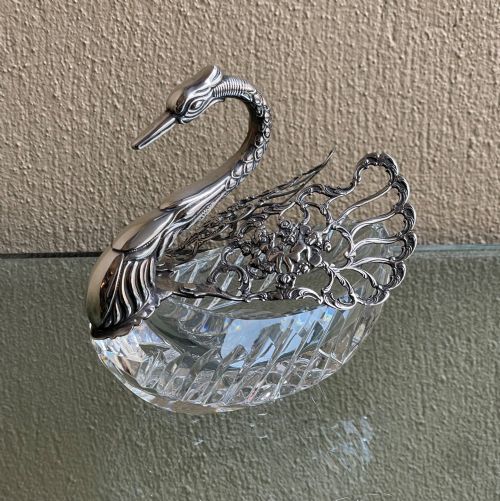
Buyers most frequently encounter Victorian and Georgian examples, ranging from simple open salts to elaborate figural designs shaped like swans, boats, and wheelbarrows. Many of these vessels retain their original coloured glass liners in cobalt or blue.
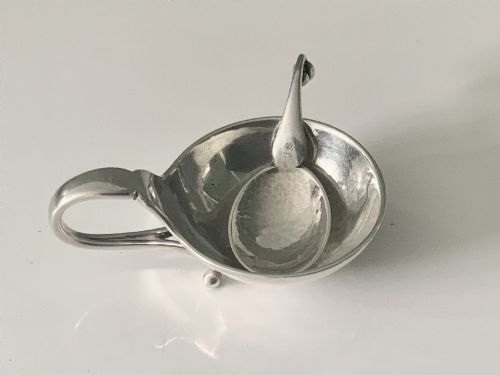
The objects function individually or in matched sets, often accompanied by miniature spoons. Their forms draw upon styles such as Rococo Revival, Art Nouveau, and Art Deco.
Standards of craftsmanship
Quality rests upon the crispness of the chasing, the weight and gauge of the silver, and the finesse of cast figural details. Pieces bearing the marks of accomplished makers display superior articulation in elements like feathers, petals, and scrollwork.
The survival of original components, such as matching spoons and intact glass liners, distinguishes finer examples from those assembled later or lacking their complete suites.
Listings feature sterling silver, silver plate, and vermeil combined with cobalt glass, cut glass, and carved horn.
William Bateman·Georg Jensen·Edward Farrell·Paul Storr·Thomas Smily·Vale Brothers and Sermon
The Silver Table Salt Dish Glossary
- Open salt
- A small open vessel designed to hold salt, used before the invention of the spring-loaded salt shaker. Diners pinched salt from the bowl using fingers or a small spoon.
- Gilt interior
- A thin layer of gold applied to the inside of a silver vessel. This coating prevents the salt from tarnishing or corroding the silver surface.
- Cobalt glass
- A deep blue glass used to line open silver salts. It provides a striking visual contrast against polished silver.
- Repousse
- A metalworking technique where the silversmith hammers the design from the reverse side to form a raised relief on the front.
Silver Table Salt Dish: Frequently Asked Questions
How were salt dishes used at the table?
Diners used these small dishes to hold individual portions of salt beside their plates. A tiny spoon or the tip of a knife served to transfer the seasoning.
Larger master salts sat in the centre of the table for shared use, while smaller cellars appeared at each place setting.
Do antique salts need glass liners?
Many open silver salts require glass liners to prevent salt from corroding the metal over time. Cobalt and blue glass liners are traditional for this purpose.
Pieces designed as solid bowls or boat-shaped dishes function perfectly well without liners.
How do I date a silver salt?
Hallmarks stamped on the metal provide the primary guide to dating, indicating the assay office, year letter, and maker's mark. Stylistic clues like Rococo Revival curves or Art Deco geometry also point to specific eras.
Design motifs often reflect the prevailing taste of periods such as the Georgian or Victorian reigns.
Can I use antique salts today?
These dishes suit modern dining tables for serving salt, condiments, or small appetisers. Regular cleaning with a soft cloth keeps the silver bright.
Wash liners separately in warm soapy water and dry them thoroughly before replacing them in the silver mount.