
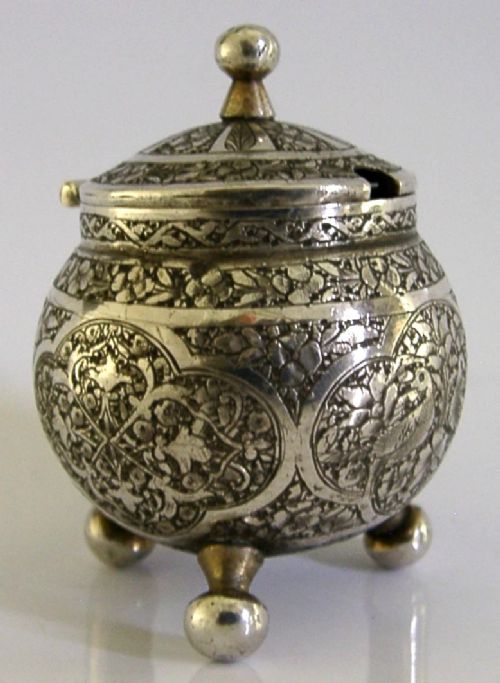


Solid Silver Salt Pot
A solid silver salt pot sits at the centre of the table, bringing tactile weight and bright reflection to every meal.
Solid Silver Salt Pot
A solid silver salt pot appears across multiple historical periods, including Georgian, Victorian, Edwardian, and mid-century eras. Collectors find these pieces in forms ranging from traditional circular vessels to elaborate animal novelties.
The selection on this page includes individual condiment pots, mustard pots, and pepper pots alongside matched cruet and condiment sets. These items serve both functional dining purposes and decorative display.
Origins span British provincial towns, London workshops, and international centres such as the Ottoman Empire and the Netherlands. Pieces frequently arrive paired with glass liners, silk, velvet, or leatherette cases.
Materials and construction methods
Smiths utilise sterling silver and solid silver for the primary bodies, often incorporating clear or coloured glass inserts to protect the metal from corrosive salts. Gold plate occasionally provides interior contrast.
Manufacturing techniques combine traditional silversmithing, casting for figural novelty pieces, and detailed chasing or piercing for decorative effect. Hallmarks stamped into the metal record the assay office, date, and maker.
Listings feature items from the Georgian, Victorian, Edwardian, and mid-century eras, incorporating sterling silver alongside glass, velvet, and gold plate.
Distinguishing quality in silver salt pots
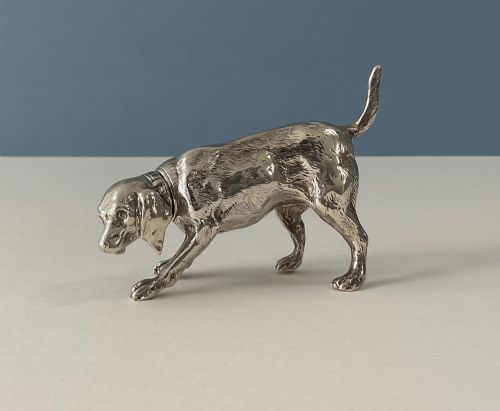
Superior examples display crisp casting in novelty animal forms such as owls, dogs, and pheasants, retaining fine feather and fur detail. Plain vessels rely on clean geometric lines, substantial metal gauge, and balanced proportions.
The presence of original glass liners, complete fitted cases, and clear hallmarks elevates an object. Maker attribution to notable firms adds historical significance to individual pieces.
Bricks and Sons·Viners Sheffield·Heath and Middleton
The Solid Silver Salt Pot Glossary
- Cruet set
- A matched group of small bottles or pots designed to hold condiments like salt, pepper, and mustard upon the dining table. These sets often rest on a dedicated silver stand.
- Hallmark
- A series of official marks stamped onto precious metal items to guarantee the purity of the silver, the maker, and the year of assay. These marks are essential for dating British items.
- Sterling silver
- An alloy of silver containing parts of other metals, usually copper, to increase durability while maintaining a bright appearance. British items typically meet the standard.
- Condiment pot
- A small vessel used for serving table seasonings, frequently supplied with a hinged lid and a matching spoon.
Solid Silver Salt Pot: Frequently Asked Questions
What is the difference between a salt pot and a mustard pot?
Salt pots traditionally feature an open top for pinched salt or include a small glass liner with a spoon. Mustard pots usually possess a hinged lid with a cut-out notch to accommodate a mustard spoon.
Both forms appear within matched condiment sets spanning the Victorian and Art Deco periods. The presence of a lid generally distinguishes the mustard vessel from its open salt counterpart.
Why do some salt pots have glass inserts?
Salt is highly corrosive and reacts chemically with silver over extended periods, causing pitting and damage to the metal interior. Glass liners provide a protective barrier while maintaining the bright visual appeal of the piece.
These liners lift out easily for cleaning and refilling between meals. Many antique examples retain their original coloured or clear glass inserts.
How can I tell the age of my silver?
Assay office marks, date letters, and monarch duty marks stamped into the silver provide precise dating information for British pieces. Reference charts match these specific punch marks to exact years.
Stylistic cues such as Edwardian proportions or Art Deco geometric motifs offer immediate visual clues when hallmarks are rubbed or absent.