
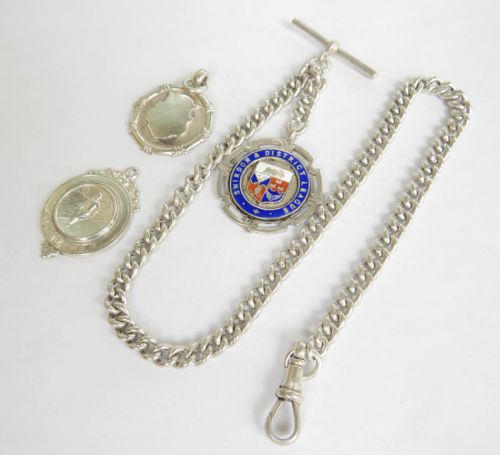
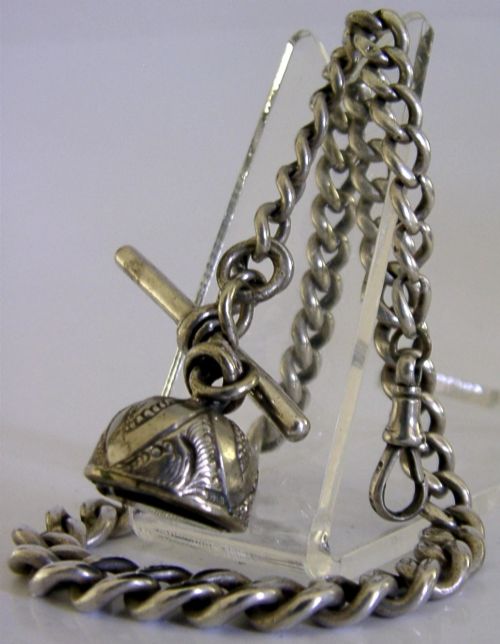
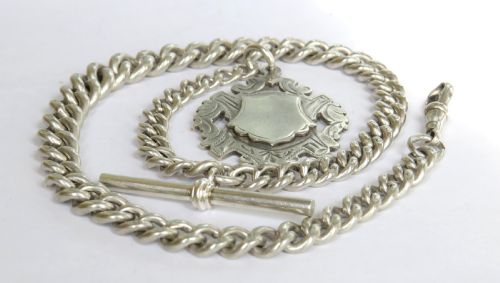

Silver T Bar Watch Chain
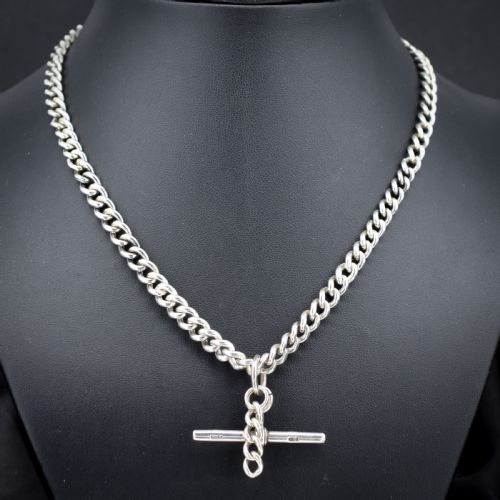
A silver t bar watch chain is a classic pocket watch accessory, sought after today both for traditional wear and as a statement necklace.
Silver T Bar Watch Chain
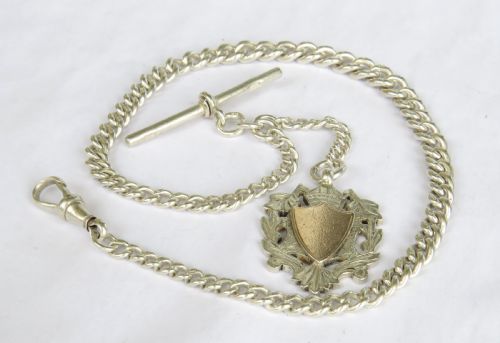
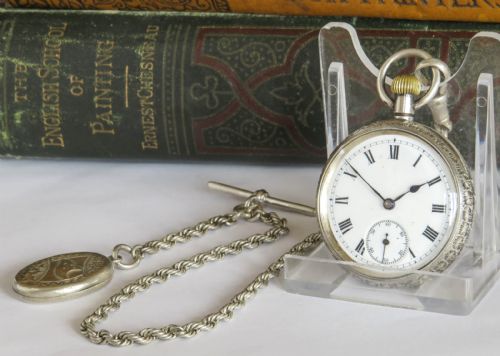
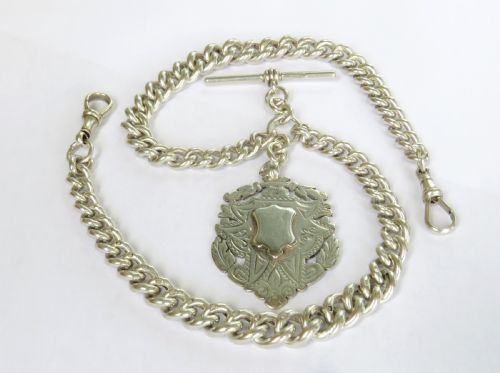
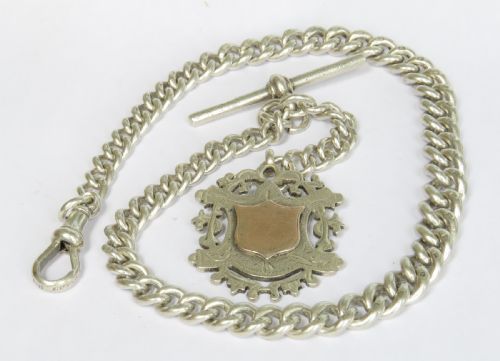
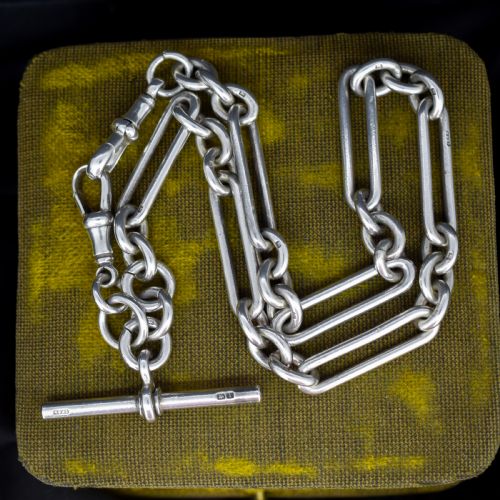
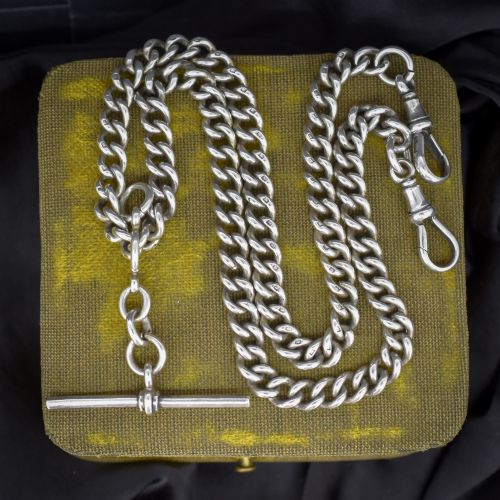
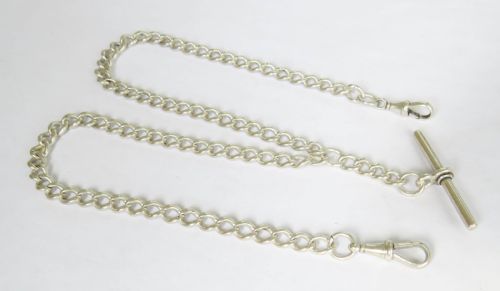
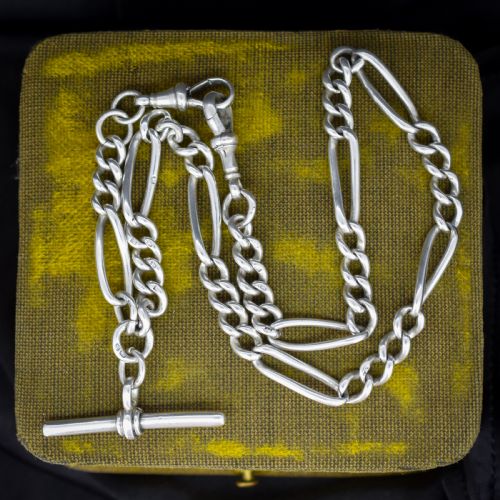
A silver t bar watch chain is an accessory traditionally designed to secure a pocket watch to a waistcoat, featuring a crossbar at the centre that anchors the piece through a buttonhole.
The versions most commonly met on this page date from the Victorian and Edwardian eras through to the 1920s and 1930s, spanning periods of robust utilitarian design and decorative refinement.
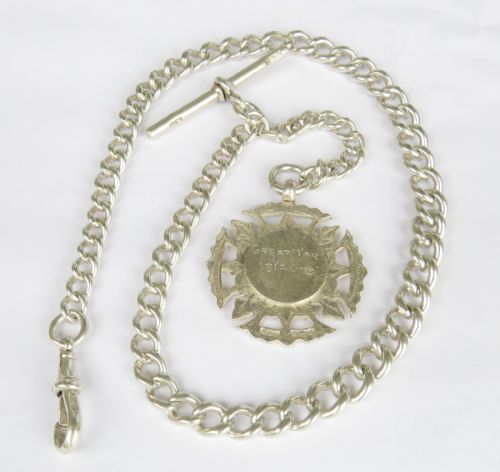
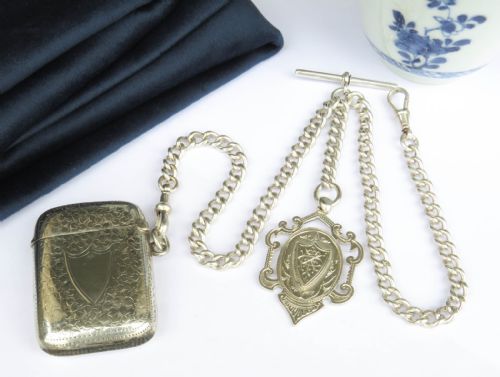
These pieces frequently appear paired with matching fobs, seals, vesta cases, or dog clips, reflecting their original function as daily gentleman's accessories.
Materials and Construction
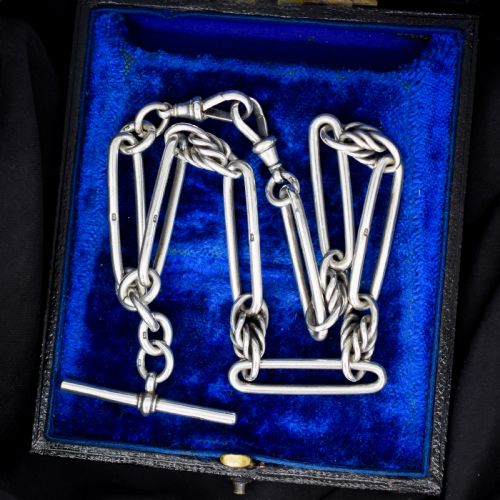
Construction relies primarily on sterling silver, shaped into various link forms such as curb, trombone, figaro, and fancy patterns, often enhanced with gold accents, enamel, or glass.
Makers utilised solid silver links joined securely by hand or machine, incorporating functional swivel dog clips and T-bars designed to withstand the daily strain of pocket wear.
Silver T Bar Watch Chain Retail Price Guide 2026
Typical asking prices for silver t bar watch chain among the pieces listed under this phrase on Sellingantiques today, from the lower quarter to the upper quarter. They describe what is for sale here now, not the wider market.
Listings span the Victorian and Edwardian eras, the First World War, and the 1920s to 1930s, utilising sterling silver, enamel, and gold accents.
Judging Quality
Quality rests in the substantial weight of the silver links and the crispness of any hallmarks stamped onto the metal, which denote the assay office and date.
Superior examples demonstrate secure mechanism function in the dog clips and swivels, alongside thoughtful proportions and intact decorative elements like enamel or attached fobs.
Waltham·Omega·Cyma·Doxa·Tellus
The Silver T Bar Watch Chain Glossary
- T-Bar
- A small horizontal metal bar attached to a short length of chain, designed to slip through a waistcoat buttonhole to secure a pocket watch.
- Albert Chain
- A type of pocket watch chain named after Prince Albert, worn across the front of a waistcoat or jacket.
- Dog Clip
- A spring-loaded clasp attached to the end of a watch chain, used to fasten securely to the pocket watch loop.
- Vesta
- A small pocket case designed to hold matches, frequently found suspended as a fob from a watch chain.
- Albertina
- A delicate variation of the standard watch chain, often multi-stranded and traditionally worn by women as a bracelet or necklace.
Silver T Bar Watch Chain: Frequently Asked Questions
How do I wear a watch chain today?
A silver t bar watch chain can be worn across a waistcoat using the T-bar through a buttonhole, just as it was originally intended. Alternatively, many modern wearers detach the watch and style the chain as a heavy choker or necklace.
Securing the dog clips to the ends allows you to fasten the piece comfortably around the neck or wrist depending on the length.
What is the difference between an Albert and an Albertina chain?
Standard Albert chains are typically heavier, featuring robust curb or trombone links designed originally for men's pocket watches. Albertina chains are finer, often multi-stranded, and historically intended for women.
Both incorporate the characteristic T-bar, but the overall gauge and delicacy of the construction separate the two styles.
Were these chains always made of solid silver?
While the vast majority found here consist of solid sterling silver, variations include silver plate or components featuring gold accents. Hallmarks stamped onto the individual links or the T-bar usually confirm the solid silver standard.
Examining the metal stamps helps determine whether a piece is solid sterling or plated.
What are fobs and why are they attached?
Fobs are decorative ornaments or functional items such as seals, vesta cases, or medals that hang from the centre drop of a watch chain. They added personal flair, indicated club memberships, or served practical purposes like lighting matches.
Today, these attached elements provide historical context and visual weight to the piece.